

Tarantulas have long captured the imagination of exotic pet lovers, but nothing excites enthusiasts more than the dazzling blue tarantula species. From the Cobalt Blue to the Green Bottle Blue and Singapore Blue, these spiders stand out for their vibrant, almost metallic coloration. Despite their intimidating appearance, most blue tarantulas are kept successfully in captivity, though some require advanced care. In this article, we’ll explore the most famous species, their care needs, and whether they’re safe to keep as pets.
What Is a Blue Tarantula?
Not all tarantulas are brown and dull. Some display striking shades of electric or metallic blue, making them highly sought after by collectors. Interestingly, tarantulas don’t produce blue pigment; instead, their color comes from structural coloration. Microscopic nanostructures in the hairs on their exoskeleton scatter light in such a way that the blue hue becomes visible.
Several species across different regions display this trait, with varying shades of cobalt, violet, and turquoise. These include the Cobalt Blue Tarantula, Green Bottle Blue Tarantula, Singapore Blue Tarantula, and others like the Brazilian Blue and Blue Baboon Tarantula.
Cobalt Blue Tarantula (Cyriopagopus lividus)
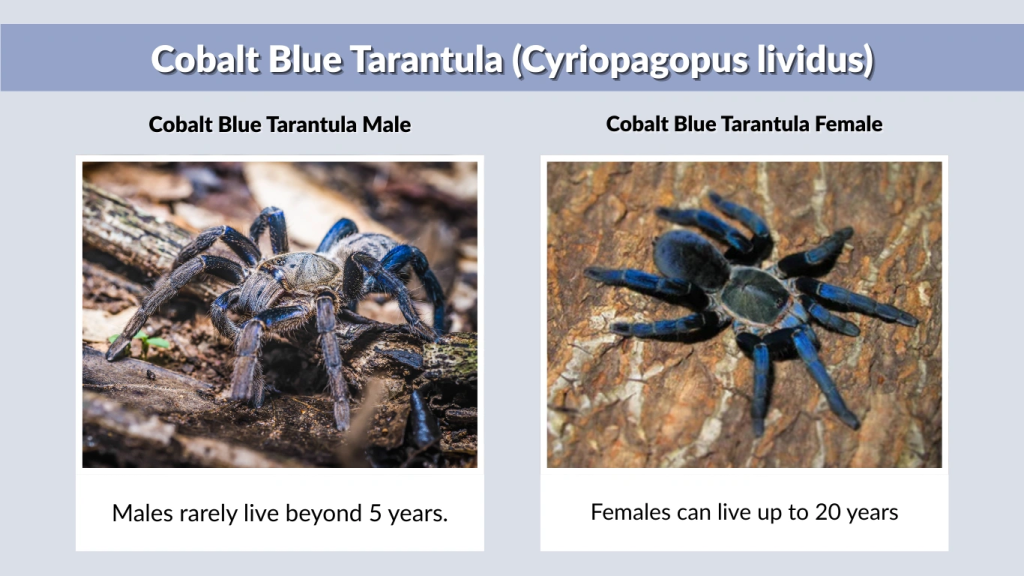
One of the most famous species, the Cobalt Blue Tarantula, originates from the tropical forests of Southeast Asia, particularly Myanmar and Thailand. It is known for its intense cobalt-blue legs contrasted by a grayish body.
Appearance and Behavior
- Females are stocky with a shimmering blue coloration, while males appear thinner and slightly lighter.
- This species is primarily fossorial, meaning it spends much of its life in deep burrows.
- It is known for its defensive nature and should not be handled.
Venom and Bite
The venom of the cobalt blue tarantula is not lethal to humans but is more painful than beginner-friendly species. A bite may cause swelling, localized pain, and muscle cramps in sensitive individuals.
Lifespan and Size
- Females can live up to 20 years, while males rarely live beyond 5 years.
- Their leg span can reach 5 inches (12–13 cm).
Care and Enclosure
- Requires deep substrate (4–6 inches) for burrowing.
- High humidity (70–80%) and warm temperatures (75–85°F).
- Diet consists of crickets, roaches, and mealworms.
Availability and Price
Due to their popularity, cobalt blue tarantulas are often found for sale online. Prices vary between $80–$150 depending on age and sex, with females being more expensive due to their longer lifespan.
Green Bottle Blue Tarantula (Chromatopelma cyaneopubescens)
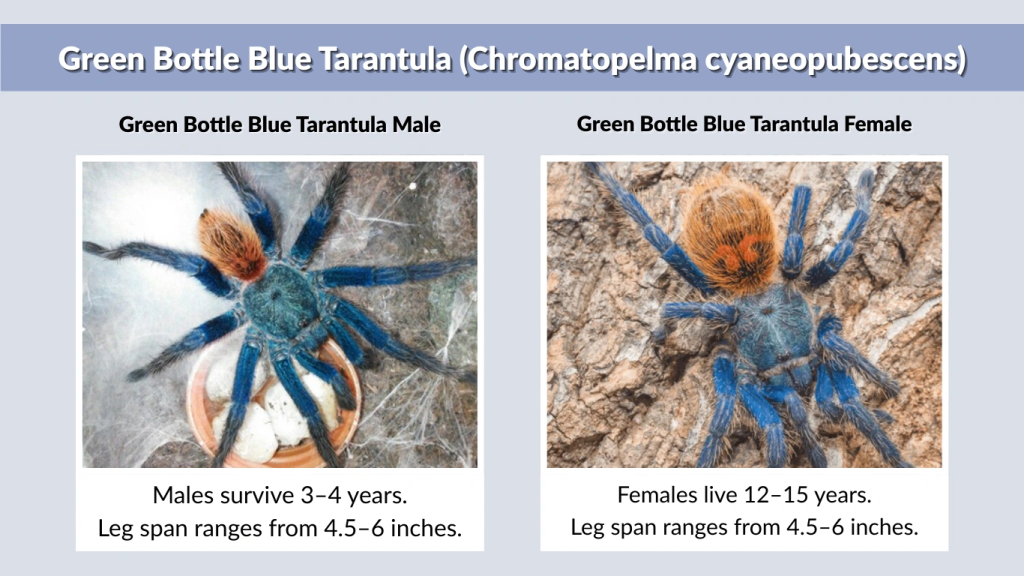
Often described as one of the most colorful tarantulas in the world, the Green Bottle Blue Tarantula hails from Venezuela, particularly the desert scrublands.
Appearance and Temperament
- Bright blue legs, green carapace, and a striking orange abdomen.
- Known for being hardy, active, and relatively easy to care for.
- Less defensive than cobalt blues, though still not recommended for handling.
Lifespan and Size
- Females live 12–15 years, while males survive 3–4 years.
- Leg span ranges from 4.5–6 inches.
Enclosure and Care
- Requires a dry setup with a water dish, unlike many tropical tarantulas.
- Moderate temperatures (75–80°F) and low to medium humidity (50–60%).
- Webs extensively, creating intricate silk tunnels.
Popularity as Pets
Because of their beauty and relative ease of care, Green Bottle Blues are popular among intermediate keepers. They are often sold for $60–$120, depending on size and gender.
Singapore Blue Tarantula (Lampropelma violaceopes)
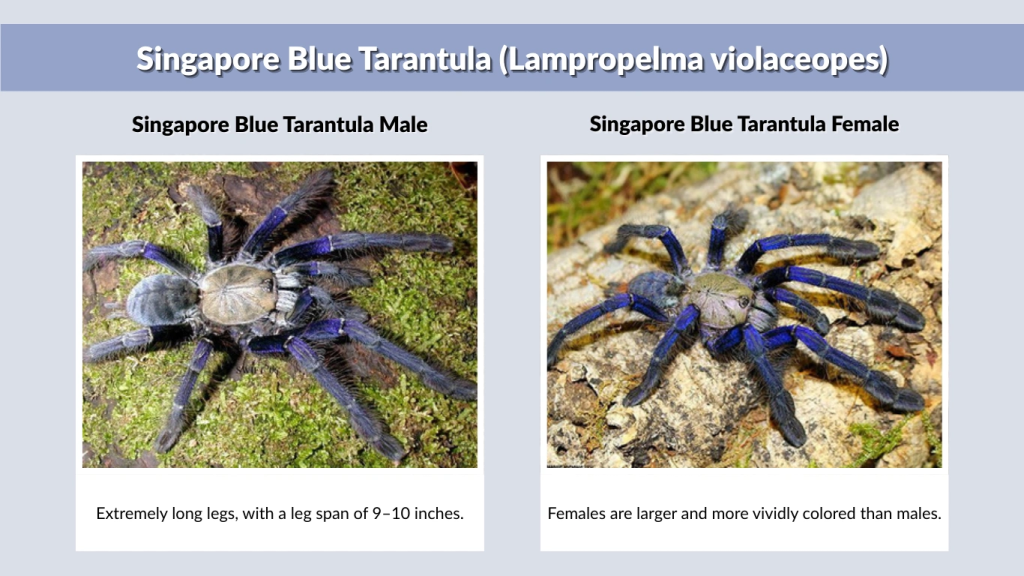
The Singapore Blue Tarantula is one of the largest and most stunning arboreal species. Native to Malaysia and Singapore, it has a striking metallic violet-blue sheen.
Appearance and Behavior
- Extremely long legs, with a leg span of 9–10 inches.
- Females are larger and more vividly colored than males.
- Arboreal in nature, requiring vertical space in enclosures.
Temperament and Venom
- Known for speed and defensive behavior.
- Its venom is stronger than beginner species but not life-threatening to humans.
- Best suited for experienced keepers only.
Care Requirements
- Tall enclosure with climbing surfaces.
- Warm and humid environment (75–85°F, 70–80% humidity).
- Prey includes large crickets, roaches, and locusts.
Availability and Cost
Because of their size and rarity, Singapore Blues are more expensive, often costing $150–$250.
Brazilian Blue Tarantulas

Several Brazilian species display blue hues, such as the Brazilian Blue (Pterinopelma sazimai) and Brazilian Blue Violet Tarantula. These are admired for their deep sapphire-blue coloration and relatively calmer nature compared to Asian blue tarantulas.
- Habitat: Dry forest regions of Brazil.
- Temperament: Semi-defensive, not recommended for frequent handling.
- Lifespan: Females can live 12–14 years.
- Cost: Typically $100–$180 in the pet trade.
Other Blue Tarantula Varieties

While less common, several other blue-hued tarantulas exist:
- Blue Baboon / Socotra Island Blue Baboon Tarantula – aggressive, burrowing species with vivid blue coloration.
- Blue Fang Skeleton Tarantula – named for its iridescent blue-green fangs.
- Metallic Blue Tarantula (Poecilotheria metallica, also called Gooty Sapphire) – arboreal species with metallic blue coloration, highly sought after but rare.
- Blue Knee, Blue Jewel, and Blue Bloom Tarantulas – lesser-known varieties sometimes found in the exotic pet trade.
Each has unique care needs, but all share one thing: a brilliant blue sheen that makes them stand out in any collection.
Blue Tarantulas as Pets

Blue tarantulas are breathtaking, but not all species are equally suited for beginners. While their beauty attracts enthusiasts, their temperament, care requirements, and venom strength must be considered before ownership.
Suitability for Beginners vs. Experts
- Beginner-Friendly: The Green Bottle Blue is often recommended for newer keepers because it is hardy, adapts well to captivity, and tolerates drier enclosures.
- Intermediate to Advanced: The Cobalt Blue and Singapore Blue are better suited for experienced hobbyists. Both are defensive, fast, and require specific conditions.
- Specialty Species: Tarantulas like the Blue Fang Skeleton or Socotra Blue Baboon are striking but highly aggressive, making them unsuitable for most keepers.
Enclosure and Habitat
- Terrestrial Species (Cobalt Blue, Brazilian Blue): Deep substrate for burrowing, humid environments, and secure lids.
- Arboreal Species (Singapore Blue, Gooty Sapphire): Tall enclosures with branches or cork bark for climbing.
- Web-Builders (Green Bottle Blue): Require anchor points for webbing and space to create elaborate silk structures.
Feeding and Diet
Blue tarantulas thrive on a diet of:
- Crickets, roaches, and mealworms for juveniles.
- Larger insects like locusts or grasshoppers for adults.
- Occasional pinky mice may be offered to large species, though this is not necessary for healthy growth.
Feeding frequency:
- Spiderlings: Every 3–4 days.
- Juveniles: Twice a week.
- Adults: Once a week or less, depending on size and appetite.
Lifespan and Growth
- Cobalt Blue: Females up to 20 years, males 4–5 years.
- Green Bottle Blue: Females 12–15 years, males 3–4 years.
- Singapore Blue: Females 12–14 years, males 5 years.
- Brazilian Blue species: Females 12–14 years, males around 4 years.
Molting is an essential part of growth, during which tarantulas shed their old exoskeleton to expand. Owners must ensure a stress-free, humid environment during this time.
Venom and Safety
Are Blue Tarantulas Poisonous or Venomous?
Like all tarantulas, blue tarantulas are venomous but not poisonous. This means they inject venom when biting but are not harmful to touch or consume (though eating them is not recommended).
Bite Effects on Humans
- Mild species (Green Bottle Blue): Bites may feel like bee stings, with swelling and itching.
- Stronger species (Cobalt Blue, Singapore Blue): Bites are more painful, sometimes causing muscle cramps and prolonged discomfort.
- Not Deadly: No blue tarantula is lethal to humans.
Handling Risks
Most blue tarantulas are best admired rather than handled. They are fast-moving and easily stressed, increasing the chance of defensive bites. Additionally, urticating hairs from some species can cause skin irritation and eye problems if airborne.
Buying a Blue Tarantula

Availability in the Pet Trade
Blue tarantulas are widely available due to their popularity, though some species are rarer than others. The Green Bottle Blue is commonly sold worldwide, while the Singapore Blue and Gooty Sapphire are harder to find.
Prices
- Cobalt Blue Tarantula: $80–$150.
- Green Bottle Blue Tarantula: $60–$120.
- Singapore Blue Tarantula: $150–$250.
- Brazilian Blue Tarantulas: $100–$180.
- Rare Species (Gooty Sapphire): $200–$400+.
Females often cost more because of their significantly longer lifespans.
What to Look for Before Buying
- Ensure the tarantula is captive-bred rather than wild-caught.
- Check for signs of health (active, no injuries, good appetite).
- Buy from reputable breeders or licensed exotic pet sellers.
Long-Term Costs
Beyond the initial purchase, owners must invest in:
- Proper enclosures ($50–$150).
- Substrate, decorations, and hides.
- Food supplies.
- Occasional vet visits (though rare, sometimes necessary).
Conservation and Ethical Considerations
Blue tarantulas are stunning, but their popularity has raised conservation concerns.
- Overcollection: Species like the Gooty Sapphire were nearly wiped out due to overharvesting for the pet trade.
- Habitat Loss: Deforestation in Southeast Asia and South America threatens wild populations.
- Captive Breeding: Many reputable breeders now provide captive-bred specimens, reducing pressure on wild populations.
When buying a blue tarantula, choosing captive-bred individuals ensures ethical ownership while helping preserve natural ecosystems.
FAQs
Are cobalt blue tarantulas poisonous?
No. Cobalt blue tarantulas are venomous, not poisonous. Their venom can cause pain and swelling but is not deadly to humans.
How long do green bottle blue tarantulas live?
Females can live 12–15 years, while males typically survive 3–4 years. Proper care and diet help extend their lifespan.
Which blue tarantula is best for beginners?
The Green Bottle Blue is considered the best choice for new keepers due to its hardiness, beauty, and manageable temperament.
How much does a cobalt blue tarantula cost?
Cobalt Blue Tarantulas usually cost between $80–$150, with females priced higher than males.
Can a cobalt blue tarantula kill you?
No. While a bite can be very painful, cobalt blue tarantula venom is not fatal to humans. The main risks are allergic reactions or secondary infections.
