

The Brazilian Black Tarantula (Grammostola pulchra) is one of the most admired species in the tarantula hobby. Known for its velvety jet-black coloration, calm personality, and impressive lifespan, it has earned the nickname “Black Beauty.” Easy to care for and gentle in nature, it is considered one of the best tarantulas for beginners. Whether you are new to keeping spiders or an experienced collector, the Brazilian Black stands out as a hardy, low-maintenance, and rewarding pet.
1. Overview of the Brazilian Black Tarantula
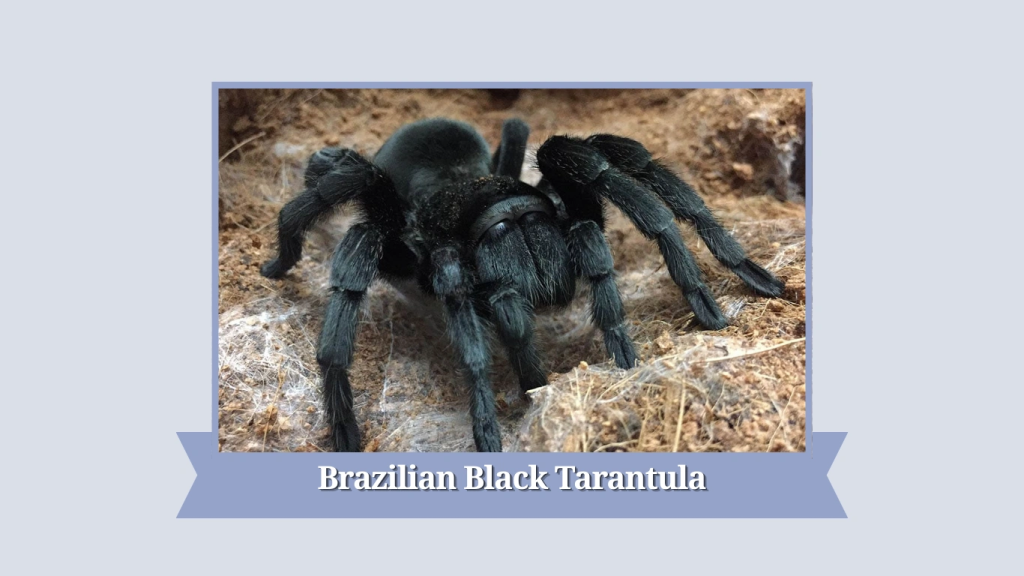
The Brazilian Black Tarantula originates from the grasslands of Brazil and Uruguay. It is a terrestrial species that prefers burrowing in loose soil and spending much of its time hidden inside a shelter. Unlike some fast or aggressive tarantulas, this species is slow-moving and rarely defensive. Because of its mild venom and docile nature, it is often recommended as a safe and manageable entry point into the world of tarantula keeping.
What makes it truly special is its appearance. Unlike many species that change color over time, the Brazilian Black retains its deep black coloration throughout its life, making it a striking display animal. Its rarity in the pet trade also adds to its desirability, as breeding projects take time due to its slow growth.
2. Appearance and Size

Brazilian Black Tarantulas are instantly recognizable thanks to their smooth, velvety black bodies. Their coloration gives them an elegant, almost regal look that captivates enthusiasts. Juveniles may appear slightly brown or grayish but darken with each molt, eventually reaching the deep black sheen characteristic of adults.
- Size: Adults typically grow to 6–7 inches in leg span.
- Females: Bulkier and more robust, with a longer lifespan.
- Males: Slender build, shorter life expectancy, often more active.
- Juveniles and slings: Much smaller, usually sold at 1–2 inches, requiring time and patience to reach maturity.
Full-grown females are especially prized in the hobby for their size, beauty, and longevity.
3. Lifespan and Growth Rate
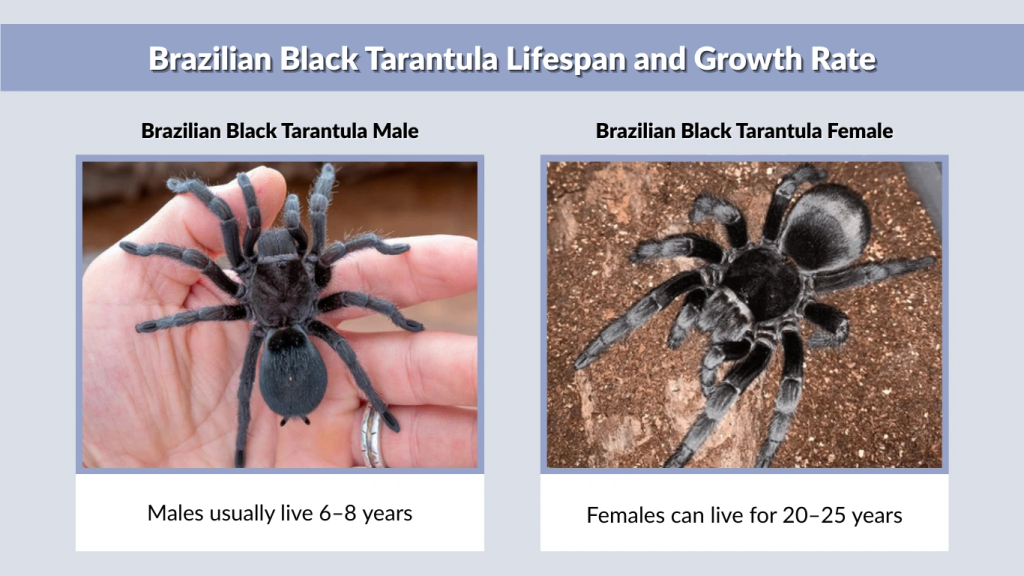
One of the most remarkable aspects of this species is its longevity.
- Females can live for 20–25 years, making them one of the longest-living tarantulas.
- Males usually live 6–8 years, which is still long compared to other spiders but significantly shorter than females.
Their growth rate is slow, meaning it may take several years for a sling to reach full size. Young tarantulas molt frequently, sometimes several times per year, while adults molt less often. Proper feeding, hydration, and stable conditions help ensure steady growth and a healthy life.
This slow pace is part of their charm, as keepers often enjoy watching their tarantula gradually mature into a full-grown “Black Beauty.”
4. Natural Habitat and Enclosure Setup
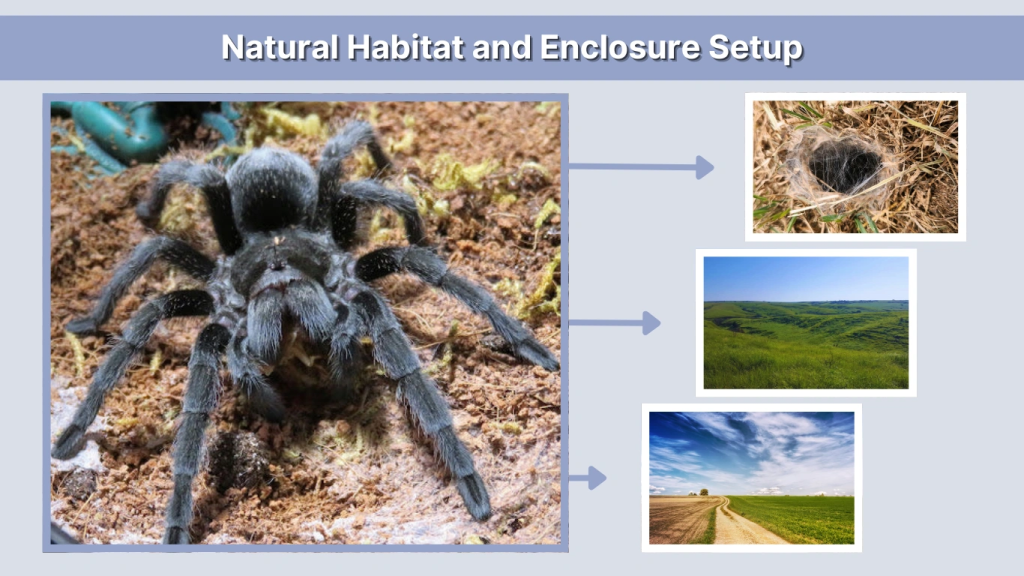
In the wild, Brazilian Black Tarantulas are found in grasslands and open fields, where they dig shallow burrows for protection. Replicating this environment in captivity is straightforward, making them one of the easiest species to house.
Enclosure Size
- Slings can be kept in small containers until they outgrow them.
- Juveniles thrive in 1–2 gallon enclosures.
- Adults do well in 5–10 gallon terrariums, with more floor space than height since they are terrestrial.
Substrate and Hides
A few inches of coconut fiber, peat moss, or topsoil provides burrowing opportunities. Adding a piece of cork bark or a half log offers a secure hiding spot.
Temperature and Humidity
- Temperature: 70–80°F is ideal.
- Humidity: 65–75%, maintained by lightly misting the enclosure and keeping a water dish inside.
- Good ventilation prevents mold and keeps the enclosure healthy.
Behavior in Captivity
Brazilian Blacks are not arboreal and rarely climb. Instead, they prefer walking on the ground and sometimes burrowing. They are also less skittish compared to other tarantulas, spending more time in view, which adds to their appeal as display pets.
5. Diet and Feeding
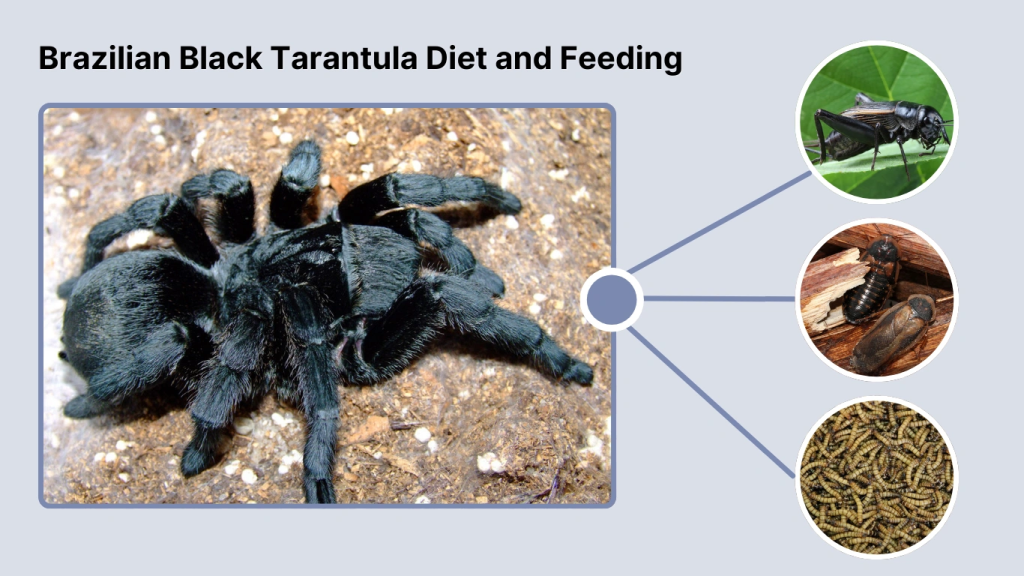
Like all tarantulas, the Brazilian Black is a carnivorous predator that feeds on live prey. In captivity, they accept a wide range of feeder insects.
Recommended Foods
- Crickets
- Dubia roaches
- Mealworms, superworms, and occasional hornworms
Feeding Schedule
- Slings and juveniles: Small insects every 4–5 days.
- Adults: One or two large feeders once per week.
Overfeeding should be avoided, as tarantulas can become obese. Always remove uneaten prey within 24 hours to prevent stress or injury to the spider.
Feeding time is often a highlight for owners, as these tarantulas are methodical hunters. Their slow, deliberate movements contrast with the sudden strike they use to subdue prey.
6. Temperament and Handling
The Brazilian Black Tarantula is famous for its calm personality. Unlike faster, more defensive species, this tarantula is docile and slow-moving, making it suitable for keepers of all experience levels. It rarely shows aggression and instead prefers to retreat into its hide when disturbed.
While handling is possible due to their gentle nature, it should be done sparingly. Tarantulas can be injured easily if dropped, so handling should always be cautious. Most keepers recommend observing rather than handling, as this reduces stress for the spider and lowers the risk of accidents.
7. Venom, Bite, and Safety
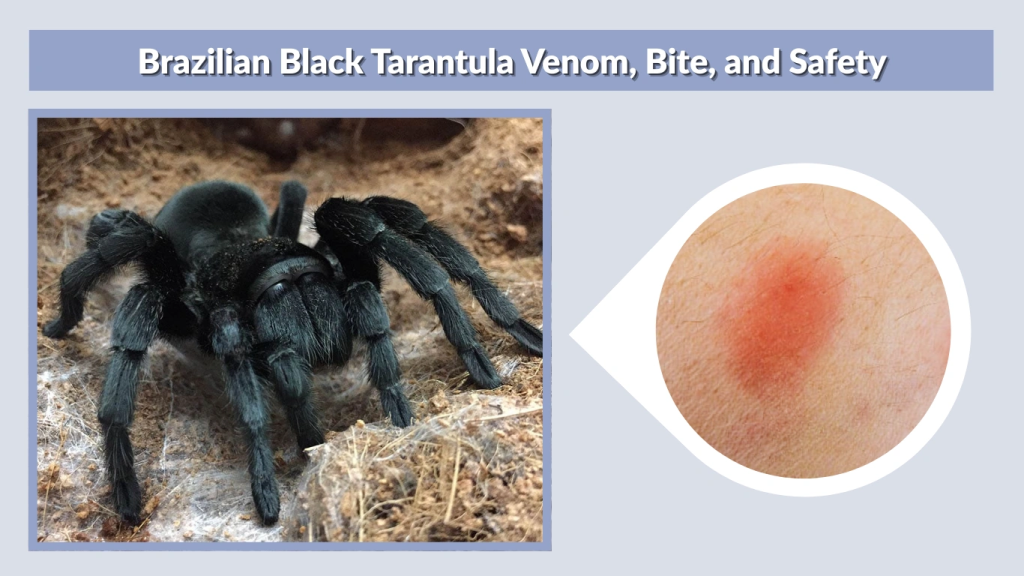
Like all tarantulas, the Brazilian Black has venom, but it is considered mild to humans. A bite is often compared to a bee sting—uncomfortable but not dangerous unless the individual has specific allergies.
More importantly, these spiders rarely bite. Their first response to threats is retreat, not aggression. They also lack the irritating urticating hairs that many tarantulas flick as a defense, which makes them even easier to care for.
With proper respect and handling, they pose minimal safety risks, making them one of the most beginner-friendly tarantulas available.
8. Buying and Price Range

The Brazilian Black Tarantula is a prized species in the hobby, and its rarity makes it more expensive than many other tarantulas. Prices vary depending on age and sex:
- Slings: $60–$100
- Juveniles: $120–$200
- Adult females: $250–$400 (females cost more due to their long lifespan)
In the UK and US, they are available from reputable breeders and exotic pet stores. Online vendors also sell slings and juveniles, sometimes shipping with live arrival guarantees. Always ensure the seller is reliable and follows legal import/export regulations, as this species is sometimes subject to restrictions.
Buying a female is often considered the best long-term investment because she may live for over two decades.
9. Related Species and Variations
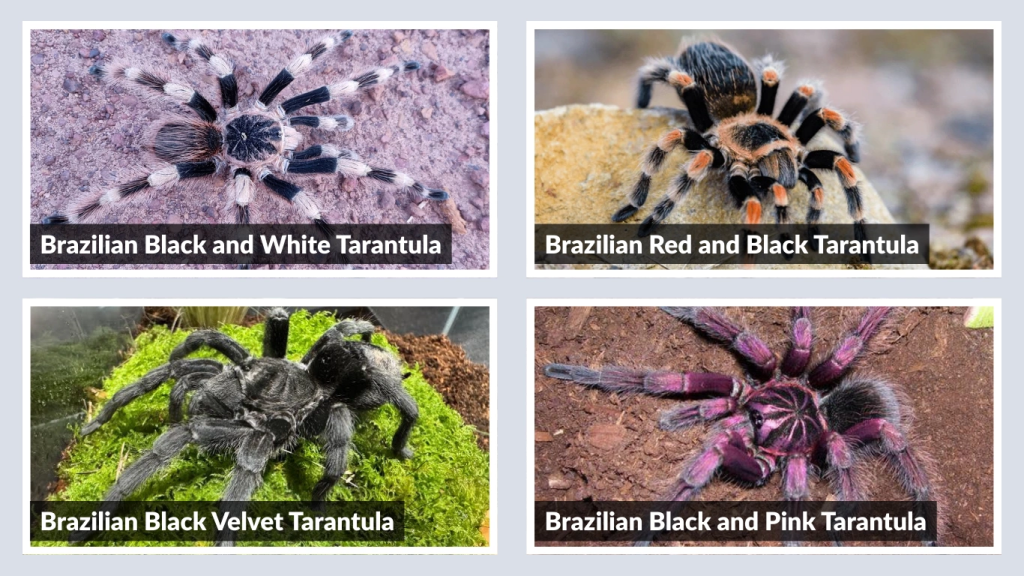
Brazil hosts many tarantulas admired for their striking colors. While the Brazilian Black is known for its pure black elegance, other related species include:
- Brazilian Black and White Tarantula (Nhandu coloratovillosus) – Bold white stripes on black legs.
- Brazilian Red and Black Tarantula (Nhandu chromatus) – Fiery red hairs and striking contrast.
- Brazilian Black Velvet Tarantula – A closely related species with softer coloration.
- Brazilian Black and Pink Tarantula – Less common but equally captivating variation.
These species often share similar care needs but may differ in temperament. Enthusiasts often keep several of these alongside the Brazilian Black to diversify their collections.
10. Interesting Facts
- They are nicknamed “Black Beauty” among keepers.
- Considered one of the calmest tarantulas in the hobby.
- Sexual dimorphism: females are larger, bulkier, and live significantly longer.
- Unlike many species, they retain their deep black sheen throughout their life.
- Their slow growth rate makes them rarer and more valuable in the pet trade.
11. Brazilian Black Tarantula as a Pet
The Brazilian Black is regarded as one of the best tarantulas to keep as a pet. Its gentle nature, striking appearance, and hardy care requirements make it beginner-friendly while still appealing to seasoned collectors.
Pros
- Docile and calm temperament
- Low-maintenance enclosure needs
- Striking appearance
- Very long lifespan in females
Cons
- Higher price compared to other tarantulas
- Slow growth rate requires patience
- Rare availability depending on region
Overall, they are excellent pets for anyone willing to commit to their long lifespan and provide a stable environment.
12. Care Sheet / Quick Guide
- Enclosure Size: 5–10 gallons (more floor space than height).
- Substrate: 3–4 inches of coco fiber or soil for burrowing.
- Temperature: 70–80°F.
- Humidity: 65–75%.
- Diet: Crickets, roaches, mealworms once a week.
- Temperament: Docile, slow-moving, great for beginners.
- Lifespan: Females 20+ years, males 6–8 years.
13. FAQs
How long do Brazilian Black Tarantulas live?
Females can live for 20–25 years in captivity, making them one of the longest-living tarantula species. Males live 6–8 years on average. This exceptional lifespan is one reason adult females are so highly prized in the pet trade, as they remain healthy and active for decades with proper care.
Are Brazilian Black Tarantulas good pets for beginners?
Yes, they are among the best beginner tarantulas thanks to their calm demeanor, slow movements, and mild venom. They rarely display aggression and are easy to care for, requiring only a simple enclosure, steady temperature, and regular feeding. Their gentle temperament makes them safe even for first-time keepers.
What do Brazilian Black Tarantulas eat in captivity?
They thrive on a diet of crickets, roaches, and mealworms. Adults are typically fed once per week, while juveniles and slings require more frequent meals with smaller prey. Providing a varied diet ensures good nutrition, and removing uneaten food prevents stress or health issues in the enclosure.
Are Brazilian Black Tarantulas venomous or dangerous?
They do have venom, but it is mild to humans and comparable to a bee sting. Bites are rare since they prefer hiding rather than confronting threats. They also lack irritating urticating hairs, making them less defensive than many other species. With proper care, they are safe and easy to manage.
How much does a Brazilian Black Tarantula cost?
Prices vary depending on age and sex. Slings are the cheapest, costing $60–$100. Juveniles range from $120–$200, while adult females can cost $250–$400. Their higher price reflects their rarity, slow growth, and long lifespan. Purchasing from reputable breeders ensures you get a healthy, well-cared-for specimen.
14. Conclusion
The Brazilian Black Tarantula is a true gem of the tarantula-keeping hobby. With its velvety black beauty, calm temperament, and exceptional lifespan, it combines elegance with manageability. Ideal for beginners and seasoned keepers alike, it represents a long-term commitment and a striking display pet. For anyone looking to own one of the most iconic tarantulas, the Brazilian Black remains a top choice and a rewarding addition to any collection.