

The Brazilian Jewel Tarantula (Typhochlaena seladonia) is often called the most beautiful tarantula in the world. With its iridescent, rainbow-like colors, this spider looks more like a gemstone than an arachnid. Native to Brazil’s Atlantic rainforest, it is a rare and highly sought-after species in the exotic pet trade. Despite its small size, it has captivated hobbyists worldwide due to its unique trapdoor-building behavior and jewel-like appearance.
Overview of the Brazilian Jewel Tarantula

The Brazilian Jewel Tarantula belongs to the genus Typhochlaena and is one of the smallest species of tarantula. Unlike large, intimidating species such as the Goliath Birdeater, the jewel tarantula reaches only around 2.5–3 inches in leg span when fully grown.
Natural Habitat
This species is native to the Atlantic forest of Brazil, one of the most biodiverse yet threatened ecosystems in the world. It lives in tree bark crevices, where it creates a silk-lined retreat hidden under a trapdoor. This behavior is unusual among tarantulas and makes the Brazilian Jewel a fascinating species to observe.
Male vs. Female Differences
- Females: Larger, more vividly colored, and longer-lived (10–15 years).
- Males: Smaller, less colorful, and short-lived (often only 3–5 years).
Because of this, females are far more prized and command higher prices in the pet trade.
Appearance and Unique Features

The Brazilian Jewel Tarantula is famous for its striking coloration. Its carapace shines in shades of green and pink, while the abdomen displays bold orange and red tones. The legs appear metallic blue and violet, giving the spider a gemstone-like appearance under light.
Distinctive Traits
- Iridescent Colors: Caused by structural reflection of light, not pigments.
- Size: Adults reach only about 6–7 cm in body length with a total leg span of 2.5–3 inches.
- Eyes: Like most tarantulas, it has eight eyes, but they are arranged in a compact cluster.
- Trapdoor Lifestyle: Unlike many tarantulas that sit in open burrows or webs, the Brazilian Jewel constructs silk trapdoors in tree bark, where it ambushes prey.
This combination of tiny size, rare coloration, and unique behavior makes it one of the most fascinating species in the arachnid world.
Brazilian Jewel Tarantula Care
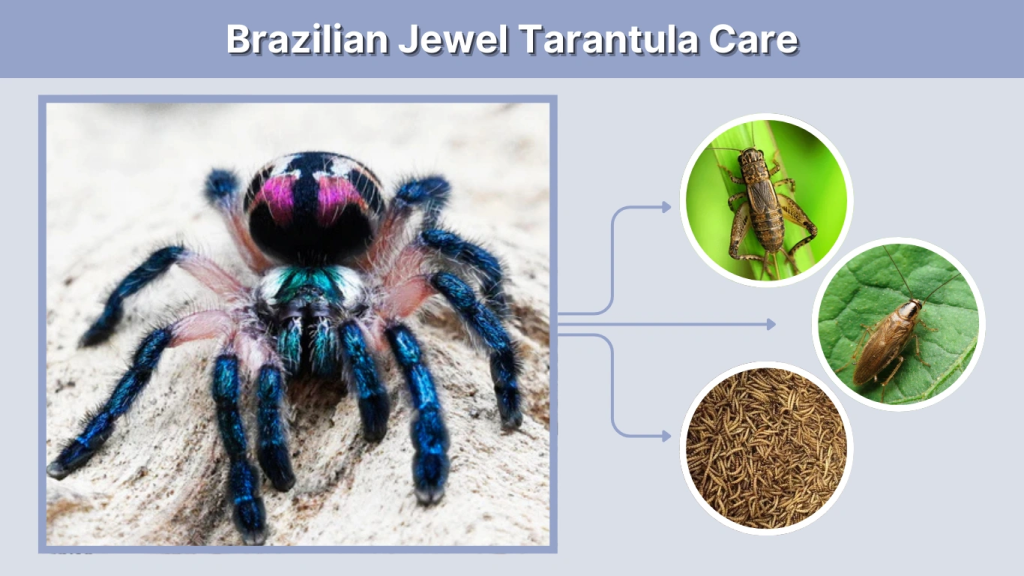
Owning a Brazilian Jewel Tarantula requires specific knowledge, as this species is delicate compared to hardier tarantulas like the Chilean Rose Hair or Green Bottle Blue.
Enclosure Setup
- Arboreal Habitat: The Brazilian Jewel is tree-dwelling, so it requires a vertical enclosure with bark, cork tubes, or hollow wood for climbing and trapdoor building.
- Substrate: Fine substrate like coconut fiber or peat moss to maintain humidity.
- Trapdoor Needs: Provide natural bark slabs where the tarantula can spin silk doors.
- Temperature & Humidity: Warm conditions between 75–82°F (24–28°C) with humidity around 70–80% are ideal.
- Ventilation: Crucial to prevent mold, which can harm delicate tarantulas.
Diet
Like other tarantulas, the Brazilian Jewel feeds on live insects:
- Crickets
- Roaches
- Mealworms or small locusts
Due to its small size, prey should not be too large. Spiderlings (babies) are best started on pinhead crickets or flightless fruit flies.
Lifespan
- Females: Can live 10–15 years in captivity with proper care.
- Males: Typically survive 3–5 years.
Because females live longer and display more vibrant colors, they are the preferred choice among collectors.
Temperament
The Brazilian Jewel is considered a shy and secretive tarantula. It rarely shows aggression but spends much of its time hidden behind its trapdoor. While not dangerous, it is not recommended for handling because of its delicate body and risk of injury.
Venom and Safety

Like all tarantulas, the Brazilian Jewel has venom, but it is not medically significant to humans.
Bite Effects
- Pain is mild to moderate, similar to a bee sting.
- Swelling, redness, or itching may occur.
- Allergic reactions are possible but very rare.
Are They Poisonous?
No, Brazilian Jewel Tarantulas are not poisonous to touch or eat. They are venomous, meaning they inject venom through bites, but their venom is not considered dangerous to humans or large pets.
Urticating Hairs
Unlike some New World tarantulas, the Brazilian Jewel does not rely heavily on defensive hairs. Instead, it depends on its trapdoor and camouflage for protection.
Brazilian Jewel Tarantula as a Pet
The Brazilian Jewel Tarantula is a highly desirable exotic pet, but it is not ideal for everyone. Its beauty and unique trapdoor behavior make it an excellent display species, yet its care requirements are advanced compared to hardier tarantulas.
Pros
- Stunning Appearance: Iridescent colors unmatched in the tarantula world.
- Unique Behavior: Rare arboreal trapdoor-building habits.
- Compact Size: Smaller enclosures required compared to large terrestrial tarantulas.
Cons
- High Cost: One of the most expensive tarantulas in the world.
- Delicate Care Needs: Sensitive to improper humidity or poor ventilation.
- Shy Temperament: Spends most of its time hidden, so not always visible.
- Not Handleable: Too delicate to be safely handled.
For these reasons, the Brazilian Jewel is recommended for intermediate or advanced keepers rather than beginners.
Buying a Brazilian Jewel Tarantula

Availability in the Pet Trade
This species is relatively rare and can be difficult to find. Because it is native to Brazil, wild exports are often illegal, making captive-bred specimens the only ethical choice.
Price and Cost
The Brazilian Jewel Tarantula is among the most expensive tarantulas due to its rarity and beauty:
- Spiderlings (babies): $200–$350.
- Juveniles: $400–$600.
- Adult Females: $700–$1,000 or more.
Prices vary by region:
- USA: Commonly sold by specialized breeders and online dealers.
- UK: Legal to buy from licensed exotic pet sellers.
- Philippines: Costs may be higher due to import restrictions.
For Sale Listings
Captive-bred spiderlings are most often available, as they adapt better to new enclosures. Adult females are rarely sold and are significantly more expensive.
Male vs. Female Pricing
- Females: More expensive due to their 10–15 year lifespan and vibrant colors.
- Males: Cheaper but live only 3–5 years, making them less desirable.
Conservation and Ethical Concerns
The Brazilian Jewel Tarantula’s popularity has raised concerns about its conservation.
- Habitat Destruction: The Atlantic rainforest of Brazil is shrinking rapidly, threatening wild populations.
- Illegal Trade: Wild-caught specimens are often smuggled, which is harmful to ecosystems and unsustainable.
- Captive Breeding: Thankfully, many breeders now provide captive-bred specimens, reducing the need for wild collection.
When buying one, always ensure it comes from a reputable, captive-breeding source. This not only protects wild populations but also gives you a healthier pet.
Fascinating Facts About the Brazilian Jewel Tarantula
- World’s Most Beautiful Tarantula: Its jewel-like coloration gives it global fame.
- Trapdoor Specialist: One of the few tarantulas known for building silk trapdoors in trees.
- Tiny but Rare: At only 2.5–3 inches, it’s much smaller than most tarantulas.
- Highly Sought-After: Collectors worldwide prize it, making it one of the costliest tarantulas in the pet trade.
- Webbing Behavior: Yes, they produce intricate silk structures, using them to create concealed retreats.
Conclusion
The Brazilian Jewel Tarantula (Typhochlaena seladonia) is truly a living gem of the spider world. With its breathtaking colors and fascinating trapdoor lifestyle, it has earned a reputation as one of the most stunning arachnids on Earth. However, it is not a beginner-friendly pet. Its rarity, high cost, and delicate care needs make it suitable only for dedicated enthusiasts. By supporting captive-bred sellers and avoiding illegal wild-caught specimens, hobbyists can enjoy this jewel responsibly while helping preserve its future in the wild.
FAQs
How much does a Brazilian Jewel Tarantula cost?
Prices range from $200–$350 for spiderlings to $700–$1,000 for adult females. Costs vary depending on region, sex, and age.
Is the Brazilian Jewel Tarantula poisonous to humans?
No. It is venomous, not poisonous. Its venom is mild and comparable to a bee sting, with no serious medical risks for humans.
How big do Brazilian Jewel Tarantulas get?
They remain small compared to other tarantulas, with a full-grown leg span of about 2.5–3 inches.
What is the lifespan of a Brazilian Jewel Tarantula?
Females can live up to 10–15 years, while males usually survive only 3–5 years.
Can Brazilian Jewel Tarantulas make webs or trapdoors?
Yes. They are unique among tarantulas for building silk-lined trapdoors in bark or substrate, where they hide and ambush prey.