

A brown garden spider is a fascinating yet often misunderstood species that plays an essential role in keeping your outdoor spaces pest-free. These spiders, found across regions like California, Texas, and the UK, are known for their beautiful web patterns and calm behavior. Despite their intimidating appearance, they are harmless garden allies that help control insect populations naturally.
Appearance and Identification
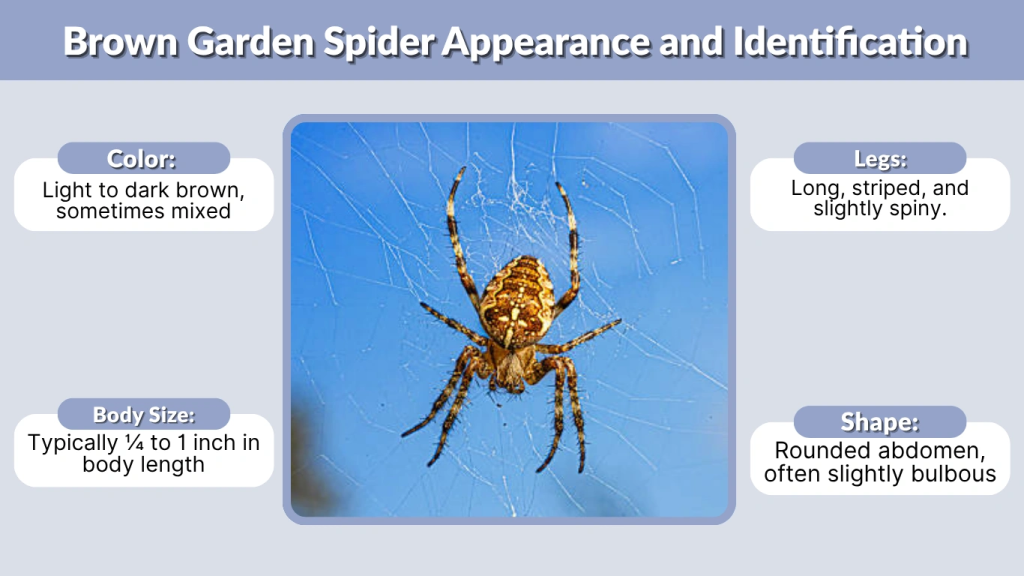
Brown garden spiders come in various shades, ranging from light tan to deep chocolate brown. They often feature unique markings, including stripes, white spots, or intricate patterns on their abdomen and legs. These patterns make them easily distinguishable from more dangerous species such as the brown recluse.
Common physical features include:
- Color: Light to dark brown, sometimes mixed with yellow or black.
- Legs: Long, striped, and slightly spiny.
- Body Size: Typically ¼ to 1 inch in body length, with a leg span of up to 2–3 inches.
- Shape: Rounded abdomen, often slightly bulbous, especially in females.
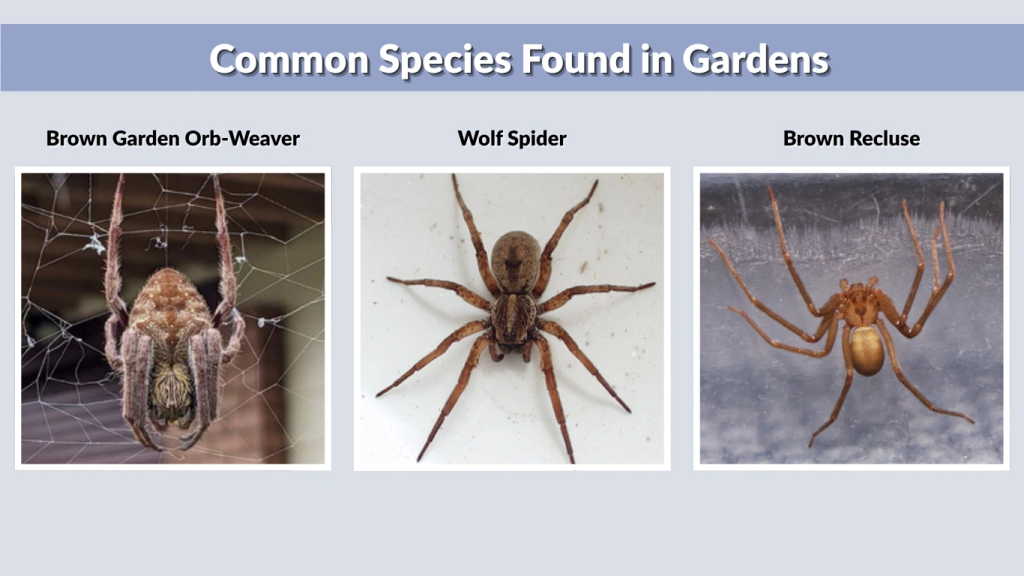
Some of the most frequently spotted types include the brown garden orb-weaver, wolf spider, and the common brown garden spider. The orb-weaver, in particular, is admired for its symmetrical circular webs, which can span several feet across.
Common Species Found in Gardens
Brown Garden Orb-Weaver
This is the most iconic and easily recognized garden spider. It builds perfect orb-shaped webs in bushes, trees, and near lights where insects gather. The orb-weaver is nocturnal, meaning it repairs or rebuilds its web at night and rests during the day, often hiding in nearby leaves.
Wolf Spider
The wolf spider, though brown and garden-dwelling, differs significantly because it doesn’t spin webs. Instead, it hunts prey directly on the ground. Its large eyes and quick movements make it an excellent predator but an easily startled guest in gardens.
Brown Recluse (Comparison)
The brown recluse often gets mistaken for a brown garden spider. However, the recluse has a distinct violin-shaped mark on its back and prefers dark, indoor environments. While its bite can be harmful, brown garden spiders are harmless and beneficial to your garden’s health.
Distribution and Habitat

Brown garden spiders are found worldwide, especially in temperate climates where vegetation thrives. They commonly inhabit gardens, porches, fences, and sheds, choosing areas that attract flying insects. In the United States, they are prevalent in California, Texas, Ohio, Michigan, and Florida, while in the UK and Australia, lighter brown species are frequently seen during summer and autumn.
These spiders prefer outdoor environments but occasionally venture indoors during colder months seeking warmth. They build webs in quiet corners, tall grasses, and between tree branches where prey activity is high.
Web Structure and Behavior
One of the most remarkable features of the brown garden spider is its web-building technique. The web is usually circular (orb-shaped) and can measure several feet in diameter. Using fine silk, the spider constructs a complex network with a sticky spiral pattern that effectively traps flying insects like flies and moths.
At night, the spider sits in the web’s center, waiting for prey vibrations. When an insect gets trapped, the spider swiftly immobilizes it with silk before consuming it. During the day, it often hides nearby, connected to the web by a signal thread that alerts it when prey arrives.
These spiders are solitary and territorial. Each maintains its own web space, and if damaged, the web is rebuilt nightly. This diligent behavior ensures consistent pest control in gardens and backyards.
Diet and Role in the Ecosystem

Brown garden spiders play a vital ecological role as natural pest controllers. They feed on common insects such as:
- Flies
- Mosquitoes
- Moths
- Beetles
- Gnats
By preying on these pests, they help reduce the need for chemical insecticides, promoting a healthier garden ecosystem. Despite their intimidating appearance, brown garden spiders are not aggressive toward humans and rarely bite unless provoked. Their venom is mild and primarily used to subdue prey, not for defense.
Because of their feeding habits, gardeners often view them as beneficial residents. Their presence indicates a balanced, insect-rich habitat — a sign of a healthy, thriving garden environment.
Brown Garden Spider vs. Brown Recluse
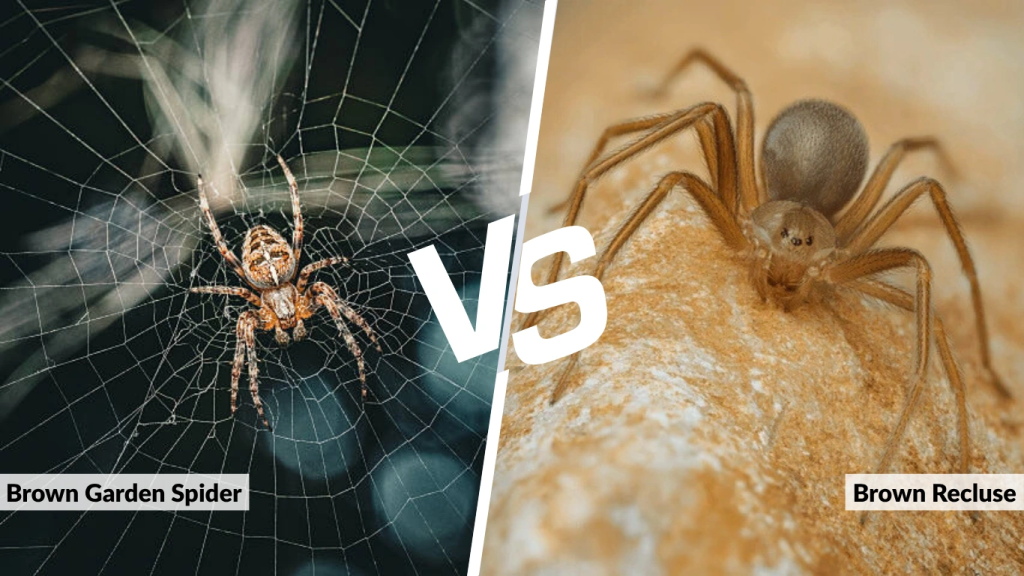
Many people confuse brown garden spiders with brown recluses, but there are key distinctions.
| Feature | Brown Garden Spider | Brown Recluse |
| Habitat | Outdoor gardens, plants, porches | Indoors, dark undisturbed spaces |
| Web Type | Orb-shaped web | Does not spin webs |
| Markings | Stripes, spots, or symmetrical patterns | Violin-shaped mark on back |
| Behavior | Passive, non-aggressive | Hides, potentially aggressive if disturbed |
| Venom | Harmless to humans | Potentially dangerous |
This comparison highlights why correct identification is important. While the brown recluse requires caution and professional control, the brown garden spider should be protected and appreciated as a natural insect predator.
Reproduction and Egg Sacs
Brown garden spiders reproduce during the warmer months, typically late summer through early autumn. After mating, the female produces silken egg sacs, which she attaches to leaves, twigs, or hidden areas within her web. These sacs are white to pale brown in color and can hold hundreds of eggs.
In some cases, females guard the egg sacs until the spiderlings hatch, while others may carry them on their abdomen for protection. Once hatched, the young spiders, known as spiderlings, disperse using a method called ballooning—releasing silk threads that catch the wind and carry them to new habitats. This ensures population spread and genetic diversity.
Bite and Toxicity
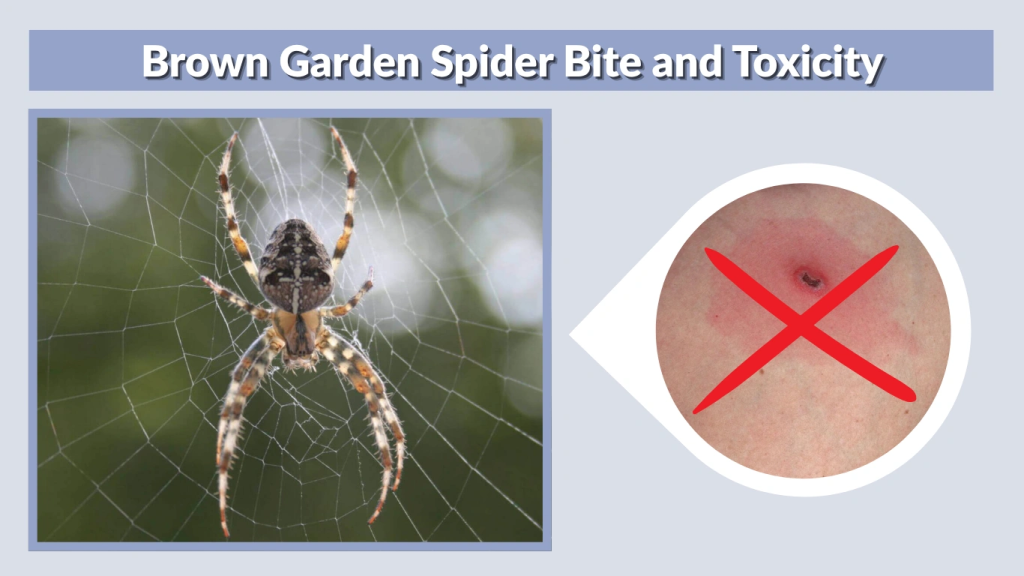
The brown garden spider is not poisonous to humans. Its bite is rare and typically occurs only if it feels threatened or trapped against the skin. Symptoms of a bite, when they do occur, are mild and include slight redness, swelling, or itching—similar to a mosquito bite.
Unlike the brown recluse, whose venom can cause tissue damage, the brown garden spider’s venom is weak and used solely to paralyze its insect prey. Basic first aid, such as cleaning the area with soap and water and applying antiseptic, is sufficient. If symptoms persist, consulting a doctor is recommended, though serious reactions are exceedingly uncommon.
Regional Variants and Adaptations
Brown garden spiders adapt well to different environments and climates, resulting in several regional variations.
- California & Texas: These regions host large brown orb-weavers with striking white or yellow markings. They thrive in warm weather and are commonly seen from late summer to early winter.
- UK & Australia: These spiders are often lighter brown with cream or white abdominal patterns. They prefer hedges, garden fences, and outdoor furniture.
- Midwestern US (Ohio, Michigan, Indiana): Typically medium-sized, these brown spiders have striped legs and darker abdomens, perfect for camouflage among autumn leaves.
- Florida & Hawaii: Warmer climates produce slightly larger spiders with more vibrant brown and orange hues.
Such adaptations help them survive diverse habitats—from humid coastal regions to cooler inland gardens—demonstrating their incredible resilience.
Lifespan and Natural Predators
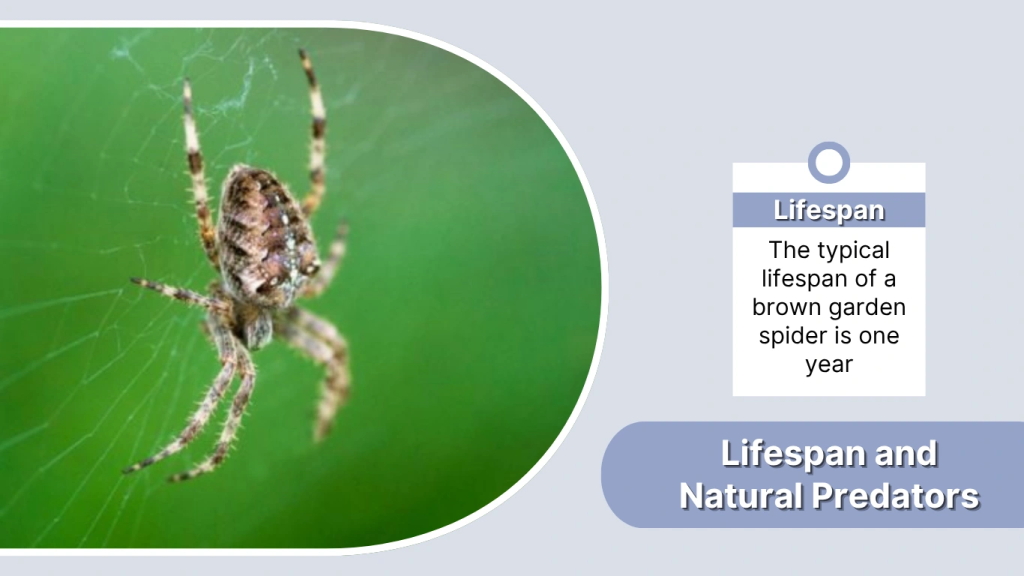
The typical lifespan of a brown garden spider is one year, although some females can live slightly longer in sheltered conditions. They grow through several molting stages, shedding their old exoskeleton as they mature.
Their main predators include birds, wasps, frogs, and lizards. Orb-weavers rely on camouflage and nocturnal behavior for protection, blending seamlessly with plants or their web surroundings. When disturbed, they often drop from their web or play dead to avoid predation.
Brown Garden Spider Web and Behavior
These spiders are meticulous engineers. Each night, they rebuild or repair their webs to maintain strength and symmetry. The silk they produce is incredibly strong—proportionally tougher than steel—and used both for hunting and shelter.
At dusk, the spider takes position at the web’s center, detecting prey through vibrations. The web’s design not only traps insects but also minimizes damage from wind or rain. This nightly cycle of web construction reflects their efficiency and adaptation to changing environmental conditions.
Brown Garden Spider in Human Environments
Despite their outdoor preference, brown garden spiders occasionally wander into homes, garages, or sheds. This usually happens during seasonal temperature changes. Inside, they’re harmless and often short-term guests. Relocating them outdoors safely is the best approach instead of extermination.
In gardens, their presence indicates low pesticide use and high insect activity—a sign of ecological balance. Encouraging these spiders supports a healthier garden environment.
FAQs
What does a brown garden spider look like?
A brown garden spider typically has a rounded abdomen with white, yellow, or black markings. Its legs are long and striped, giving it a distinctive look. Females are usually larger than males and may appear bulkier when carrying eggs.
Are brown garden spiders dangerous to humans?
No, brown garden spiders are harmless. Their venom is mild and not medically significant. They rarely bite, and when they do, the reaction is similar to a small insect sting with mild irritation or redness.
How can I tell a brown garden spider from a brown recluse?
The brown recluse has a violin-shaped mark on its back and no web, while the brown garden spider builds large circular orb webs. Recluses prefer dark indoor spaces, whereas garden spiders live outdoors.
Where are brown garden spiders commonly found?
They are widespread in the United States, especially in California, Texas, Ohio, and Michigan. They are also found in the UK, Australia, and New Zealand. Their preferred habitats include bushes, porch corners, and fences.
What should I do if I find a brown garden spider in my house?
There’s no need to panic. Simply use a container to gently capture and release it outdoors. They do not infest homes and will naturally return to garden areas where insects are abundant.