

Brown house spiders are some of the most commonly seen spiders inside homes. Their colors range from light to dark brown, and while most are harmless, some are often confused with venomous species like the brown recluse.
In this guide, I’ll help you identify different types of brown house spiders, from tiny ones hiding in corners to large, hairy ones crawling across walls. You’ll also learn how to spot regional differences, understand bite symptoms, and tell the harmless spiders apart from the dangerous ones.
Common Brown House Spider
Traits and Appearance
The common brown house spider is small to medium-sized with a round or oval body. Its color ranges from tan to dark brown, and it may have faint markings. The legs are thin and usually match the body color.
Are They Dangerous?
No, most common brown house spiders are harmless. They rarely bite and their venom is too weak to harm humans. People often confuse them with more dangerous spiders like the brown recluse.
Web-Building Behavior
They build messy, tangled webs in corners, basements, and closets. These webs are not sticky like orb webs but help trap small insects.
Brown House Spider vs Brown Recluse
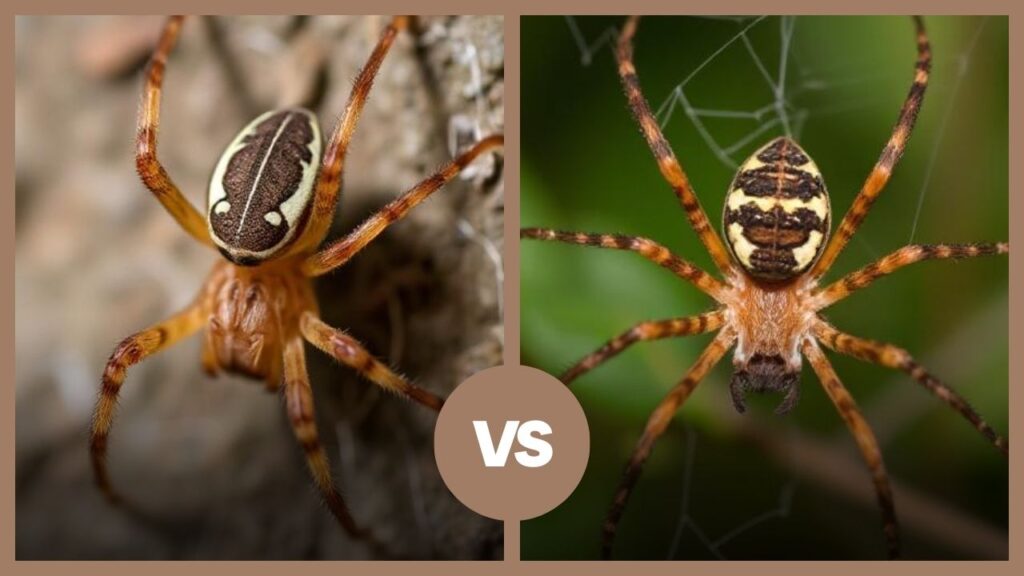
Brown house spiders and brown recluse spiders may look similar at first glance, but they have clear differences. Brown house spiders usually have more visible hairs or patterns on their legs and bodies, while the recluse is smooth and has a violin-shaped mark on its back. The brown recluse also has only six eyes, arranged in pairs — a rare trait in spiders.
Bite Danger and Medical Risk
Most brown house spiders are harmless and rarely bite. If they do, the bite causes mild irritation. In contrast, a brown recluse bite can be serious and may lead to skin damage, though severe reactions are rare. Always seek medical attention if a bite causes strong pain or skin damage.
Key Differences Table
| Feature | Brown House Spider | Brown Recluse Spider |
| Body Color | Light to dark brown | Light brown with violin mark |
| Markings | May have faint patterns | Dark violin-shaped mark |
| Eyes | 8 (two rows) | 6 (in pairs) |
| Legs | Long, thin, sometimes hairy | Smooth and uniform |
| Web Type | Messy cobwebs | Rarely builds visible webs |
| Bite Risk | Mild or none | Can cause skin damage |
| Venom Danger | Not medically significant | Can be harmful |
7 Types of Brown House Spiders
Brown house spiders come in many shapes and sizes. Some are small and hide in corners, while others are larger and build webs near windows or basements. Below are seven commonly seen types with their key details.
1. Common Brown House Spider
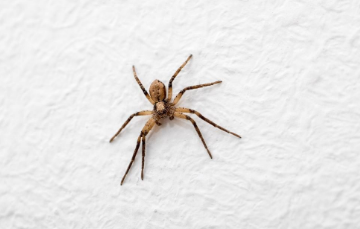
The common brown house spider is frequently seen indoors. It has a medium-sized brown body and is usually harmless, building webs in quiet, undisturbed spaces.
Identification:
- Color: Light to medium brown
- Size: Around 1/4 to 1/2 inch
- Legs: Thin, often same color as body
- Eyes: 8, arranged in two rows
Habitat:
This spider prefers indoor spaces, especially those that are dry and undisturbed. It’s well-adapted to human environments and doesn’t require outdoor conditions to survive.
Web Style:
It spins messy, irregular cobwebs that often appear unstructured. The webs are usually found in low-traffic areas and serve to trap small insects.
Where It Lives in the House:
You’ll often find this spider behind furniture, in ceiling corners, under tables, or on window sills where there is little movement and less cleaning activity.
2. Light Brown House Spider
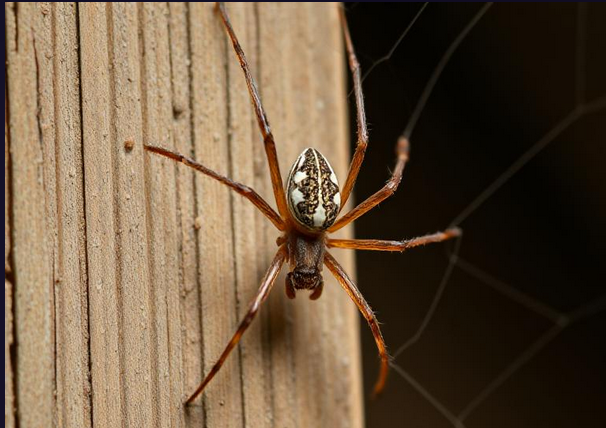
The light brown house spider has a pale body and is often seen in higher areas like ceilings or near windows. Its slender appearance and lighter color make it easy to miss.
Identification:
- Color: Pale brown or yellowish brown
- Size: Around 1/4 inch
- Legs: Long and thin
- Eyes: 8, arranged in two rows
Habitat:
This spider prefers warm, dry indoor areas with access to flying insects. It avoids damp or cluttered locations and stays higher off the ground.
Web Style:
It creates thin, irregular webs that stretch across corners or window frames. The webs may appear more delicate than those of darker spiders.
Where It Lives in the House:
Commonly found near ceilings, window corners, curtain rods, or high shelves, especially where light attracts small flying insects.
3. Dark Brown House Spider

The dark brown house spider has a deeper, richer brown tone. It tends to be slightly larger than light brown types and prefers darker parts of the home.
Identification:
- Color: Dark brown to chocolate brown
- Size: 1/2 to 3/4 inch
- Legs: Strong, slightly hairy
- Eyes: 8, positioned in two rows
Habitat:
It likes dark, undisturbed spaces where it can hide during the day. Often found in basements, storage rooms, or crawl spaces.
Web Style:
It builds thick, tangled webs, especially in tight corners or between objects that haven’t been moved in a while.
Where It Lives in the House:
Most often in basement corners, under stairs, behind boxes, or around floor vents and wall gaps.
4. Tiny Brown House Spider
The tiny brown house spider is one of the smallest you’ll find indoors. It’s often mistaken for dust or lint due to its size and can be difficult to notice unless it’s moving.
Identification:
- Color: Light to medium brown
- Size: Less than 1/4 inch
- Legs: Thin, proportionally long
- Eyes: 8, but often hard to see without magnification
Habitat:
This spider thrives in small, hidden areas. It doesn’t need much space and prefers calm, indoor spots where it won’t be disturbed.
Web Style:
Its webs are small and fine, often built inside tiny cracks or around overlooked corners. The webs might collect dust easily due to their location.
Where It Lives in the House:
Common in window track edges, behind wall hangings, under baseboards, inside electrical outlets, or along bookshelf corners.
5. Brown Cobweb Spider
The brown cobweb spider is often mistaken for the common house spider. It belongs to the same family (Theridiidae) as the black widow, though it is not dangerous.
Identification:
- Color: Yellow-brown to medium brown
- Size: 1/4 to 1/2 inch
- Legs: Long and slender, with darker joints
- Eyes: 8, clustered closely
Habitat:
This spider prefers quiet, indoor locations but can also be found in garages or sheds. It’s drawn to dry, dusty spaces where insects are likely to pass by.
Web Style:
Builds sticky, three-dimensional cobwebs. The web is often low to the ground and includes a hiding spot where the spider waits for prey.
Where It Lives in the House:
Commonly found in corners of closets, behind toilets, around air vents, under appliances, or beneath furniture that rarely gets moved.
6. Small Crevice Weaver
The small crevice weaver is a shy brown spider that hides in narrow cracks and tight spaces. It’s a slow mover and rarely seen unless its web is disturbed.
Identification:
- Color: Brownish-gray or dull brown
- Size: About 1/4 inch
- Legs: Shorter and thicker compared to cobweb spiders
- Eyes: 8, arranged in two curved rows
Habitat:
Prefers to live in small crevices, gaps in walls, or between stacked objects. It avoids open spaces and stays hidden most of the time.
Web Style:
Spins small, sheet-like webs inside gaps. The webs are not sticky but act more as alarm traps and shelters.
Where It Lives in the House:
Common in wall cracks, behind peeling wallpaper, inside gaps between wooden boards, and under window ledges.
7. Brown Orb Weaver
The brown orb weaver is best known for its circular webs. It’s usually found near light sources at night and may come indoors during colder months.
Identification:
- Color: Brown to reddish-brown
- Size: 1/2 to 3/4 inch
- Legs: Long with visible banding
- Eyes: 8, spaced in two rows
Habitat:
Usually lives outdoors but may enter homes when temperatures drop. Prefers locations with flying insect activity.
Web Style:
Builds large, classic round orb webs. These webs are often rebuilt daily, especially in the evening.
Where It Lives in the House:
You may spot it near windows, porches, balconies, stair railings, or corners where light attracts insects.
5 Largest Brown House Spiders
Some brown house spiders grow quite large and can be alarming to see indoors. While their size might look threatening, most are harmless and play a helpful role in controlling insect populations.
1. Giant House Spider

The giant house spider is one of the biggest spiders commonly found indoors. Despite its size and speed, it is not aggressive and rarely bites.
Identification:
- Color: Brown to dark brown
- Size: Up to 1 inch (body), over 4 inches with legs
- Legs: Very long and hairy
- Eyes: 8, arranged in two rows
Habitat:
Thrives in cooler indoor areas like basements and garages. It prefers still, dark places with minimal foot traffic.
Web Style:
Spins large, flat sheet webs with a tunnel retreat where it hides. The web is used more for shelter than for catching prey.
Where It Lives in the House:
Often seen in basements, under stairwells, near floor vents, behind storage boxes, or occasionally running across floors.
2. Southern House Spider (Male)
The male southern house spider is large and often confused with the brown recluse because of its body shape. It roams in search of mates and doesn’t build visible webs.
Identification:
- Color: Dark brown to gray-brown
- Size: Up to 1 inch (body), with long legs
- Legs: Long and slim, especially in males
- Eyes: 8, closely spaced
Habitat:
Prefers warm climates and is common in the southern U.S. It shelters in cracks and crevices during the day.
Web Style:
Males do not build webs; females create flat, sheet-like webs in hidden locations. Males wander and may appear suddenly indoors.
Where It Lives in the House:
Can be found near baseboards, door frames, inside wall gaps, attic corners, or roaming on walls at night.
3. Wolf Spider (Brown Type)

Wolf spiders are fast-moving hunters often seen darting across floors. While they don’t build webs to catch prey, their large size and hairy bodies make them easy to spot.
Identification:
- Color: Mottled brown with dark stripes or spots
- Size: 1/2 to 1 inch (body), legs extend total size to 2–3 inches
- Legs: Thick and hairy
- Eyes: 8, with two large front-facing eyes
Habitat:
Wolf spiders live outdoors but may wander inside, especially during cold weather or rain. They prefer dry, dark areas.
Web Style:
They do not build webs to trap insects. Instead, they hunt prey by sight and speed.
Where It Lives in the House:
Often found in garages, basements, closets, laundry rooms, or crawling along baseboards and under furniture.
4. Funnel-Web Spider (Brown Variant)

Some funnel-web spiders found in homes have brown coloring. These spiders are not related to the deadly Australian species and are usually harmless.
Identification:
- Color: Brown or gray-brown
- Size: Up to 3/4 inch (body), with long legs
- Legs: Hairy and strong
- Eyes: 8, evenly spaced
Habitat:
They like cool, dark places and create webs with a tunnel-shaped retreat, often along edges or corners.
Web Style:
Creates a horizontal web sheet with a funnel or tunnel where the spider hides. It waits for vibrations from insects that step on the web.
Where It Lives in the House:
Can be found in basement corners, window wells, garage cracks, or behind storage cabinets and appliances.
5. Huntsman Spider (Brown Type)
The brown huntsman is one of the largest and fastest spiders found indoors. Despite their size, they are shy and non-aggressive.
Identification:
- Color: Light to medium brown, sometimes with spots
- Size: Body around 1 inch, leg span up to 5 inches
- Legs: Long and crab-like, extended sideways
- Eyes: 8, arranged in two curved rows
Habitat:
Huntsman spiders live in warm areas and enter homes for shelter or hunting. They prefer quiet, undisturbed spots with access to insects.
Web Style:
They do not build webs to catch prey. They actively hunt at night and rest during the day behind objects.
Where It Lives in the House:
Can be found behind curtains, picture frames, wall clocks, under furniture, or even inside drawers or cupboards.
5 Smallest Brown House Spiders
These tiny brown spiders are often overlooked due to their size. While small, they can still build webs and play a role in controlling other pests indoors.
1. Baby Recluse (Often Misidentified)
Juvenile brown recluse spiders are tiny and frequently mistaken for harmless house spiders. Although young, they can still pose a risk if provoked.
Identification:
- Color: Pale to light brown
- Size: Less than 1/4 inch
- Legs: Thin and short
- Eyes: 6, arranged in 3 pairs
Habitat:
They hide in dark, undisturbed areas and come out mostly at night. They avoid noise and light.
Web Style:
Doesn’t spin a traditional web for catching prey. Instead, uses a small retreat silk for shelter.
Where It Lives in the House:
Found in cardboard boxes, behind wall trim, under beds, or tucked inside shoes and clothing piles.
2. Small Orb Weaver (Brown Type)
This spider is part of the orb-weaver family but is much smaller than its larger cousins. It often builds miniature round webs indoors or near windows.
Identification:
- Color: Light brown to reddish brown
- Size: About 1/8 to 1/4 inch
- Legs: Long relative to body size
- Eyes: 8, arranged in two rows
Habitat:
Loves corners and spots with airflow and natural light. Prefers locations where it can build a clean, round web.
Web Style:
Creates small, classic orb-shaped webs. Webs are symmetrical and often rebuilt daily.
Where It Lives in the House:
Seen near window frames, curtain edges, plant stands, or in door corners with air circulation.
3. Brown Recluse Juvenile
Juvenile brown recluse spiders are very small and often confused with other harmless brown spiders. Though small, they have the same venomous potential as adults.
Identification:
- Color: Light brown with faint violin mark (develops more clearly as they age)
- Size: Around 1/8 inch
- Legs: Thin and long
- Eyes: 6, arranged in 3 pairs
Habitat:
They hide in places with little human activity and come out at night to hunt small insects.
Web Style:
They create silk retreats rather than sticky webs, usually in hidden areas.
Where It Lives in the House:
Found in drawers, behind baseboards, inside boxes, or between stacked papers or fabrics.
4. Ground Spider (Brown Type)
Ground spiders are fast and rarely seen because they don’t build webs. Some small brown types may enter homes looking for food or warmth.
Identification:
- Color: Uniform brown or reddish brown
- Size: About 1/8 to 1/4 inch
- Legs: Short and sturdy
- Eyes: 8, tightly grouped
Habitat:
They live close to the ground, often moving between cracks or under objects. Usually active at night.
Web Style:
Does not spin webs to catch prey. Uses silk for shelter or egg sacs only.
Where It Lives in the House:
Common along baseboards, under rugs, beneath heavy furniture, or inside floor vents.
5. Tiny Jumping Spider (Brown Variant)
These small jumping spiders are quick, curious, and often have a brown or tan body. Despite their size, they are great hunters and commonly seen on windowsills.
Identification:
- Color: Light to medium brown, sometimes with white spots
- Size: Around 1/8 inch
- Legs: Compact and strong
- Eyes: 8, with two large front-facing eyes
Habitat:
Active during the day and likes sunny, open indoor areas where it can jump between surfaces.
Web Style:
Does not build webs to trap insects. Spins silk retreats for resting or laying eggs.
Where It Lives in the House:
Seen on windowsills, countertops, shelves, or even climbing walls and furniture near sunlight.
6 Regional Types of Brown House Spiders
Some brown house spiders are more common in specific regions of the United States. Their appearance and behavior can vary slightly depending on climate, surroundings, and the typical indoor environments in those areas. Below are six types linked to particular states or regions.
1. Brown House Spider – Texas

In Texas, brown house spiders are frequently spotted in both rural and urban homes, especially during hot and dry seasons. These spiders often have a medium to dark brown color and may grow slightly larger than those found in colder climates.
They prefer dry indoor areas like attics, storage sheds, and garages, where insect activity is high. Because of Texas’s warm climate, they remain active year-round and don’t go into hiding as much during winter.
Homeowners in Texas may find them around baseboards, window corners, or even air conditioning vents. Though they may look intimidating, these spiders are generally harmless and tend to avoid contact with humans.
2. Brown House Spider – Florida

Florida’s humid climate attracts a variety of indoor insects—and brown house spiders follow the food. These spiders are typically lighter in color and may have slightly longer legs, which help them move quickly through moist indoor environments.
They are often found in bathrooms, kitchens, or laundry rooms—places with both moisture and insect activity. Some may build webs close to water sources like sinks, under cabinets, or around drainpipes.
In Florida homes, it’s not uncommon to find brown house spiders near windows and patios where light draws in flying insects. Their presence helps control bug populations indoors.
3. Brown House Spider – California

Brown house spiders in California are most often seen in older homes and garages, especially in drier southern regions. They vary in color from tan to dark brown and may have more visible body patterns.
These spiders thrive in shaded, undisturbed areas. In cities like Los Angeles or San Diego, they are common in garages, wall corners, and between window screens and glass panes. During warm weather, they are more active and may move between indoor and outdoor areas.
California brown house spiders are helpful in reducing fly and mosquito numbers inside homes. Though they sometimes surprise homeowners, they rarely pose any threat.
4. Brown House Spider – Ohio

In Ohio, brown house spiders are most active during late summer and fall when outdoor temperatures begin to drop. They seek indoor shelter and often settle in basements or behind stored boxes.
These spiders tend to be darker in color, blending in well with wood or brick surfaces. They’re more reserved and build their webs in hidden areas like crawl spaces or corners with low foot traffic.
Ohio residents usually encounter them while cleaning storage areas or during seasonal house maintenance. They’re non-aggressive and generally stay out of sight.
5. Brown and Black House Spider – Georgia
Georgia homes may occasionally host a spider that appears both brown and black. These could be various species, including cobweb spiders and crevice dwellers, which develop darker tones in the state’s humid climate.
They are often found in shaded areas of the house such as under stairs, behind curtain rods, or tucked inside utility rooms. They don’t mind moisture and may share space with silverfish or roaches.
In Georgia, people sometimes confuse these spiders with more harmful types, but most are completely harmless and play a helpful role in pest control.
6. Southern Brown House Spider
The southern brown house spider is more common in southeastern U.S. states. It’s usually medium-sized with a brown to grayish tone and may have slightly hairy legs. Some types are related to crevice weavers.
They’re shy spiders that rarely venture out during the day. They build small sheet-like webs in cracks or tight spaces inside walls and furniture. Males may roam at night, while females stay hidden.
Southern brown house spiders are often seen in attics, behind mirrors, or tucked in paneling. While their sudden appearance might be alarming, they’re not considered dangerous to people.
Brown House Spider Identification
Color: Brown house spiders come in different shades, from light tan to dark brown. Some may have faint patterns or spots, but they don’t usually have bold markings like a violin shape.
Leg Shape and Texture: Their legs are long and thin. In most cases, the legs match the color of the body. They may look smooth or slightly hairy depending on the species.
Eye Pattern: Most brown house spiders have 8 eyes arranged in two rows. This is a key way to tell them apart from the brown recluse, which has only 6 eyes in pairs.
Body Size and Shape: They usually range in size from 1/4 inch to 3/4 inch. The abdomen is often round or oval and may look plump compared to the head area.
Behavior Clues: Brown house spiders prefer dark, quiet places like corners, under furniture, or behind storage boxes. They spin messy, tangled webs and often stay hidden during the day.
Brown House Spider Bites
Symptoms of Bites
Most brown house spider bites are mild. You may notice:
- A small red bump
- Itching or slight swelling
- Minor pain that fades quickly
These symptoms usually go away without treatment.
Real-Life Cases
In most reported cases, people don’t even realize they were bitten until they see a small mark. Serious reactions are rare. Some individuals with sensitive skin may experience more noticeable irritation, but it usually improves within a few days.
When to Seek Medical Attention
You should see a doctor if:
- The bite becomes painful or starts to spread
- Swelling increases after 24 hours
- You experience fever, chills, or nausea
- You’re not sure if the spider was a brown recluse
Black and Brown Spiders in the House

Sometimes you may see spiders that appear both black and brown. These color variations can be confusing, and many people mistake them for more dangerous species like the brown recluse or black widow. However, most of these mixed-color spiders are harmless house spiders.
The black and brown coloration is often due to lighting, age, or natural variation within a species. For example, some cobweb spiders and crevice weavers can appear brown with darker legs or abdomens. Others might look blackish-brown in shaded corners or under artificial light.
If you see a spider in your home that has both black and brown features, focus on its shape, size, eye pattern, and web style rather than color alone. Many of these spiders spin messy cobwebs in ceiling corners, closets, or garages and are not a threat to humans. Unless the spider shows a distinct red hourglass (like the black widow) or a clear violin marking (like the brown recluse), it’s likely a harmless household species.
FAQ About Brown House Spiders
1. Are brown house spiders poisonous?
Most brown house spiders are not poisonous to humans. While some may bite if provoked, their venom is usually too weak to cause serious harm. The brown recluse is an exception, but it is much rarer and has distinct features like a violin-shaped mark and six eyes.
2. What is the difference between a brown house spider and a brown recluse?
The brown recluse has six eyes in three pairs, a violin-shaped marking on its back, and smooth legs. Brown house spiders typically have eight eyes, no violin mark, and may have hairy or patterned legs. Recluse bites can be dangerous, while brown house spider bites are usually harmless.
3. What are those tiny brown spiders in my house?
Tiny brown spiders are often young house spiders, cobweb spiders, or small crevice weavers. They hide in corners, window tracks, or near baseboards and are harmless. Their small size makes them easy to overlook, but they help control pests like flies and ants.
4. What is the black and brown spider in my house?
A spider that looks both black and brown may be a cobweb spider or a crevice weaver. Color can vary based on age, light, or region. Unless it has clear signs like a red hourglass or violin shape, it’s likely a harmless house spider and not a danger to you or your pets.