
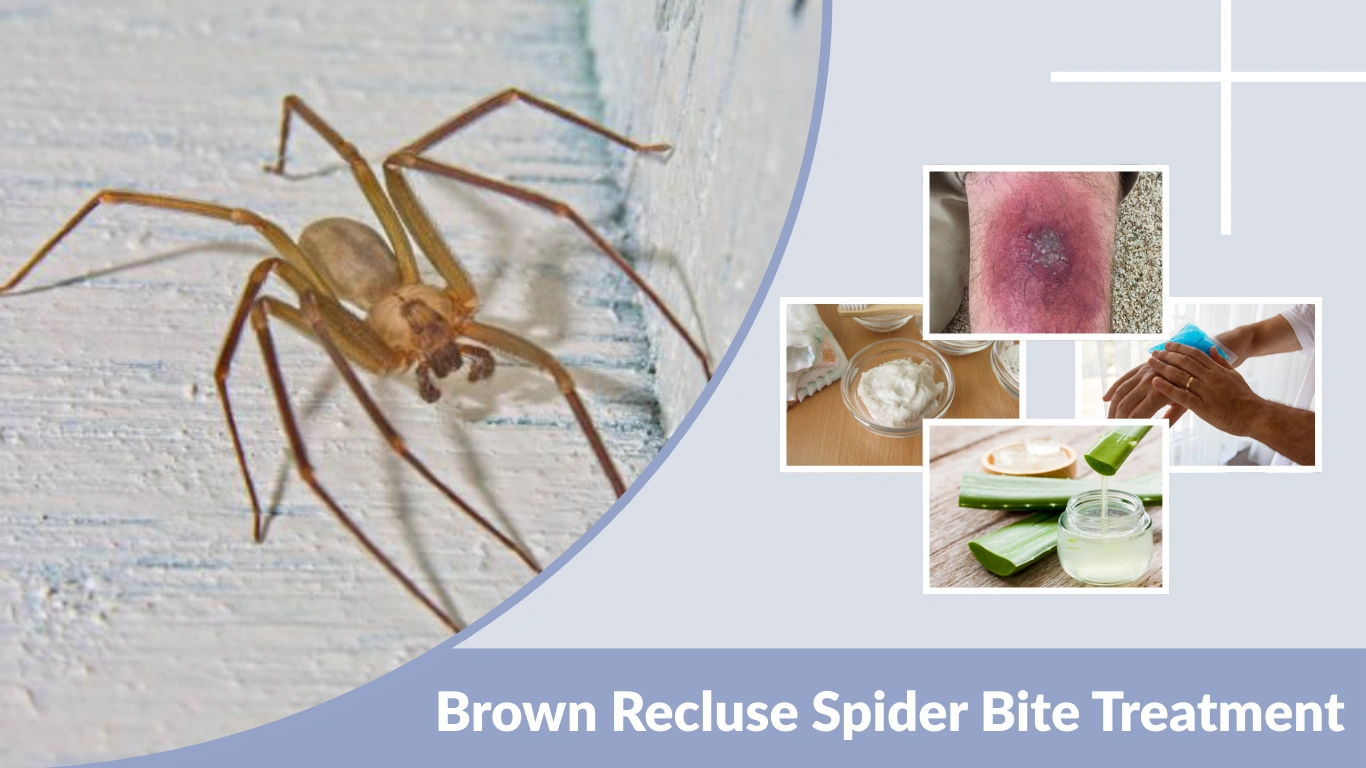
A brown recluse spider bite can cause serious skin damage and discomfort if not treated properly. Although bites from this spider are relatively rare, their venom can lead to painful wounds and sometimes tissue damage. Knowing how to recognize the symptoms and apply proper first aid is essential for preventing complications. This guide explains brown recluse spider bite symptoms, treatment options, healing stages, and when to seek medical help.
What Is a Brown Recluse Spider?
The brown recluse spider is a venomous spider commonly found in parts of the United States, especially in the Midwest and southern regions. It prefers quiet, undisturbed areas such as basements, closets, garages, and storage boxes. Because these spiders tend to hide in dark places, people may accidentally disturb them while cleaning or moving items.
Although brown recluse spiders are not aggressive, they may bite if they feel threatened or trapped against the skin. Their venom contains toxins that can damage skin tissue, which is why early treatment is important.
How to Identify a Brown Recluse Spider
Identifying a brown recluse spider can help reduce the risk of accidental bites. These spiders have several distinctive features.
Violin-shaped marking
One of the most recognizable characteristics of a brown recluse spider is the violin-shaped marking on its back. This marking points toward the spider’s abdomen and gives the spider its nickname, the “fiddleback spider.”
Color and size
Brown recluse spiders are typically light to dark brown in color. They are relatively small, usually measuring about 6–20 millimeters in body length.
Habitat and behavior
These spiders prefer dark and quiet environments such as woodpiles, attics, closets, and storage containers. They are mostly active at night and avoid human contact whenever possible.
Brown Recluse Spider Bite Symptoms
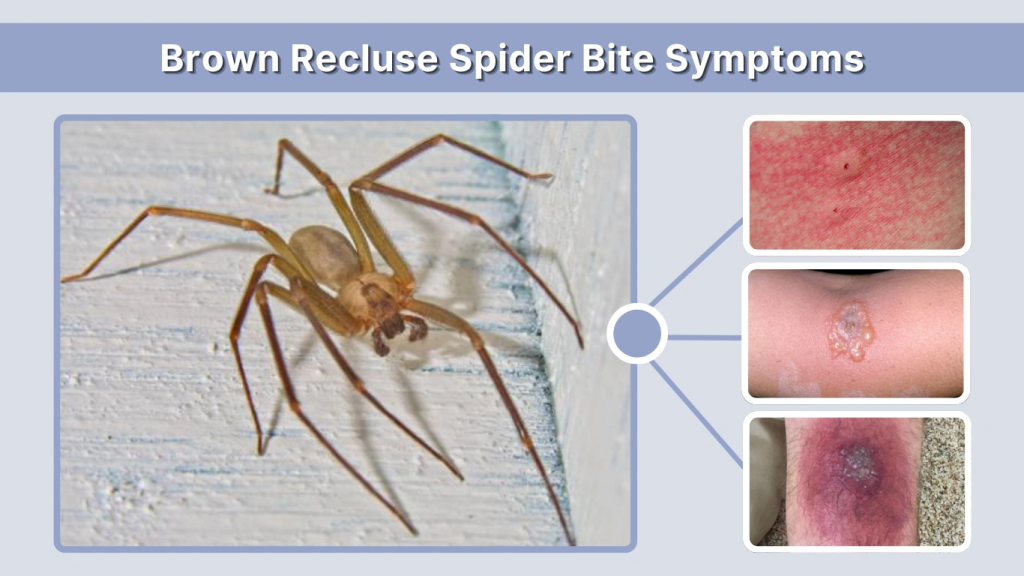
The symptoms of a brown recluse spider bite can vary from mild irritation to severe tissue damage. In many cases, people do not realize they have been bitten until symptoms begin to appear several hours later.
Early Symptoms (First 24 Hours)
During the first 24 hours after a bite, symptoms may be mild and easy to overlook.
Common early signs include:
- A mild stinging or burning sensation
- Redness around the bite area
- Slight swelling
- Tenderness or itching
Some individuals may not feel pain immediately, which can make it difficult to identify the bite right away.
Progressive Symptoms (24–72 Hours)
Within one to three days, symptoms may become more noticeable as the venom begins to affect the surrounding tissue.
These symptoms may include:
- Increased pain around the bite area
- Development of a blister
- Skin discoloration, often turning bluish or purple
- Expansion of the affected area
At this stage, the bite may start to look more serious and require closer monitoring.
Severe Symptoms
In some cases, a brown recluse bite can lead to more severe symptoms, especially if the venom causes tissue damage.
Possible severe symptoms include:
- Necrotic skin ulcer (dead tissue around the bite)
- Fever and chills
- Nausea or vomiting
- Muscle aches
- Fatigue
Although severe reactions are uncommon, they require prompt medical attention.
Brown Recluse Spider Bite Stages
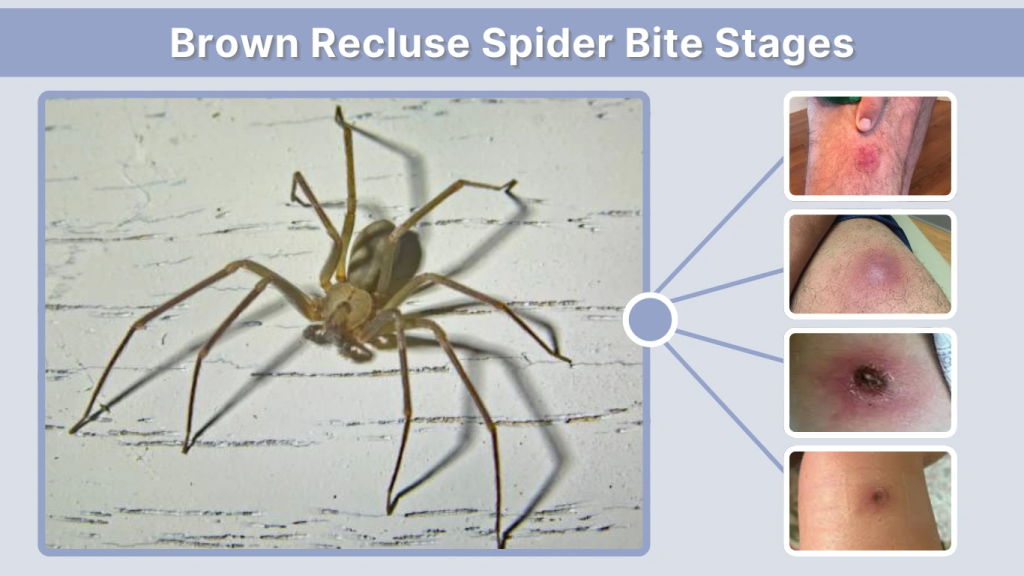
A brown recluse spider bite often progresses through several stages as the body reacts to the venom and begins healing.
Stage 1 – Initial Bite
The initial bite may go unnoticed because it is often painless. A small red mark may appear at the bite site, similar to a minor insect bite.
Some people experience mild burning or itching within the first few hours.
Stage 2 – Inflammation
After several hours, inflammation may begin to develop around the bite. The area may become swollen, red, and sensitive to the touch.
A small blister may also form at the center of the bite.
Stage 3 – Tissue Damage
In more serious cases, the venom can damage nearby skin tissue. The center of the bite may turn dark or bluish as tissue begins to break down.
This stage can lead to an open wound or ulcer, which may take weeks to heal.
Stage 4 – Healing Process
During the final stage, the body gradually repairs the damaged skin. A scab forms over the wound, and new tissue slowly replaces the damaged area.
Healing time can vary depending on the severity of the bite and the treatment received.
Brown Recluse Spider Bite First Aid
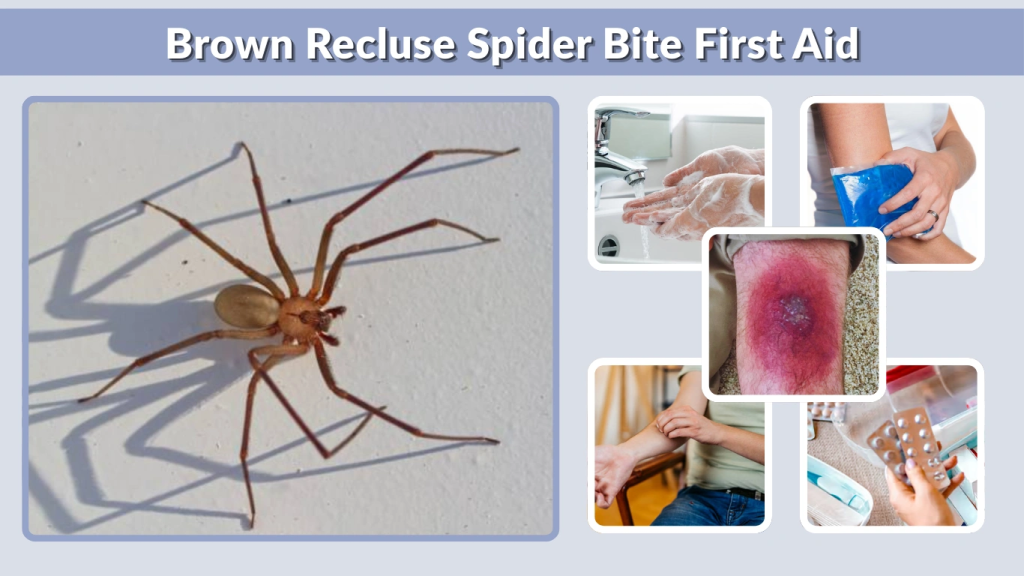
If you suspect a brown recluse spider bite, taking immediate first aid steps can help reduce pain and limit tissue damage.
Step-by-Step First Aid Treatment
1. Clean the bite area
Wash the bite gently with soap and warm water to reduce the risk of infection.
2. Apply a cold compress
Place an ice pack or cold cloth on the bite for about 10 minutes at a time. This can help reduce swelling and pain.
3. Elevate the affected area
If the bite is on an arm or leg, keep the limb elevated to help reduce inflammation.
4. Avoid scratching the wound
Scratching can worsen irritation and increase the risk of infection.
5. Take pain relief medication
Over-the-counter pain relievers such as ibuprofen or acetaminophen may help manage discomfort.
Medical Treatment for Brown Recluse Spider Bites
While many brown recluse spider bites heal with basic first aid, some cases require professional medical treatment. Doctors may recommend specific treatments depending on the severity of the bite and whether complications such as infection or tissue damage have developed.
Antibiotics for Infection
If the bite becomes infected, a doctor may prescribe antibiotics to control bacterial growth. Signs of infection include increased redness, pus, swelling, warmth around the wound, or fever.
Antibiotics help prevent the infection from spreading and promote faster healing.
Pain Management
Pain from a brown recluse bite can range from mild to severe. Doctors may recommend over-the-counter pain relievers such as ibuprofen or acetaminophen.
In cases where the pain is intense, prescription medications may be provided to help manage discomfort during the healing process.
Wound Care and Cleaning
Proper wound care is essential for preventing complications. A healthcare provider may clean the wound, remove damaged tissue if necessary, and apply special dressings to support healing.
Keeping the wound clean and protected reduces the risk of infection and encourages new skin growth.
Surgical Treatment
In rare and severe cases where significant tissue damage occurs, surgery may be required. Surgical procedures may include removing dead tissue or performing skin grafts to repair large wounds.
However, surgery is usually considered only after the wound has stabilized and the affected tissue has fully developed.
Home Remedies for Brown Recluse Spider Bite
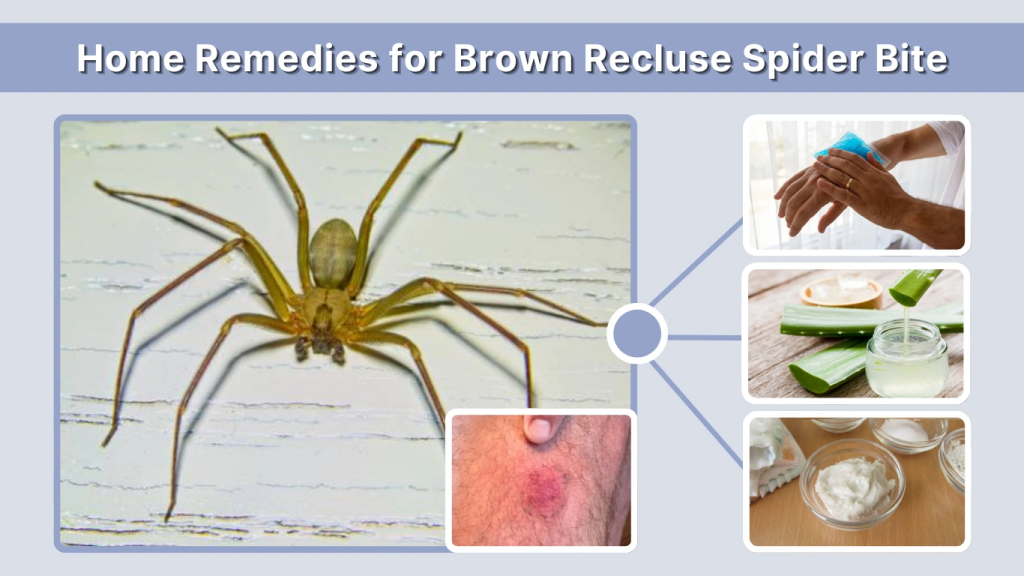
Some mild brown recluse bites can be managed at home with supportive care. These remedies may help reduce pain, swelling, and irritation, but they should not replace medical treatment if symptoms worsen.
Ice Packs
Applying ice packs can help reduce swelling and inflammation. Wrap ice in a cloth and apply it to the bite for about 10 minutes at a time. Avoid placing ice directly on the skin to prevent frostbite.
Aloe Vera
Aloe vera gel is known for its soothing and anti-inflammatory properties. Applying a small amount of aloe vera to the bite area may help calm irritated skin and support healing.
Baking Soda Paste
A paste made from baking soda and water may help reduce itching and irritation. Apply the paste gently to the bite area and rinse it off after several minutes.
Although these home remedies may provide temporary relief, it is important to monitor the bite closely for worsening symptoms.
When to See a Doctor
Many spider bites heal without medical intervention, but some situations require professional care. It is important to seek medical attention if any of the following symptoms occur:
- Severe or worsening pain
- Spreading redness around the bite
- Fever or chills
- Development of a large blister or ulcer
- Signs of infection such as pus or swelling
- Difficulty breathing or severe allergic reactions
Early medical treatment can prevent serious complications and improve recovery outcomes.
Possible Complications
Although most brown recluse spider bites heal without major issues, complications can sometimes occur.
Skin Necrosis
One of the most well-known complications of a brown recluse bite is skin necrosis, which occurs when venom damages surrounding tissue. This can lead to an open wound that may take weeks or months to heal.
Infection
Open wounds from spider bites can become infected if bacteria enter the area. Infection can slow healing and may require antibiotic treatment.
Permanent Scarring
Severe bites that cause tissue damage may leave permanent scars. Proper wound care can help minimize scarring during the healing process.
Systemic Reactions
In rare cases, the venom can cause systemic reactions affecting the entire body. Symptoms may include fever, nausea, muscle pain, and fatigue. These reactions require immediate medical care.
Brown Recluse Bite Healing Process
The healing time for a brown recluse spider bite varies depending on the severity of the bite and the individual’s health.
Mild Bites
Mild bites usually heal within one to three weeks. During this time, swelling and redness gradually decrease, and the skin begins to repair itself.
Moderate to Severe Bites
More serious bites involving tissue damage may take several weeks or even months to heal. Proper wound care and medical supervision are important to support recovery.
In severe cases, the wound may leave a noticeable scar after healing.
How to Prevent Brown Recluse Spider Bites
Preventing brown recluse spider bites is the best way to avoid the complications associated with their venom. Taking simple precautions can significantly reduce the risk of encountering these spiders.
Some effective prevention tips include:
- Wear gloves when handling firewood, boxes, or stored items
- Shake out shoes, clothing, and bedding before use
- Keep storage areas clean and organized
- Seal cracks and gaps in walls, windows, and doors
- Reduce clutter in basements, garages, and closets
Regular cleaning and careful inspection of dark areas in your home can help keep brown recluse spiders away.
FAQs
How do you treat a brown recluse spider bite at home?
You can treat a mild bite by washing the area with soap and water, applying a cold compress, elevating the affected area, and taking over-the-counter pain medication. Monitor the bite closely and seek medical care if symptoms worsen.
How long does a brown recluse bite take to heal?
Most mild bites heal within one to three weeks, while more severe bites involving tissue damage may take several weeks or months to fully recover.
What does a brown recluse bite look like?
A brown recluse bite often begins as a small red area that may develop a blister. In some cases, the center of the bite turns bluish or dark as tissue damage occurs.
Can a brown recluse bite be fatal?
Fatal cases are extremely rare. Most bites heal with proper care, but severe reactions require immediate medical attention.
Should you squeeze a spider bite?
No. Squeezing a spider bite can worsen the injury and increase the risk of infection. It is best to clean the area and apply proper first aid instead.