
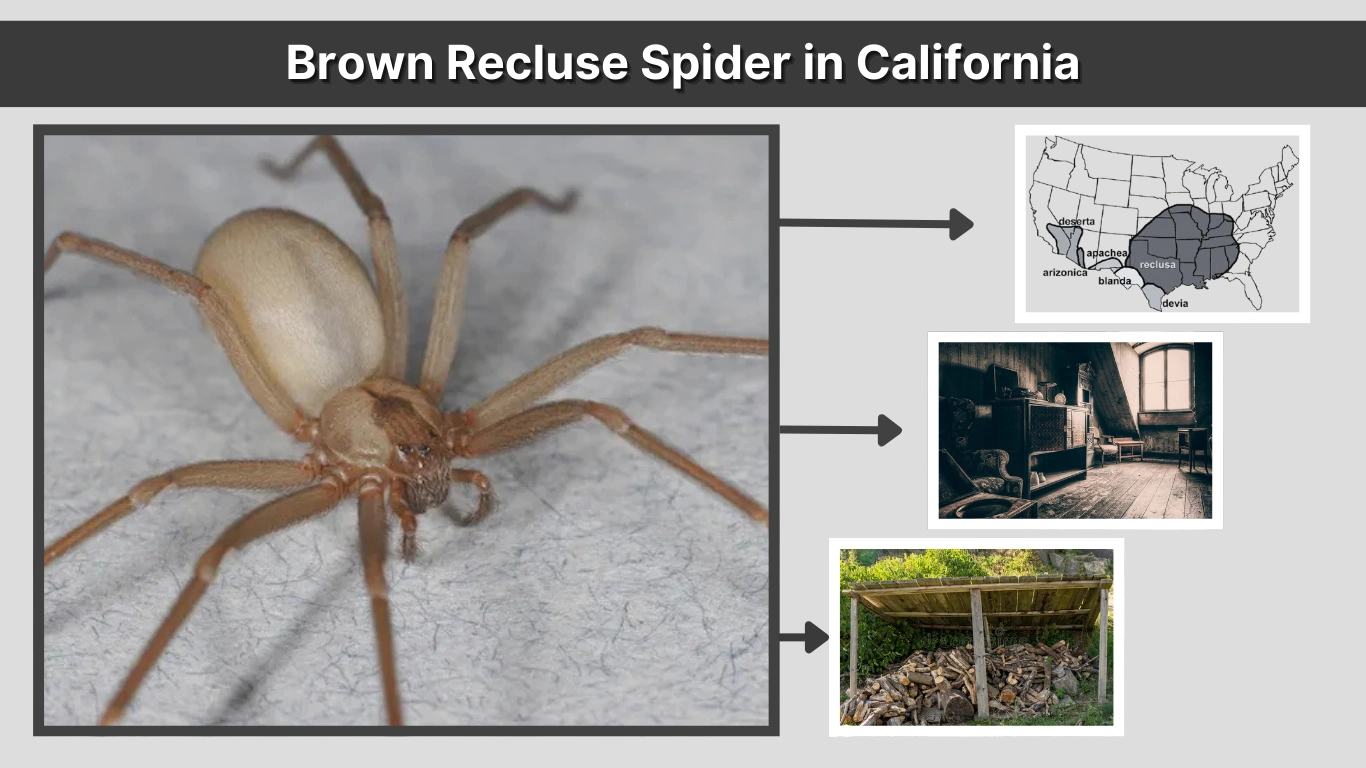
Spiders are some of the most misunderstood creatures in California, and none spark more fear than the brown recluse. Over the years, countless reports have claimed sightings of this spider in homes, hospitals, and backyards across the state. But how much of this is fact, and how much is myth? The truth is more complicated than most people realize. While the brown recluse is one of the most medically significant spiders in the United States, its actual presence in California is rare and often confused with local species. Let’s explore what’s real, what’s mistaken, and how to properly identify these spiders.
Does the Brown Recluse Spider Live in California?
One of the most common questions is whether the brown recluse (Loxosceles reclusa) actually lives in California. According to arachnologists and pest control experts, the brown recluse is not native to California. Its established range covers the Midwest and parts of the southern United States, including states like Oklahoma, Texas, Arkansas, and Missouri.
In California, confirmed populations of the brown recluse are practically nonexistent. While isolated spiders may occasionally hitchhike into the state via moving boxes, shipments, or luggage, they rarely establish breeding colonies. This means the chances of encountering a true brown recluse in California are extremely low.
Yet, reports persist. Many of these are due to misidentification of harmless native spiders that share some superficial similarities.
Brown Recluse Spider Distribution in California

Myth vs. Reality
The myth: brown recluse spiders are crawling all across California, from Los Angeles to San Francisco.
The reality: brown recluse spiders are not widespread in California. Entomological surveys have consistently shown that populations of this species do not exist naturally in the state. When brown recluses are found, they are almost always isolated specimens, not part of a reproducing population.
Why the Confusion?
- Misidentified species: Wolf spiders, yellow sac spiders, and cellar spiders are often mistaken for recluses.
- Overdiagnosed bites: Many skin lesions, infections, or insect bites are incorrectly blamed on the recluse.
- News stories: Dramatic headlines about “deadly recluse spiders” fuel misconceptions.
California Distribution Map
If you look at verified brown recluse distribution maps from arachnology studies, California is outside their natural range. Instead, the maps highlight the Midwest and parts of the southern U.S. The only related recluse found natively in California is the desert recluse (Loxosceles deserta), which inhabits the state’s desert regions.
Brown Recluse Spiders in Northern California

Northern California, including Sacramento, Santa Cruz, and the Bay Area, frequently sees reports of “brown recluse” sightings. However, these almost always turn out to be local spiders with similar coloring.
- Wolf spiders are large, fast-moving hunters with brown coloring that often leads to false alarms.
- Common house spiders spin messy webs in garages and basements and are often mislabeled.
- Yellow sac spiders, which do live in Northern California, occasionally cause bites that can mimic recluse symptoms.
In truth, there is no evidence of established brown recluse populations in Northern California.
Brown Recluse Spiders in Southern California

Southern California, with its dry climate and sprawling cities like Los Angeles, Riverside, and Lancaster, is another hotspot for recluse rumors. People frequently report “brown recluse bites” after experiencing skin sores or spider encounters.
But once again, studies show that nearly all of these cases are misattributions. Hospitals and urgent care centers often diagnose necrotic skin lesions as “brown recluse bites” even though the spider isn’t found locally.
The desert recluse spider, which does live in the desert regions of Southern California, is a much more likely culprit. While its bite can also be harmful, it is not the same species as the brown recluse.
Brown Recluse Spider Identification in California

So how can you tell if the spider you saw is a recluse? Correct identification is crucial, especially in California where so many harmless spiders are mistaken for them.
Key Features of a Brown Recluse
- Color: Light to medium brown body with slightly darker markings.
- Violin-shaped marking: Distinct dark shape on the cephalothorax (just behind the head).
- Eyes: Six eyes arranged in three pairs (most spiders have eight).
- Body size: 1/4 to 3/4 inch long, with legs extending to about the size of a quarter.
- Legs: Uniformly colored, not spiny or striped.
Why Identification Is Tricky
Many California spiders share some of these traits but lack the full combination. For example, wolf spiders are brown and large but have eight eyes, not six. Cellar spiders are often called “recluse” due to their thin legs, but their body shape is entirely different.
Identification Table: Brown Recluse vs. California Look-Alikes

| Feature | Brown Recluse | Wolf Spider | Yellow Sac Spider | House Spider | Desert Recluse |
| Eyes | 6 (pairs) | 8 | 8 | 8 | 6 |
| Violin marking | Yes | No | No | No | Faint/Yes |
| Body size | 1/4–3/4 inch | Up to 1 inch | 1/4 inch | 1/4 inch | Similar |
| Common in California? | Rare | Very common | Common | Very common | Yes, deserts |
| Danger level | Medically significant | Harmless | Mildly venomous | Harmless | Medically significant |
Common Spiders in California Mistaken for Brown Recluse
If you’ve ever thought you saw a brown recluse in your California home, chances are it was one of these:
- Wolf spiders – large, hairy hunters, often confused due to size and brown coloring.
- Cellar spiders (daddy longlegs) – long-legged spiders often mistaken for recluses despite very different body structures.
- Yellow sac spiders – can cause irritating bites that resemble recluse symptoms.
- House spiders (Parasteatoda species) – found in webs in corners of garages, basements, and attics.
- Desert recluse spiders – the only true recluse species native to California, found in dry desert regions.
Correctly identifying these spiders helps reduce fear and prevents unnecessary medical panic.
Brown Recluse Spider Bites in California

Few spider topics generate as much fear as the idea of being bitten by a brown recluse. In states where the spider is native, its bite is medically significant because it can cause necrotic skin lesions. But what about California?
Most reported “brown recluse bites” in the state are misdiagnosed. Medical experts warn that infections, allergic reactions, diabetic ulcers, and even MRSA can mimic the symptoms of a recluse bite. Without capturing and identifying the spider, doctors cannot confirm the culprit.
Symptoms of a True Recluse Bite
- Mild stinging at first, sometimes unnoticed
- Redness and swelling developing over several hours
- In severe cases, tissue damage (necrosis) forming an ulcer
- Systemic symptoms (rare): fever, chills, nausea
In California, these symptoms are more likely caused by other health issues or bites from local spiders like the yellow sac spider, which can also cause irritating lesions.
Brown Recluse Bites in Southern vs. Northern California
The majority of bite reports in California come from Southern California hospitals, especially in Los Angeles and desert regions. However, entomologists consistently emphasize that there are no established recluse populations there. These diagnoses are almost always based on the wound appearance alone.
Northern California hospitals, particularly around Sacramento and San Jose, also receive patients with suspected recluse bites. Yet again, almost all of these cases lack verified spider specimens.
Bottom line: while brown recluse bites are real in their natural range, the likelihood of being bitten by one in California is extremely low.
Brown Recluse Habitat & Webs in California Homes

Understanding habitat is key to identification.
Where Brown Recluses Prefer to Live
- Dark, undisturbed spaces such as basements, closets, and attics
- Stored clothing, shoes, and boxes
- Woodpiles and sheds
Why California Homes Are Unlikely Habitats
Because brown recluses are not established in California, typical home infestations are almost nonexistent. However, desert recluse spiders may be found in outdoor sheds or desert homes.
Their Webs
Unlike orb-weavers, which spin large circular webs, recluse spiders spin small, irregular, and loose webs. These are used for shelter, not hunting. If you see a big, geometric web in California, it’s not from a recluse.
Brown Recluse Spider Size and Appearance in California
Many Californians panic when they see a medium-sized brown spider, assuming it’s a recluse. But understanding size helps clarify.
- Brown Recluse Size:
- Body: 1/4 to 3/4 inch long
- Leg span: up to 1.5 inches
- Body: 1/4 to 3/4 inch long
- California Wolf Spider:
- Often much larger (up to 2 inches with legs)
- Hairy body and prominent eyes
- Often much larger (up to 2 inches with legs)
- Yellow Sac Spider:
- Smaller (about 1/4 inch)
- Light yellow to tan, not violin-marked
- Smaller (about 1/4 inch)
In California, most “large brown spiders” are wolf spiders, not recluses.
Are Brown Recluse Spiders Common in California?
The short answer: no.
Brown recluse spiders are rare in California. Entomologists often stress that despite thousands of alleged sightings, very few confirmed specimens have ever been collected in the state. The widespread belief that they are common is due to:
- Misidentification of native spiders
- Overuse of the term “recluse bite” by medical professionals
- Exaggerated news coverage
So, unless you personally bring one into the state via shipping or moving boxes, chances are you will never see a brown recluse in California.
Brown Recluse vs. Wolf Spider in California

A particularly common confusion is between brown recluses and wolf spiders.
- Eye pattern: Recluse has 6, wolf spider has 8
- Body build: Recluse is slim and delicate; wolf spiders are stocky and hairy
- Behavior: Recluse hides in still places; wolf spiders roam actively at night
- Danger: Recluse bites can be serious; wolf spider bites are harmless
Wolf spiders are extremely common in California and explain most “recluse” sightings.
Other Recluse Species in California (The Desert Recluse)
California does have a true recluse species: the desert recluse (Loxosceles deserta).
Where It Lives
- Arid desert regions of Southern California
- Often in sparsely populated areas
Appearance and Behavior
- Similar violin marking, but lighter in color
- Prefers dry, sandy habitats
- Less likely to wander indoors compared to brown recluse
Bite Effects
Its venom is also necrotic, but most bites are rare and less severe than those attributed to the brown recluse.
Brown Recluse Spider Pictures & Images in California
When searching for “California brown recluse spider pictures,” many of the results are misleading. Photos often depict:
- Wolf spiders labeled as recluses
- Desert recluse spiders mistaken for brown recluse
- Stock images from other states misapplied to California
Accurate images should highlight the violin marking, six eyes, and slender body. Always cross-check with trusted entomology sources before assuming you’ve found one.
How to Stay Safe from Brown Recluse Spiders in California
Even though they’re rare, it’s good to take basic precautions against all spiders.
Prevention Tips
- Shake out shoes and clothing before wearing
- Seal cracks and gaps in doors and windows
- Store firewood away from the home
- Use sticky traps in garages and basements
What to Do if Bitten
- Wash the area with soap and water
- Apply a cool compress
- Elevate the affected limb
- Seek medical attention if symptoms worsen
Remember: in California, most “brown recluse bites” are caused by other factors, but medical evaluation is still wise.
FAQs About Brown Recluse Spiders in California
Are there brown recluse spiders in California?
They are not native to California and have no established populations. Most sightings are misidentifications.
What does a brown recluse spider look like in California?
It has a violin-shaped marking, six eyes, and a body about 1/2 inch long. However, most similar spiders in California are not true recluses.
How common are brown recluse spider bites in California?
They are extremely rare. Most reported bites are actually caused by other spiders or skin infections.
Are California brown recluse spiders poisonous?
Yes, the brown recluse is venomous, but they are not common in California. The desert recluse, which is found in the state, also has medically significant venom.
What spider looks like a brown recluse in California?
Wolf spiders, yellow sac spiders, and desert recluse spiders are the most common look-alikes.