
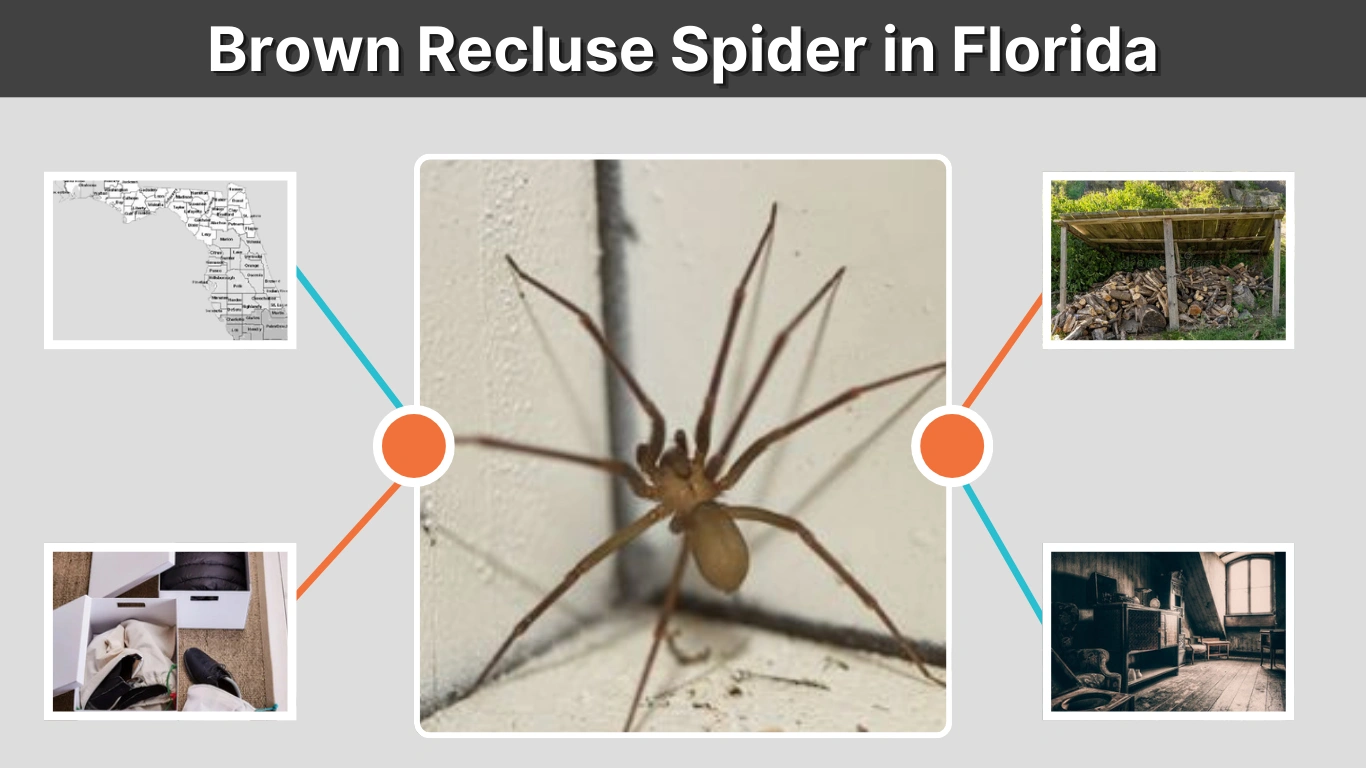
Florida is home to a wide variety of spiders, from the large and harmless wolf spider to the fast-moving huntsman. But few spiders spark as much fear in the Sunshine State as the brown recluse. Stories of necrotic bites, infestations, and deadly encounters circulate frequently online and in local news. Yet, how much of this is true? Are brown recluse spiders really established in Florida, or are they just misunderstood and misidentified? In this guide, we’ll separate myth from fact and take a closer look at what residents should know about the brown recluse spider in Florida.
Does the Brown Recluse Spider Live in Florida?
The brown recluse (Loxosceles reclusa) is one of the most infamous spiders in the United States, known for its violin-shaped marking and venomous bite. However, when it comes to Florida, the truth is surprising: brown recluse spiders are not native to the state.
Their natural range includes the south-central United States—states like Arkansas, Oklahoma, Texas, and Missouri—extending into the Midwest. Florida, with its humid subtropical and tropical climate, is outside of this distribution.
That doesn’t mean brown recluses have never been found in Florida. Occasionally, individual spiders hitchhike into the state via moving boxes, shipping crates, or personal belongings. But experts, including entomologists from the University of Florida, confirm that there are no established breeding populations of brown recluse spiders in Florida.
This means that while you could, in rare cases, come across one in Florida, it’s far more likely that what you see is a different species altogether.
Brown Recluse Spider Distribution in Florida
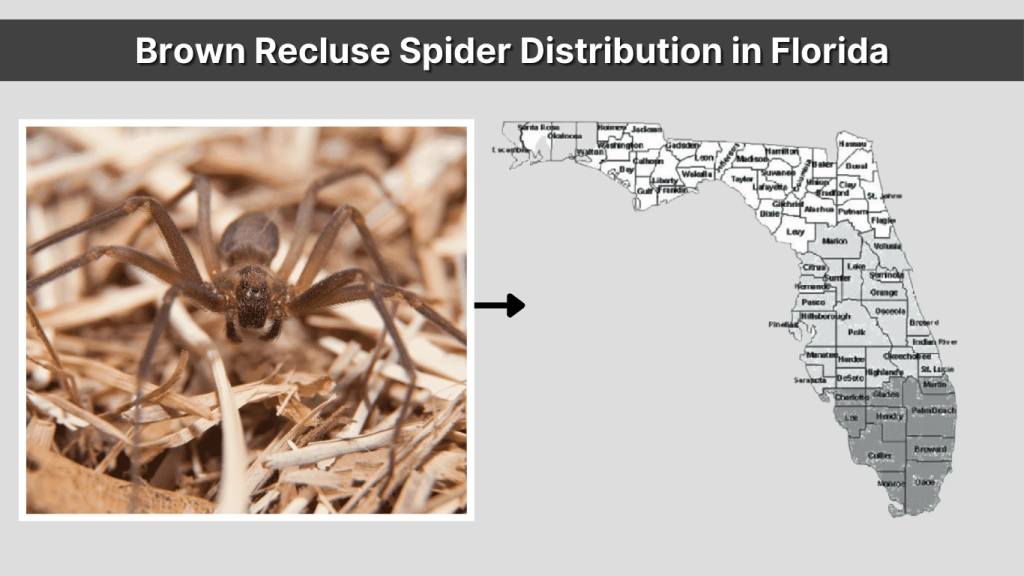
The Myth vs. Reality
- Myth: Brown recluse spiders are all over Florida, infesting homes from Miami to Tallahassee.
- Reality: Documented specimens in Florida are extremely rare and almost always trace back to accidental human transport.
Regional Reports
- North Florida: There have been occasional reports of brown recluse sightings, but most are unverified or turn out to be other species.
- Central Florida (Orlando, Tallahassee): Rumors of infestations occasionally circulate, but confirmed populations are lacking.
- South Florida & Keys: The warm, humid environment is not suitable for the brown recluse’s typical habitat.
Why Confusion Persists
- Medical misdiagnosis: Necrotic skin infections and MRSA are often blamed on recluse bites without evidence.
- Look-alike spiders: Wolf spiders, huntsman spiders, and yellow sac spiders resemble the recluse in color or body shape.
- Media exaggeration: Headlines about “deadly recluse spiders” gain traction, fueling public fear.
Brown Recluse Spider Identification in Florida

Correctly identifying a recluse is the first step in separating fact from myth.
Key Features of the Brown Recluse
- Violin-shaped marking: A dark violin pattern on the cephalothorax (just behind the head).
- Eyes: Six eyes arranged in three pairs (most spiders have eight).
- Body size: 1/4 to 3/4 inch long.
- Legs: Thin, uniformly colored, and without spines.
- Color: Light to medium brown, sometimes tan.
Florida Spiders Commonly Mistaken for Brown Recluse
- Wolf Spiders: Large, hairy hunters found throughout Florida. They can look intimidating but are harmless to humans.
- Huntsman Spiders: Big, flat-bodied spiders often seen in homes, especially in South Florida. Their speed and size often cause alarm.
- Yellow Sac Spiders: Small pale spiders whose bites can cause painful lesions, often confused with recluse bites.
- Southern House Spiders: Brown and reclusive by nature, but lacking the violin marking.
- Chilean Recluse (imported): Rarely brought into Florida accidentally, but not naturally found there.
Why Identification Is Tricky
Many Floridians panic when they see a medium or large brown spider in their home, assuming it’s a recluse. But true recluses are much less likely to be present. A quick check of the eyes, violin marking, and leg characteristics can often rule them out.
Brown Recluse Spider Bites in Florida

Brown recluse bites are notorious for their potential to cause necrotic skin lesions. But in Florida, most “recluse bites” reported to doctors turn out to be something else.
Symptoms of a True Recluse Bite
- Mild stinging at first (often unnoticed)
- Redness and swelling after several hours
- In some cases, blistering or tissue death at the site
- Rarely, systemic effects like fever, chills, or nausea
Bite Reports in Florida
Hospitals in Orlando, South Florida, and Tallahassee sometimes diagnose recluse bites, but entomologists stress that no spiders are ever collected for confirmation in most of these cases. Skin infections, insect bites, or allergic reactions are often to blame instead.
In reality, Florida residents are much more likely to be bitten by yellow sac spiders or widow spiders (black, brown, or red widow), which do live in the state.
Brown Recluse Spiders in North, Central, and South Florida

North Florida
Occasional reports of recluses in Gainesville, Tallahassee, and Jacksonville exist. Still, most are unverified and likely misidentifications of wolf spiders or house spiders.
Central Florida
Orlando and surrounding areas sometimes make headlines with “recluse infestations.” Yet, when pest control professionals investigate, they nearly always find other spider species.
South Florida & Florida Keys
South Florida’s tropical climate is especially unsuitable for the brown recluse. Instead, residents encounter huntsman spiders and widow spiders, both far more common.
Brown Recluse Spider Habitat in Florida
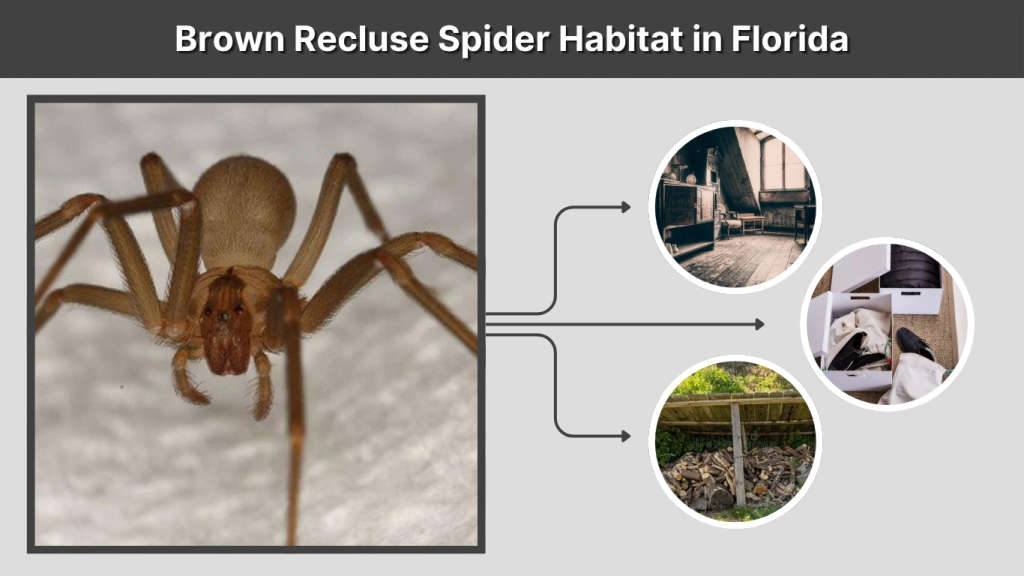
The brown recluse has very specific habitat preferences, which is another reason it doesn’t thrive in Florida.
Preferred Habitats
- Dark, dry, and undisturbed areas such as attics, closets, or storage boxes.
- Woodpiles, sheds, and garages where clutter is common.
- Inside shoes or clothing that has not been worn for a while.
Florida’s Climate Challenge
Florida’s humid and tropical conditions don’t match the brown recluse’s natural preference for drier, temperate climates. While other spiders—like widow and huntsman spiders—adapt well to Florida’s warmth, the recluse does not. That’s why confirmed breeding populations haven’t taken hold here.
What About Florida Homes?
In rare cases where brown recluse spiders have been introduced into the state, they may survive temporarily in homes. But they do not spread widely, unlike local house spiders that are well adapted to Florida environments.
Brown Recluse Spider Size and Appearance in Florida Context
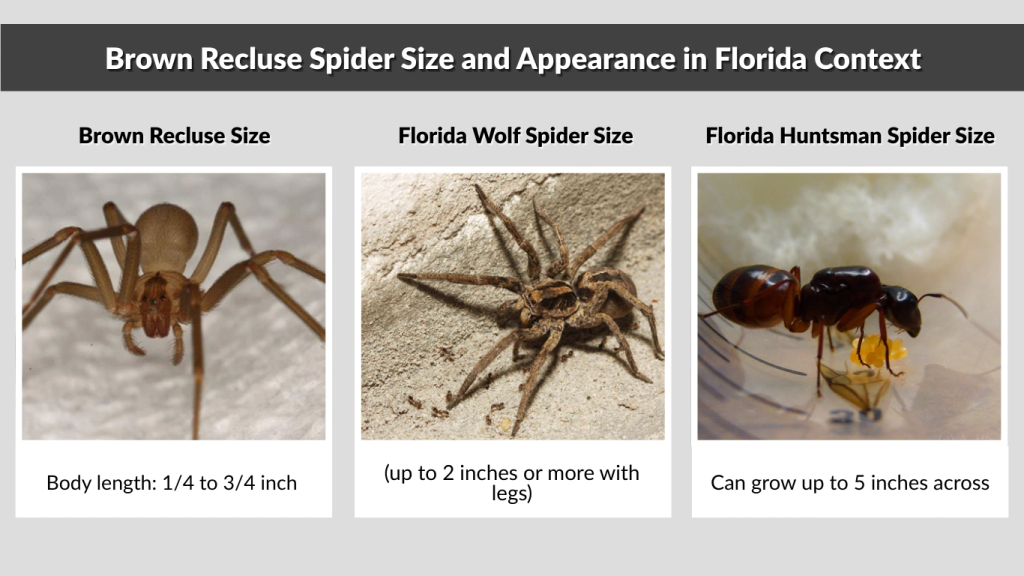
Many Floridians assume that any medium or large brown spider they see is a recluse, but size and appearance can help tell the difference.
- Brown Recluse Size
- Body length: 1/4 to 3/4 inch
- Leg span: up to 1.5 inches
- Slim, delicate build
- Body length: 1/4 to 3/4 inch
- Florida Wolf Spider Size
- Often much larger (up to 2 inches or more with legs)
- Hairy body and thick legs
- Fast-moving hunters seen indoors and outdoors
- Often much larger (up to 2 inches or more with legs)
- Florida Huntsman Spider Size
- Can grow up to 5 inches across
- Flat body, crab-like legs
- Very common in South Florida homes
- Can grow up to 5 inches across
When compared side by side, Florida’s native spiders are often much bigger and bulkier than the recluse.
Are Brown Recluse Spiders Common in Florida?
The simple answer: no.
While stories about brown recluse infestations occasionally make the news, researchers repeatedly confirm that the spider is not common in Florida. Most sightings turn out to be wolf spiders, huntsman spiders, or southern house spiders.
Even in cases where individual brown recluses have been discovered, they are usually traced back to imported goods or moving boxes from states within the spider’s true range. Without the right conditions, they fail to establish stable populations.
For most Floridians, the chance of encountering a recluse is far lower than the chance of seeing a widow spider or even a harmless wolf spider.
Brown Recluse vs Wolf Spider in Florida
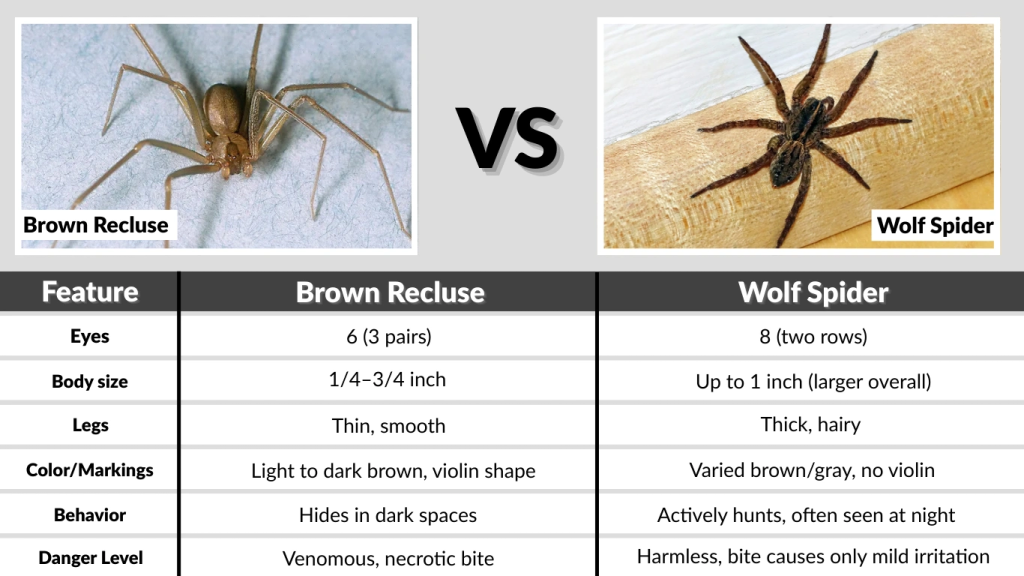
Wolf spiders are one of the most common household spiders in Florida and are frequently mistaken for recluses. Here’s how to tell them apart:
| Feature | Brown Recluse | Wolf Spider |
| Eyes | 6 (3 pairs) | 8 (two rows) |
| Body size | 1/4–3/4 inch | Up to 1 inch (larger overall) |
| Legs | Thin, smooth | Thick, hairy |
| Color/Markings | Light to dark brown, violin shape | Varied brown/gray, no violin |
| Behavior | Hides in dark spaces | Actively hunts, often seen at night |
| Danger Level | Venomous, necrotic bite | Harmless, bite causes only mild irritation |
In short, wolf spiders are much more common in Florida homes, and while they look intimidating, they pose little risk compared to the recluse.
Brown Recluse Spider Pictures & Images in Florida
A quick online search for “brown recluse spider Florida pictures” can be misleading. Many images are mislabeled and actually show:
- Wolf spiders: bulky, hairy hunters often mistaken for recluses.
- Huntsman spiders: their large size makes them appear more dangerous than they are.
- Yellow sac spiders: small but capable of causing bites blamed on recluses.
For accurate identification, look for the violin marking and the six-eye arrangement. If those features aren’t present, it’s not a recluse.
How Dangerous Are Brown Recluse Spiders in Florida?
Despite the hype, the real danger of recluse spiders in Florida is minimal.
- Bites: The venom can cause necrosis, but confirmed recluse bites in Florida are extremely rare.
- Medical Panic: Many hospitals misdiagnose wounds as recluse bites, leading to unnecessary fear.
- Other Dangerous Spiders in Florida: Residents should be more aware of widow spiders (black widow, brown widow, red widow), which are established and widespread across the state.
If a recluse bite were to occur in Florida, it would likely be from a transported spider rather than a local breeding population.
Brown Recluse Spider Prevention & Safety Tips for Florida Homes
Even though the recluse is rare, general spider safety is useful for Florida households.
Prevention Tips
- Shake out clothing and shoes before wearing.
- Keep storage boxes sealed and off the floor.
- Reduce clutter in closets, attics, and garages.
- Store firewood away from the house.
- Seal cracks and gaps in windows, doors, and foundations.
What to Do If Bitten
- Wash the wound with soap and water.
- Apply a cool compress to reduce swelling.
- Elevate the affected limb.
- Seek medical attention if symptoms worsen.
- If possible, safely capture the spider for identification.
FAQs About Brown Recluse Spiders in Florida
Are there brown recluse spiders in Florida?
They are not native and have no permanent populations in Florida. Occasional individuals may be transported here but rarely survive long-term.
What does a brown recluse spider look like in Florida?
It has a violin-shaped marking, six eyes, and a slender brown body about 1/2 inch long. Most spiders mistaken for recluses in Florida lack these features.
How common are brown recluse spider bites in Florida?
Confirmed bites are extremely rare. Most “brown recluse bites” diagnosed in Florida hospitals are actually caused by other spiders or infections.
What spiders are mistaken for brown recluse in Florida?
Wolf spiders, huntsman spiders, yellow sac spiders, and southern house spiders are the most common look-alikes.
Are brown recluse spiders poisonous in Florida?
Yes, brown recluse spiders are venomous, but they are not common in Florida. Widow spiders pose a greater risk to residents.