

Spiders are common across homes, gardens, and forests—but not all are equal in risk or behavior. Two spiders that often cause confusion are the brown recluse and the wolf spider. Both are brown, fast-moving, and can appear intimidating. However, they differ significantly in venom, appearance, web habits, and danger to humans. In this guide, we’ll break down all the differences to help you safely identify which spider you’re dealing with.
Brown Recluse vs Wolf Spider
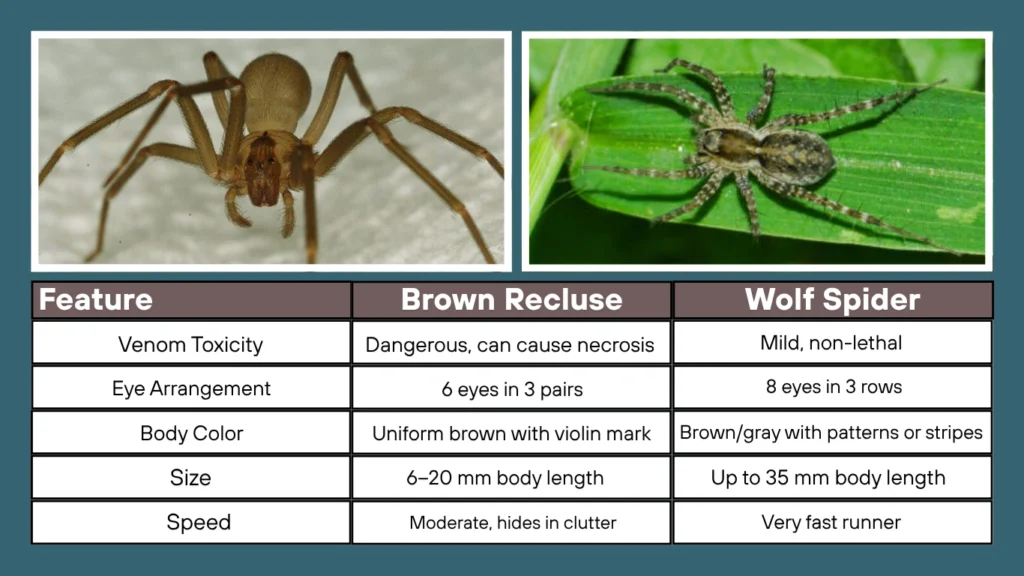
| Feature | Brown Recluse (Loxosceles reclusa) | Wolf Spider (Lycosidae family) |
| Venom Toxicity | Dangerous, can cause necrosis | Mild, non-lethal |
| Eye Arrangement | 6 eyes in 3 pairs | 8 eyes in 3 rows |
| Body Color | Uniform brown with violin mark | Brown/gray with patterns or stripes |
| Size | 6–20 mm body length | Up to 35 mm body length |
| Speed | Moderate, hides in clutter | Very fast runner |
| Web Use | No web for catching prey | Does not spin webs for prey |
| Hunting Method | Ambush predator | Active ground hunter |
| Common Habitat | Indoors (attics, closets) | Outdoors (gardens, under rocks) |
| Bite Risk | Can cause severe wounds | Rarely bites, minor symptoms |
Appearance and Eye Differences
Color and Markings
The brown recluse is typically tan to light brown and has a distinct violin-shaped marking on its back, just behind the eyes. Its legs are uniformly colored and lack noticeable hair or spines.
The wolf spider is more robust, usually brown or gray, with distinct stripe-like or mottled patterns on its body. It’s hairy and resembles a small tarantula. Unlike the recluse, it lacks a violin marking.
Eyes and Identification
One of the most reliable ways to tell them apart is by their eyes:
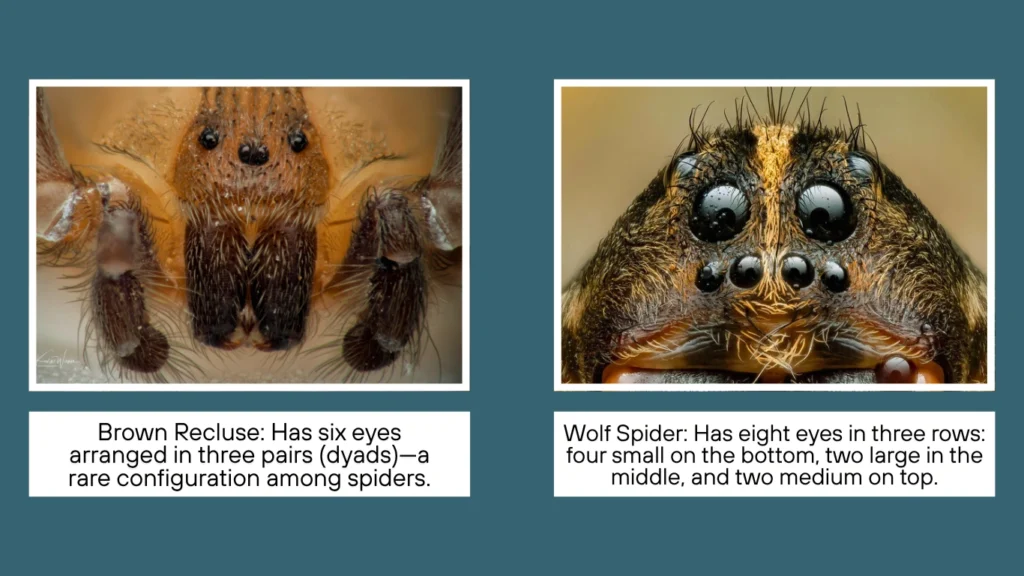
- Brown Recluse: Has six eyes arranged in three pairs (dyads)—a rare configuration among spiders.
- Wolf Spider: Has eight eyes in three rows: four small on the bottom, two large in the middle, and two medium on top.
Wolf spiders’ large middle eyes shine when exposed to light—making them easier to spot at night.
Size and Speed
Body Size
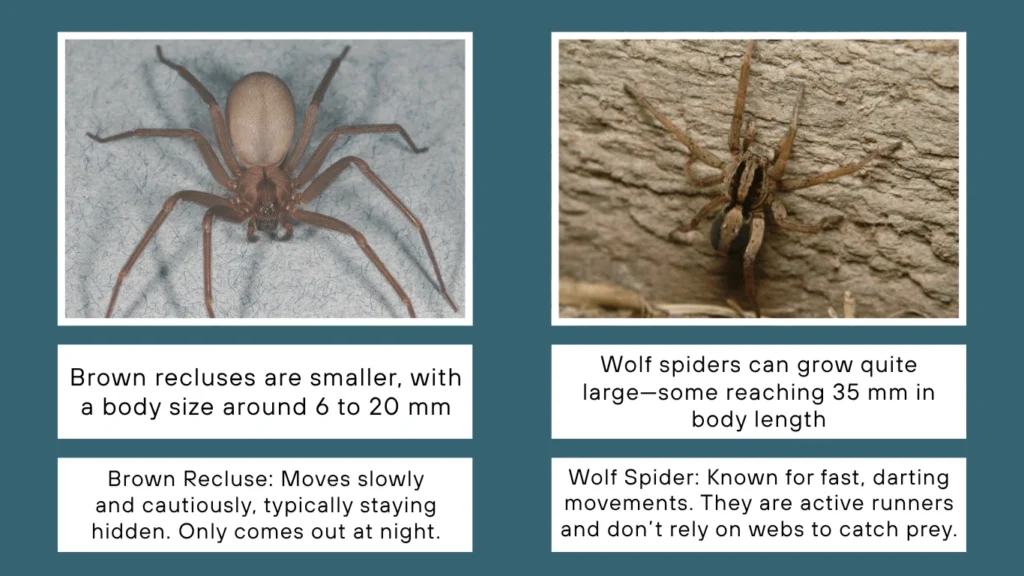
Brown recluses are smaller, with a body size around 6 to 20 mm, excluding legs. Their slender appearance can make them less noticeable.
Wolf spiders can grow quite large—some reaching 35 mm in body length. With their long, hairy legs, they often look much bigger and more intimidating.
Movement Style
- Brown Recluse: Moves slowly and cautiously, typically staying hidden. Only comes out at night.
- Wolf Spider: Known for fast, darting movements. They are active runners and don’t rely on webs to catch prey.
Habitat and Web Use
Brown Recluse Habitat
Prefers quiet, undisturbed indoor spaces such as:
- Closets
- Behind baseboards
- Inside cardboard boxes
- Under furniture
They spin irregular webs but not for trapping prey—only as shelters.
Wolf Spider Habitat
Primarily outdoors, found in:
- Gardens
- Lawns
- Under rocks or logs
- Leaf litter and forest floors
They don’t spin webs to catch food. Instead, they hunt their prey directly, often at night.
Hunting and Behavior
Hunting Style
- Brown Recluse: A sit-and-wait predator. It ambushes small insects that wander close.
- Wolf Spider: A mobile ground hunter, chasing and pouncing on its prey using its strong legs and good eyesight.
Wolf spiders may carry their egg sac attached to their abdomen and even carry their spiderlings on their back, which is a unique and recognizable behavior.
Venom and Bite Risks
Brown Recluse Bite
- Venom Type: Necrotic
- Bites may cause:
- Redness and blistering
- Tissue damage and ulceration
- Fever, rash, or nausea in severe cases
- Redness and blistering
Their bites can become serious if untreated and should be seen by a doctor, especially if the wound gets worse after 24–48 hours.
Wolf Spider Bite
- Venom Type: Non-necrotic
- Bites are rare and happen only if the spider is provoked.
- Symptoms may include:
- Mild swelling
- Redness and itching
- Slight pain, like a bee sting
- Mild swelling
Wolf spider bites do not cause lasting damage and usually resolve on their own within a few days.
Danger Level and Human Interaction
Are They Dangerous?
- Brown Recluse: Yes, due to its necrotic venom. Medical attention may be needed after a bite.
- Wolf Spider: No, unless someone is highly allergic. Their bites are harmless to most people.
Which Is More Likely to Be in Your Home?
- If you live in the central or southern United States, brown recluses may hide indoors.
- Wolf spiders may enter homes occasionally, but they prefer outdoor environments.
How to Tell Them Apart Quickly
| Trait | Brown Recluse | Wolf Spider |
| Eye Count | 6 | 8 |
| Marking | Violin on back | Stripes or mottled patterns |
| Hair | Smooth | Hairy |
| Movement | Slow, reserved | Fast runner |
| Bite Reaction | Possible necrosis | Mild irritation |
FAQs
1. Can a brown recluse and wolf spider be mistaken for each other?
Yes, due to their similar brown color and body shape. However, the eye arrangement and violin marking on the recluse help distinguish them. Wolf spiders also appear more robust and hairy.
2. Which spider is more aggressive toward humans?
Neither spider is aggressive. Brown recluses bite when trapped against the skin, while wolf spiders bite only if handled or provoked. They generally avoid humans and flee when disturbed.
3. How can I keep both spiders out of my house?
Seal cracks, reduce clutter, and keep indoor areas clean. Remove woodpiles or debris near your house. Use natural repellents like peppermint oil and minimize indoor insect populations to discourage spider entry.
4. Should I kill a wolf spider if I see one indoors?
Not necessarily. Wolf spiders are beneficial predators that control insect populations. If you find one indoors, you can safely catch and release it outside instead of killing it.
5. What should I do if bitten by a brown recluse?
Clean the wound, apply ice, and seek medical help—especially if symptoms worsen. Avoid applying heat. Early treatment can reduce the risk of skin ulceration or deeper infection.