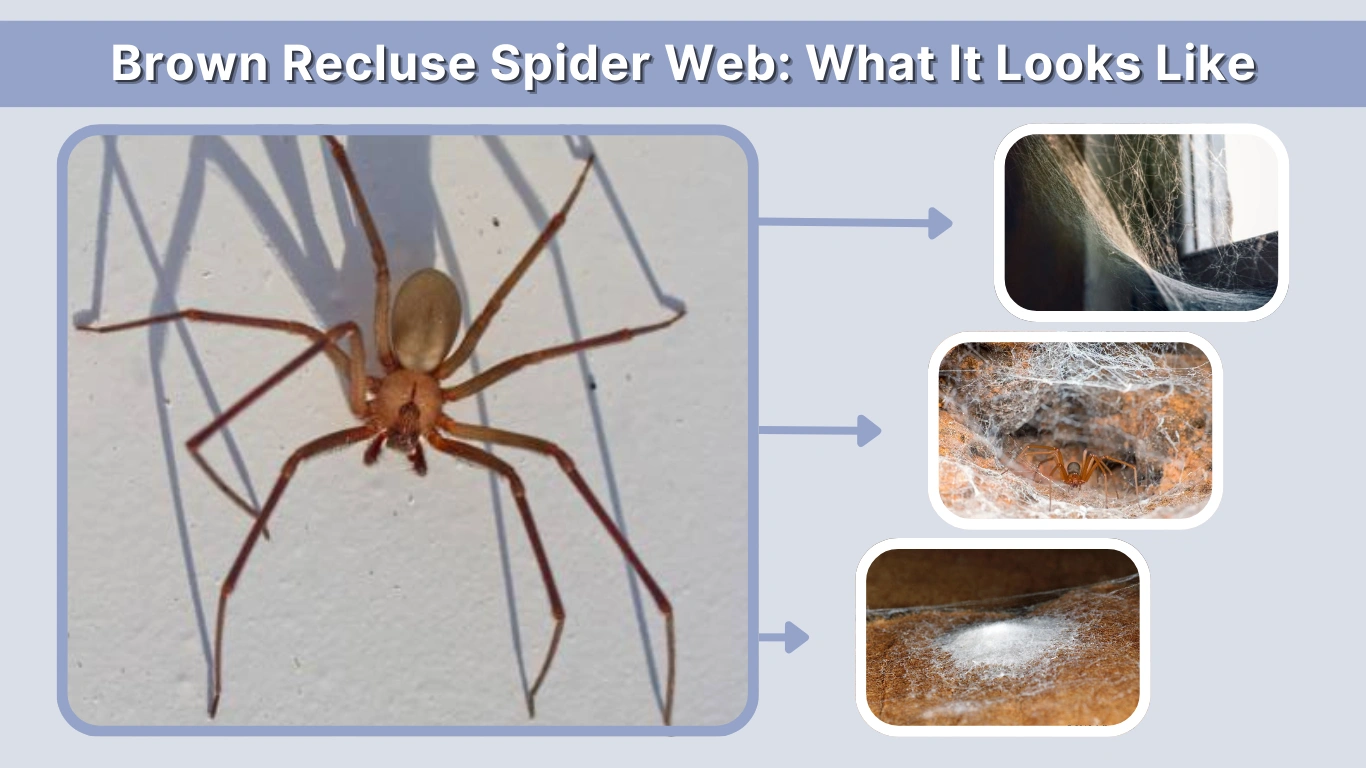
Many people search for information about the brown recluse spider web to determine whether these spiders might be living in their homes. Unlike many other spiders, brown recluse spiders do not build large, decorative webs to catch prey. Instead, they create small, irregular silk structures mainly used for shelter and protection. Understanding what a brown recluse spider web looks like and where it is commonly found can help you identify possible infestations and take steps to prevent unwanted encounters.
Do Brown Recluse Spiders Make Webs?
A common misconception is that brown recluse spiders spin large webs similar to the classic spider webs seen in gardens or corners of ceilings. In reality, brown recluse spiders behave quite differently.
These spiders are active hunters, meaning they search for prey rather than trapping insects in webs. Because of this behavior, their webs serve a different purpose compared to those of many other spider species.
Hunting Behavior of Brown Recluse Spiders
Brown recluse spiders rely on their speed and venom to catch prey. Instead of waiting in a web for insects to become trapped, they wander at night searching for small insects such as crickets, cockroaches, and other arthropods.
Once they find prey, they quickly bite and inject venom to immobilize it. This hunting strategy allows them to survive without the need for large, structured webs.
Purpose of Brown Recluse Spider Webs
Although they do not build trapping webs, brown recluse spiders still produce silk. Their silk is mainly used for protective purposes.
Common uses of their webs include:
- Creating a hidden retreat or shelter
- Protecting egg sacs
- Providing a temporary resting place
These silk structures are usually small and located in dark, undisturbed places where the spider can hide safely during the day.
What Does a Brown Recluse Spider Web Look Like?
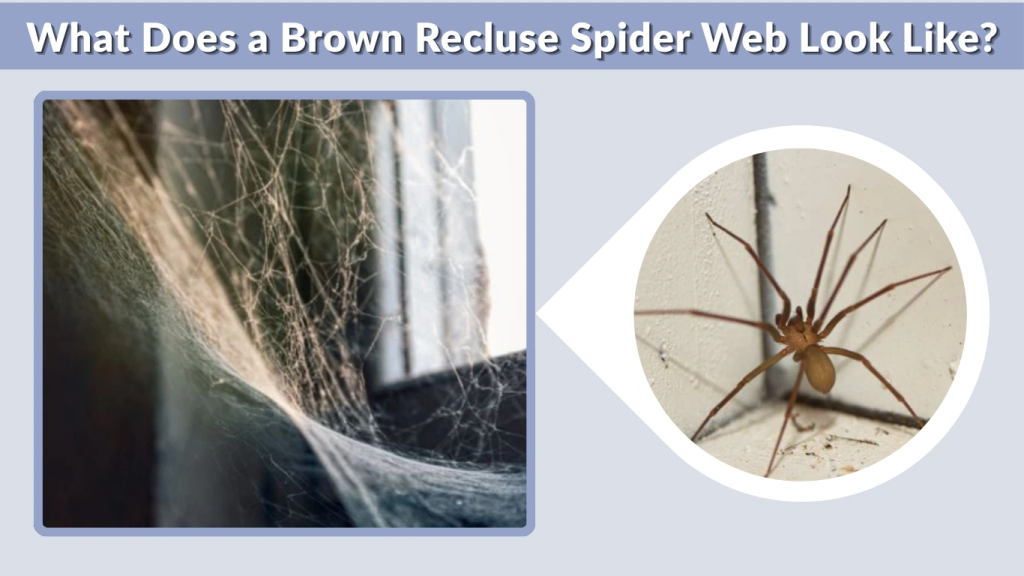
The appearance of a brown recluse spider web is quite different from the familiar circular webs many people associate with spiders.
Irregular and Messy Structure
A brown recluse spider web typically looks irregular and messy. Unlike orb-weaving spiders that build perfectly symmetrical circular webs, brown recluse spiders spin loose strands of silk that form a tangled or disorganized pattern.
These webs often appear random and may look like thin layers of silk stretched across a small hiding space.
Thick, Dusty-Looking Silk
Another characteristic of brown recluse spider webs is their thick and slightly sticky silk. Over time, the web may collect dust and debris, giving it a cotton-like or dusty appearance.
Because the web is usually built in quiet areas that are rarely disturbed, it can remain in place for long periods and gradually accumulate dirt.
Small and Hidden Web Locations
Brown recluse webs are usually small and hidden, making them difficult to notice. They are not designed to be visible or to catch flying insects.
Instead, the web is typically tucked into corners, cracks, or other protected spaces where the spider can remain hidden from predators and human activity.
Brown Recluse Spider Web vs Other Spider Webs
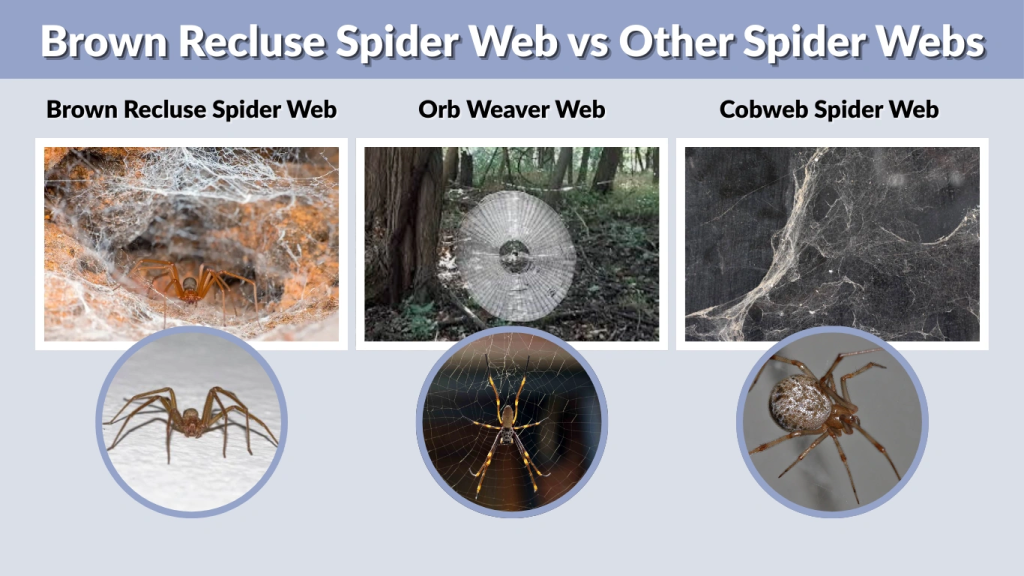
Learning how to distinguish a brown recluse web from other spider webs can help you identify whether a brown recluse spider might be present.
Brown Recluse Web vs Orb Weaver Web
Orb weaver spiders are famous for creating large circular webs with intricate symmetrical patterns. These webs are designed to catch flying insects.
Brown recluse webs, however, are very different. They lack any organized pattern and appear tangled or irregular. They are also much smaller and usually hidden from view.
Brown Recluse Web vs Cobweb Spider Web
Cobweb spiders, also known as house spiders, build tangled webs that are often found in corners of ceilings or furniture. These webs are designed to trap insects that wander into them.
While cobweb spider webs may appear messy, they are still built specifically for catching prey. Brown recluse webs, on the other hand, function primarily as hiding places rather than insect traps.
Brown Recluse Web vs Wolf Spider Behavior
Wolf spiders provide another interesting comparison. Like brown recluse spiders, wolf spiders are active hunters and do not rely on webs to capture prey.
However, wolf spiders typically do not build webs at all, while brown recluse spiders still create small silk retreats for shelter.
Where Are Brown Recluse Spider Webs Commonly Found?
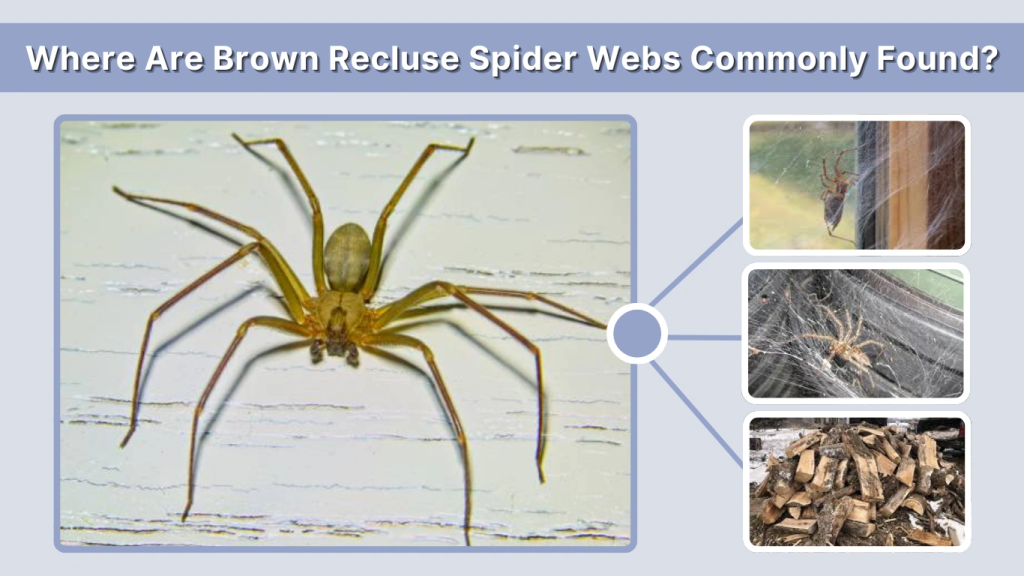
Brown recluse spiders prefer dark, quiet environments where they are unlikely to be disturbed. Their webs are usually located in hidden areas that provide protection during the daytime.
Inside Homes
Inside houses, brown recluse spiders often build their webs in places that are rarely used or cleaned. Common indoor locations include:
- Closets and storage areas
- Basements
- Attics
- Inside cardboard boxes
- Behind furniture
Because these spiders prefer darkness and minimal activity, cluttered areas are especially attractive hiding spots.
Outdoor Locations
Brown recluse spiders can also live outdoors. In natural environments, they often hide in protected spaces such as:
- Woodpiles
- Under rocks
- Inside sheds or barns
- Beneath tree bark
These locations provide the darkness and shelter that brown recluse spiders prefer.
Dark and Undisturbed Areas
One of the most important factors for brown recluse spiders is limited disturbance. Areas that are rarely accessed by people or pets offer ideal conditions for their webs and hiding places.
Regular cleaning and reducing clutter can help prevent these spiders from establishing themselves inside a home.
Brown Recluse Spider Nest and Egg Sacs
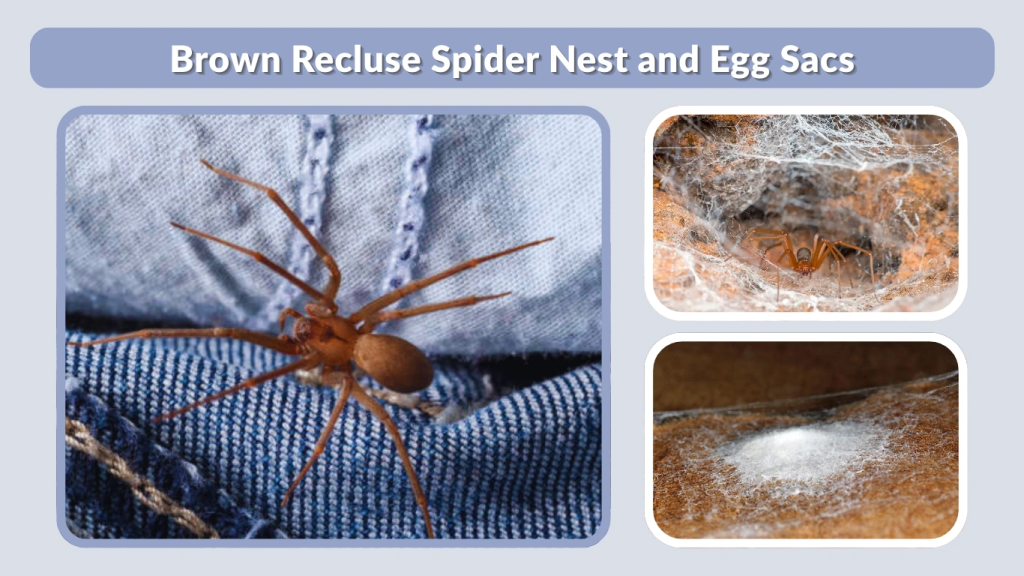
In addition to simple shelter webs, brown recluse spiders also create silk structures to protect their eggs. These nests are usually hidden deep inside quiet areas where the spider feels safe.
Female brown recluse spiders lay eggs in small silk sacs, which are carefully attached to protected surfaces. The spider often stays close to the egg sac to guard it until the spiderlings hatch.
Egg Sac Appearance
Brown recluse egg sacs are small and round, usually measuring a few millimeters in size. They are typically cream-colored or off-white and made from dense silk.
Each egg sac may contain dozens of tiny spider eggs, which eventually hatch into spiderlings. The sacs are usually hidden inside cracks, corners, or under objects where they are difficult to detect.
Webs Used for Egg Protection
The silk surrounding the egg sac helps protect the developing spiders from predators and environmental threats. These protective webs are usually thicker than normal retreat webs.
Because egg sacs are placed in hidden areas, they may remain unnoticed for long periods, allowing spider populations to grow if the environment remains undisturbed.
Signs of Brown Recluse Spider Activity
Detecting brown recluse spiders early can help prevent potential problems inside your home. While the spiders themselves may be difficult to spot, there are several signs that may indicate their presence.
Some common signs include:
- Irregular silk webs in dark corners or storage areas
- Shed spider skins, which appear as empty shells left behind during molting
- Egg sacs hidden in cracks, boxes, or under furniture
- Occasional sightings of the spider, especially at night
Because brown recluse spiders are nocturnal, they are most active after dark. Seeing a spider moving along walls or floors at night may be a sign that they are living nearby.
How to Identify a Brown Recluse Spider
Correctly identifying a brown recluse spider is important because many harmless spiders are often mistaken for them. Several physical features can help distinguish this species from others.
Violin-Shaped Marking
The most recognizable feature of a brown recluse spider is the violin-shaped marking on its back. This dark marking is located on the cephalothorax (the body section behind the head) and points toward the abdomen.
Because of this marking, brown recluse spiders are sometimes called “fiddleback spiders.”
Body Size and Color
Brown recluse spiders are relatively small. Their bodies usually measure 6 to 20 millimeters in length, although their long legs can make them appear larger.
Their color ranges from light tan to dark brown, and their bodies are generally smooth without heavy hair or bold patterns.
Six Eyes Instead of Eight
Most spiders have eight eyes arranged in two rows. Brown recluse spiders are different because they have six eyes arranged in three pairs.
This unique eye pattern is one of the key scientific features used to identify them.
Are Brown Recluse Spider Webs Dangerous?
The web itself is not dangerous to humans. Unlike some spider species that rely heavily on webs to trap prey, the brown recluse spider mainly uses silk as a hiding place.
The real danger comes from the spider’s venomous bite, which can cause skin irritation or, in rare cases, tissue damage.
However, brown recluse spiders are not aggressive and typically bite only when they feel threatened or trapped against the skin. Avoid disturbing hidden webs in dark areas to reduce the risk of accidental contact.
How to Prevent Brown Recluse Spiders in Your Home
Preventing brown recluse spiders from entering or living in your home is the best way to avoid encounters with them. Simple maintenance and cleaning habits can greatly reduce the chances of infestation.
Some helpful prevention steps include:
- Reduce clutter in closets, garages, and basements
- Seal cracks and gaps around windows, doors, and walls
- Shake out shoes, clothing, and bedding before using them
- Wear gloves when handling firewood or stored items
- Clean and vacuum regularly, especially in corners and storage areas
Maintaining a tidy home and regularly inspecting hidden spaces can help discourage spiders from settling in.
FAQs
Do brown recluse spiders build webs?
Yes, but their webs are not used for trapping prey. Brown recluse spiders create small irregular silk structures mainly used as hiding places and shelters.
What does a brown recluse spider web look like?
A brown recluse spider web usually appears messy and irregular. It lacks the circular pattern seen in orb webs and is often hidden in dark, undisturbed areas.
Where do brown recluse spiders make their webs?
These spiders prefer quiet locations such as basements, closets, attics, woodpiles, storage boxes, and behind furniture.
How can you tell if a spider web belongs to a brown recluse?
Brown recluse webs are typically small, irregular, and located in hidden spaces rather than open areas where insects fly.
Are brown recluse webs sticky?
Their silk may feel slightly sticky and can collect dust over time, but the web is mainly used for shelter rather than trapping insects.