
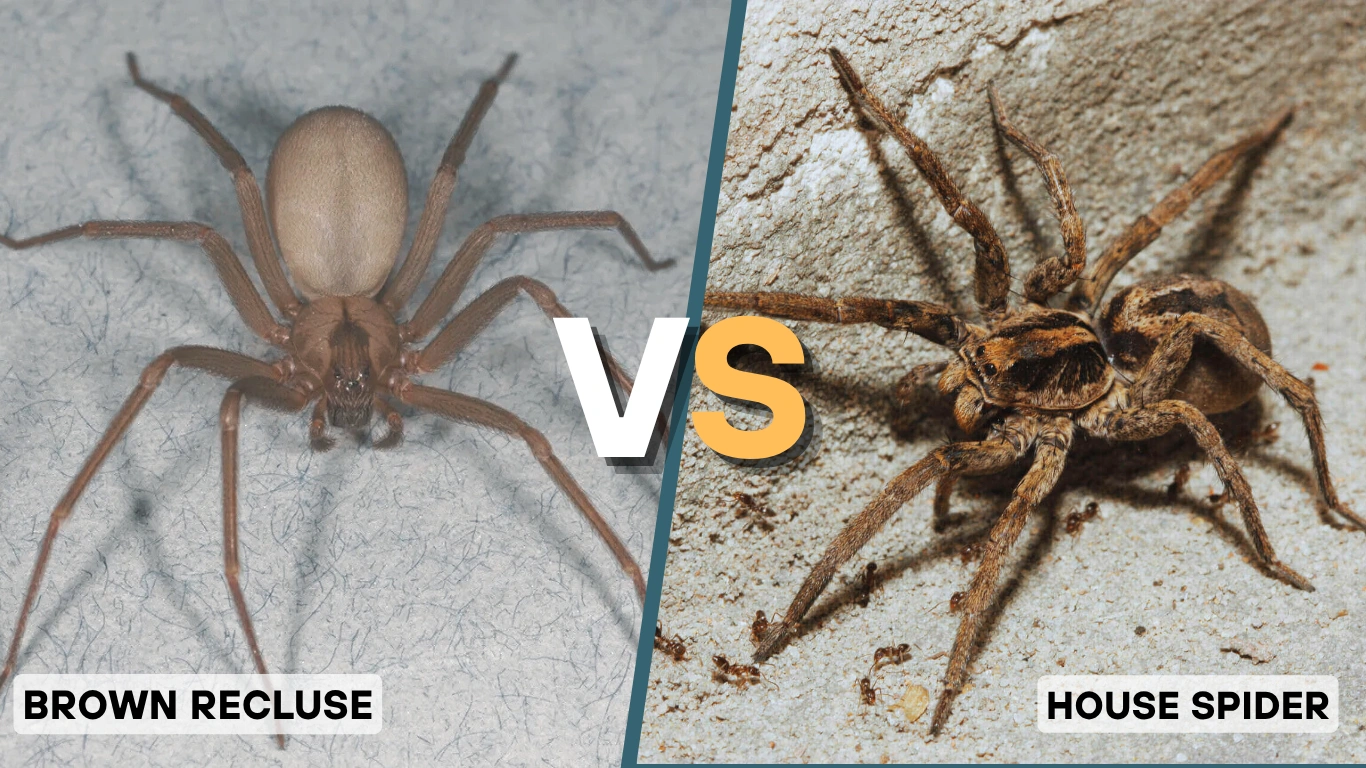
Many homeowners get uneasy when they spot a brown spider lurking in the corner of a room or inside a box in the garage. But not all brown spiders are dangerous. Two species that are often confused are the brown recluse and the common house spider. While they share a similar appearance and both prefer indoor environments, they are vastly different in terms of behavior, venom, and risks to humans. In this article, we’ll compare these two spiders side by side to help you identify them and understand the real danger—if any—they pose.
Brown Recluse vs House Spider
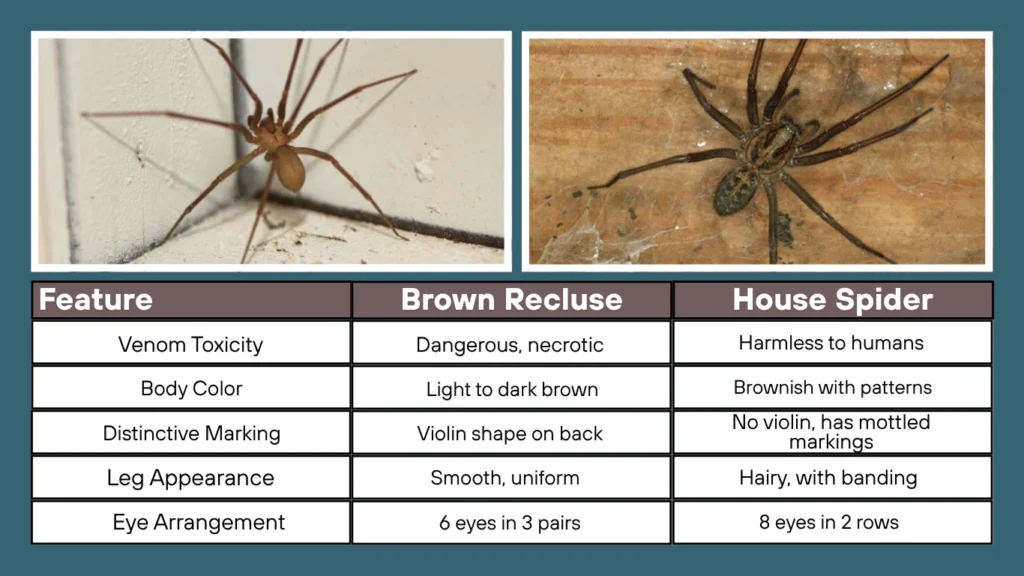
| Feature | Brown Recluse (Loxosceles reclusa) | House Spider (Parasteatoda tepidariorum) |
| Venom Toxicity | Dangerous, necrotic | Harmless to humans |
| Body Color | Light to dark brown | Brownish with patterns |
| Distinctive Marking | Violin shape on back | No violin, has mottled markings |
| Leg Appearance | Smooth, uniform | Hairy, with banding |
| Eye Arrangement | 6 eyes in 3 pairs | 8 eyes in 2 rows |
| Web Type | Irregular, hidden | Cobweb in open corners |
| Behavior | Nocturnal, hides | Active near webs |
| Geographic Range | Southern & Midwestern USA | Global (especially North America) |
| Bite Symptoms | Can cause severe necrosis | Mild or no symptoms |
Appearance Differences
Body Shape and Size
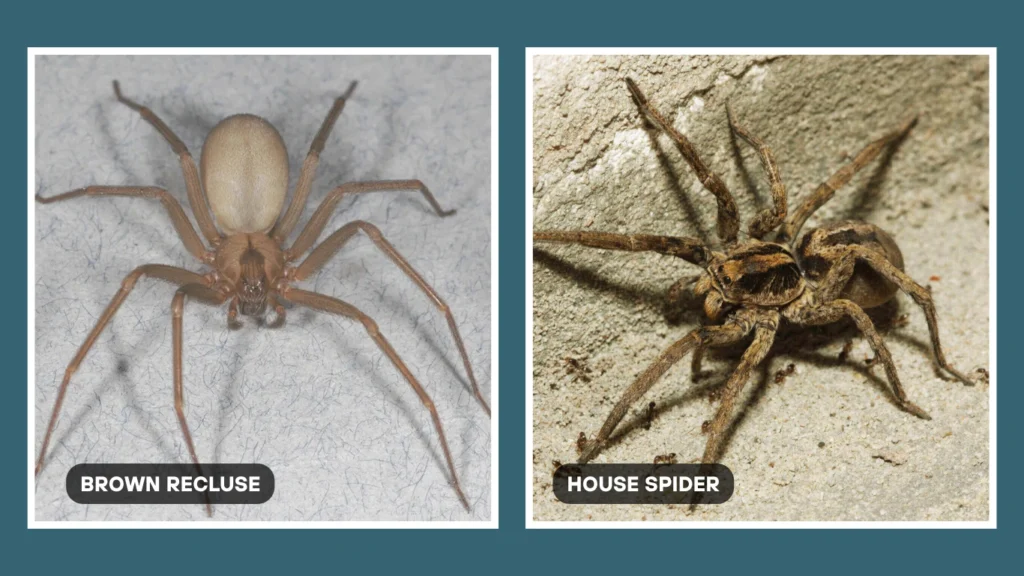
Brown recluses are slender, with a body length ranging from 6 to 20 mm (not counting legs). Their legs are thin and uniform in color. The common house spider is smaller, typically around 4 to 9 mm, and has a more bulbous abdomen. While both have long legs, the house spider’s legs often appear slightly hairy and patterned.
Color and Markings
The brown recluse has a uniform tan or brown body with no stripes or patterns—except for the distinctive violin-shaped marking on its back, just behind the eyes. This “violin” mark is the key to identifying them, though it’s not always clearly visible. In contrast, house spiders are more mottled and patterned, with light and dark brown patches across their bodies and legs. They do not have a violin marking.
Eyes and Legs
Most spiders have eight eyes arranged in two rows, but the brown recluse is different—it has six eyes arranged in three pairs, which is unusual. This is one of the most reliable identification traits. Its legs are smooth and lack visible spines or hairs. The house spider has eight eyes and legs that are hairy, often with alternating light and dark bands.
Web Structure and Behavior
Web Type and Placement
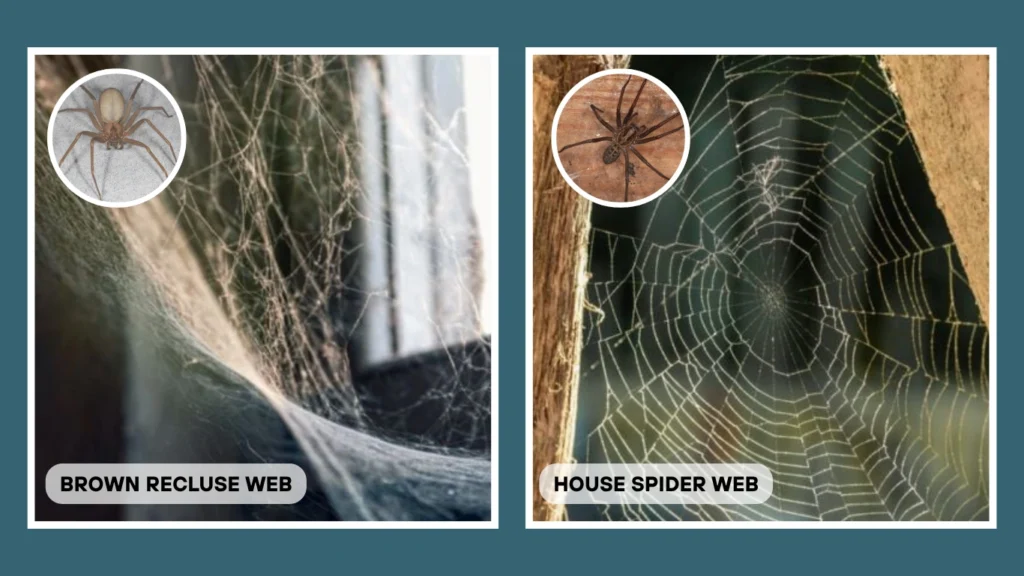
Brown recluses spin irregular, messy webs in undisturbed areas such as attics, storage boxes, or behind furniture. They don’t use their webs to catch prey but as a retreat during the day. House spiders, on the other hand, spin classic cobwebs—tangled, messy silk webs—in open corners, ceiling edges, and windowsills. Their webs are more visible and frequently maintained.
Daily Behavior
Brown recluses are nocturnal and shy. They avoid human interaction and hide in dark, quiet places during the day, becoming active only at night to hunt insects. You’re unlikely to spot one unless you disturb its hiding place. House spiders are more tolerant of human presence and often remain near their webs, waiting for prey. They’re not aggressive and rarely wander far.
Venom and Bite Risks
Brown Recluse Bites
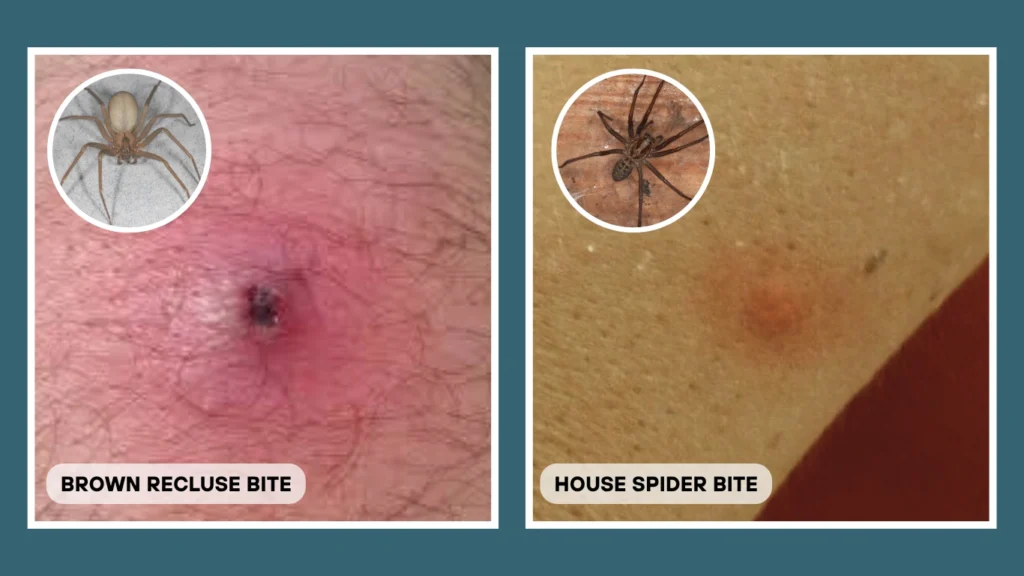
The brown recluse is known for its potentially serious bite. Although they don’t bite unless provoked or trapped against the skin, the venom can destroy tissue and lead to necrotic wounds. Symptoms may include:
- Redness and swelling
- A blister that develops into an ulcer
- Dead skin tissue (necrosis)
- Fever, fatigue, and nausea in rare cases
Medical treatment is advised if you suspect a brown recluse bite, especially if symptoms worsen after 24 hours.
House Spider Bites
The house spider is considered harmless to humans. Even when they do bite (which is extremely rare), their venom is mild. You might experience a slight itch or redness similar to a mosquito bite, but there’s no serious risk. Most people won’t even notice they’ve been bitten.
Habitat and Distribution
Where They’re Commonly Found
The brown recluse prefers warm, dry, and undisturbed places. They are most commonly found in the Midwestern and Southern United States. Homes, sheds, and basements are typical hideouts. They’re not common outside the U.S.
House spiders are globally distributed, especially in North America, Europe, and Asia. They adapt well to indoor conditions and are among the most common indoor spiders in many regions.
Indoor Hiding Spots
- Brown Recluse: Cardboard boxes, clothing piles, behind wall hangings, under beds, and in storage closets.
- House Spider: Ceiling corners, windows, behind furniture, and garages.
How to Identify Them Safely
Before panicking over a spider, take time to observe carefully:
- Look for the violin mark on the brown recluse.
- Count eyes if possible (brown recluse = 6; house spider = 8).
- Examine the web: if it’s tucked away and hidden, it may be recluse; if it’s in a visible ceiling corner, it’s likely a house spider.
- Consider the location: cluttered storage areas increase the chance of finding a brown recluse.
What to Do If You See One
If you spot a brown spider in your home:
- Do not touch it with bare hands.
- Trap it using a glass and paper, then examine or photograph for ID.
- For brown recluse sightings, consider calling pest control, especially if multiple spiders are present.
- Declutter your home, vacuum corners, and seal cracks or gaps.
FAQs
1. Can a house spider bite be confused with a recluse bite?
It’s unlikely. Brown recluse bites often develop into painful, ulcerated wounds with dark centers. House spider bites rarely cause more than minor irritation. If symptoms become severe or spread quickly, it’s more likely a recluse and should be checked by a doctor.
2. What should I do if bitten by a brown recluse?
Immediately clean the bite with soap and water, apply a cool compress, and avoid scratching. Watch for signs like increasing pain, blistering, or dark tissue. Seek medical attention promptly—early treatment can reduce complications and prevent deep skin necrosis.
3. Is the brown recluse found in every U.S. state?
No. Brown recluse spiders are native to the central and southern United States, especially the Midwest. They are rarely found in northern or coastal states. Verified sightings outside their native range are uncommon and often due to accidental transport.
4. How do I get rid of spiders in my house naturally?
Use natural repellents like peppermint oil spray, vinegar, or citrus. Vacuum frequently, remove clutter, and seal small cracks in walls or windows. Reducing indoor insect populations also discourages spiders from staying, as it eliminates their food sources.
5. Do brown recluses ever live in groups?
Brown recluses are solitary by nature. However, in ideal environments—such as quiet storage areas with ample food—they may be found in larger numbers. Finding several in one area is a red flag that your space may require professional pest control.