
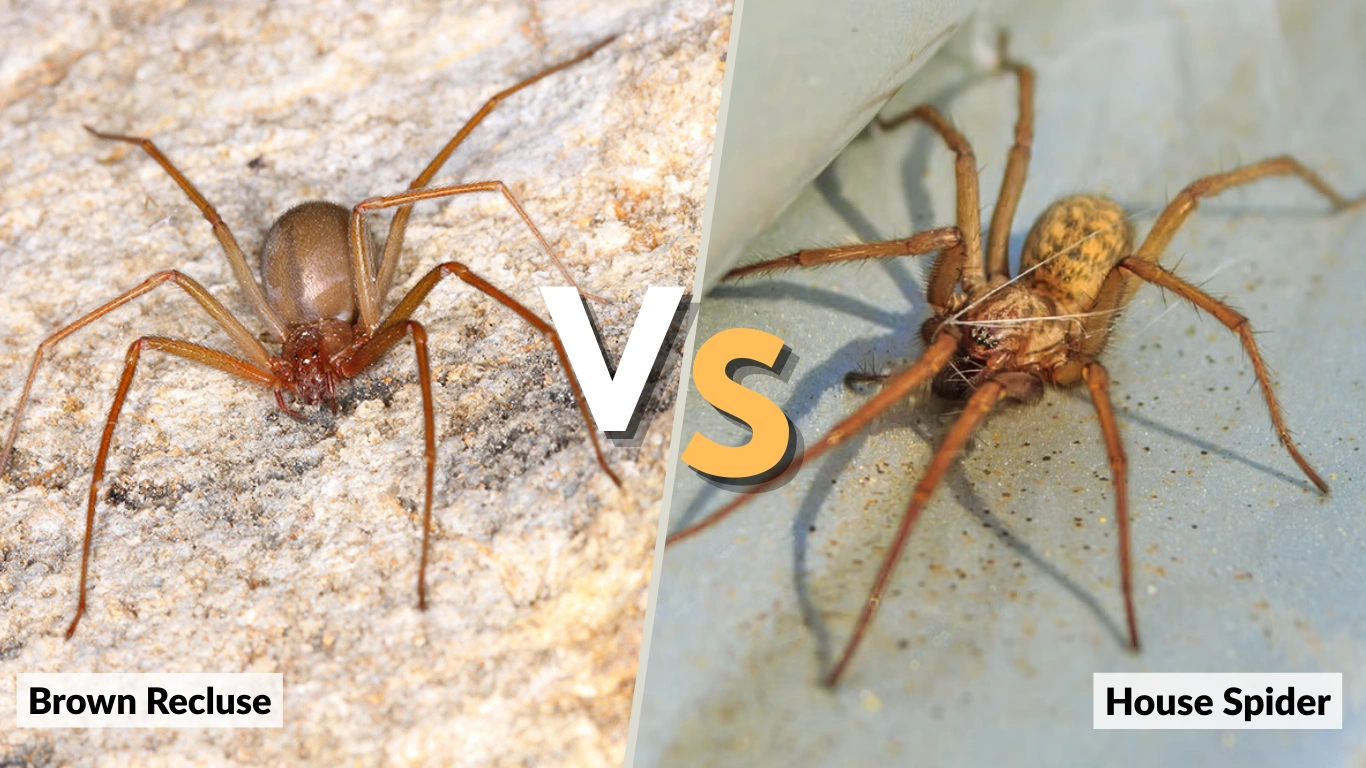
Finding a spider in your home can be unsettling, and many people immediately wonder if it could be a dangerous species. Two of the most commonly confused spiders are the brown recluse spider and the common house spider. At first glance, their similar size and coloring make them easy to mix up. However, knowing the differences is essential because one is potentially harmful while the other is completely harmless.
Why People Confuse Brown Recluse with House Spiders
Both spiders are small, brownish, and often live indoors in corners, basements, or storage spaces. Their overlapping habitats and colors lead homeowners to assume any brown spider might be a recluse. This fear can result in misidentifying harmless house spiders and unnecessary alarm. Learning key traits makes it easier to tell them apart quickly and confidently.
Quick Comparison Table: Brown Recluse vs House Spider

| Feature | Brown Recluse Spider | House Spider (Parasteatoda tepidariorum) |
| Size | ¼ to ½ inch body length | ⅛ to ⅜ inch body length |
| Color | Light to medium brown | Brown, gray, or tan with mottled patterns |
| Eyes | 6 eyes in pairs | 8 eyes, typical spider arrangement |
| Distinct Marking | Violin-shaped mark on back | No violin marking |
| Legs | Uniform in color, no bands | May have banding or ring patterns |
| Web Type | Thin, irregular retreat web | Messy cobwebs to catch prey |
| Danger Level | Venomous bite, can cause necrosis | Harmless, rarely bites |
| Common Locations | Closets, basements, storage boxes | Corners of rooms, windows, basements |
Brown Recluse Spider Overview
Identification
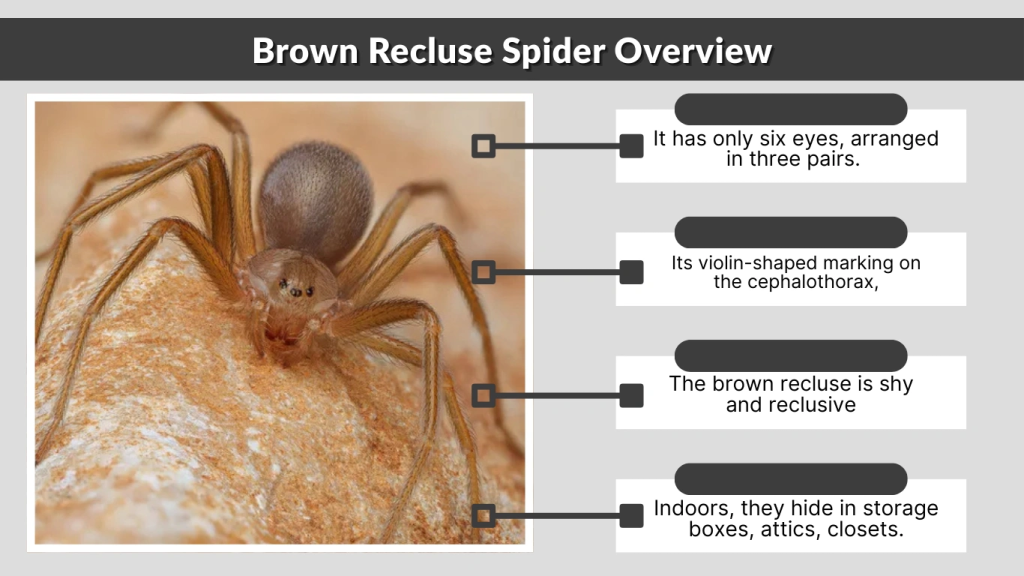
The brown recluse (Loxosceles reclusa) is recognized by its violin-shaped marking on the cephalothorax, where the “neck” points toward the abdomen. Unlike most spiders, it has only six eyes, arranged in three pairs. Its legs are long, thin, and uniformly colored without stripes.
Behavior
As its name suggests, the brown recluse is shy and reclusive. It avoids human contact and spends daylight hours hidden in dark spaces. At night, it actively hunts for small insects rather than relying on webs to capture prey.
Habitat
Outdoors, they are commonly found in woodpiles, barns, or sheds. Indoors, they hide in storage boxes, attics, closets, or behind furniture where they are rarely disturbed.
Risk to Humans
While not aggressive, their venom can be medically significant. A bite may lead to irritation, blistering, or, in rare cases, tissue necrosis. Most bites occur when a recluse is accidentally pressed against the skin, such as when putting on shoes or clothes.
House Spider Overview

Identification
The common house spider (Parasteatoda tepidariorum) is smaller and more patterned than the recluse. They often display mottled markings on their abdomen and sometimes banded legs. Like most spiders, they have eight eyes.
Behavior
House spiders build messy cobwebs in corners, near windows, and in basements. They rely on their webs to trap flies, mosquitoes, and other small insects. Unlike the recluse, they don’t actively hunt and spend most of their lives in or near their webs.
Habitat
They thrive in human environments, especially in places with insect activity. You’ll often find them in garages, basements, window corners, and ceilings.
Risk to Humans
House spiders are harmless. Their bites are extremely rare and typically no worse than a mosquito bite. In fact, they are beneficial because they control insect populations in your home.
Key Differences Between Brown Recluse and House Spider
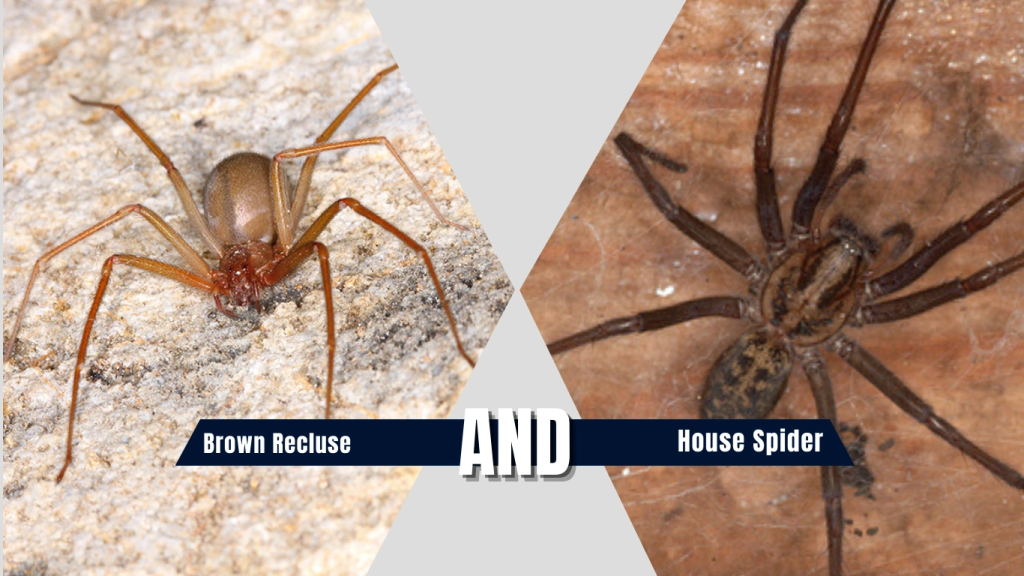
Although they may look similar at first, several clear traits set them apart.
Physical Appearance
- Brown Recluse: Identified by its violin-shaped mark and six eyes arranged in pairs. Its legs are smooth and uniformly colored.
- House Spider: Lacks the violin mark and has eight eyes. Its abdomen is mottled, and its legs often show faint banding.
Webs and Hunting
- Brown Recluse: Builds small, irregular webs only for shelter. It hunts prey at night rather than waiting for insects in webs.
- House Spider: Spins large, messy cobwebs in corners to trap insects. They rely on vibrations in the web to capture food.
Behavior and Aggression
- Brown Recluse: Avoids humans and bites only when pressed against skin.
- House Spider: Extremely timid and almost never bites. They simply retreat deeper into their webs when disturbed.
Danger Level
- Brown Recluse: Venom may cause painful or dangerous reactions in rare cases. Medical attention is often needed.
- House Spider: Non-venomous to humans and poses no threat.
How to Tell Them Apart in Your Home
If you’re unsure whether the spider you see is a brown recluse or a house spider, follow these steps:
- Check for the Violin Marking – If it’s present, you may be dealing with a recluse.
- Count the Eyes – Six eyes (recluse) versus eight eyes (house spider).
- Look at the Web – Messy cobwebs usually belong to house spiders.
- Consider the Location – Recluses often hide in shoes, clothing, and boxes, while house spiders stay in web corners.
- Size and Shape – House spiders tend to be smaller and rounder-bodied compared to the leaner recluse.
What to Do If You See One in Your House
- For Brown Recluse:
- Stay calm and avoid contact.
- Safely trap it with a container and release it outside if possible.
- If sightings increase, contact professional pest control.
- Stay calm and avoid contact.
- For House Spider:
- Leave it alone—house spiders help control insect populations.
- If webs are bothersome, gently vacuum or remove them.
- Relocate them outdoors if you prefer not to share your space.
- Leave it alone—house spiders help control insect populations.
Myths and Misidentifications
- Myth: Every brown spider indoors is a recluse.
Fact: Many harmless spiders, such as orb-weavers, wolf spiders, or cellar spiders, are mistakenly identified as recluses. - Myth: Brown recluse spiders aggressively attack humans.
Fact: They are shy and only bite when trapped against skin. - Myth: House spiders are dangerous and should be killed.
Fact: They are harmless and often beneficial for pest control.
FAQs
How do I know if a spider in my house is a brown recluse?
Look for the violin-shaped marking and six eyes. Most spiders, including house spiders, don’t have these traits.
Are house spiders good to keep around?
Yes. They help reduce indoor insect populations by feeding on flies, mosquitoes, and small pests.
Do brown recluse spiders infest homes in large numbers?
Not usually. They are solitary and prefer hidden, undisturbed spots. Multiple sightings may mean your home offers ideal shelter.
Can a brown recluse bite kill you?
Fatalities are extremely rare. While bites may cause serious skin damage in rare cases, most heal with proper medical care.
Should I exterminate house spiders too?
No, extermination isn’t necessary. They are harmless, and removing webs or relocating them is enough.