
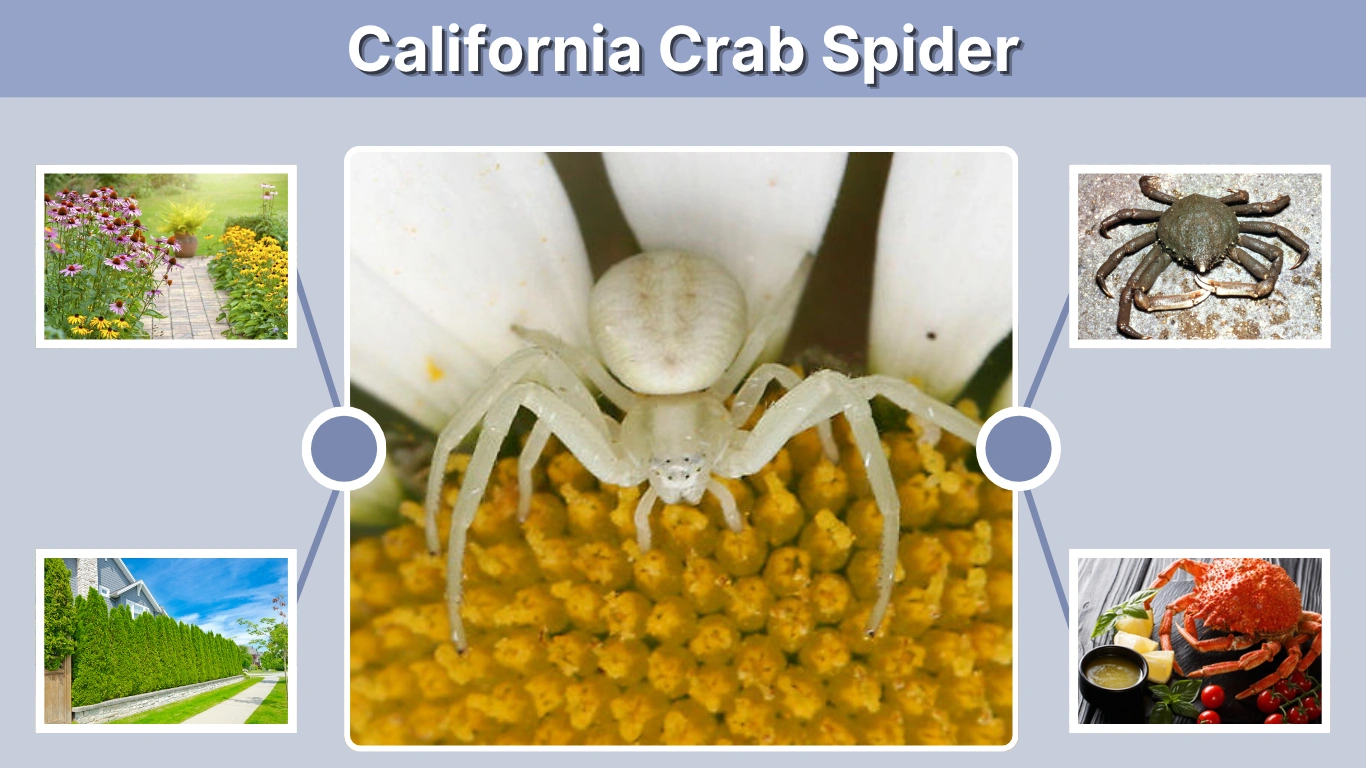
The California Crab Spider is a term used for two distinct creatures — the land-dwelling crab spider (family Thomisidae) and the marine California Spider Crab (Loxorhynchus grandis). Both share crab-like features, but they inhabit entirely different worlds. On land, these tiny crab spiders help control insect populations, while in the ocean, the giant spider crab dominates California’s coastal reefs with its size and strength.
Land-Dwelling Crab Spiders in California
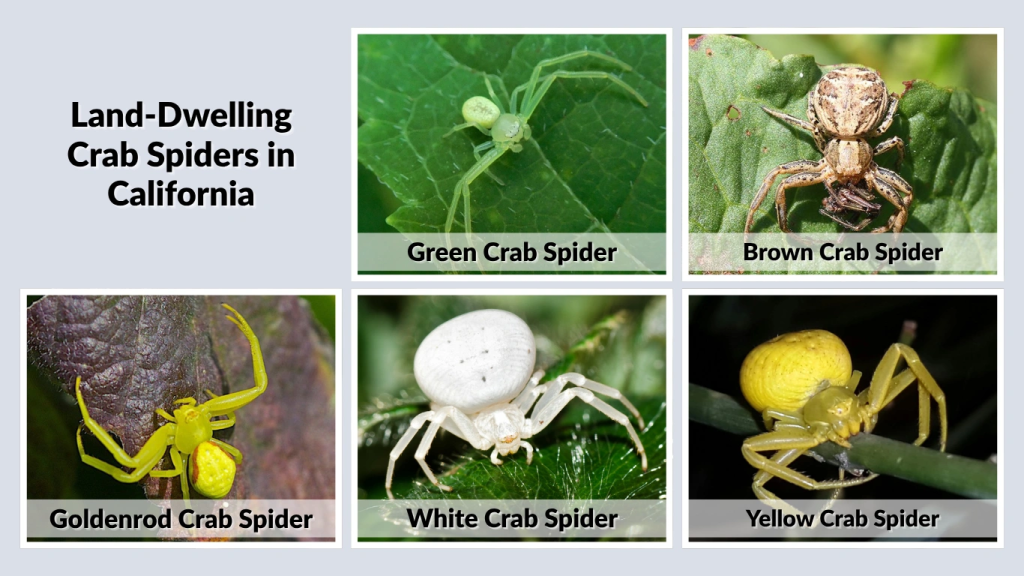
Common Species
California is home to several crab spider species, each uniquely adapted to its surroundings. The most common include:
- Goldenrod Crab Spider (Misumena vatia) – A striking species that can shift between yellow and white to match flower petals.
- Green Crab Spider (Misumessus oblongus) – Bright green, often seen camouflaging on leaves.
- Brown Crab Spider – Earth-toned and common in bark or garden beds.
- White Crab Spider – Commonly found on daisies, sunflowers, and desert blooms.
- Yellow Crab Spider – Thrives in southern California’s warm, dry habitats.
All are small, typically 5–10 mm, and capable of moving sideways like a true crab. Their flattened bodies and extended front legs make them agile hunters and masters of camouflage.
Habitat and Range
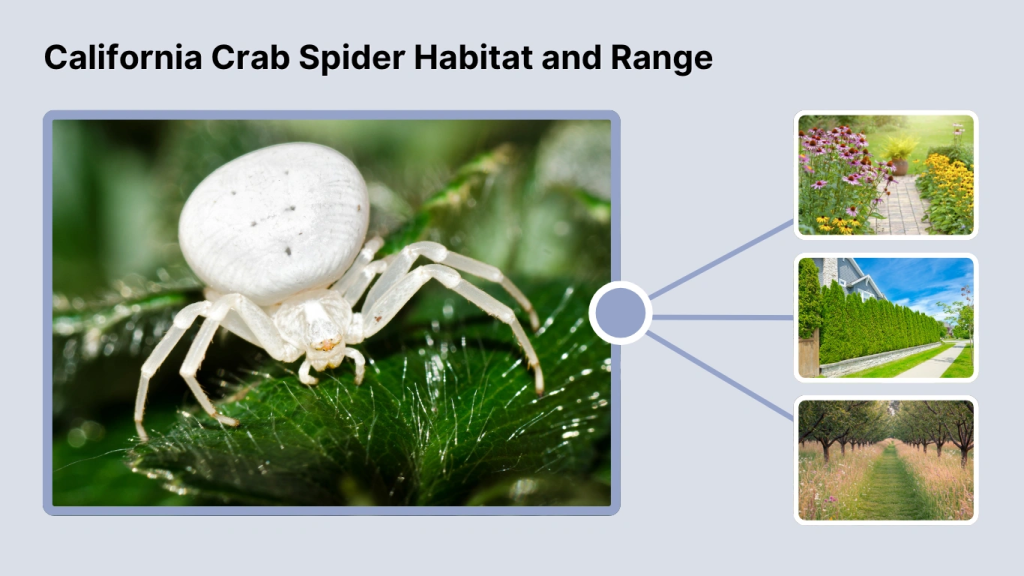
Crab spiders live throughout California’s diverse landscapes, from coastal gardens to inland valleys. They favor:
- Wildflowers and garden plants
- Shrubs, fences, and tree bark
- Meadows and vineyard edges
- Urban gardens and parks
They are abundant in Northern and Southern California, especially where pollinating insects are common. In southern counties like Los Angeles, San Diego, and Riverside, crab spiders are most active in spring and summer when flowers bloom.
Behavior
Unlike web-building spiders, crab spiders are ambush predators. They perch motionless on petals or leaves, waiting for prey to approach. When a bee or fly lands nearby, the spider lunges with its strong front legs and injects mild venom to subdue it. Their patience and perfect camouflage make them efficient hunters.
They are also non-aggressive toward humans and rarely bite. Their natural role in the ecosystem helps reduce harmful insect populations, benefiting both wild and cultivated plants.
Marine Spider Crabs of California
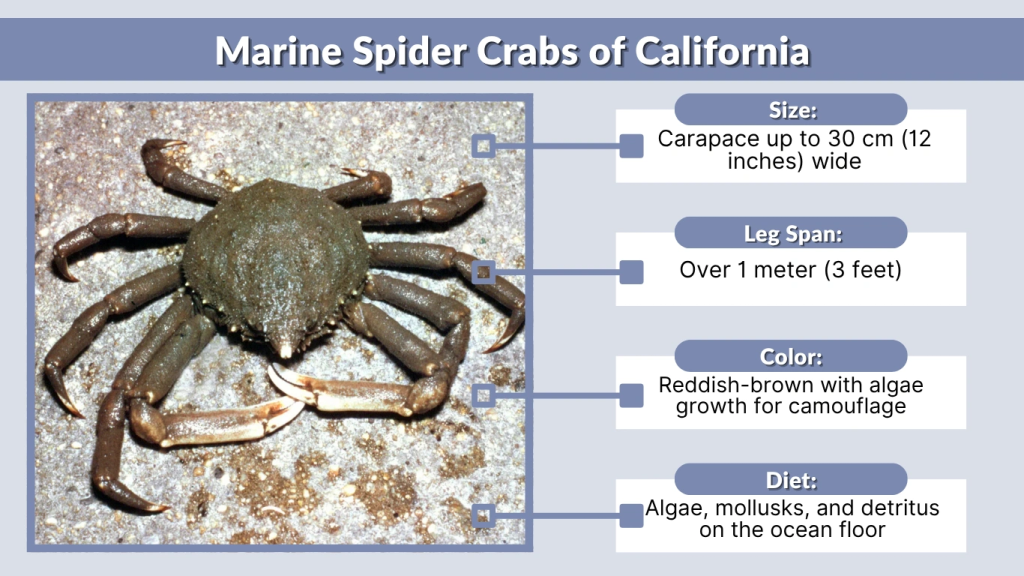
California Spider Crab (Loxorhynchus grandis)
In the Pacific Ocean off California’s coast lives the impressive California Spider Crab, sometimes called the Sheep Crab. This giant marine species belongs to the Majidae family and is known for its long legs and spiny carapace.
- Size: Carapace up to 30 cm (12 inches) wide
- Leg Span: Over 1 meter (3 feet)
- Color: Reddish-brown with algae growth for camouflage
- Diet: Algae, mollusks, and detritus on the ocean floor
Habitat and Range
The California Spider Crab inhabits rocky reefs, kelp forests, and sandy bottoms along the Pacific coast from Point Reyes to Baja California. It is especially abundant in Southern California, near Catalina Island, San Diego Bay, and the Channel Islands. Juveniles prefer shallower waters, while adults migrate to depths of 6 to 90 meters.
They use their spiny shells to attach seaweed and sponges, blending seamlessly into the underwater landscape — a clever defense against predators such as octopuses and large fish.
Fishing, Regulations, and Edibility
Can You Eat California Spider Crabs?
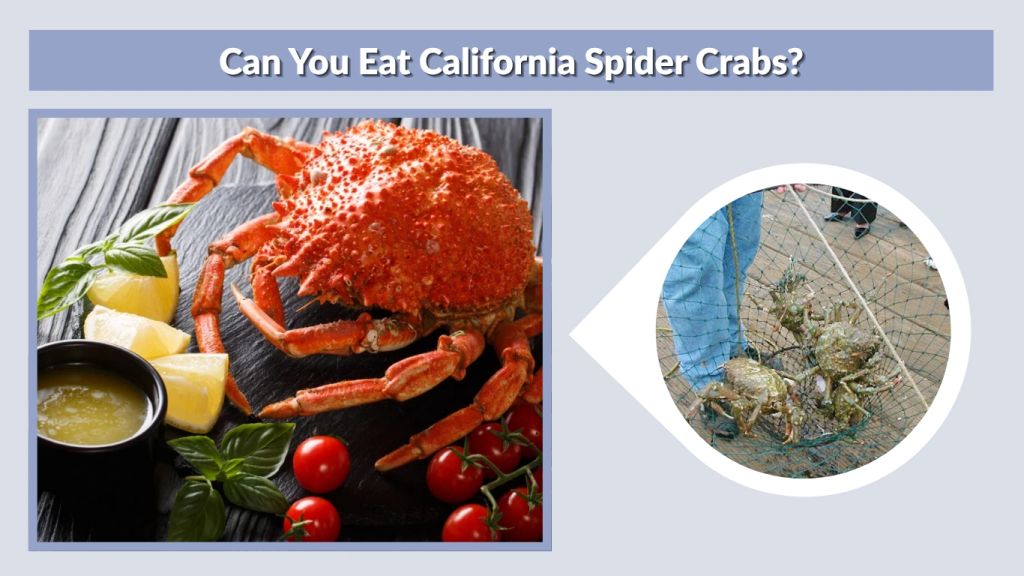
Yes — the California Spider Crab (Loxorhynchus grandis) is edible and occasionally harvested by local fishers. Though not as commercially popular as Dungeness or rock crabs, its meat is sweet, mild, and delicate, often compared to that of snow crab. However, its thick shell and long legs make extraction time-consuming, which is why it’s less commonly sold in markets.
Legal Size and Harvest Rules
According to the California Department of Fish and Wildlife (CDFW), spider crabs can be taken recreationally under certain conditions:
- Legal Size Limit: Minimum 4 inches (10 cm) carapace width
- Fishing Season: Generally open year-round, but some marine areas have seasonal closures
- Methods: Hand capture, hoop net, or trap (with a valid fishing license)
- Bag Limit: May vary by region — check local regulations before harvesting
Because of their slow growth, responsible harvesting is essential to maintain healthy populations. Commercial fishing for spider crab is limited, but they are sometimes caught as bycatch during lobster or Dungeness crab seasons.
Taste and Preparation
California spider crabs are usually boiled or steamed for 10–15 minutes. The leg and claw meat is tender and slightly sweet. Common dishes include:
- Garlic butter steamed spider crab
- Crab salad with citrus and avocado
- Crab bisque or pasta using leg meat
In coastal restaurants — especially in San Diego, Santa Barbara, and Monterey Bay — spider crabs occasionally appear on seasonal menus. Divers also enjoy catching them recreationally for personal cooking.
Interesting Facts
- The California Spider Crab is one of the largest crabs on the U.S. West Coast, second only to the Alaskan king crab in size.
- Juvenile spider crabs often cover their shells with algae or sea sponges as camouflage — a behavior called “decorating.”
- The giant crab spider sometimes seen indoors in California is an entirely different species — a harmless land spider (Olios giganteus) that does not live in water.
- Land crab spiders, though much smaller, play a vital role in pest control and rarely enter homes.
- The spider crab’s legs continue growing after each molt, allowing adults to reach impressive spans of up to 1 meter (3 feet).
- Marine biologists consider California’s spider crab population healthy due to sustainable recreational catch practices.
FAQs
Are California crab spiders poisonous?
No. Land crab spiders in California are harmless. Their venom only affects small insects and has no impact on humans. They rarely bite and are not aggressive.
Where do California spider crabs live?
Marine spider crabs live in the Pacific Ocean, mainly along California’s coast from Point Reyes to Baja California. They prefer rocky reefs, kelp forests, and sandy seabeds at depths between 6 and 90 meters.
Can you eat spider crabs in California?
Yes. The California Spider Crab is edible and legal to harvest recreationally. The meat is mild and sweet, though less abundant compared to Dungeness crabs.
When is the spider crab season in California?
Spider crabs can generally be taken year-round, though some marine protected areas (MPAs) may have restrictions. Always verify the current rules with the CDFW before fishing.
What’s the difference between a crab spider and a spider crab?
A crab spider is a small land-dwelling arachnid that hunts insects in gardens, while a spider crab is a large marine crustacean found in the Pacific Ocean. Despite their similar names and crab-like shapes, they belong to entirely different biological groups.
