
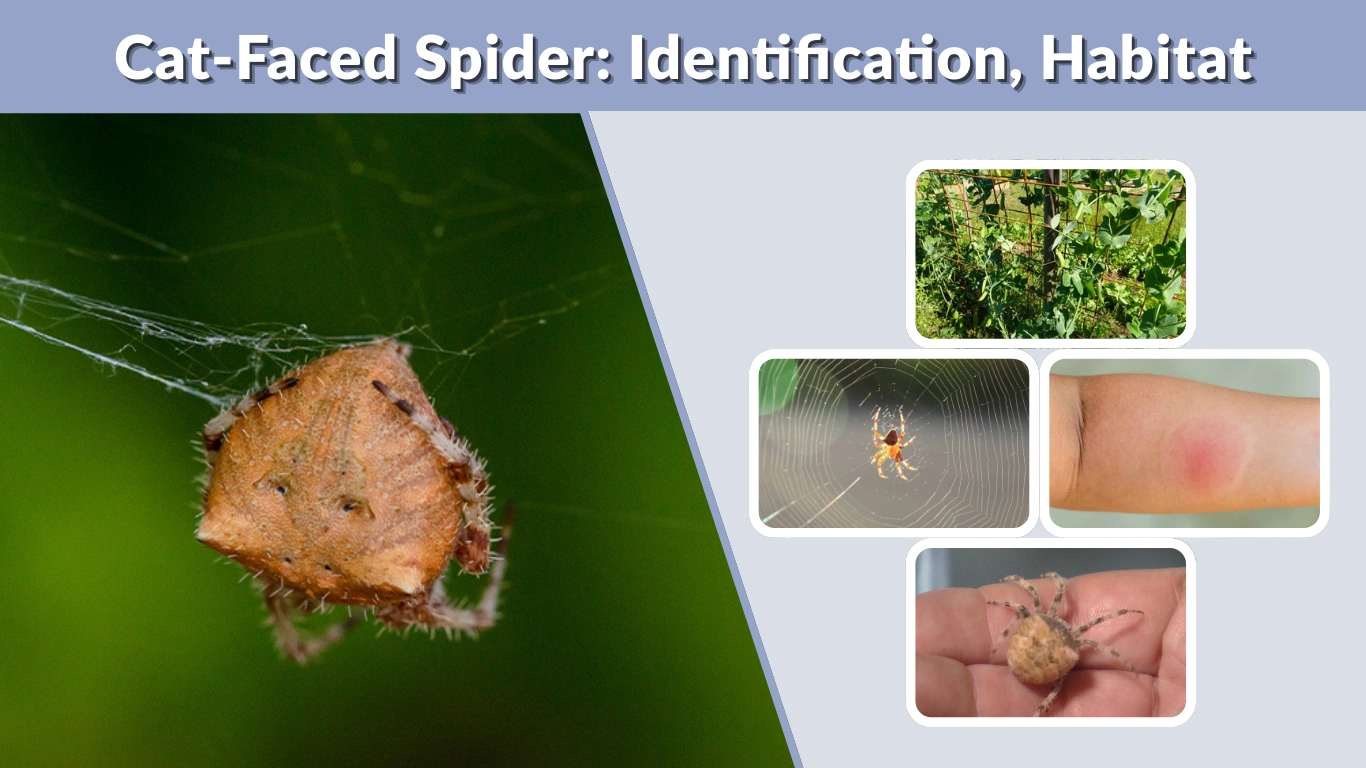
The cat-faced spider is a unique and easily recognizable orb-weaver spider commonly found in North America. Known scientifically as Araneus gemmoides, this spider gets its unusual name from the distinctive bumps on its abdomen that resemble the shape of a cat’s face. Cat-faced spiders are often seen in gardens, yards, and around buildings where they build large circular webs to catch flying insects. Although their appearance may seem intimidating, these spiders are harmless to humans and are considered beneficial because they help control pest insects.
What is a Cat-Faced Spider?
The cat-faced spider is a species of orb-weaver spider belonging to the family Araneidae. Orb-weavers are well known for creating large, circular webs that are used to capture flying insects. The cat-faced spider is one of the more recognizable members of this group because of the unique shape of its abdomen.
Its scientific name, Araneus gemmoides, refers to the raised bumps found on the spider’s abdomen. These bumps often create a pattern that resembles the ears and face of a cat, which is how the spider received its common name.
Cat-faced spiders are commonly found in gardens, wooded areas, and residential landscapes. They prefer locations where they can attach their webs between trees, shrubs, fences, or buildings. Because these environments attract many flying insects, they provide an ideal hunting ground for the spider.
Despite their large size and unusual appearance, cat-faced spiders are not aggressive. They spend most of their time sitting in the center of their web waiting for insects to become trapped in the sticky silk threads.
Cat-Faced Spider Identification
Identifying a cat-faced spider is relatively easy once you know the key physical features that distinguish it from other orb-weaver spiders.
Physical Appearance
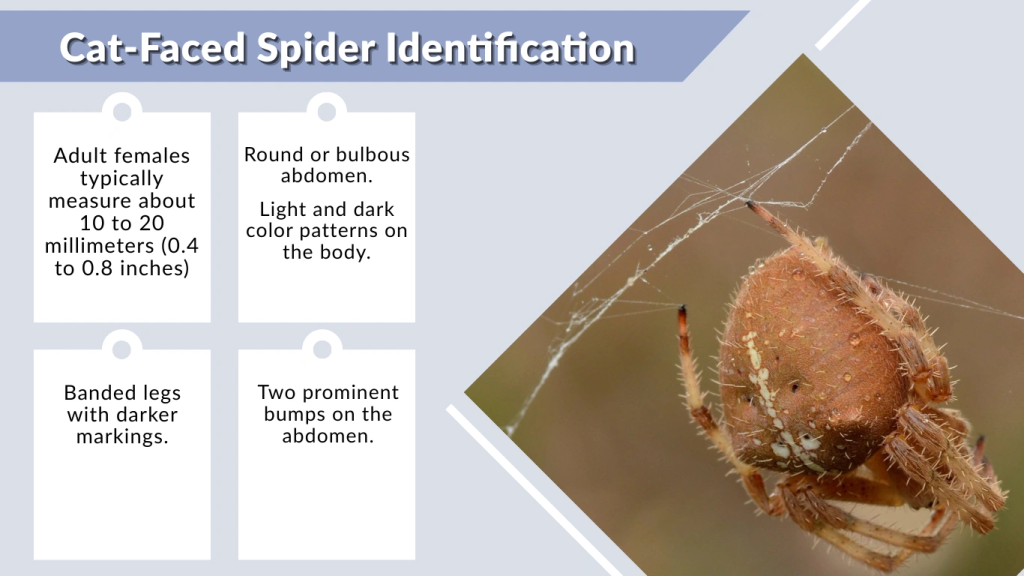
Cat-faced spiders have a round, somewhat bulbous abdomen that often displays light and dark color patterns. Their coloration can vary from tan and orange to brown or gray, which helps them blend into their surroundings.
The legs are usually banded with darker markings and are relatively long compared to the spider’s body. Like many orb-weaver spiders, they have a sturdy body shape that allows them to maintain balance while sitting in the center of their web.
Size of Cat-Faced Spiders
Cat-faced spiders are considered medium to large spiders. Adult females typically measure about 10 to 20 millimeters (0.4 to 0.8 inches) in body length. When their legs are included, they may appear significantly larger.
Male cat-faced spiders are usually smaller than females and may be less noticeable. The difference in size between males and females is common among orb-weaver spider species.
Unique Identifying Features
The most distinctive feature of the cat-faced spider is the pair of horn-like bumps on its abdomen. These raised bumps give the abdomen a shape that resembles the ears of a cat.
Other identifying features include:
- Round or bulbous abdomen
- Light and dark color patterns on the body
- Banded legs with darker markings
- Two prominent bumps on the abdomen
These features make the cat-faced spider easier to identify compared to many other orb-weaver species.
Cat-Faced Spider Web
Like other orb-weaver spiders, the cat-faced spider builds large circular webs designed to trap flying insects.
Orb-Shaped Web Structure
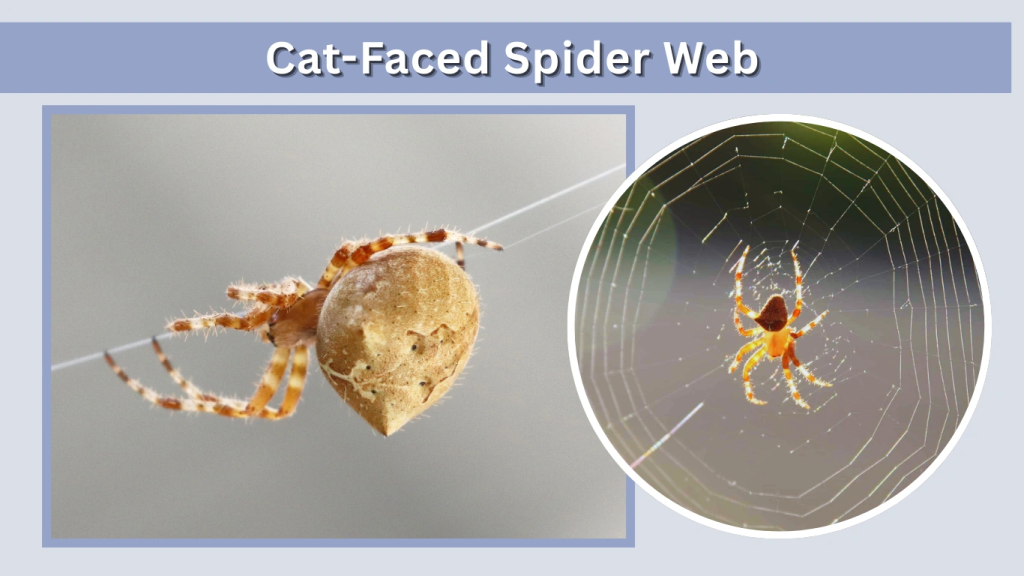
The web of a cat-faced spider is an orb-shaped web, meaning it has a circular structure with silk threads radiating outward from a central point. Spiral threads connect these radial lines, forming the familiar wheel-like pattern.
These webs are made from sticky silk that helps capture insects that fly into them. Once an insect becomes trapped, it struggles and creates vibrations that alert the spider.
Where Cat-Faced Spiders Build Webs
Cat-faced spiders often build their webs in places where flying insects are abundant. Common locations include:
- Gardens and backyard landscapes
- Between shrubs or tree branches
- Along fences and walls
- Near outdoor lights that attract insects
Their webs are often built several feet above the ground and may stretch across open spaces between plants or structures.
How They Use Their Web to Catch Prey
After building its web, the cat-faced spider typically waits in the center or hides nearby while monitoring vibrations in the silk.
When an insect becomes trapped in the web, the spider quickly moves toward the prey. It wraps the insect in silk to prevent it from escaping and then delivers a bite that immobilizes the insect.
Once the prey is secured, the spider may feed immediately or store the wrapped insect for later consumption.
Habitat and Distribution
Cat-faced spiders prefer environments where they can easily build their orb webs and find plenty of insects to eat.
Natural Habitats
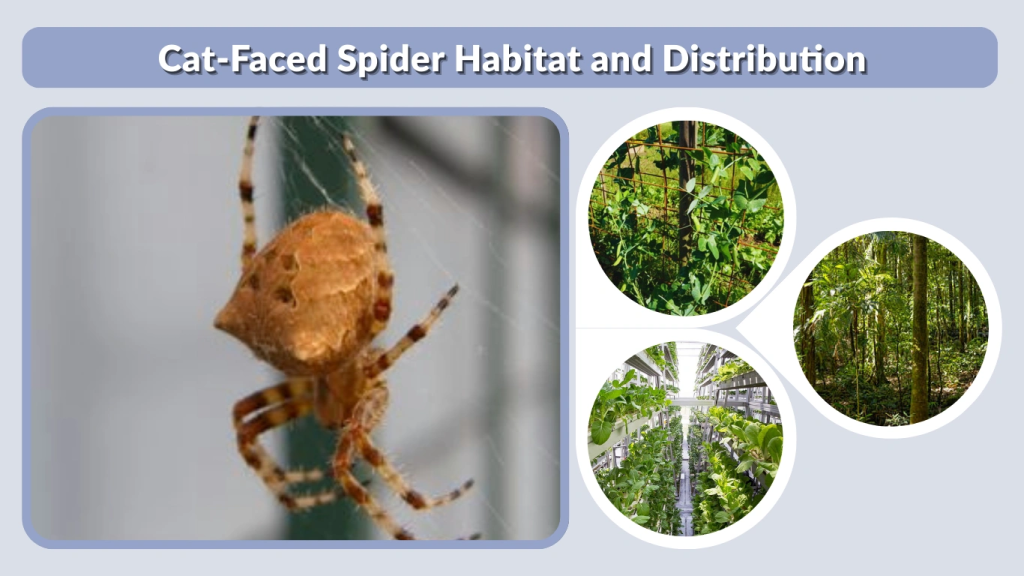
These spiders are commonly found in gardens, forests, farms, and suburban landscapes. They prefer locations with trees, shrubs, or structures that allow them to anchor their webs securely.
Because they rely on flying insects as their main food source, cat-faced spiders are often seen in areas where insects are plentiful.
Geographic Distribution
The cat-faced spider is native to North America and is most commonly found in the western United States and parts of Canada. It can also be seen in other regions where suitable habitats exist.
These spiders are especially common in areas with moderate climates and vegetation that supports insect activity.
Seasonal Activity
Cat-faced spiders are most commonly seen during the late summer and early fall months. During this time, adult females are fully grown and their large webs become more noticeable in gardens and yards.
Their webs are often easiest to spot early in the morning when dew collects on the silk threads, making the circular pattern more visible. As temperatures begin to drop later in the season, adult spiders complete their life cycle after producing egg sacs that will hatch the following spring.
Cat-Faced Spider Behavior
Cat-faced spiders are generally calm and non-aggressive. Like most orb-weaver spiders, they spend the majority of their time maintaining their web and waiting for prey.
Hunting Strategy
The cat-faced spider relies on its orb web to catch flying insects. The sticky silk threads trap insects such as:
- Flies
- Moths
- Beetles
- Mosquitoes
- Wasps
When an insect becomes caught in the web, the spider senses the vibrations traveling through the silk strands. It quickly moves toward the prey and wraps it in silk to prevent escape.
After immobilizing the insect, the spider delivers a bite that paralyzes the prey before feeding.
Daily Activity Patterns
Cat-faced spiders are usually most active during the evening and nighttime hours. During the night, they sit in the center of their web waiting for insects to become trapped.
In the daytime, the spider may hide nearby in vegetation or a sheltered location to avoid predators. If the web becomes damaged, the spider will often repair or rebuild sections of it.
Interaction With Humans
Although cat-faced spiders may appear large and unusual, they rarely interact with people. If disturbed, the spider will usually retreat to a nearby hiding place rather than attempt to defend itself.
Most encounters occur when someone accidentally walks into a web built across a path, garden area, or porch.
Cat-Faced Spider Bite
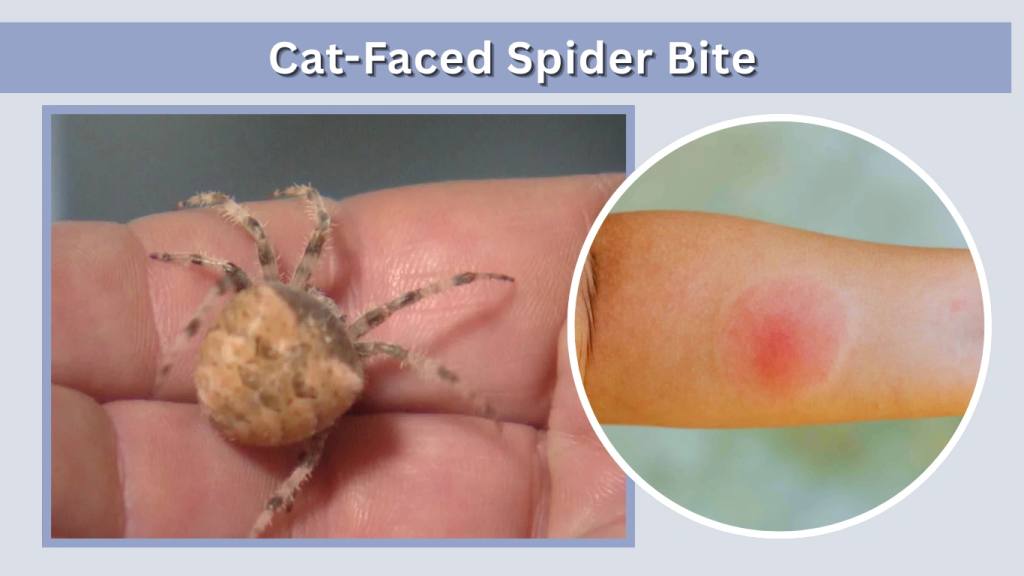
Many people wonder if the cat-faced spider is dangerous. Fortunately, these spiders are considered harmless to humans.
Do Cat-Faced Spiders Bite?
Cat-faced spiders can bite if they are handled or accidentally trapped against the skin. However, they are shy spiders that prefer to escape rather than bite.
Because they usually remain on their webs, human bites are very uncommon.
Are They Dangerous?
Cat-faced spiders are not dangerous to humans. Their venom is primarily used to immobilize small insects and typically has little effect on people.
Even if a bite occurs, it is usually mild and temporary.
Symptoms of a Bite
If a bite does happen, the symptoms are typically mild and may include:
- Slight pain or irritation
- Minor redness
- Mild swelling or itching
These symptoms generally disappear within a short period without medical treatment.
What to Do If Bitten
Basic first aid is usually enough for a spider bite. Washing the bite area with soap and water and applying a cold compress can help reduce irritation.
If symptoms become severe or unusual reactions occur, it is advisable to consult a medical professional.
Cat-Faced Spider vs Other Orb-Weaver Spiders
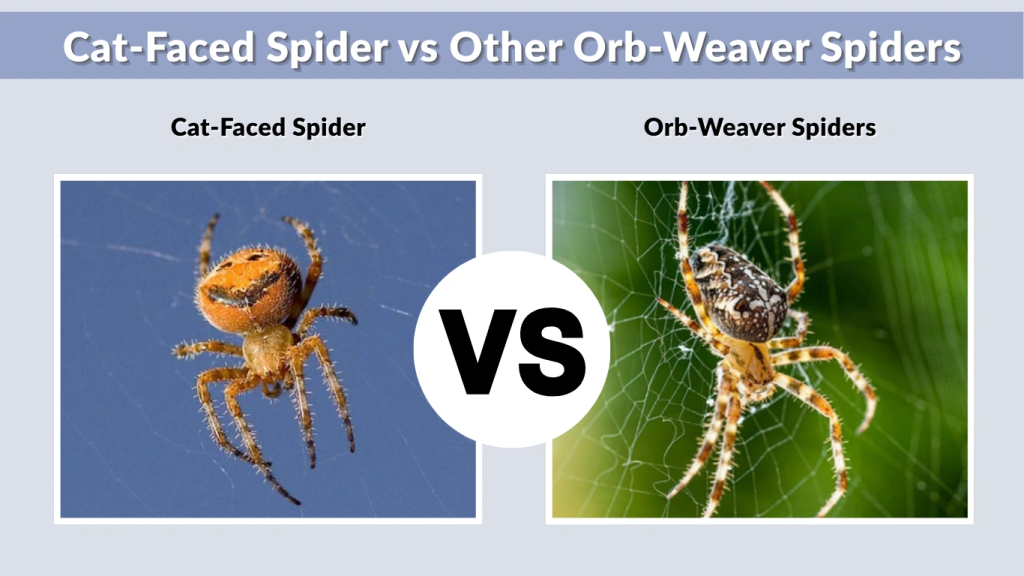
Cat-faced spiders belong to a large group of spiders called orb-weavers, which includes many species that build circular webs.
Appearance Differences
The most distinctive feature of the cat-faced spider is the two horn-like bumps on its abdomen, which give the spider its name. Many other orb-weaver spiders have smoother or differently shaped abdomens.
Web Differences
Most orb-weaver spiders build circular webs, but the size and placement can vary between species. Cat-faced spiders often build webs near buildings, fences, and garden plants.
Behavior Differences
While many orb-weavers hide during the day, cat-faced spiders may remain on their webs more frequently. Their behavior is otherwise very similar to other spiders in the orb-weaver family.
Benefits of Cat-Faced Spiders in Gardens
Cat-faced spiders are considered beneficial because they help control insect populations. By capturing flies, mosquitoes, and other pests, they contribute to natural pest management.
In gardens and yards, these spiders help maintain ecological balance by reducing the number of insects that can damage plants or become household nuisances.
Because they are harmless to humans and useful for pest control, many gardeners appreciate having them around.
Interesting Cat-Faced Spider Facts
Cat-faced spiders have several interesting characteristics that make them unique among orb-weavers.
Their abdomen shape is one of their most recognizable features, often resembling the outline of a cat’s face. This unusual appearance helps them stand out among other garden spiders.
These spiders also rebuild or repair their webs frequently. If a web becomes damaged by wind, rain, or prey activity, the spider can quickly repair it to continue hunting.
Most cat-faced spiders live for about one year, with females producing egg sacs in the fall before the next generation emerges the following season.
FAQs
Are cat-faced spiders poisonous?
Cat-faced spiders are venomous like most spiders, but their venom is not dangerous to humans.
How big do cat-faced spiders get?
Adult females typically reach 10–20 millimeters in body length, although their legs can make them appear larger.
Where are cat-faced spiders commonly found?
They are commonly found in gardens, forests, farms, and suburban yards, especially in western North America.
Do cat-faced spiders live in houses?
Cat-faced spiders usually prefer outdoor environments where they can build their large orb webs, so they rarely live inside homes.
