
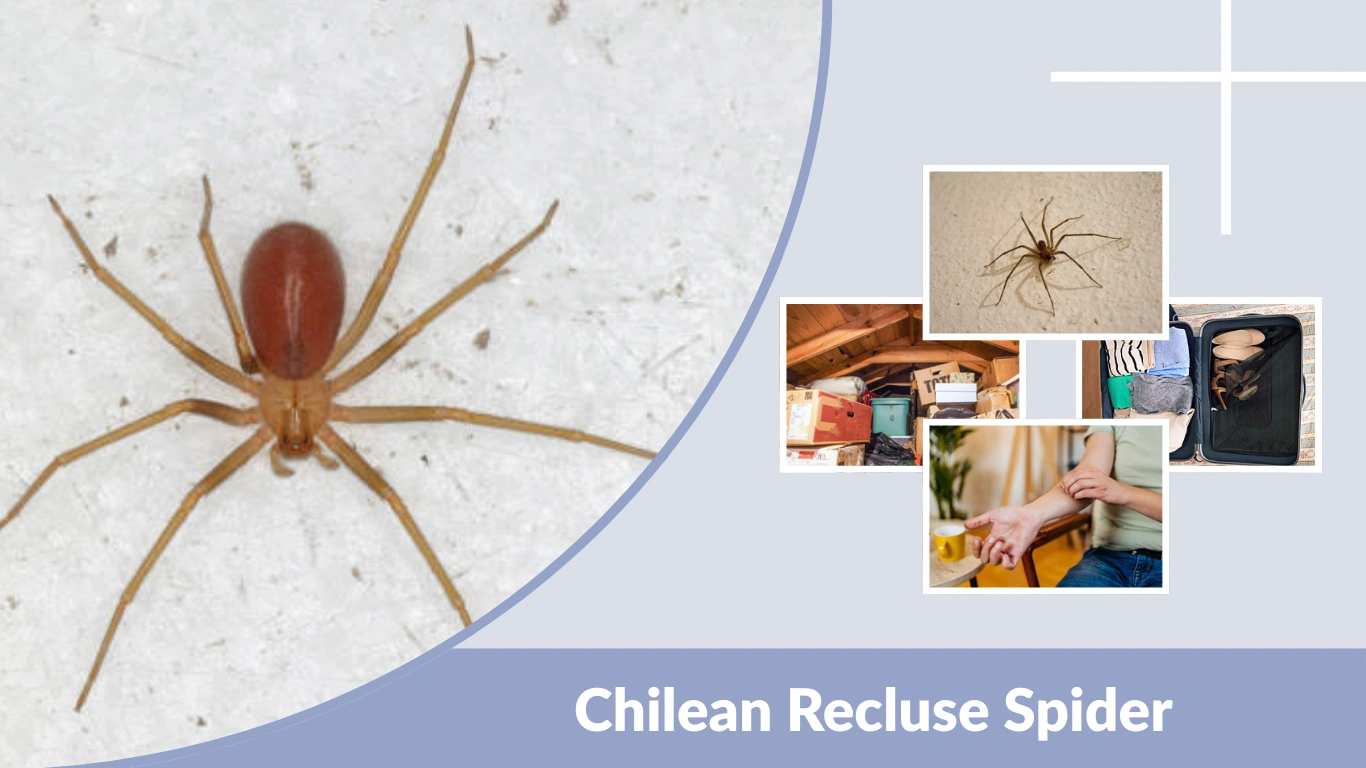
The Chilean recluse spider is widely considered one of the most medically significant spiders in the world due to its potent venom. Scientifically known as Loxosceles laeta, this species belongs to the recluse spider group and is native primarily to South America. Although it prefers to stay hidden in quiet, undisturbed places, accidental encounters with humans can occasionally occur. Understanding how to identify the Chilean recluse spider, where it lives, and how it behaves can help people avoid unwanted contact and stay safe.
What Is the Chilean Recluse Spider?
The Chilean recluse spider is a member of the family Sicariidae, which also includes the brown recluse spider. Spiders in this family are known for their cytotoxic venom, which helps them immobilize prey and begin the digestion process.
Scientific Classification
The Chilean recluse spider is classified as follows:
- Scientific name: Loxosceles laeta
- Family: Sicariidae
- Common names: Chilean recluse, South American recluse
The genus Loxosceles includes several recluse spider species found in different regions of the world. Among them, Loxosceles laeta is often considered one of the most venomous members of the group.
Overview of the Species
Chilean recluse spiders are known for their reclusive behavior, which is reflected in their name. They prefer to stay hidden in dark, undisturbed locations where they are unlikely to encounter predators or humans.
Unlike some spiders that rely heavily on webs to capture prey, recluse spiders are active hunters. They leave their hiding places at night to search for insects and other small arthropods.
Because they prefer quiet areas and avoid open spaces, these spiders often go unnoticed even when living inside buildings.
How to Identify a Chilean Recluse Spider
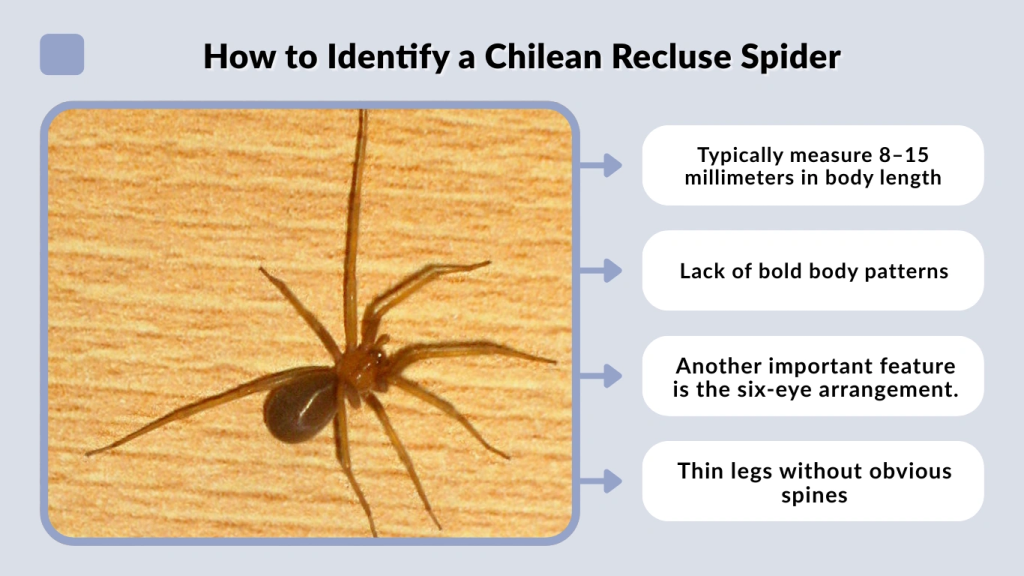
Correct identification is important because the Chilean recluse spider shares similarities with several other brown-colored spiders. However, a few distinctive features can help distinguish it from other species.
Physical Appearance
The Chilean recluse spider usually has a light to dark brown body with long, thin legs. Its body is relatively smooth and lacks the heavy hair or bold patterns seen in many other spiders.
Common physical traits include:
- Uniform light brown to dark brown coloration
- Long, slender legs
- Small body compared to leg length
- Smooth, slightly glossy body surface
These spiders are often mistaken for other harmless brown spiders because of their simple coloration.
Key Identification Features
One of the most well-known identifying characteristics of recluse spiders is the violin-shaped marking on the top of the cephalothorax (the front body section). This marking points toward the abdomen and resembles the shape of a violin.
Another important feature is the six-eye arrangement. Most spiders have eight eyes, but recluse spiders have only six. These eyes are arranged in three pairs, forming a semicircle on the front of the head.
Additional identifying traits include:
- Lack of bold body patterns
- Thin legs without obvious spines
- Small body size relative to leg span
Size and Color
Adult Chilean recluse spiders typically measure 8–15 millimeters in body length, though their legs make them appear larger.
Their coloration can vary slightly depending on age and environment, but most individuals appear in shades such as:
- Light brown
- Tan
- Medium brown
The abdomen may sometimes appear slightly darker than the rest of the body.
Habitat and Distribution
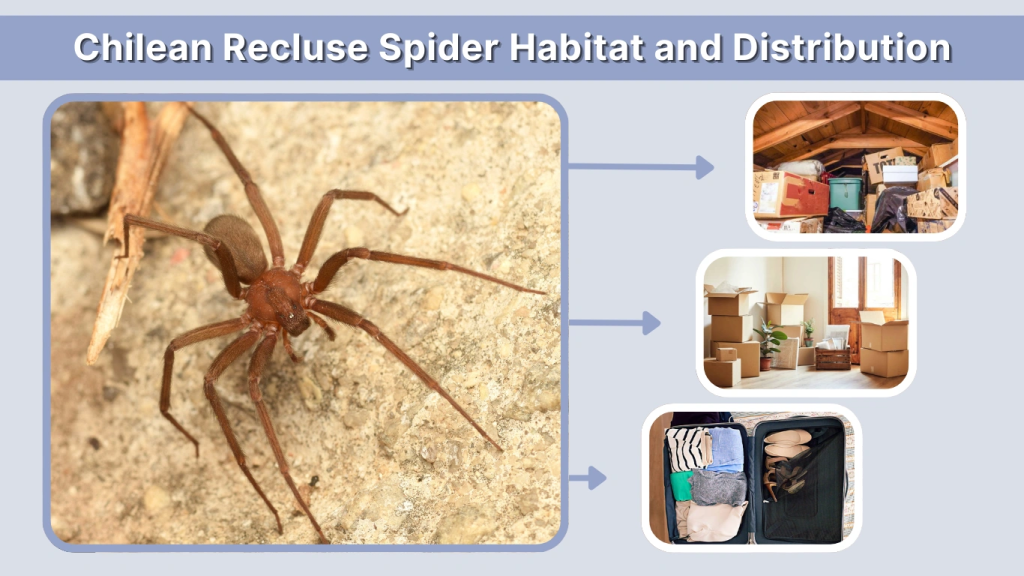
The Chilean recluse spider is primarily found in South America, but it has occasionally been reported in other parts of the world due to accidental transport through shipping and cargo.
Native Range
This species is native to several countries in South America, including:
- Chile
- Peru
- Argentina
- Uruguay
- Brazil
Among these regions, Chile is where the spider is most commonly encountered, which is why it is widely known as the Chilean recluse.
Global Spread
Although its natural range is limited to South America, the Chilean recluse spider has occasionally been introduced to other areas through international trade and shipping.
Small populations have sometimes been reported in:
- North America
- Europe
- Australia
However, these occurrences are rare, and established populations outside South America are uncommon.
Indoor Hiding Places
Chilean recluse spiders often live inside homes and buildings, especially in areas that provide darkness and minimal disturbance.
Common indoor hiding places include:
- Closets and storage rooms
- Behind furniture
- Inside cardboard boxes
- Under beds or cabinets
- Inside shoes, clothing, or linens
These spiders tend to remain hidden during the day and become more active at night when searching for prey.
Behavior and Lifestyle
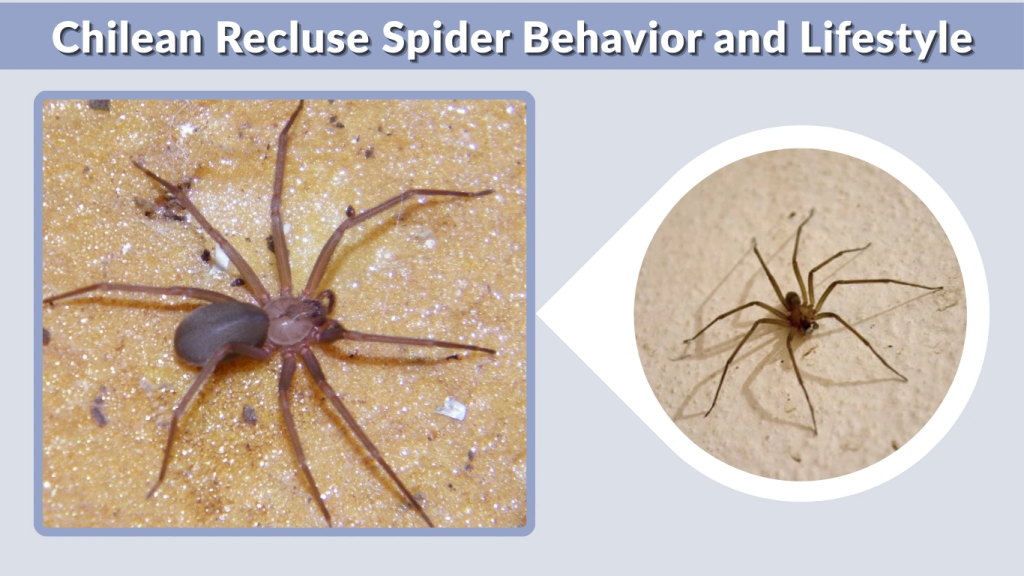
The Chilean recluse spider has several behavioral traits that help it survive and avoid predators.
Nocturnal Activity
Chilean recluse spiders are primarily nocturnal, meaning they are most active during the night. After sunset, they may leave their hiding places to search for food.
Their prey usually consists of small insects and other arthropods found inside homes or nearby environments.
Hunting Method
Unlike orb-weaving spiders that rely on large webs to catch prey, the Chilean recluse spider hunts actively. It uses its venom to immobilize insects quickly before feeding.
Because of this hunting style, their webs are usually small and irregular rather than large and structured.
Shy and Reclusive Nature
Despite their dangerous reputation, Chilean recluse spiders are generally shy and non-aggressive. They prefer to hide and avoid contact whenever possible.
Most bites occur accidentally when:
- A person puts on clothing containing a spider
- A spider becomes trapped against the skin
- Someone reaches into a hidden area where the spider is resting
Chilean Recluse Spider Venom
The venom of the Chilean recluse spider (Loxosceles laeta) is considered one of the most potent among recluse spiders. Like other members of the Sicariidae family, this spider produces cytotoxic venom, which can damage cells and surrounding tissues.
How Strong Is the Venom?
The venom contains several enzymes, including sphingomyelinase D, which is responsible for breaking down cell membranes. This toxin allows the spider to quickly immobilize prey and begin the digestion process.
Scientists consider the Chilean recluse spider’s venom stronger than that of many other recluse species, including the brown recluse. However, the spider rarely uses its venom defensively and typically bites only when threatened or accidentally pressed against the skin.
Effects of the Venom
When injected into prey or in rare cases humans, the venom can cause localized tissue damage. The reaction varies widely depending on the individual, the amount of venom delivered, and how quickly treatment is received.
Possible effects may include:
- Inflammation around the bite area
- Skin irritation and redness
- Tissue breakdown (necrosis) in severe cases
- Systemic reactions affecting other parts of the body
Although serious reactions can occur, many bites cause only mild symptoms.
Comparison With Other Recluse Spiders
Among recluse spiders, Loxosceles laeta is often considered one of the most medically significant species. It belongs to the same genus as the brown recluse (Loxosceles reclusa), but studies suggest its venom may be more potent.
However, the risk to humans is still relatively low because these spiders are shy and tend to avoid interaction with people.
Chilean Recluse Spider Bite
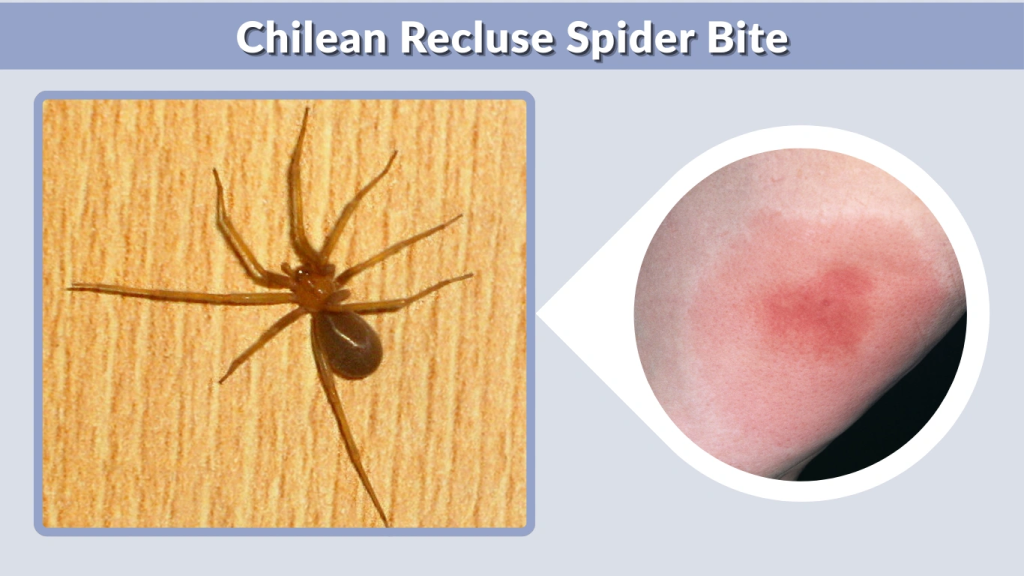
While the Chilean recluse spider has powerful venom, bites are relatively uncommon. Most incidents occur accidentally when the spider becomes trapped against human skin.
Do Chilean Recluse Spiders Bite Humans?
Yes, they can bite humans, but they do not actively seek to bite. In most situations, the spider will attempt to escape rather than defend itself.
Bites usually happen in situations such as:
- Putting on clothing that contains a hidden spider
- Reaching into storage boxes or closets
- Rolling onto a spider in bed
- Handling items in dark, undisturbed spaces
Because these spiders prefer secluded environments, many people may live near them without ever encountering one.
Bite Symptoms
Symptoms from a Chilean recluse spider bite can vary widely. Some bites may cause mild irritation, while others can lead to more serious reactions.
Common symptoms include:
- Pain or burning sensation at the bite site
- Redness and swelling
- Blister formation
- Skin lesions that may worsen over time
In more severe cases, the bite may cause necrosis, which is tissue death around the bite area.
Severe Reactions (Loxoscelism)
In rare cases, a condition called loxoscelism may occur. This is a systemic reaction to the venom that affects more than just the bite site.
Possible symptoms of systemic loxoscelism include:
- Fever and chills
- Nausea or vomiting
- Muscle pain
- Fatigue
- In severe cases, complications affecting internal organs
Although serious reactions are possible, they remain relatively uncommon.
Treatment for Chilean Recluse Spider Bites
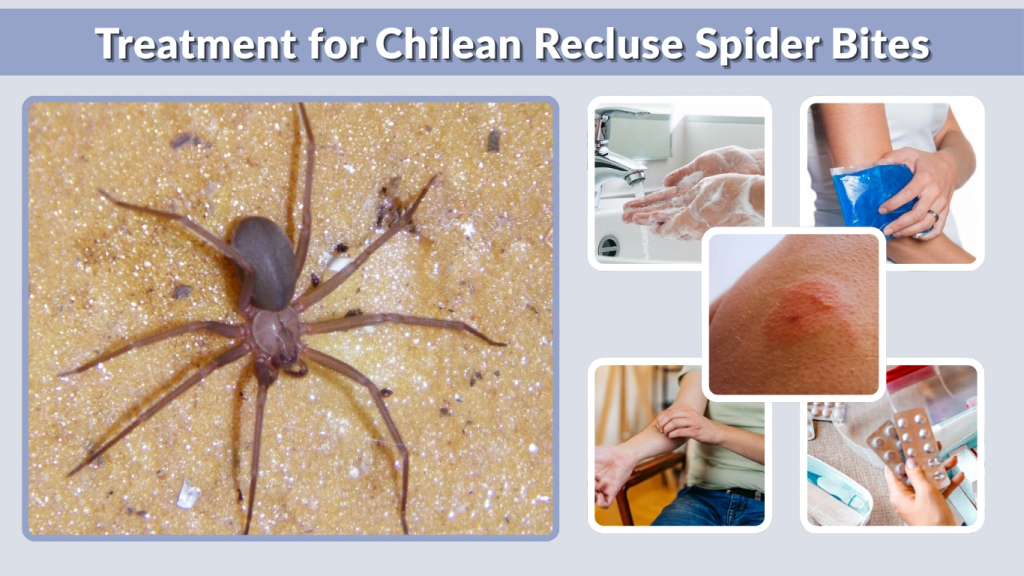
If someone suspects a bite from a Chilean recluse spider, prompt medical evaluation is recommended.
Immediate First Aid
Initial first aid can help reduce irritation and prevent infection:
- Wash the bite area with soap and clean water.
- Apply a cold compress to reduce swelling.
- Keep the affected area elevated if possible.
- Avoid scratching or irritating the wound.
These steps can help slow the spread of venom and reduce inflammation.
Medical Treatment
Doctors may recommend several treatments depending on the severity of symptoms. Possible treatments include:
- Pain relief medication
- Antibiotics if secondary infection develops
- Wound care to prevent tissue damage
- Monitoring for systemic reactions
In severe cases, medical professionals may need to provide specialized care for tissue injury.
Life Cycle of the Chilean Recluse Spider
Like other spiders, the Chilean recluse goes through several stages of development from egg to adult.
Egg Sac Production
Female spiders produce silk egg sacs that contain dozens of eggs. These sacs are usually hidden in safe locations such as cracks, corners, or storage areas.
Spiderlings
After the eggs hatch, tiny spiderlings emerge and begin growing through a series of molts. During each molt, the spider sheds its outer shell and grows larger.
Young spiders gradually develop the physical characteristics of adult recluse spiders.
Lifespan
Chilean recluse spiders can live two to three years or longer under favorable conditions. Their ability to survive with limited food helps them persist in indoor environments.
Prevention Tips
Reducing clutter and eliminating hiding places can help prevent Chilean recluse spiders from living inside homes.
Reducing Indoor Spider Habitats
Helpful prevention steps include:
- Keeping storage areas clean and organized
- Sealing cracks in walls and floors
- Reducing piles of clothing or boxes
- Regularly cleaning dark corners and closets
These measures make it harder for spiders to find suitable hiding spots.
Personal Safety Measures
When cleaning or working in storage areas, consider the following precautions:
- Shake out shoes and clothing before wearing them
- Wear gloves when handling boxes or stored items
- Be cautious when reaching into dark spaces
Simple awareness can significantly reduce the risk of accidental contact.
Common Myths About Chilean Recluse Spiders
Because of their reputation, several misconceptions about Chilean recluse spiders have become widespread.
Myth: They Aggressively Attack Humans
In reality, these spiders are not aggressive. They prefer to hide and avoid contact.
Myth: Every Bite Causes Severe Necrosis
While tissue damage can occur, many bites produce only mild symptoms.
Myth: They Are Found Everywhere
Chilean recluse spiders are mainly native to South America, and widespread populations elsewhere are rare.
FAQs
Are Chilean recluse spiders dangerous?
Yes, their venom can cause medical complications, but bites are relatively uncommon because the spiders avoid human contact.
Where do Chilean recluse spiders live?
They are most commonly found in South American countries such as Chile, Peru, and Argentina, often inside homes or buildings.
How big are Chilean recluse spiders?
Adult spiders usually measure 8–15 mm in body length, with longer legs that increase their overall size.
What should you do if bitten by a Chilean recluse spider?
Clean the wound, apply a cold compress, and seek medical attention if symptoms worsen or severe reactions occur.
How can you identify a Chilean recluse spider?
Look for a violin-shaped marking on the body and six eyes arranged in three pairs, which are key identification features.
Conclusion
The Chilean recluse spider (Loxosceles laeta) is a medically significant species known for its potent venom and reclusive behavior. Although its bite can cause serious symptoms in rare cases, the spider typically avoids human contact and prefers hidden environments. By understanding how to identify this spider, recognizing possible bite symptoms, and following simple prevention steps, people can greatly reduce the risk of encounters. Awareness and caution remain the best tools for safely coexisting with this elusive arachnid.