

The Chilean Rose Tarantula (Grammostola rosea) is one of the most recognizable pet tarantulas worldwide. Known for its docile temperament and hardiness, it is a favorite among beginners and experienced keepers alike. Native to Chile’s dry scrublands and deserts, this species thrives in relatively simple enclosures and requires minimal care compared to more delicate tarantulas. With a lifespan of over a decade for females, they can be long-term companions when cared for correctly.
This article explores everything you need to know about the Chilean Rose Tarantula, including its identification, habitat requirements, diet, size, lifespan, behavior, safety concerns, and molting process.
General Identification & Names

The Chilean Rose Tarantula is also commonly referred to as the Chilean Rose Hair Tarantula, Rose Haired Tarantula, or simply Rose Tarantula. These names are used interchangeably within the hobby, often depending on color morphs or regional preferences.
They typically exhibit a brown to gray base coloration with a distinct reddish or pinkish hue on the carapace, giving rise to the “rose” reference. Their calm nature has made them one of the most traded and bred tarantula species in captivity.
Scientific Classification & Variants
- Scientific name: Grammostola rosea
- Family: Theraphosidae
- Origin: Deserts and scrublands of northern Chile, Bolivia, and Argentina
There are recognized color morphs of this species, which are commonly categorized as:
- Pink Chilean Rose Tarantula: Featuring a light pink sheen across the carapace.
- Red Chilean Rose Tarantula: Shows a deeper reddish tone, especially under strong light.
- Blue Chilean Rose Tarantula: A rarer variation with bluish tints, particularly visible during molts.
While these differences are visually striking, all morphs share the same care requirements and behavior patterns.
Care & Enclosure

One of the biggest advantages of keeping a Chilean Rose Tarantula is its minimal care needs. They are hardy, adaptable, and thrive even with basic setups.
Enclosure size: A 5–10 gallon tank is sufficient for an adult. Since they are terrestrial, floor space is more important than height. Ensure the enclosure has a secure lid, as tarantulas can climb surprisingly well.
Hiding spots: Provide at least one hide, such as a half log or clay pot, to reduce stress. A water dish with fresh, clean water should always be available.
Lighting: No special lighting is required. Natural room lighting is enough, as they are nocturnal and avoid bright light.
Care sheets & setup: Many care sheets emphasize simplicity—overcomplicating the environment can stress the tarantula. A dry, ventilated enclosure with stable temperatures is all that’s required.
Habitat & Substrate

In the wild, Chilean Rose Tarantulas inhabit arid grasslands and semi-desert regions. Replicating these conditions in captivity ensures longevity and good health.
Substrate options: The best choices are coconut fiber, organic potting soil, or a soil/vermiculite mix. The substrate should be dry, as this species prefers arid environments compared to many other tarantulas.
Depth: Provide at least 3–4 inches of substrate to allow light burrowing, although many individuals will simply stay on the surface.
Temperature & humidity:
- Temperature: 70–80°F (21–27°C)
- Humidity: 50–60% (avoid excess moisture, as dampness can stress them)
Environment design: Adding a piece of cork bark or artificial plants can enrich the enclosure, though simplicity works best for this species.
Diet & Feeding

Chilean Rose Tarantulas are opportunistic feeders and thrive on a diet of live insects.
Staple diet: Crickets, roaches, and mealworms are ideal. Occasionally, waxworms or locusts can be offered for variety.
Feeding frequency:
- Juveniles: 2–3 times per week
- Adults: Once every 7–10 days
Overfeeding should be avoided, as tarantulas can become obese. It’s common for them to go on fasting periods, sometimes refusing food for weeks or even months without any negative health effects.
Feeding behavior: Prey should be appropriately sized—generally no larger than the spider’s abdomen. Remove uneaten prey after 24 hours to avoid stressing or injuring the tarantula, especially during molting.
Foods to avoid: Never feed wild-caught insects, as they may carry pesticides or parasites harmful to your tarantula.
Size, Lifespan & Growth
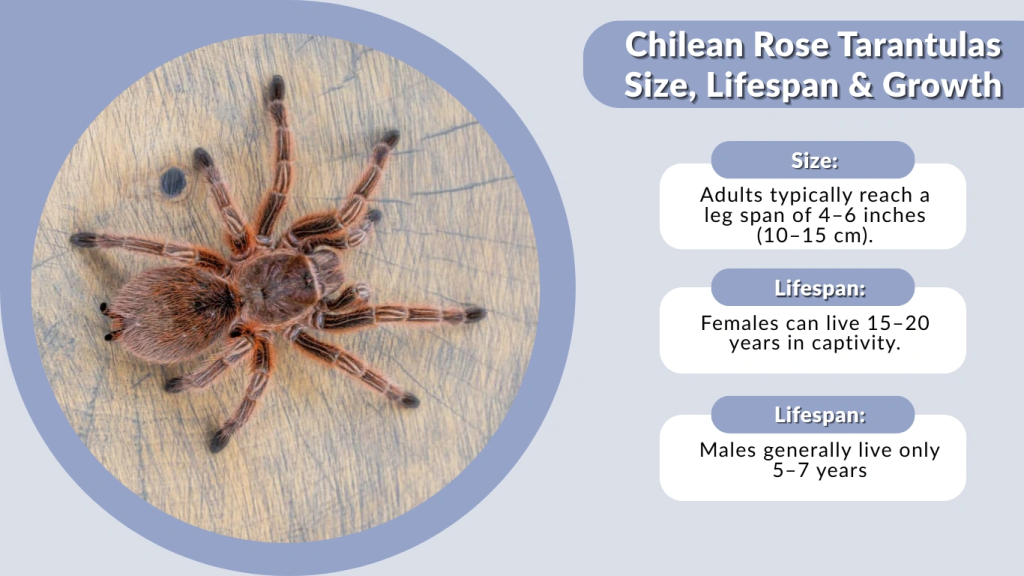
Chilean Rose Tarantulas are medium-sized tarantulas compared to some of their giant relatives.
- Size: Adults typically reach a leg span of 4–6 inches (10–15 cm).
- Growth rate: They grow slowly, taking years to reach full size.
- Lifespan:
- Females can live 15–20 years in captivity.
- Males generally live only 5–7 years, often dying shortly after reaching maturity.
- Females can live 15–20 years in captivity.
This significant difference makes sexing important for hobbyists who want a long-term companion.
Behavior & Handling

Chilean Rose Tarantulas are known for their docile and calm temperament, which is why they are so popular with beginners. However, they can also be unpredictable.
Temperament:
- Usually slow-moving and non-aggressive.
- Some individuals may flick urticating hairs when disturbed.
- Rarely show defensive postures compared to other species.
Handling:
While they tolerate occasional handling, it is not recommended to do so frequently. Falls from even a short height can be fatal. Instead, observe them in their enclosure to minimize stress.
Feeding refusal:
It is normal for them to stop eating for weeks or even months, especially before molting. Keepers should not panic as long as the spider otherwise appears healthy.
Biting, Venom & Safety

Like all tarantulas, the Chilean Rose Tarantula has venom, but it is mild and not dangerous to humans.
Bite risk:
- Bites are rare and usually occur only if the tarantula feels cornered or threatened.
- Symptoms are comparable to a bee sting—mild pain, redness, and swelling.
Venom:
Not medically significant, though allergic individuals should exercise caution.
Urticating hairs:
A more common defense is the flicking of tiny hairs from their abdomen. These hairs can cause skin irritation or mild eye discomfort. Wearing gloves or washing hands after contact is recommended.
Molting, Shedding & Breeding
Molting is a critical process in the tarantula’s growth and life cycle.
Molting process:
- Before molting, the tarantula may stop eating and become sluggish.
- It will flip onto its back, which often alarms beginners but is a natural position.
- The old exoskeleton is shed, and the tarantula emerges softer and more vulnerable.
Frequency:
- Juveniles molt several times a year.
- Adults molt far less frequently, often only once annually or every couple of years.
After molting:
- The spider should not be fed until its fangs harden, which can take 7–14 days.
Breeding:
Breeding in captivity is possible but requires experience. Males often do not survive long after mating, and females may cannibalize males if not carefully managed. Egg sacs can contain hundreds of spiderlings, making it a demanding responsibility.
FAQs
1. How often should I feed my Chilean Rose Tarantula?
Adult Chilean Rose Tarantulas need feeding once every 7–10 days, while juveniles require food 2–3 times weekly. They eat live insects such as crickets and roaches. Overfeeding should be avoided, as this species tends to fast naturally and can go weeks without eating, especially before molting.
2. How long do Chilean Rose Tarantulas live?
Lifespan varies by gender. Females can live up to 20 years, making them long-term pets, while males usually survive 5–7 years and die soon after reaching maturity. Proper care, a stress-free environment, and stable feeding habits help maximize their lifespan in captivity.
3. Are Chilean Rose Tarantulas dangerous?
These tarantulas are not considered dangerous. Their venom is mild, with effects similar to a bee sting, causing minor pain or swelling in most cases. They are more likely to flick urticating hairs than bite. With careful handling and respect for their space, they remain safe pets.
4. What is the best enclosure for a Chilean Rose Tarantula?
A secure 5–10 gallon tank is ideal. The setup should include dry substrate, one hide, and a shallow water dish. Since they are terrestrial, width matters more than height. Good ventilation and a stable temperature between 70–80°F ensure a healthy and stress-free environment.
5. Why is my Chilean Rose Tarantula not eating?
Feeding refusal is common and usually harmless. Many individuals fast before molting or during seasonal changes. They can go weeks or months without food while staying healthy. Ensure water is always available, and only reintroduce prey once the tarantula resumes normal activity after a molt.