

The Crab Spider in Florida is a small but remarkable arachnid commonly found in gardens, meadows, and even coastal mangroves. Recognized by its crab-like stance and ability to move sideways, it is often mistaken for a dangerous or exotic spider. However, crab spiders in Florida are harmless to humans and play a beneficial ecological role by controlling pest insects.
Identification and Appearance
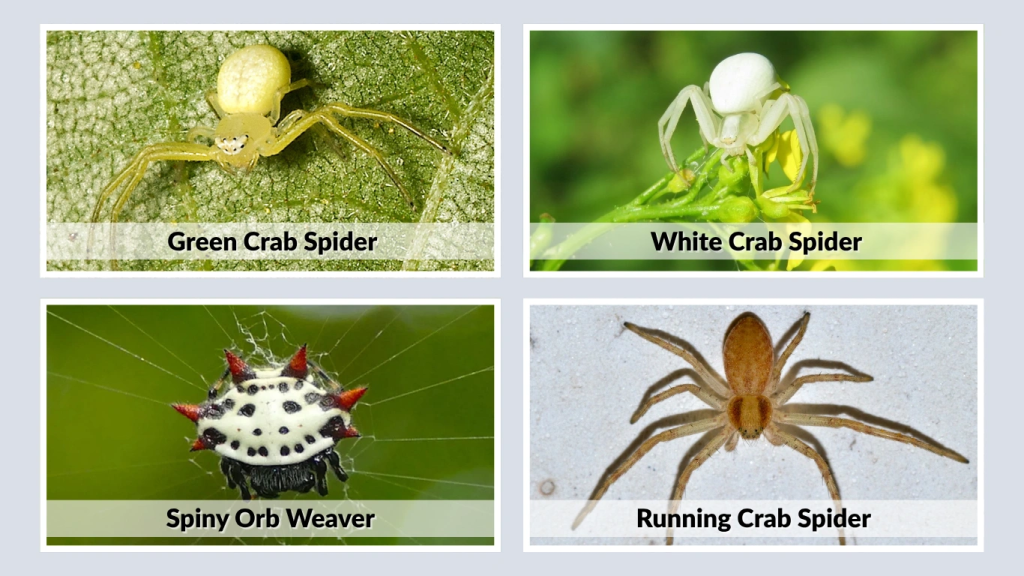
What Does a Florida Crab Spider Look Like?
Crab spiders have a flat, round body with long, extended front legs resembling a crab’s pincers. These legs allow them to move sideways or backward swiftly. Most species measure between 5–10 millimeters, although some can appear much larger depending on the variety. Their color can vary — from bright white and yellow to green or brown — providing excellent camouflage among flower petals or leaves.
Common Species in Florida
Florida hosts a range of crab spider species, each with distinctive traits:
- Green Crab Spider (Misumessus oblongus) – A bright green species found in gardens and meadows.
- White Crab Spider (Misumena vatia) – Known for sitting on white or yellow flowers awaiting prey.
- Spiny Orb Weaver (Gasteracantha cancriformis) – Often mistaken for a crab spider due to its hard, spiked shell.
- Running Crab Spider (Philodromus spp.) – A faster, ground-dwelling species that prefers open terrain.
These spiders rely heavily on camouflage rather than webs for protection and hunting. Their vivid or muted coloration depends on both habitat and maturity.
Habitat and Range in Florida
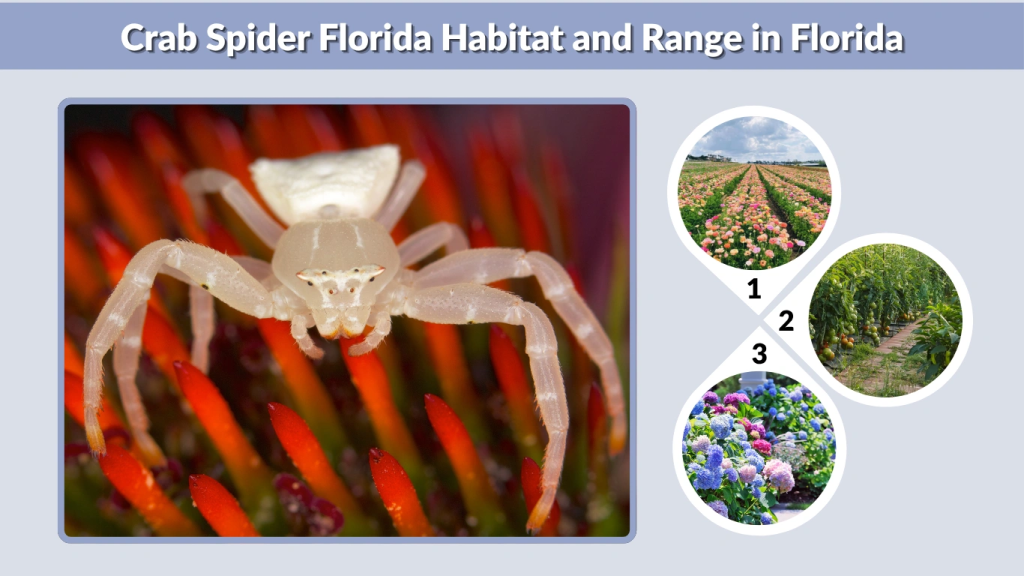
Crab spiders are abundant throughout Florida, from the northern pine woods to the Florida Keys. They favor environments with ample flowers and sunlight. Common habitats include:
- Flowering gardens and fields
- Citrus and tomato crops
- Shrubs and ornamental plants
- Coastal dunes and mangroves
Because of Florida’s tropical climate, crab spiders remain active year-round, though they’re most visible in spring and summer when flowers bloom and insect activity peaks.
Behavior and Diet
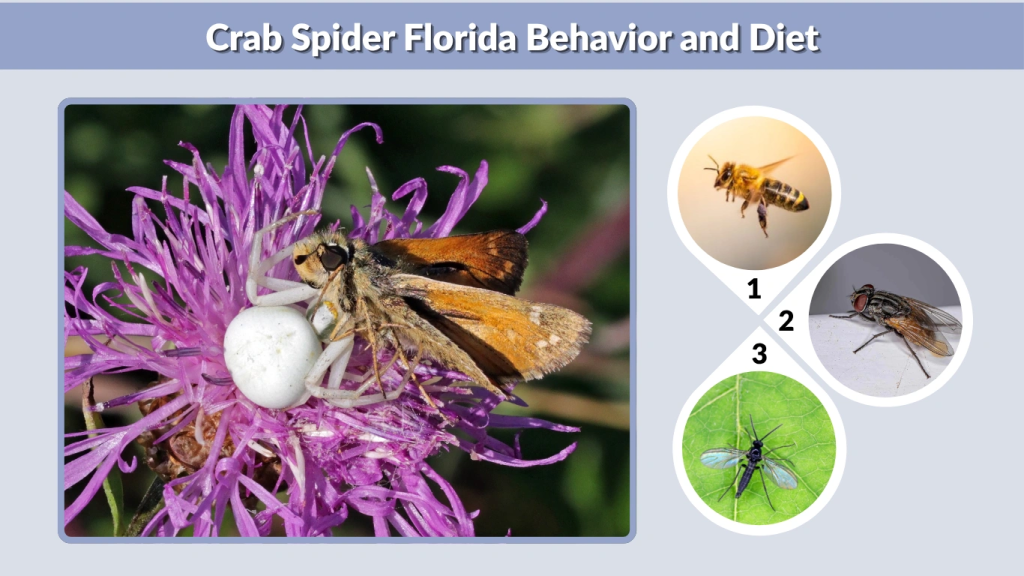
Ambush Hunting Technique
Unlike web-building spiders, crab spiders are ambush predators. They sit motionless on a flower or leaf, waiting patiently for prey — typically bees, flies, butterflies, or moths — to come within reach. When an unsuspecting insect lands, the crab spider strikes rapidly using its strong front legs and venom to immobilize the prey.
Diet and Ecological Role
Crab spiders primarily feed on pollinating insects, making them a natural form of pest control. Their presence in gardens helps reduce populations of harmful bugs without affecting plants. They consume:
- Bees and wasps
- Flies and gnats
- Small beetles
- Moths and butterflies
Their patience and camouflage make them some of nature’s most efficient garden hunters.
Venom and Bite Information
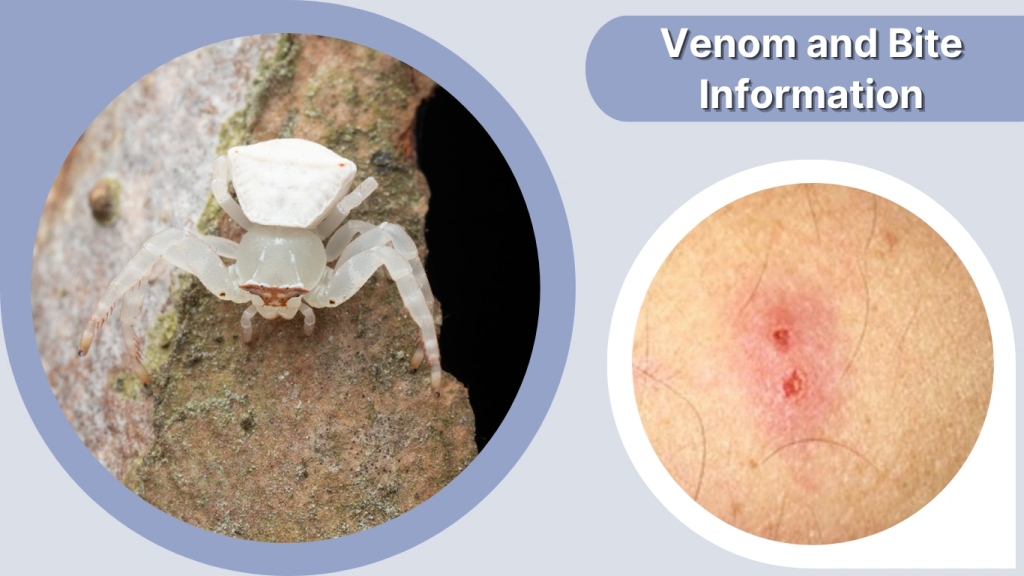
Are Florida Crab Spiders Poisonous?
Crab spiders in Florida are venomous to their prey but not dangerous to humans. Their venom is used only to subdue insects and has no significant effect on people or pets. Because they don’t spin webs or display aggressive behavior, bites are exceedingly rare.
Bite Reactions
If handled roughly, a crab spider may bite in self-defense. The effects are mild — typically a small red bump, slight itching, or temporary swelling. Symptoms fade within hours, and simple first aid (washing and applying ice) is sufficient. Medical attention is rarely needed.
Florida Spider Crab vs. Crab Spider

It’s easy to confuse the crab spider with the spider crab, but they’re completely different creatures. The crab spider is a land-dwelling arachnid, while the spider crab is a marine crustacean found in Florida’s coastal waters.
| Feature | Crab Spider (Land) | Spider Crab (Marine) |
| Habitat | Gardens, flowers, plants | Ocean floors, reefs, mangroves |
| Body Type | Soft, small, flat-bodied | Hard shell, long legs |
| Legs | 8 (spider anatomy) | 10 (crab anatomy) |
| Venom | Mild, for insects | None |
| Risk to Humans | Harmless | Edible, regulated catch |
The marine spider crab, such as the longnose spider crab or Florida spider crab, is an ocean species harvested for food under fishing regulations. In contrast, the crab spider is a harmless land arachnid that contributes to pest control.
Interesting Facts
- Color Adaptation: Some Florida crab spiders can subtly change their body color over time to match their surroundings, helping them hide from predators.
- Camouflage Masters: Their bright hues allow them to sit invisibly on flowers like daisies and hibiscus.
- No Webs: They do not spin webs to trap prey; instead, they rely on stealth and speed.
- Protective Mothers: Females spin a silk sac for their eggs and guard it until the spiderlings hatch.
- Beneficial Insects: Because they feed on pests, gardeners often consider crab spiders a natural form of pesticide.
- Widespread in Florida: Found across Miami, Tampa, Orlando, the Keys, and even northern regions like Tallahassee.
- Misidentified Species: The spiny orb weaver is frequently mistaken for a crab spider due to its flat, crab-like shape and vivid colors.
FAQs
Are crab spiders in Florida dangerous?
No. Crab spiders in Florida are completely harmless to humans. Their venom only affects small insects, and they rarely bite unless provoked. Even if bitten, the symptoms are mild and temporary, with no long-term effects.
Where can you find crab spiders in Florida?
You can find crab spiders in gardens, citrus groves, meadows, and coastal mangroves across the state. They prefer sunny areas with abundant flowers where insects are plentiful, such as those found in the Florida Keys and Gulf Coast.
Do crab spiders live in the Florida Keys?
Yes. The tropical climate of the Florida Keys provides the perfect habitat for various crab spider species, including green and yellow varieties that perch on flowering plants to ambush prey.
Is the Florida spider crab edible?
Yes — but it’s important to distinguish between the marine spider crab (which is edible) and the crab spider (a land-dwelling arachnid). The edible species lives in Florida’s coastal waters and is subject to fishing regulations.
What should you do if bitten by a crab spider?
If bitten, clean the affected area with soap and water, apply ice, and avoid scratching. The bite typically heals within hours. Medical care is unnecessary unless an allergic reaction occurs, which is extremely rare.