
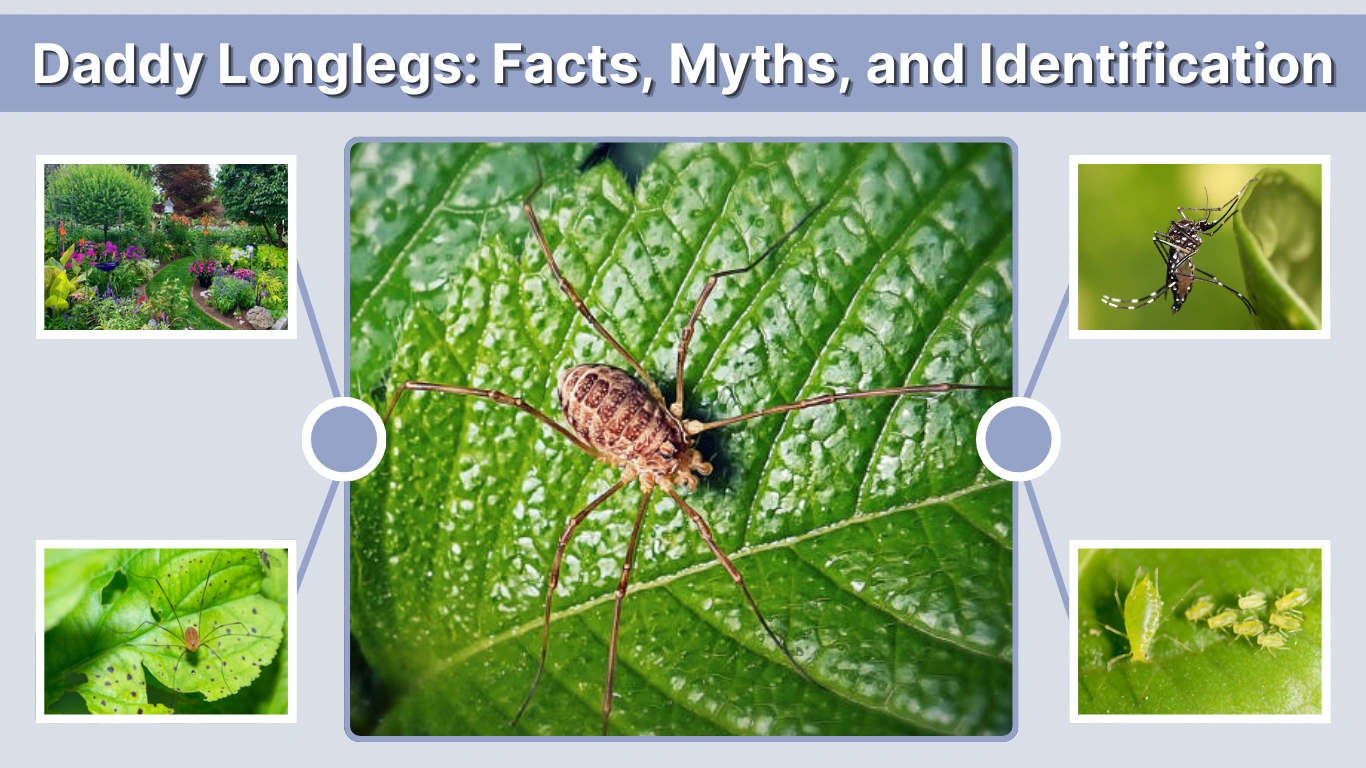
The term “daddy longlegs” is commonly used to describe a small creature with an unusually tiny body and extremely long, thin legs. Many people assume it is a type of spider, while others believe it is the most poisonous spider in the world but unable to bite humans. In reality, the name “daddy longlegs” can refer to several different creatures. Understanding what they really are, how they live, and whether they are dangerous helps clear up the many myths surrounding them.
What Is a Daddy Longlegs?
Definition and Meaning
“Daddy longlegs” is a common nickname used in many parts of the world to describe creatures with long, delicate legs and small bodies. The name itself is not a scientific classification. Instead, it is an informal term people use when they see certain long-legged arachnids or insects.
Because of this, the name can refer to more than one species, which is why there is often confusion about what a daddy longlegs actually is.
The Three Creatures Called Daddy Longlegs
In different regions, the term daddy longlegs may refer to three completely different creatures.
Harvestmen (Opiliones)
Harvestmen are arachnids that belong to the order Opiliones. They are the most common creatures people call daddy longlegs. Unlike spiders, they have a single rounded body segment and do not produce silk.
Cellar Spiders (Pholcidae)
Cellar spiders are true spiders that belong to the Pholcidae family. They are commonly found inside homes, especially in basements, ceilings, and corners. These spiders have very long legs and build loose webs, which is why people often mistake them for harvestmen.
Crane Flies (Tipulidae)
In some countries, especially the United Kingdom, people call crane flies daddy longlegs. These insects resemble large mosquitoes with long legs and wings, but they are completely harmless.
Daddy Longlegs vs Spider

Key Differences Between Harvestmen and Spiders
Even though they look similar, harvestmen and spiders are quite different in their anatomy and behavior.
One of the biggest differences is body structure. Spiders have two separate body segments, while harvestmen have a single fused body that appears round or oval.
Another important difference is silk production. Spiders can produce silk and build webs for catching prey, but harvestmen cannot spin webs at all.
Finally, spiders possess venom glands used for subduing prey. Harvestmen, on the other hand, do not have venom glands.
Why People Mistake Them for Spiders
People often confuse daddy longlegs with spiders because of their extremely long and thin legs. At a quick glance, they look like delicate spiders moving slowly across walls or floors.
Their small body size also adds to the confusion. Without closely examining their body segments, most people simply assume they are spiders.
Daddy Longlegs Species Explained
Harvestman Daddy Longlegs
Harvestmen are among the most recognizable creatures called daddy longlegs. They usually have a round body and eight very long legs that can be several times longer than their body.
These arachnids are commonly found outdoors in forests, gardens, grasslands, and under rocks or logs. They prefer moist environments and are often active at night.
Unlike spiders, harvestmen do not trap prey with webs. Instead, they feed on small insects, plant matter, fungi, and decaying organic material.
Cellar Spider Daddy Longlegs
Cellar spiders are true spiders often found inside buildings. They prefer dark, quiet places such as basements, garages, and storage rooms.
These spiders build irregular, loose webs in corners and ceilings. When disturbed, they often vibrate rapidly in their webs, making them difficult for predators to catch.
Cellar spiders feed on a variety of small insects, including flies, mosquitoes, and even other spiders.
Are Daddy Longlegs Poisonous?
The Famous Venom Myth
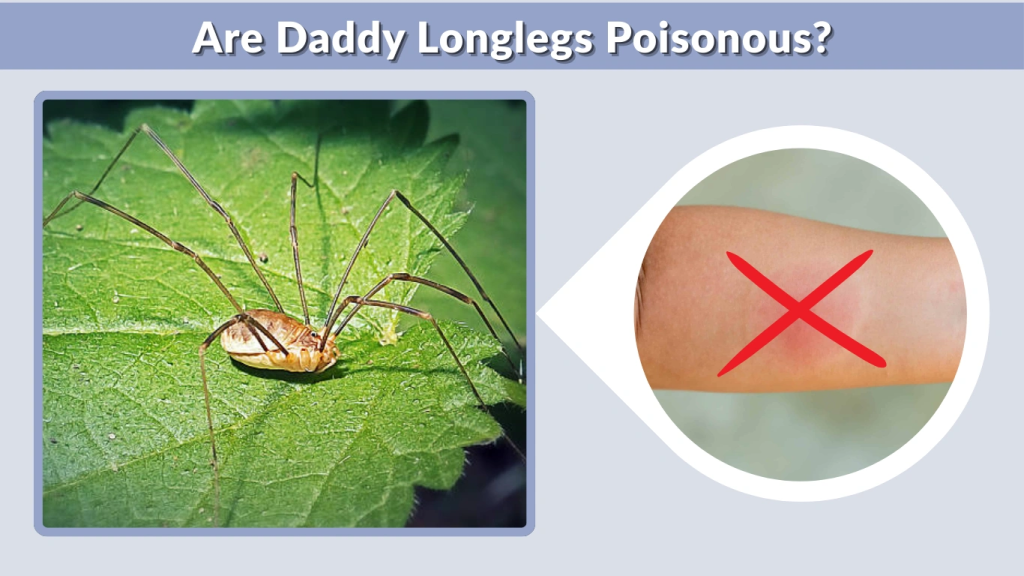
One of the most widespread myths about daddy longlegs claims that they are the most venomous spiders in the world, but their fangs are too small to bite humans.
This story has circulated for decades and is repeated frequently online and in casual conversations.
Scientific Truth
In reality, the myth is not true. Harvestmen, which are the creatures most commonly called daddy longlegs, do not even possess venom glands. They cannot inject venom at all.
Cellar spiders do have venom because they are true spiders, but their venom is harmless to humans and their bites are extremely rare.
Scientists and arachnologists have repeatedly confirmed that daddy longlegs are not dangerous to people.
Daddy Longlegs Habitat and Behavior
Where Daddy Longlegs Live
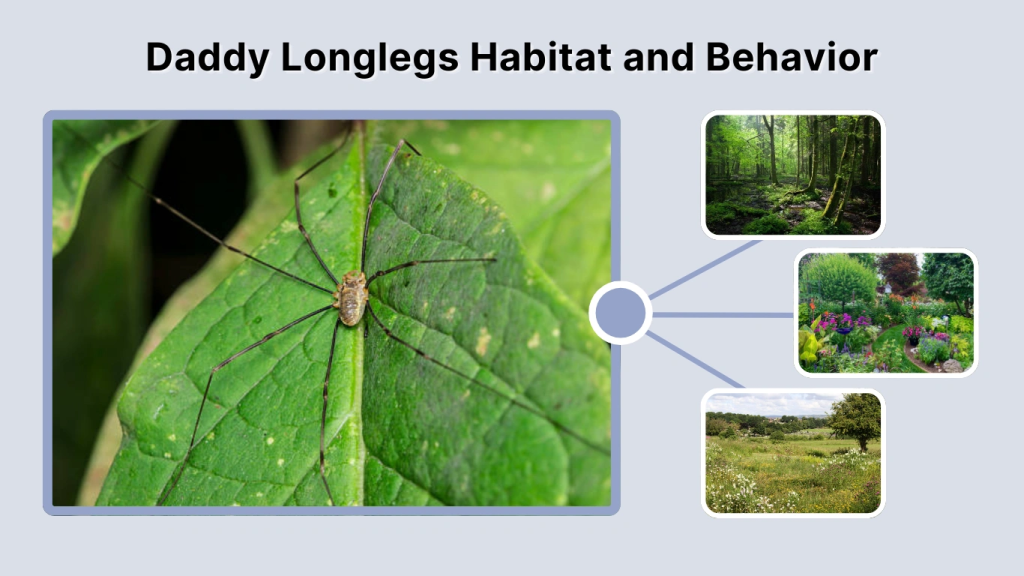
Daddy longlegs can be found in many parts of the world and adapt easily to different environments. Most species prefer moist, shaded areas where they can avoid extreme heat and predators.
Harvestmen usually live outdoors in forests, gardens, fields, and under rocks, logs, or leaf litter. During the day, they often hide in cool, damp places and become more active at night when temperatures drop.
Cellar spiders, on the other hand, are commonly found indoors. They prefer quiet, undisturbed spaces such as basements, garages, attics, and corners of ceilings. These areas provide shelter and a steady supply of small insects to eat.
Crane flies are typically found outdoors near water sources, grasslands, and gardens, especially during warmer months.
What Daddy Longlegs Eat
Daddy longlegs are generally opportunistic feeders, meaning they eat whatever food is available.
Harvestmen have a varied diet that may include:
- Small insects
- Dead insects and organic matter
- Plant material
- Fungi
Unlike spiders, harvestmen can consume solid food, which makes their diet more diverse.
Cellar spiders mainly feed on small flying insects such as flies, mosquitoes, and gnats. They sometimes even capture and eat other spiders caught in their webs.
Because of their feeding habits, daddy longlegs can help reduce insect populations around homes and gardens.
Unique Defense Mechanisms
Despite their fragile appearance, daddy longlegs have several clever ways to protect themselves from predators.
One of the most well-known defenses is leg shedding, also called autotomy. When threatened, a harvestman may drop one of its legs to escape. The detached leg continues to twitch, distracting the predator while the animal escapes.
Some species also use vibrating movements. By rapidly shaking their bodies, they make it difficult for predators to focus on them.
Additionally, certain harvestmen release defensive chemicals that produce an unpleasant smell, discouraging predators from attacking.
Benefits of Daddy Longlegs

Natural Pest Control
Daddy longlegs play an important role as natural pest controllers. By feeding on insects such as flies, mosquitoes, and small pests, they help keep insect populations under control.
In homes, cellar spiders can quietly reduce the number of flying insects without causing any harm to people.
Because of this, many experts recommend leaving them alone if they appear indoors.
Role in the Ecosystem
In outdoor environments, daddy longlegs contribute to the balance of ecosystems. Harvestmen help break down organic matter by feeding on dead insects and plant material.
This process supports nutrient recycling in soil and provides food for other animals such as birds, frogs, and reptiles.
Their presence is often a sign of a healthy natural environment.
Are Daddy Longlegs Dangerous to Humans?
Bites and Human Safety
Daddy longlegs are generally harmless to humans. Harvestmen cannot bite with venom because they lack venom glands entirely.
Cellar spiders are capable of biting, but they rarely do so. Even if a bite occurs, it is usually mild and harmless, causing little more than minor irritation.
For most people, daddy longlegs pose no medical risk at all.
Should You Remove Them From Your Home?
In many cases, there is no need to remove daddy longlegs from your home. Since they eat insects and stay mostly hidden, they can actually be beneficial.
However, if you prefer not to have them indoors, you can safely remove them by:
- Gently capturing them with a cup and paper
- Releasing them outside
- Keeping rooms clean and sealed to reduce insect activity
Avoid using harsh chemicals, as these are unnecessary and can harm other beneficial insects.
Interesting Daddy Longlegs Facts
Daddy longlegs have several fascinating traits that many people do not know about.
- Some species can live for more than a year, which is relatively long for small arachnids.
- Harvestmen are among the oldest groups of arachnids, with fossils dating back hundreds of millions of years.
- Their long legs contain sensory organs that help them detect vibrations, smells, and movement.
- Many species gather in large groups, sometimes forming clusters of hundreds of individuals.
These characteristics make daddy longlegs unique and important members of the arachnid world.
How to Identify a Daddy Longlegs

Physical Features
Daddy longlegs are easy to recognize because of their distinctive appearance. Most have:
- A very small body compared to their legs
- Extremely long, thin legs
- A light brown, gray, or tan color
Harvestmen usually have a round, single body segment, while spiders have two separate body sections.
Identification Tips
You can often tell what type of daddy longlegs you are looking at by observing a few details.
If the creature does not build webs and has a single rounded body, it is likely a harvestman.
If it builds loose webs in corners or ceilings, it is probably a cellar spider.
If the creature has wings and flies, it is actually a crane fly.
FAQs
Are daddy longlegs really spiders?
Not always. Some daddy longlegs are spiders, but many are harvestmen, which belong to a different group of arachnids.
Can daddy longlegs bite humans?
Harvestmen cannot bite with venom, and cellar spider bites are extremely rare and harmless.
Why are they called daddy longlegs?
The name likely comes from their long, thin legs, which are much longer than their bodies.
Are daddy longlegs beneficial in homes?
Yes. They help control insect populations by feeding on flies, mosquitoes, and other pests.
How long do daddy longlegs live?
Many species live for about one year, although lifespans can vary depending on the environment and species.
Conclusion
Daddy longlegs are fascinating creatures often misunderstood because of myths and confusing names. Whether they are harvestmen, cellar spiders, or crane flies, these animals are generally harmless and play useful roles in nature. They help control insect populations and contribute to healthy ecosystems. By understanding what daddy longlegs truly are and how they live, people can appreciate these long-legged creatures rather than fear them.