
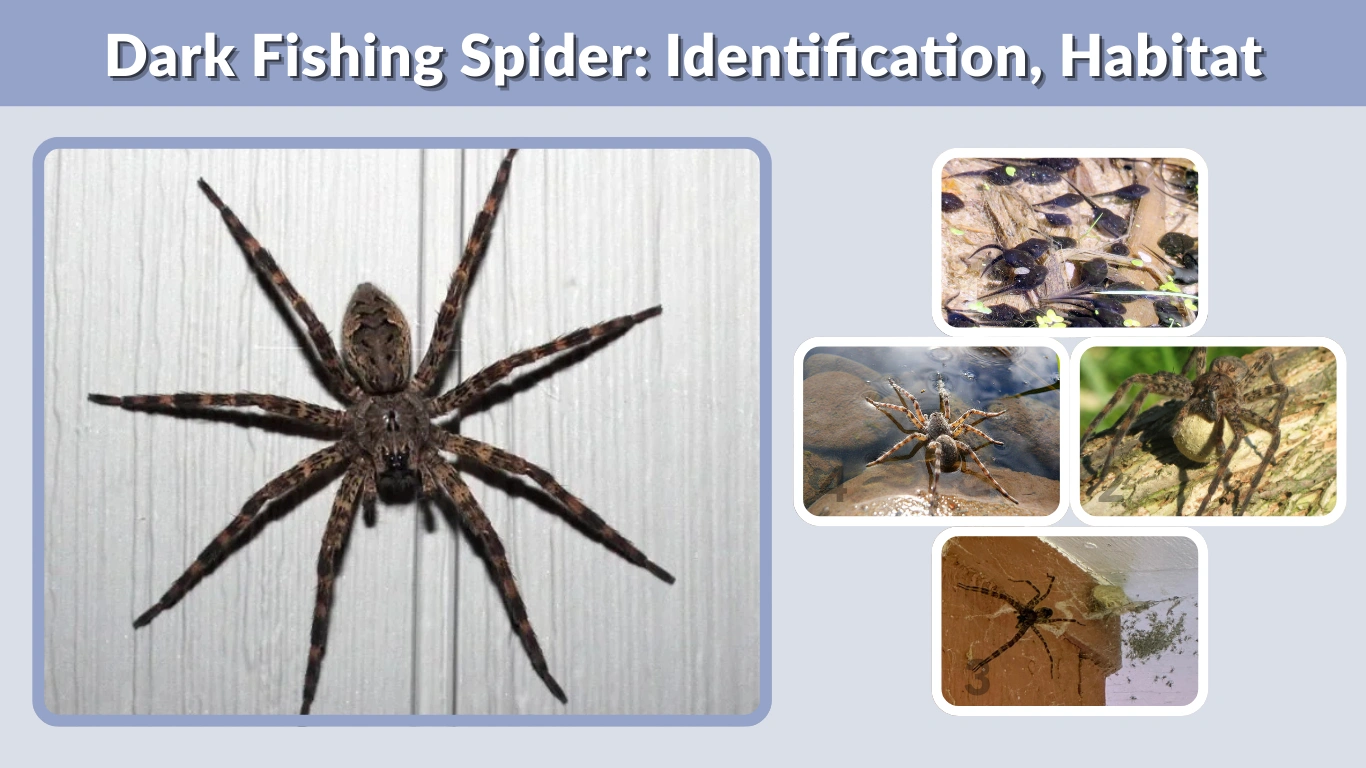
The dark fishing spider (Dolomedes tenebrosus) is one of the largest and most fascinating spiders found in North America. Known for its impressive size and unique hunting abilities, this spider often lives near water and can even walk across the surface of ponds and streams. Despite its intimidating appearance, the dark fishing spider is generally harmless to humans and plays an important role in controlling insect populations. Understanding its identification, habitat, and behavior helps people appreciate this remarkable semi-aquatic predator.
What Is a Dark Fishing Spider?
The dark fishing spider belongs to a group of spiders called fishing spiders, which are part of the nursery web spider family (Pisauridae). These spiders are famous for their ability to hunt near water and sometimes capture aquatic prey.
Scientific Classification
The dark fishing spider is scientifically classified as:
- Kingdom: Animalia
- Phylum: Arthropoda
- Class: Arachnida
- Order: Araneae
- Family: Pisauridae
- Genus: Dolomedes
- Species: Dolomedes tenebrosus
The species name tenebrosus means “dark” or “shadowy,” which refers to its dark brown coloration.
Key Characteristics
Several features make the dark fishing spider easy to recognize:
- Large body and long legs
- Dark brown or gray coloration
- Subtle banding on the legs
- Light markings on the abdomen
- Excellent vision and fast hunting ability
Unlike web-building spiders, dark fishing spiders are active hunters that rely on speed and stealth rather than webs to catch prey.
Dark Fishing Spider Identification
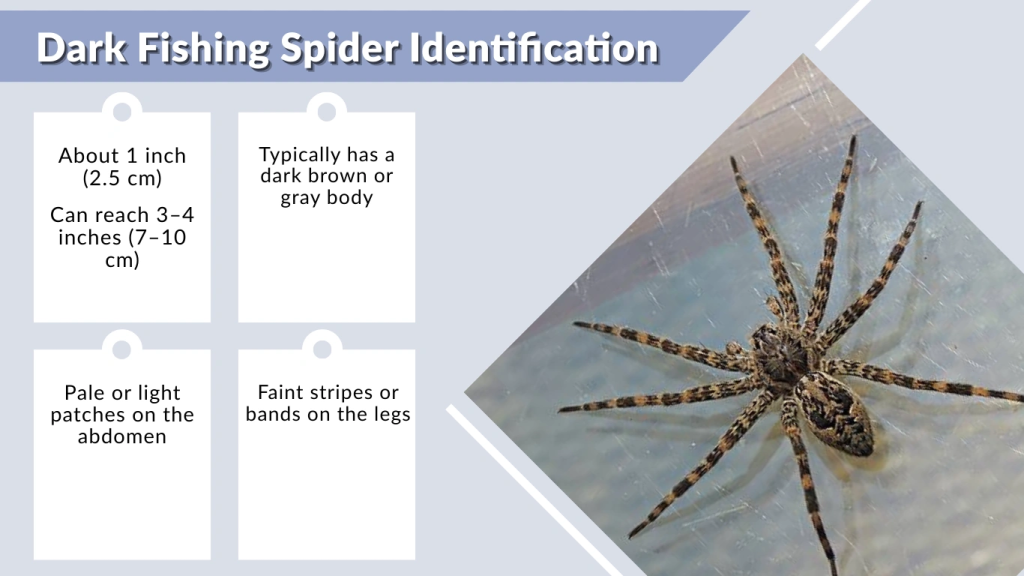
Correctly identifying a dark fishing spider is important because it is often confused with other large spiders such as wolf spiders.
Size and Appearance
One of the most striking features of the dark fishing spider is its size.
- Body length: about 1 inch (2.5 cm)
- Leg span: can reach 3–4 inches (7–10 cm)
- Females: larger than males
Because of its long legs and wide stance, the spider may appear even larger than it actually is.
Color and Markings
The dark fishing spider typically has a dark brown or gray body with lighter patterns that help it blend into tree bark and rocks.
Common markings include:
- Pale or light patches on the abdomen
- Faint stripes or bands on the legs
- Subtle patterns that provide camouflage
These markings help the spider remain hidden from predators and prey.
Difference Between Fishing Spider and Wolf Spider
Many people mistake the dark fishing spider for a wolf spider, but there are some important differences.
Fishing spiders:
- Often live near water
- Can walk on water surfaces
- Have longer legs and flatter bodies
Wolf spiders:
- Usually live on land
- Prefer grasslands, forests, and gardens
- Have a more compact body shape
Although both are fast hunters, their habitats and behaviors are different.
Habitat and Distribution
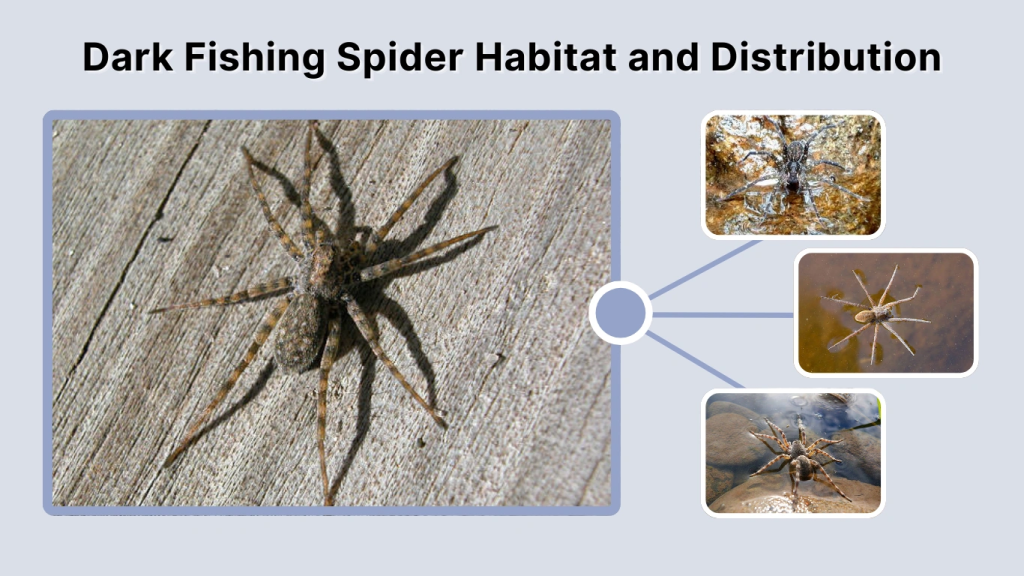
Dark fishing spiders prefer environments where they can easily find insects and aquatic prey.
Where Dark Fishing Spiders Live
These spiders are commonly found in places such as:
- Riverbanks
- Lakes and ponds
- Wet forests
- Tree trunks and rock surfaces near water
- Wooden structures close to streams
They are excellent climbers and may sometimes be seen resting on tree bark, docks, or buildings near water.
Geographic Distribution
The dark fishing spider is primarily found in North America.
Its range includes:
- The United States
- Southern Canada
- Parts of eastern and central North America
They are especially common in wooded areas with freshwater sources.
Behavior and Hunting Style
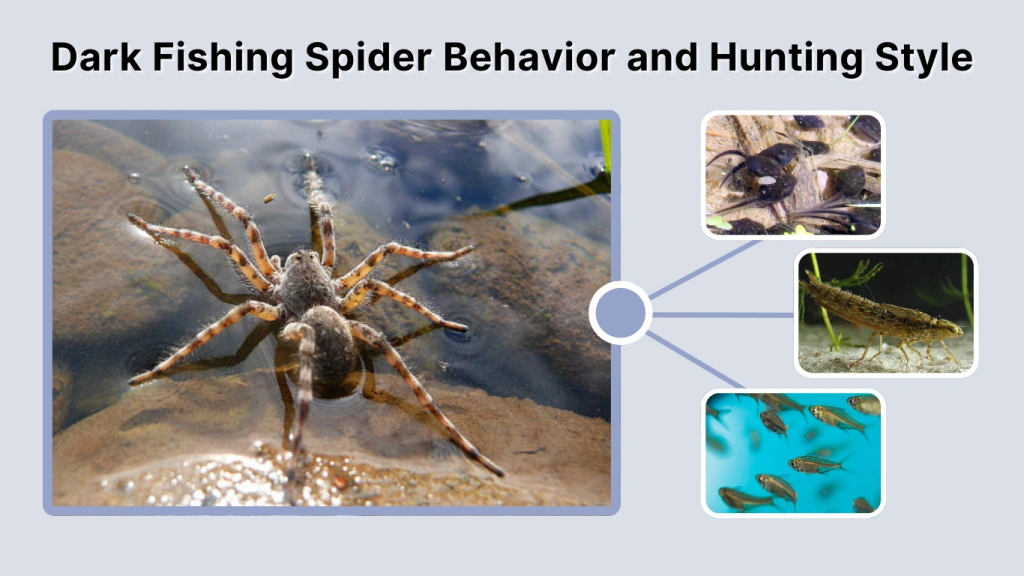
Unlike many spiders that rely on webs, the dark fishing spider is an active predator.
How Fishing Spiders Hunt
Dark fishing spiders typically hunt by waiting near the water’s edge with their front legs touching the surface. This allows them to detect vibrations created by insects or small animals.
When prey is detected, the spider quickly attacks and injects venom to immobilize it.
Their diet may include:
- Insects
- Aquatic insects
- Tadpoles
- Small fish
- Other spiders
Can Dark Fishing Spiders Walk on Water?
One of the most amazing abilities of the dark fishing spider is its capacity to walk on water.
This happens because:
- Their legs have tiny water-repelling hairs
- Surface tension supports their weight
- They can move quickly across the water
In some cases, the spider can even dive underwater to escape predators.
Dark Fishing Spider Bite
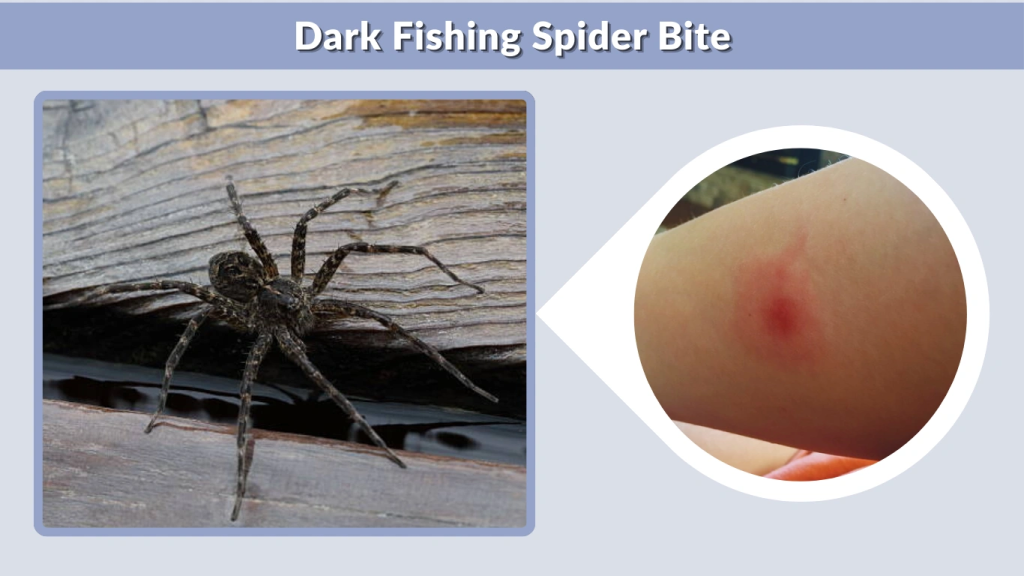
Because of their large size, many people worry about the dark fishing spider bite. However, these spiders are not considered dangerous to humans.
Is the Dark Fishing Spider Dangerous?
The dark fishing spider does produce venom, but it is primarily used to subdue prey. For humans, the venom is not medically significant.
In most cases, the spider will avoid humans and bite only if it feels threatened or trapped.
Key points to remember:
- Not aggressive toward people
- Bites are rare
- Venom is mild compared to dangerous spiders like black widows
Symptoms of a Bite
If a dark fishing spider does bite, the symptoms are usually mild and temporary.
Common symptoms may include:
- Mild pain at the bite site
- Redness or swelling
- Slight itching or irritation
These symptoms typically disappear within a few hours or a couple of days.
When to Seek Medical Help
Although serious reactions are uncommon, medical attention may be necessary if:
- Severe swelling occurs
- Signs of infection appear
- The person has an allergic reaction
Keeping the bite area clean and applying a cold compress can help reduce swelling and discomfort.
Life Cycle and Reproduction
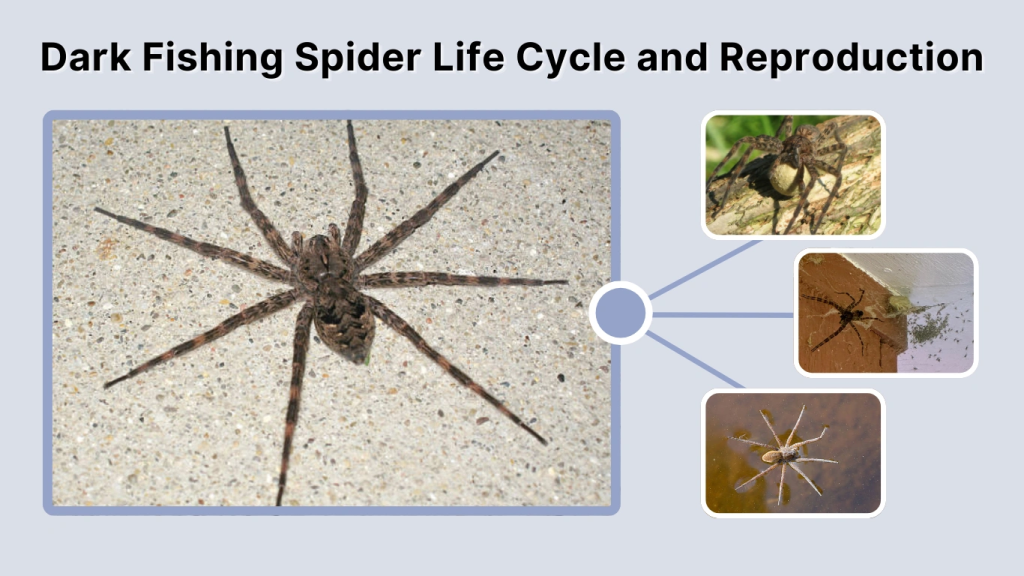
The life cycle of the dark fishing spider is similar to other spiders in the nursery web spider family.
Mating Behavior
Male dark fishing spiders approach females cautiously because females are significantly larger. During courtship, the male performs subtle movements or vibrations to signal that he is a potential mate rather than prey.
Once mating occurs, the female begins preparing to produce eggs.
Egg Sac and Spiderlings
The female dark fishing spider carries her egg sac in her jaws, which is a characteristic trait of nursery web spiders.
Important stages include:
- The female produces an egg sac containing hundreds of eggs.
- She carries the sac until the eggs are ready to hatch.
- Before the spiderlings emerge, she builds a nursery web among vegetation.
- The young spiders remain protected inside the web until they are ready to disperse.
After leaving the nursery web, the spiderlings begin hunting small insects on their own.
Interesting Facts About Dark Fishing Spiders
The dark fishing spider has several remarkable traits that make it one of the most interesting spiders in North America.
Some fascinating facts include:
- It is one of the largest spiders in North America.
- It can run across the surface of water.
- The spider can dive underwater and remain submerged for short periods.
- It sometimes enters homes accidentally while searching for shelter.
- It relies on speed and strong eyesight rather than webs to capture prey.
These abilities make the dark fishing spider an effective and adaptable predator.
Dark Fishing Spider vs Other Fishing Spiders
There are several species of fishing spiders, and some people may confuse them with each other.
Dark Fishing Spider vs Six-Spotted Fishing Spider
The six-spotted fishing spider (Dolomedes triton) is another well-known species.
Differences include:
- Six-spotted fishing spiders usually have lighter colors and distinct spots on their bodies.
- They are more strongly associated with water surfaces and aquatic plants.
- Dark fishing spiders often rest on tree trunks and rocky surfaces.
Dark Fishing Spider vs Striped Fishing Spider
The striped fishing spider (Dolomedes scriptus) has more noticeable striping patterns.
Key differences:
- Striped fishing spiders have clear, visible stripes on their bodies and legs.
- Dark fishing spiders have darker coloration with subtler markings.
Despite these differences, all fishing spiders share similar hunting behaviors.
Are Dark Fishing Spiders Good for the Environment?
Like many predators, dark fishing spiders play an important role in maintaining ecological balance.
Their benefits include:
- Controlling insect populations
- Reducing pest species
- Supporting healthy freshwater ecosystems
By feeding on insects and other small animals, these spiders help prevent certain pest populations from growing too large.
Because of this, they are considered beneficial predators in natural environments.
How to Prevent Fishing Spiders Around Homes
Although dark fishing spiders are harmless, some people prefer to keep them away from their homes.
Remove Attractants
Reducing things that attract insects can help discourage spiders.
Helpful steps include:
- Limiting outdoor lighting that attracts insects
- Keeping windows and doors closed at night
- Removing standing water near the house
Habitat Control
You can also reduce areas where spiders might hide.
Practical tips include:
- Trimming vegetation near walls and foundations
- Removing piles of wood or debris
- Sealing cracks in walls and windows
These steps make it less likely for spiders to enter indoor spaces.
FAQs
How big is a dark fishing spider?
A dark fishing spider can reach a leg span of 3 to 4 inches, while its body length is usually about 1 inch. Females are typically larger than males.
Is a dark fishing spider poisonous?
The spider has venom used for hunting prey, but it is not dangerous to humans and bites are uncommon.
Can dark fishing spiders swim?
Yes. Dark fishing spiders can move across water and even dive underwater when hunting or escaping predators.
Do dark fishing spiders enter houses?
Occasionally, they may wander indoors by accident, especially if the home is near water or wooded areas.
Are dark fishing spiders aggressive?
No. These spiders are generally shy and avoid human contact, biting only when they feel threatened.