

Wolf spiders are fascinating hunters known for their speed, strength, and unique parenting behavior. Among them, females are especially notable for their maternal instincts, often seen carrying egg sacs and even baby spiderlings on their backs. But how do you tell a female wolf spider apart from a male? Their differences extend beyond size — they include body structure, pedipalps, and even behavior. Let’s explore in detail.
Female Wolf Spider Overview

Female wolf spiders are larger, bulkier, and more dominant in appearance compared to males. They are recognized for their strong maternal care, which sets them apart from many other spider species. A female will not only guard her egg sac but also carry her newly hatched spiderlings on her back until they are ready to disperse.
Identification of Female Wolf Spider
- Size – Females are generally much larger, often twice the body mass of males.
- Body Shape – Their abdomen is broad and rounded, giving them a stocky look.
- Color & Markings – They display gray, brown, or black shades with clear markings depending on species.
- Pedipalps – Unlike males, females have thin pedipalps that are not swollen or bulb-like.
- Overall Impression – They appear heavier, sturdier, and less active than males.
Male Wolf Spider Overview

Male wolf spiders are smaller but more active, spending much of their lives searching for mates. They are slimmer, faster-moving, and usually less robust. Males play little role in parental care, but they have evolved distinctive features that make them easy to identify.
Identification of Male Wolf Spider
- Size – Usually smaller than females, with slender bodies.
- Pedipalps – Enlarged, bulb-shaped pedipalps are the most reliable way to identify a male, as these are used during mating.
- Legs – Proportionally longer and thinner compared to their body.
- Coloration – Sometimes lighter and with less noticeable markings.
- Movement – More mobile and restless, often found wandering at night.
Male vs Female Wolf Spider – Key Differences
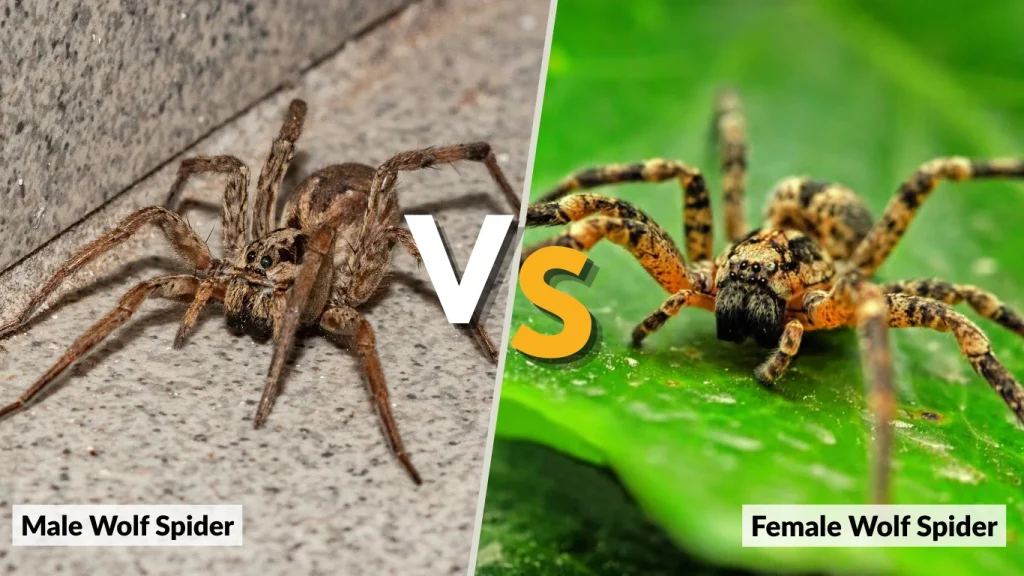
When seen side by side, the differences become clear:
- Size – Females are much larger and heavier, while males are smaller and slim.
- Pedipalps – Females have straight, narrow pedipalps; males have bulbous pedipalps, a feature unique to their sex.
- Behavior – Females remain near burrows or hunting grounds, while males roam widely in search of mates.
- Body Structure – Females have rounder abdomens, while males look elongated and lean.
This comparison is not just about appearance. These traits reflect survival strategies: females focus on reproduction and protection, while males dedicate energy to mating opportunities.
Female Wolf Spider with Egg Sac and Babies

One of the most iconic sights in nature is a female wolf spider carrying her egg sac. The sac is attached to her spinnerets at the rear of the abdomen, and she never abandons it. If the sac becomes detached, she will actively retrieve and reattach it.
After hatching, dozens of tiny spiderlings climb onto the female’s back, clinging tightly as she continues to hunt and move. This unique maternal behavior provides protection during the spiderlings’ most vulnerable stage, something rare among spiders.
Behavior Differences Between Male and Female
Females are more sedentary, spending time near their burrows or hunting areas. They display fierce maternal instincts, aggressively defending their egg sacs and young. Males, on the other hand, are far more mobile. They leave the safety of burrows to travel long distances in search of females, often increasing their risk of predation.
The lifespan also differs: females usually live longer than males, sometimes up to two years, while males rarely survive beyond a single mating season.
Rabid Wolf Spider Male vs Female
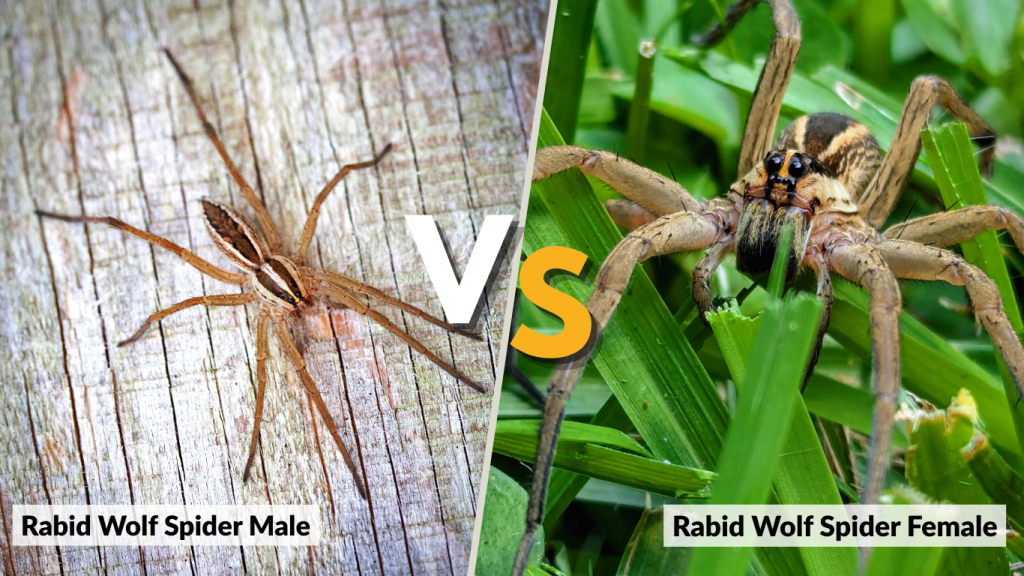
The rabid wolf spider, a well-known species in North America, shows clear sexual differences too. Females are noticeably larger, often reaching over an inch in body length, while males are slimmer. The same pedipalp distinction applies — males have swollen tips, while females do not. Behaviorally, rabid wolf spider females remain in habitats such as grasslands or forests, while males wander in search of mates during warmer months.
Female Wolf Spider Size Variations
The size of female wolf spiders varies widely depending on the species. In general, females are significantly larger than their male counterparts.
- Average Size – Most females measure between 15–35 mm in body length, not including legs.
- Carolina Wolf Spider – One of the largest species in North America, females can grow over 35 mm long.
- Australian Wolf Spider – Some females in Australia are equally large and more robust than males.
- Texas and Southern States – Wolf spiders in warmer regions often reach impressive sizes compared to their northern relatives.
This size difference plays an important role in survival, as larger females can produce more eggs and defend their offspring more effectively.
Female Wolf Spider Reproduction and Egg Sac
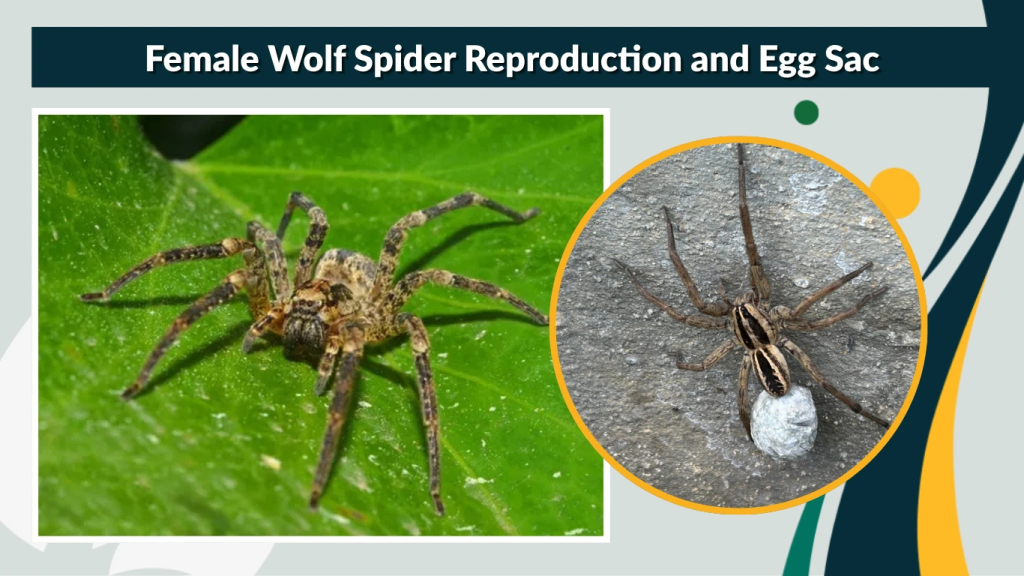
Female wolf spiders are remarkable mothers in the arachnid world. After mating, they produce an egg sac that may hold hundreds of eggs. Unlike many other spiders that abandon their eggs, the female wolf spider remains attached to the sac at all times.
When carrying the sac, she is still able to hunt and defend herself. Once spiderlings hatch, they climb onto her back and stay there for several days or weeks. This unique maternal care gives them a higher survival rate compared to many spider species.
Female Wolf Spider Venom & Bite

Both male and female wolf spiders have venom, but neither is considered highly dangerous to humans. The female’s larger fangs can deliver a more noticeable bite. Most bites result in mild symptoms such as:
- Redness and swelling
- Localized pain or itching
- Rarely, mild necrosis if left untreated
Female wolf spiders are not aggressive unless provoked, especially when guarding egg sacs or babies. Medical attention is recommended if symptoms worsen, but bites are usually harmless.
Regional Examples of Female Wolf Spiders
Different species around the world show variations in female wolf spiders:
- Carolina Wolf Spider Female – Known as one of the biggest wolf spiders in North America, with robust body and distinct markings.
- Female Black Wolf Spider – Darker in appearance, often found in forests and grasslands.
- Female Rabid Wolf Spider – Active hunters with clear size difference between sexes.
- Large Female Wolf Spider in Texas & Australia – Some of the largest wolf spiders globally, sometimes mistaken for tarantulas due to size.
Male vs Female Wolf Spider Pictures (Visual Guide)
Visual identification is often the easiest way to tell male and female wolf spiders apart. When seen side by side:
- Females appear larger, with rounded abdomens.
- Males look slimmer with swollen pedipalps.
- Females often stay with egg sacs or spiderlings, while males are more solitary.
These traits make photo comparison a practical tool for quick identification.
How to Tell if a Wolf Spider is Male or Female (Practical Guide)
If you find a wolf spider and want to determine its sex, here are the steps:
- Check the Size – Larger, stockier spiders are likely female.
- Look at the Pedipalps – Swollen, bulb-like pedipalps indicate a male; thin pedipalps suggest female.
- Observe Behavior – If the spider carries an egg sac or babies, it is always female.
- Examine Body Shape – Females have round abdomens; males are slimmer.
With these observations, it becomes much easier to differentiate between male and female wolf spiders.
FAQs
What does a female wolf spider look like?
A female wolf spider is usually larger than the male, with a broad, rounded abdomen and thicker body. They often appear in shades of gray, brown, or black with distinct patterns. Females are also known for carrying egg sacs or spiderlings on their back, making them easier to recognize.
Are female wolf spiders poisonous?
Yes, female wolf spiders possess venom, but it is not considered dangerous to humans. Their venom is mainly used to immobilize prey. If a female bites, it may cause redness, swelling, and temporary discomfort. Severe reactions are rare, and most symptoms subside within a few days without medical treatment.
How can you tell male from female wolf spiders?
The easiest way is to observe size and pedipalps. Female wolf spiders are larger, with slim pedipalps, while males are smaller with swollen, bulb-like pedipalps used for mating. Females also have rounder abdomens, whereas males appear slimmer and more active, often roaming in search of mates at night.
Do female wolf spiders always carry babies?
No, they only carry babies during reproductive stages. First, females attach the egg sac to their spinnerets, and after hatching, the spiderlings climb onto her back. At other times, females live independently, hunting and hiding in burrows or under debris, just like males, without carrying eggs or young.
Which lives longer: male or female wolf spider?
Female wolf spiders usually outlive males, often surviving for up to two years. Males, in contrast, typically live only one mating season after reaching maturity. This difference is due to reproductive roles: females need longevity to produce and protect offspring, while males prioritize finding mates, making their lives shorter.