
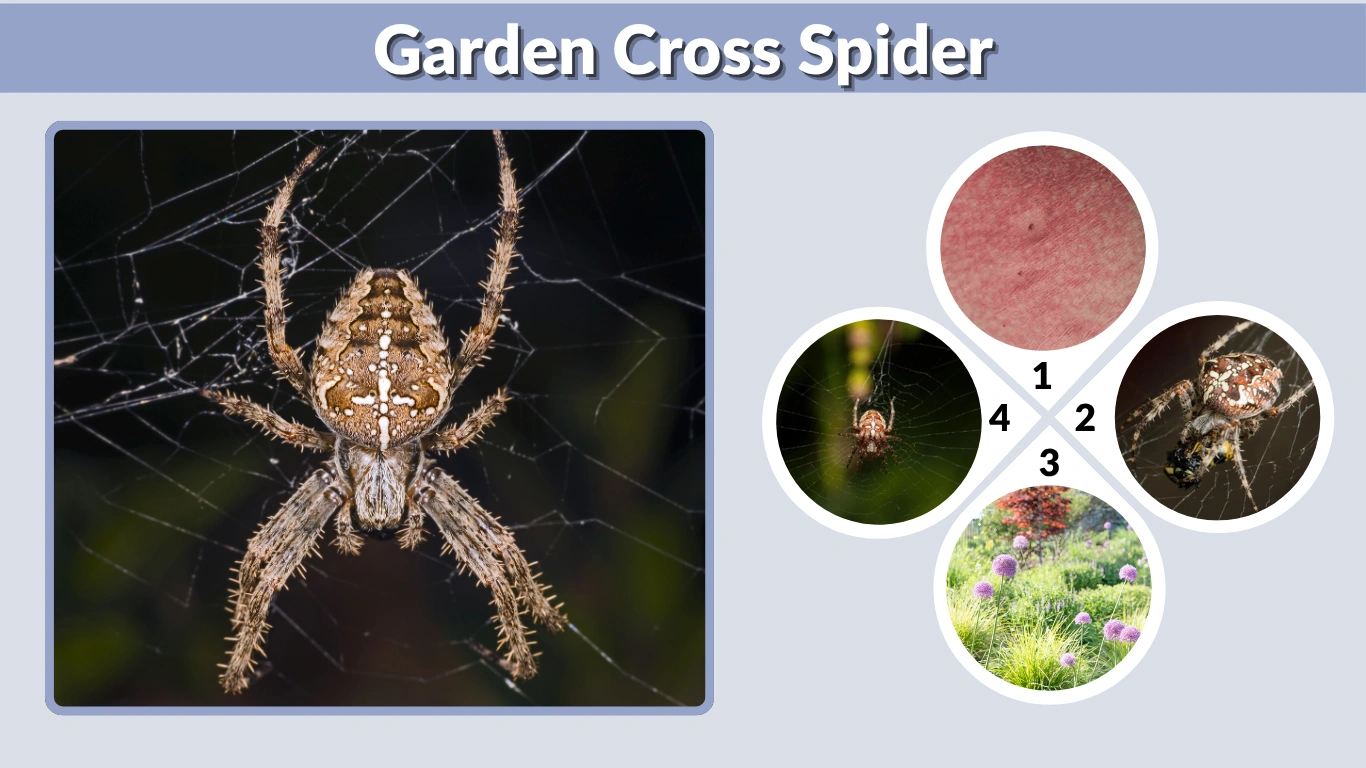
The garden cross spider (Araneus diadematus), also called the European garden spider or cross orb-weaver, is one of the most recognized arachnids across Europe and North America. Known for the distinct white cross on its abdomen, this spider is both beautiful and beneficial. Despite its intimidating appearance, the garden cross spider is harmless to humans and plays a key role in keeping pest populations under control. Its intricate webs, seasonal behavior, and fascinating life cycle make it a true wonder of the garden ecosystem.
Identifying the Garden Cross Spider
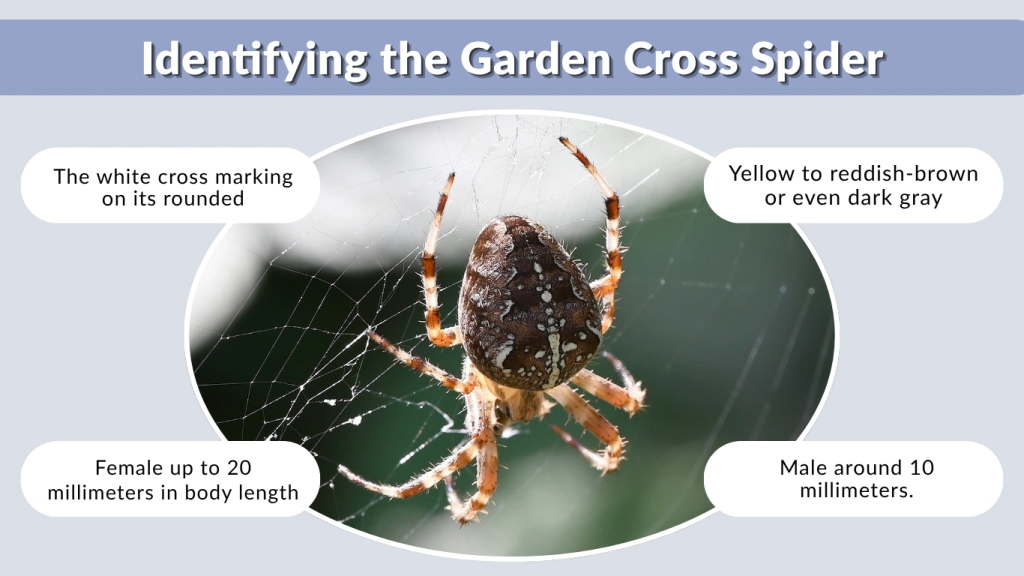
This spider’s appearance is instantly recognizable. The white cross marking on its rounded abdomen gives it its name. Its coloration varies widely—from pale yellow to reddish-brown or even dark gray—depending on habitat and season. Females are larger, reaching up to 20 millimeters in body length, while males are smaller and more slender, often measuring around 10 millimeters.
A key feature is their orb-shaped web, typically suspended between tall plants or branches. When resting, the spider hangs upside down in the center, legs tucked inward, perfectly blending with its surroundings. These spiders are common in late summer and autumn, especially in temperate regions like the UK, Ireland, Canada, and parts of the United States.
Garden Cross Spider Habitat
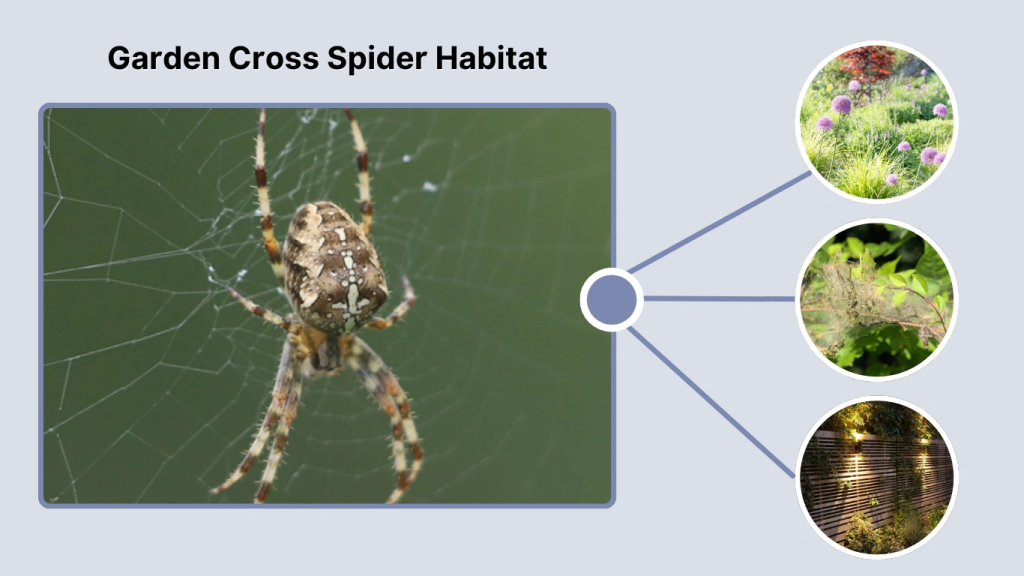
Garden cross spiders thrive in environments where insects are abundant. They can adapt to both natural and urban landscapes, constructing webs that capture flying insects efficiently.
- Gardens and Meadows: Found between flower stems or tall grasses.
- Woodland Edges: Often build webs across tree branches for stability.
- Urban Spaces: Frequently seen near fences, windows, and lamp posts.
- Coastal Zones: Adjust to humidity and wind with stronger silk tension.
Their adaptability allows them to live across Europe, North America, and Australia, making them one of the most widespread orb-weavers globally.
The Web of a Garden Cross Spider
A garden cross spider web is a masterpiece of symmetry and engineering. Each web can reach up to 30 centimeters across and features a precise radial structure with spiral silk threads. The sticky spiral captures prey like flies, moths, and small beetles, while the dry frame lines offer structural support.
Every evening, the spider consumes old silk to recycle protein before spinning a new web. This daily reconstruction ensures maximum strength and stickiness. The spider’s sensitivity to vibration helps it locate trapped prey instantly. Despite poor eyesight, it can detect subtle web tremors, distinguishing between harmless wind movement and the frantic struggles of insects.
Life Cycle and Reproduction
Egg Stage
The reproductive cycle begins in late summer when females lay hundreds of eggs inside protective silk sacs. These sacs are hidden in sheltered areas like under leaves or in crevices. The eggs overwinter safely and hatch the following spring.
Mating and Growth
During mating, males approach females cautiously to avoid being mistaken for prey. After successful fertilization, the female focuses on producing egg sacs. She may create multiple sacs, each containing up to 800 eggs. Once her reproductive task is complete, the female dies naturally as temperatures fall.
The spiderlings emerge in spring, forming small yellow clusters before dispersing. They ride air currents on silk threads—a behavior called ballooning—to find new territories. This stage marks the beginning of their solitary lives, with most reaching maturity by late summer.
Are Garden Cross Spiders Poisonous?
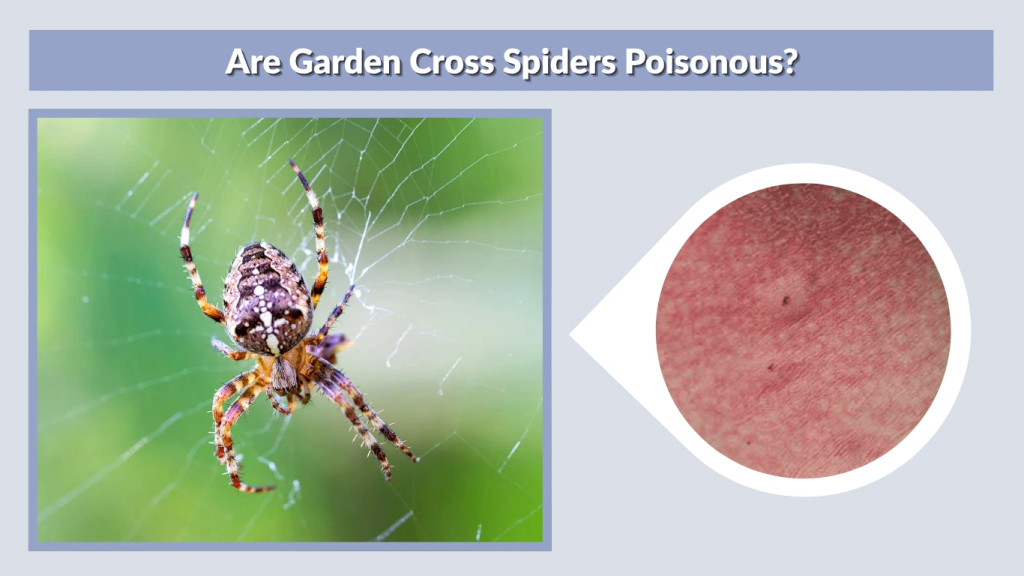
There’s a common misconception that garden cross spiders are dangerous, but they are not harmful to humans. These spiders are venomous, meaning they use venom to immobilize prey, but their venom is too mild to affect people significantly.
- Venom Presence: Yes, used only to subdue insects.
- Bite Sensation: Rare, typically a mild sting similar to a bee bite.
- Allergic Reactions: Extremely uncommon and short-lived.
- Toxicity Level: Insignificant to humans, strong only for small insects.
Most bites occur when the spider is accidentally pressed against the skin. Even then, the reaction is minimal—slight redness or itching that resolves within hours. Thus, the garden cross spider bite should not be feared. Instead, these spiders should be appreciated for their role as natural pest controllers.
Behavior and Daily Activities
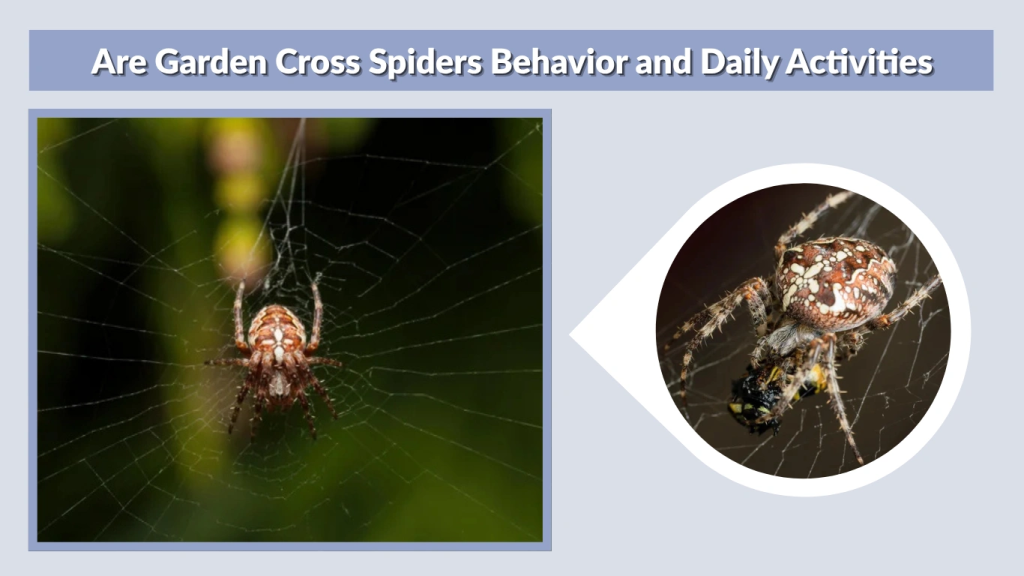
The cross orb-weaver garden spider is a nocturnal hunter. It rebuilds its web at dusk, waiting patiently for night-flying insects. During the day, it often hides near the edge of its web or in nearby foliage, connected to the web by a single “signal line” of silk. This allows it to feel vibrations while remaining concealed from predators.
When threatened, the spider drops to the ground or curls its legs to appear smaller. Unlike aggressive species, it rarely defends its web. Instead, it relies on camouflage and retreat for safety. In cooler climates like Washington State, Michigan, and Ontario, activity slows during fall as metabolism decreases. Some individuals even survive mild winters, resuming hunting in early spring.
Regional Variants of the Garden Cross Spider
Europe and the UK
Native to this region, it’s the most common garden spider with a white cross on its back. Populations peak between August and October, when females reach full size.
North America
The American garden cross spider was introduced from Europe but is now well-established in areas like California, British Columbia, and the Pacific Northwest.
Australia and Ireland
Although less widespread, reports confirm sightings in coastal Australia and rural Ireland, where they thrive in mild, humid climates.
Garden Cross Spider Facts
The garden cross spider isn’t just another web builder—it’s one of nature’s most efficient pest controllers and silk engineers. Here are a few remarkable facts that reveal its complexity and importance:
- Web Recycling: Each night, the spider consumes its old web to reuse silk proteins for the next one.
- Strength of Silk: The spider’s silk is stronger than steel of the same thickness, yet flexible enough to stretch without breaking.
- Natural Pest Control: A single adult can catch dozens of flying insects daily, reducing mosquito and gnat populations.
- Longevity: Females live for nearly a year, while males usually die after mating.
- Camouflage Expert: Its mottled coloration and resting posture help it blend into its surroundings, avoiding predators like birds and wasps.
These traits make the European garden spider, or cross orb-weaver, a vital part of the garden ecosystem. It is an indicator of healthy biodiversity and balanced insect activity.
FAQs
Is the garden cross spider poisonous?
No. The garden cross spider is not poisonous to humans. It does have venom, but it’s used only to paralyze insects. Its bite feels similar to a mild bee sting, and medical attention is rarely needed unless an allergic reaction occurs.
Where do garden cross spiders live?
They inhabit gardens, fields, hedgerows, and woodland edges. The garden cross spider UK population is especially dense in late summer, while in North America, they’re common in places like Michigan, California, and Washington State.
How long does a garden cross spider live?
A typical garden cross spider lifespan is about one year. Females live through autumn to lay eggs, while males die shortly after mating. Eggs overwinter safely inside silk sacs, and spiderlings emerge in spring to start new colonies.
What should I do if I find a garden cross spider indoors?
It’s best to gently relocate it outside using a jar and a piece of paper. They prefer outdoor environments where they can build large orb webs and catch insects naturally.
What makes the garden cross spider’s web unique?
The web is perfectly symmetrical and rebuilt almost daily. The spider uses vibrations to detect trapped prey and temperature shifts. Its precision, strength, and geometric beauty have inspired engineering and biomaterial research worldwide.