
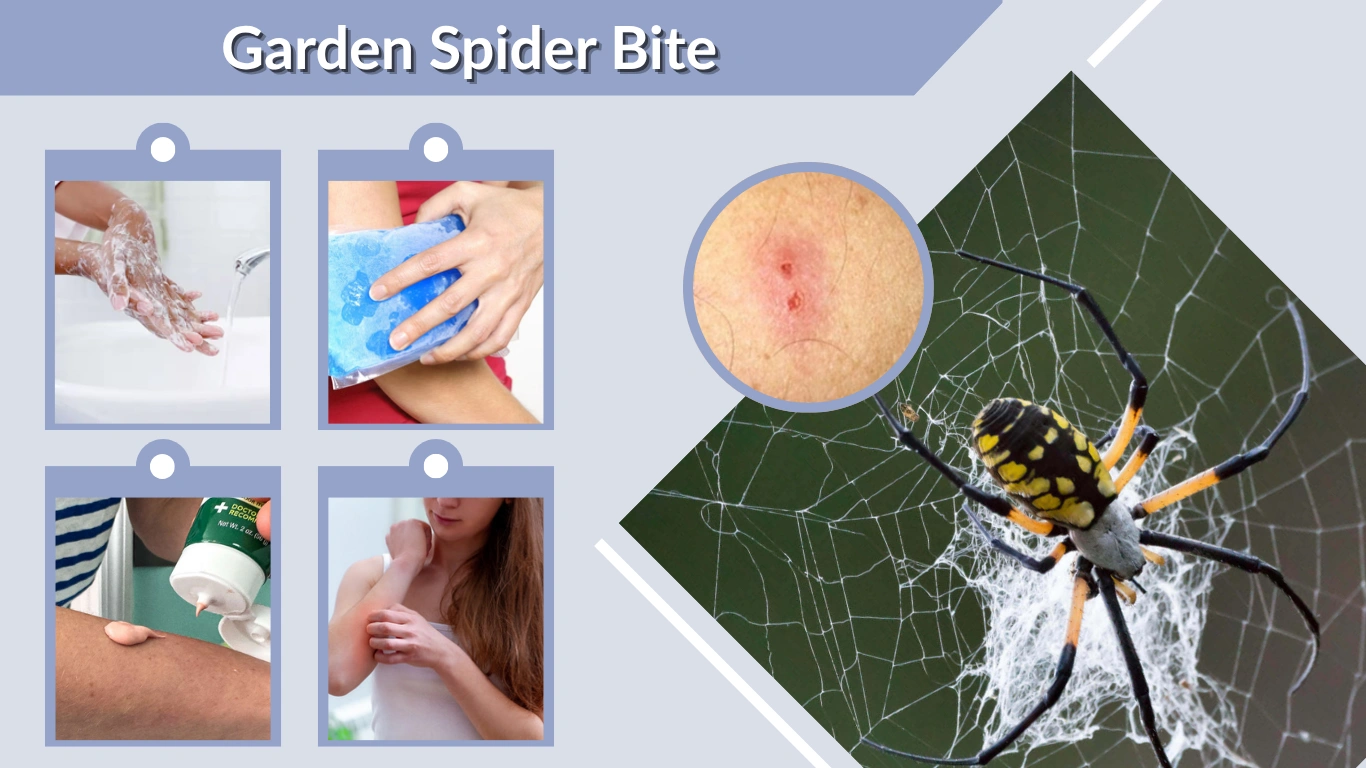
Large, colorful, and often seen weaving intricate webs in gardens and fields, garden spiders are among the most common arachnids found near homes. Despite their striking appearance, they often trigger unnecessary fear — especially when people wonder, “Do garden spiders bite, and are they dangerous?”
The truth is that garden spiders rarely bite and are not considered harmful to humans. Their venom is designed to subdue insects, not people, and most bites are mild or even unnoticed. Still, like many garden visitors, they can bite if provoked or handled roughly.
This article explores everything you need to know about garden spider bites — how they happen, what they look like, the symptoms, and simple treatments to keep you safe and informed.
Do Garden Spiders Bite?
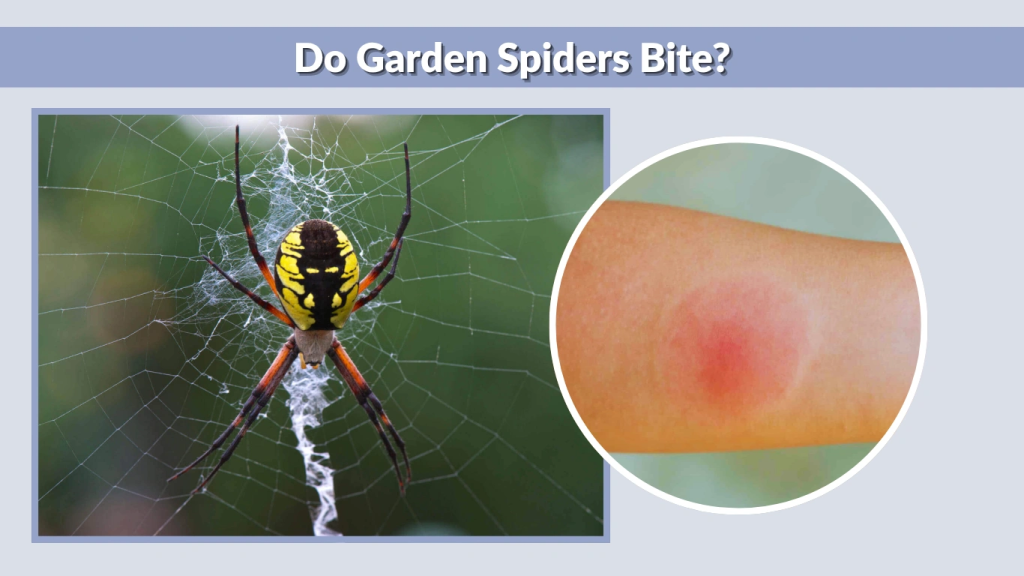
Garden spiders are generally shy creatures that prefer to stay in their webs, waiting for insects to land. They are not aggressive and will only bite as a defensive reaction if they feel trapped or threatened — such as when accidentally brushed against or handled.
In most cases, garden spiders will drop from their web or retreat rather than bite. Their fangs are small, and they typically cannot penetrate human skin easily. When they do, the result is mild and temporary.
Can a Garden Spider Bite Humans?
Yes, technically they can bite — but they almost never do. A garden spider’s bite feels similar to a bee sting or mosquito bite, producing mild redness and irritation. The reaction is local and usually goes away within a day or two.
People often confuse insect bites, rashes, or allergic reactions with spider bites, but verified cases of garden spider bites are extremely rare.
Types of Garden Spiders That May Bite
Yellow Garden Spider (Argiope aurantia): Recognized by its bright yellow and black abdomen, this large orb-weaver looks intimidating but is harmless. Bites are rare and mild.
European Garden Spider (Araneus diadematus): Common across the UK and Europe, this species can bite when provoked. The bite causes slight swelling or redness, similar to a gnat bite.
Banded Garden Spider (Argiope trifasciata): Found in North America and warmer climates, its bite causes only brief discomfort.
Australian Garden Orb-Weaver Spider: Sometimes causes a sharp pain or burning sensation, but symptoms fade within a few hours.
While these spiders vary in color and size, their venom has very little effect on humans. None are considered medically significant.
What Does a Garden Spider Bite Look Like?
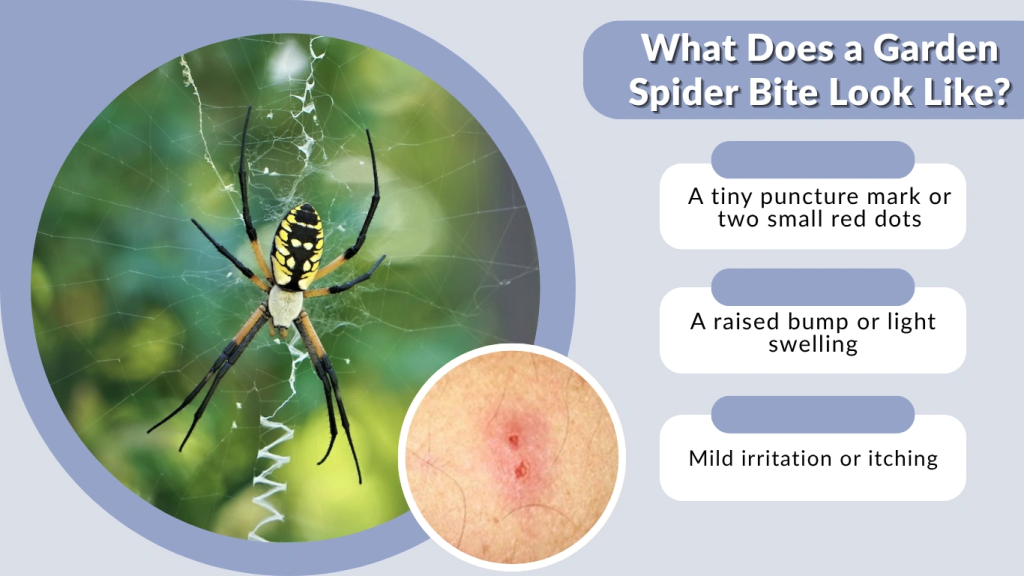
A garden spider bite is often minor and may even go unnoticed at first. The most common reaction is a small, red bump resembling a mosquito bite. There may be slight swelling, tenderness, or itching, but the area typically returns to normal within 24–48 hours.
Bite Identification
In most cases, a garden spider bite looks like:
- A tiny puncture mark or two small red dots
- A raised bump or light swelling
- Mild irritation or itching
The bite rarely forms a blister or open wound. Because garden spiders inject minimal venom, their bites lack the dark lesions or tissue damage associated with more dangerous species like brown recluses.
Visual Signs and Duration
The redness and swelling peak within the first few hours and begin to subside by the next day. Applying a cool compress or over-the-counter anti-itch cream speeds recovery.
In sensitive individuals, a bite might produce a small hive-like bump or warm area on the skin, but it’s still harmless and heals quickly.
If you notice multiple bites or widespread irritation, it’s more likely from insects such as mosquitoes, ants, or mites rather than a garden spider.
Common Symptoms of a Garden Spider Bite
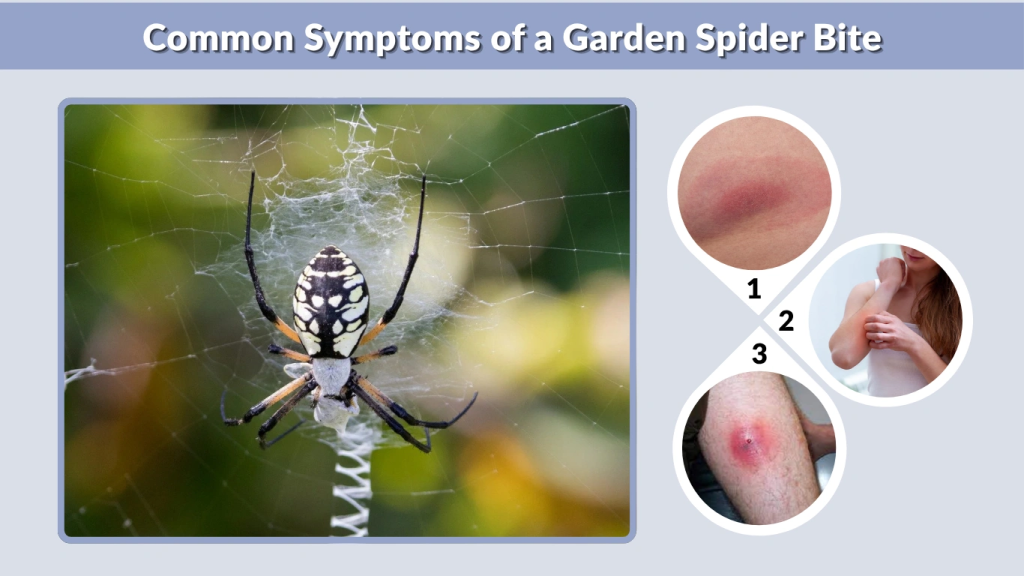
For most people, symptoms are mild and short-lived. The most you’ll experience is brief discomfort, similar to a bee or wasp sting.
Mild Reactions
- Local redness or pinkness around the bite site
- Itching or slight burning sensation
- Minimal swelling, usually less than half an inch
- Minor tenderness when touched
These symptoms rarely require medical care and usually disappear on their own.
Moderate Reactions (Rare)
In uncommon cases, some individuals may experience:
- Swelling extending beyond the bite area
- Warmth or light bruising around the skin
- Mild rash or short-term fatigue
Such symptoms are typically allergic reactions rather than venom effects. The body is simply reacting to foreign proteins from the bite.
Garden spiders are not aggressive and not poisonous to humans. Their venom is only strong enough to subdue small insects, not mammals.
Are Garden Spider Bites Dangerous or Poisonous?
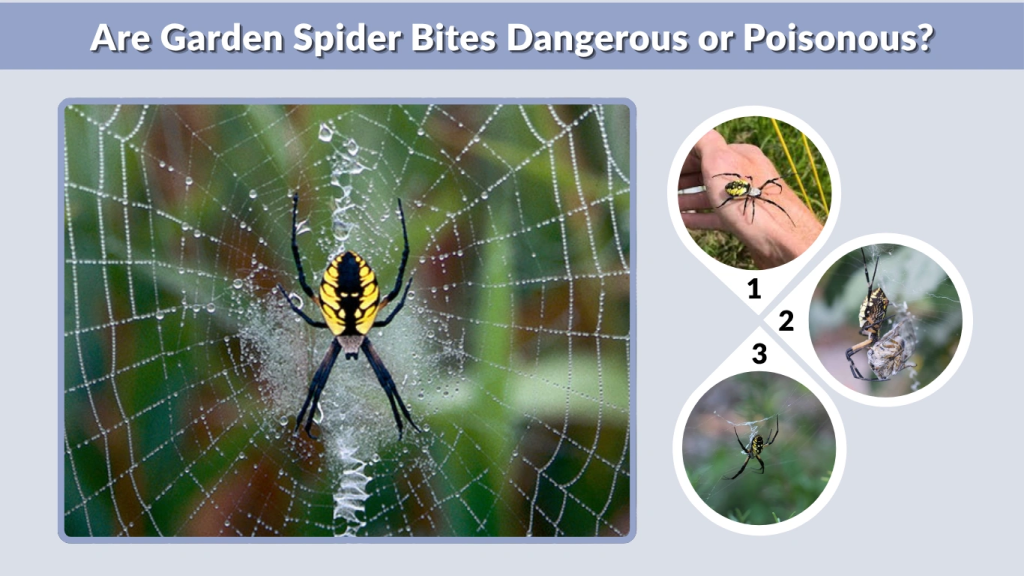
Garden spiders may look intimidating because of their size and vivid markings, but their bites are not dangerous or poisonous to humans. Like most spiders, they do possess venom, but it’s designed to paralyze small prey — not harm people.
Their venom is considered medically insignificant, meaning it doesn’t cause serious reactions or lasting damage. Even in sensitive individuals, symptoms are limited to local irritation.
Venom Toxicity
Garden spider venom contains mild neurotoxins that are effective against insects but harmless to human nervous systems. The small amount injected during a bite isn’t enough to cause systemic effects.
For comparison, their venom is far weaker than that of the black widow or brown recluse, two spiders known for medically significant bites.
If you do get bitten, it may sting or feel warm for a short time — nothing more serious than a bee sting.
Regional Variations
In the United States: The yellow garden spider (Argiope aurantia) is common in gardens across the country. Despite its striking black and yellow coloring, it’s gentle and avoids contact. Its bite is mild and non-toxic.
In the United Kingdom and Europe: The European garden spider (Araneus diadematus) is a frequent garden inhabitant. Its bite can cause a small red mark that lasts a few days but is harmless.
In Australia: The Australian garden orb-weaver occasionally bites if provoked. Its bite may cause brief local pain and swelling, but serious effects are rare.
In all regions, garden spider bites are not considered medically dangerous.
What Happens If You Get Bitten by a Garden Spider?
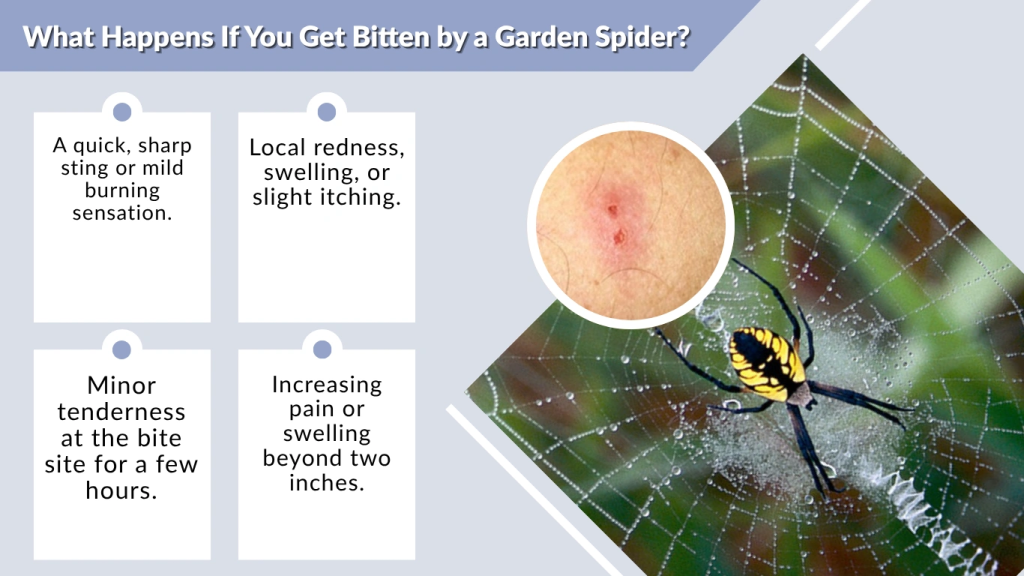
Most people don’t realize they’ve been bitten until they notice a small red bump. The effects are mild, short-term, and rarely require treatment.
Immediate Reactions
- A quick, sharp sting or mild burning sensation.
- Local redness, swelling, or slight itching.
- Minor tenderness at the bite site for a few hours.
These reactions are normal and fade within a day or two. A simple cold compress can reduce the discomfort quickly.
Rare or Severe Reactions
Although extremely uncommon, some individuals may experience an allergic reaction to the bite. Warning signs can include:
- Increasing pain or swelling beyond two inches.
- Red streaks or signs of infection.
- Rash, fever, or dizziness (seek medical attention immediately).
However, such reactions are exceptions — not the rule. Most bites heal completely without medical care.
Garden Spider Bite Treatment
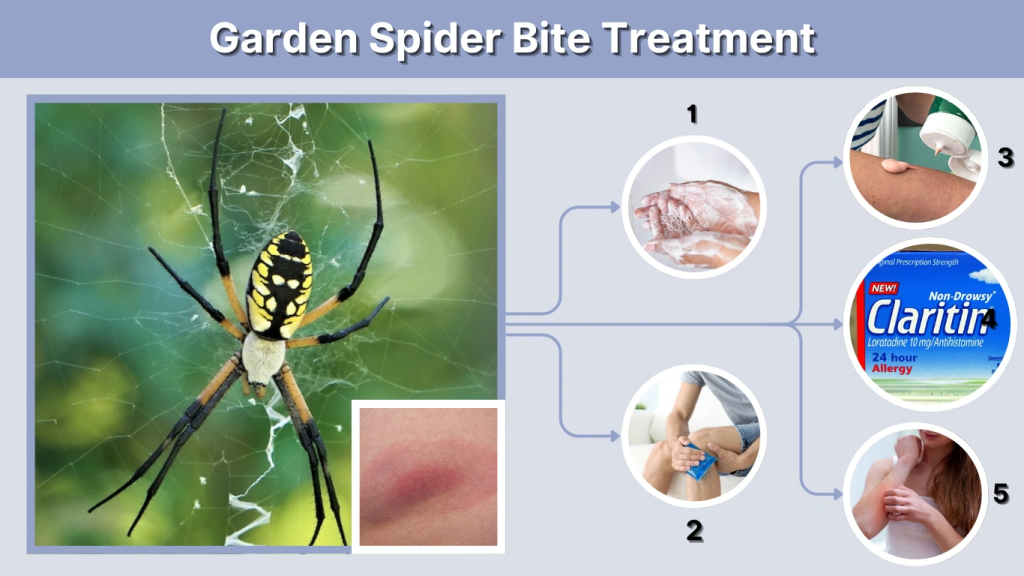
Even though garden spider bites are minor, it’s still a good idea to practice basic first aid to prevent infection and relieve irritation.
First Aid Steps
- Clean the bite: Wash the area thoroughly with mild soap and warm water to remove dirt and bacteria.
- Apply a cold compress: Place an ice pack or cool cloth on the bite for 10 minutes to reduce swelling and numb pain.
- Use an antiseptic or hydrocortisone cream: This helps soothe redness and itching.
- Take an antihistamine (optional): If itching or swelling persists, an over-the-counter antihistamine can provide relief.
- Avoid scratching: Scratching can lead to infection or prolong healing.
Most bites clear up within 24–48 hours with these simple steps.
When to Seek Medical Help
You should consult a doctor if:
- The bite becomes infected (pus, warmth, or spreading redness).
- Pain worsens instead of improving after two days.
- You experience allergic symptoms such as swelling in the face or difficulty breathing.
In these rare cases, medical treatment with antibiotics or allergy medication may be necessary.
Garden Spider Bites on Pets
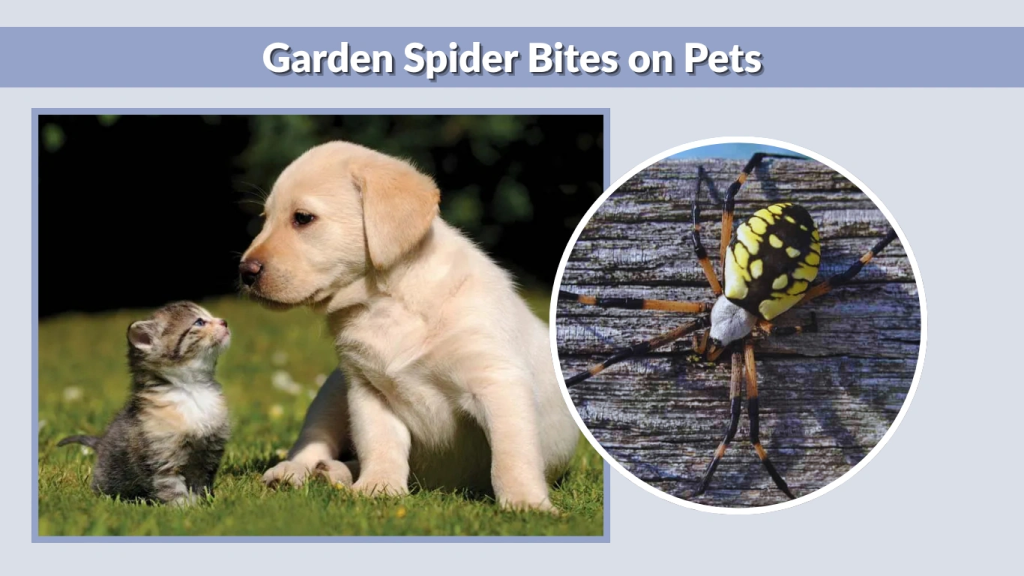
Garden spiders are generally harmless to animals. Their fangs are too small to pierce thick fur, and their venom isn’t potent enough to harm dogs, cats, or other pets.
If a pet happens to be bitten on an exposed area (like the nose or paw), symptoms may include slight swelling or irritation. The same first-aid principles apply: clean the area gently and monitor for signs of infection.
However, pets are far more likely to eat garden spiders than be bitten by them. If your dog or cat swallows one, don’t worry — garden spiders are not toxic. The worst effect might be mild stomach upset if they eat several.
Preventing Garden Spider Bites
While garden spider bites are rare, it’s always wise to be cautious when working outdoors.
Safety Tips
- Wear gloves when gardening, pruning, or clearing leaves.
- Shake out shoes, gloves, and tools stored outside before using them.
- Avoid disturbing webs — garden spiders are territorial but non-aggressive.
- Relocate, don’t kill: If you find a spider in an unwanted spot, gently move it with a stick or container.
These simple precautions protect you while also preserving these beneficial spiders that keep your garden pest-free.
Why Garden Spiders Are Beneficial
- They eat flies, mosquitoes, and other insects that damage plants or spread disease.
- Their webs reduce pest populations naturally, limiting the need for pesticides.
- Garden spiders play an important role in maintaining ecological balance.
So, rather than fearing them, it’s best to appreciate garden spiders as helpful residents in your outdoor space.
Myths and Misconceptions
Many people assume that all spiders are venomous or dangerous, but this couldn’t be further from the truth.
Myth: “Garden spiders are deadly.”
Fact: They are harmless to humans and not poisonous. Their venom cannot cause serious symptoms.
Myth: “Big spiders are more dangerous.”
Fact: Size doesn’t determine toxicity. Garden spiders look large but are gentler than many small house spiders.
Myth: “All skin bumps are spider bites.”
Fact: Most suspected spider bites are caused by mosquitoes, ants, or allergic reactions — not spiders.
FAQs
Are garden spider bites poisonous or deadly?
No. Their venom is too weak to harm humans or pets and causes only mild local irritation.
What should I do if bitten by a yellow garden spider?
Clean the bite, apply a cold compress, and use an antiseptic cream. The symptoms should fade within a day.
Are garden spiders dangerous to pets?
No. They rarely bite animals and are not toxic if eaten.
Do garden spiders bite often?
Very rarely. They are non-aggressive and bite only in self-defense.
Can garden spiders be beneficial?
Absolutely. They help control pests like flies, moths, and mosquitoes, making them valuable for gardens.