
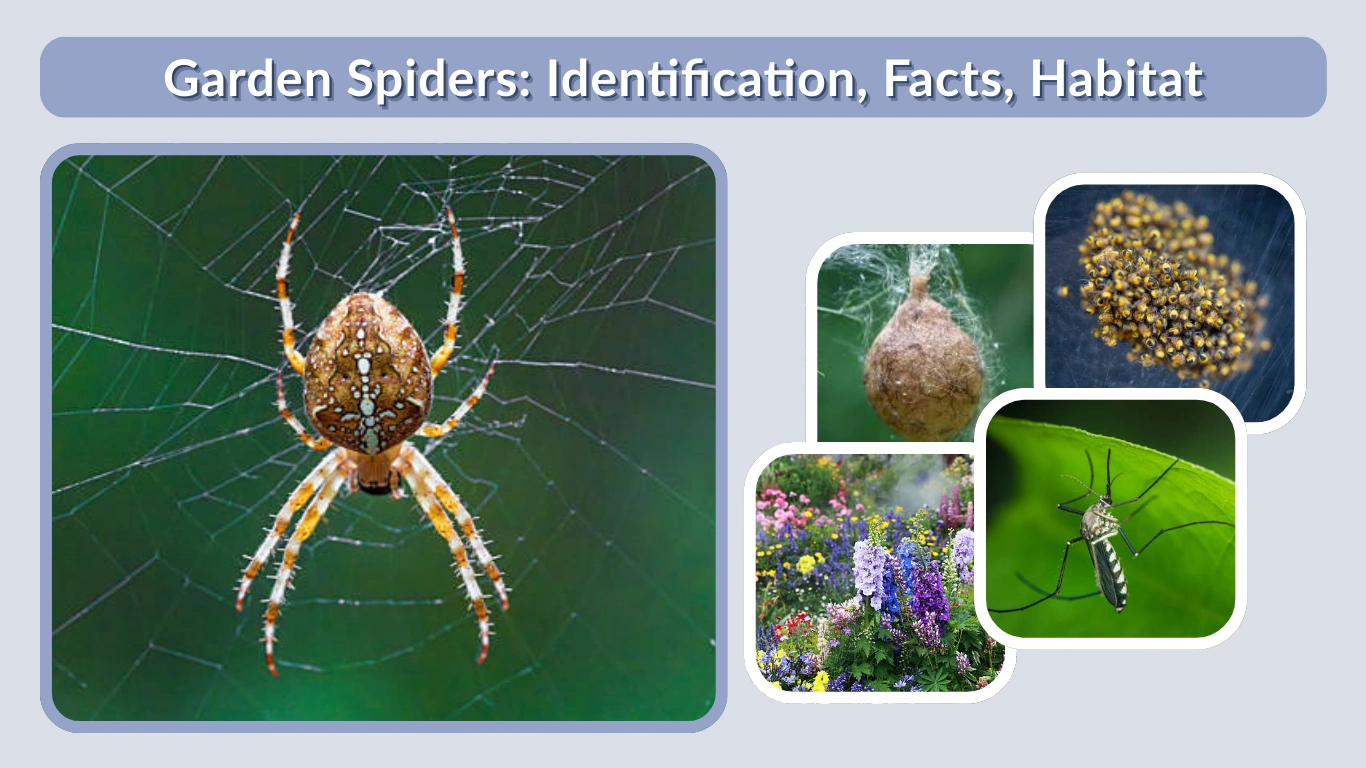
Garden spiders are commonly seen in backyards, farms, and flower beds where they build large circular webs between plants and branches. While their appearance may seem intimidating at first, most garden spiders are harmless to humans and extremely helpful for gardens. They belong mainly to the orb-weaver spider family and play an important role in controlling insect populations. Learning about garden spiders, their habitat, behavior, and benefits can help gardeners understand why these fascinating creatures are valuable members of a healthy ecosystem.
What Are Garden Spiders?
Garden spiders are a group of spiders that live outdoors, especially in gardens, fields, and areas with plenty of vegetation. These spiders are known for spinning large, symmetrical webs that are designed to catch flying insects.
Most garden spiders belong to the orb-weaver family (Araneidae), which includes hundreds of species around the world. The name “orb-weaver” comes from the circular shape of the webs they create. These webs are not only beautiful but also highly effective at trapping prey.
Common Garden Spider Species
Several species are commonly referred to as garden spiders. Some of the most well-known include:
Black and Yellow Garden Spider (Argiope aurantia)
This species is one of the most recognizable garden spiders. It has bright yellow and black markings on its abdomen and often builds webs with a zigzag pattern in the center.
Banded Garden Spider (Argiope trifasciata)
This spider has silver, white, and black bands across its body. It is commonly found in tall grass and gardens.
Cross Orb Weaver (Araneus diadematus)
Named after the cross-shaped marking on its back, this spider is widely found in Europe and North America.
European Garden Spider
Another orb-weaver species often seen in gardens and parks, known for building large webs among shrubs and plants.
Although these spiders vary in color and size, they share similar behaviors and ecological roles.
Garden Spider Identification
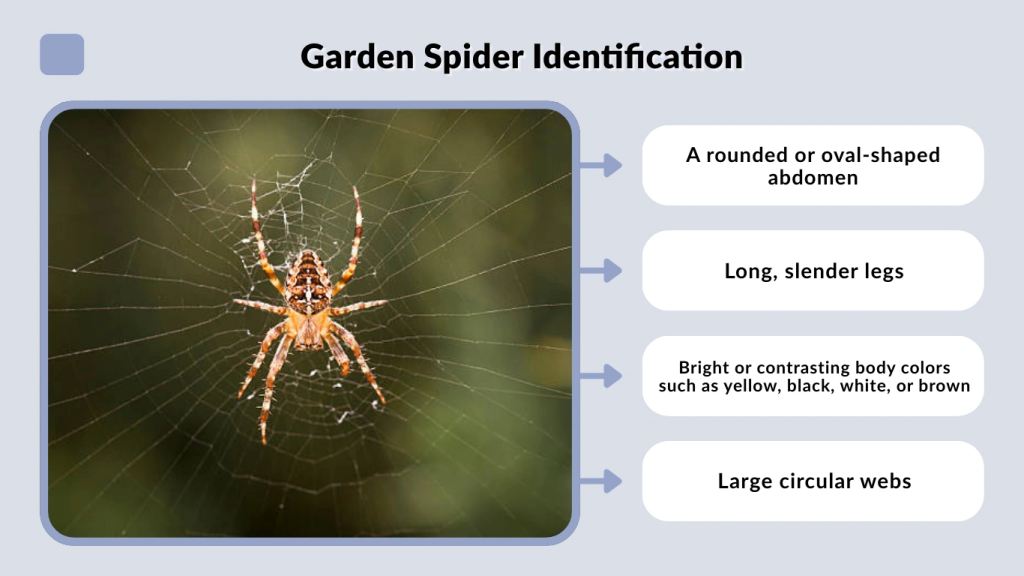
Identifying a garden spider is usually easy if you know what features to look for. These spiders have several unique physical traits that make them stand out from other types of spiders.
Physical Characteristics
Most garden spiders have medium to large bodies with long legs and distinctive color patterns. Female garden spiders are usually much larger than males.
Common characteristics include:
- A rounded or oval-shaped abdomen
- Long, slender legs
- Bright or contrasting body colors such as yellow, black, white, or brown
- Large circular webs
Female garden spiders can grow up to one inch in body length, while males are often much smaller.
Male vs Female Garden Spiders
In many species, female garden spiders are significantly larger and more colorful than males. Females are responsible for building the large orb webs used to catch insects, while males typically remain smaller and spend less time on webs.
Male spiders often stay near the female’s web, especially during the mating season.
Garden Spider Web Patterns
One of the most distinctive features of garden spiders is their web design. Their webs are usually orb-shaped, meaning they form a nearly perfect circle with spokes extending from the center.
Some species, particularly the black and yellow garden spider, create a zigzag pattern in the middle of the web known as a stabilimentum. Scientists believe this structure may help attract prey or make the web more visible to larger animals so it is not accidentally destroyed.
Garden spiders often rebuild their webs daily to maintain their strength and effectiveness.
Where Do Garden Spiders Live?
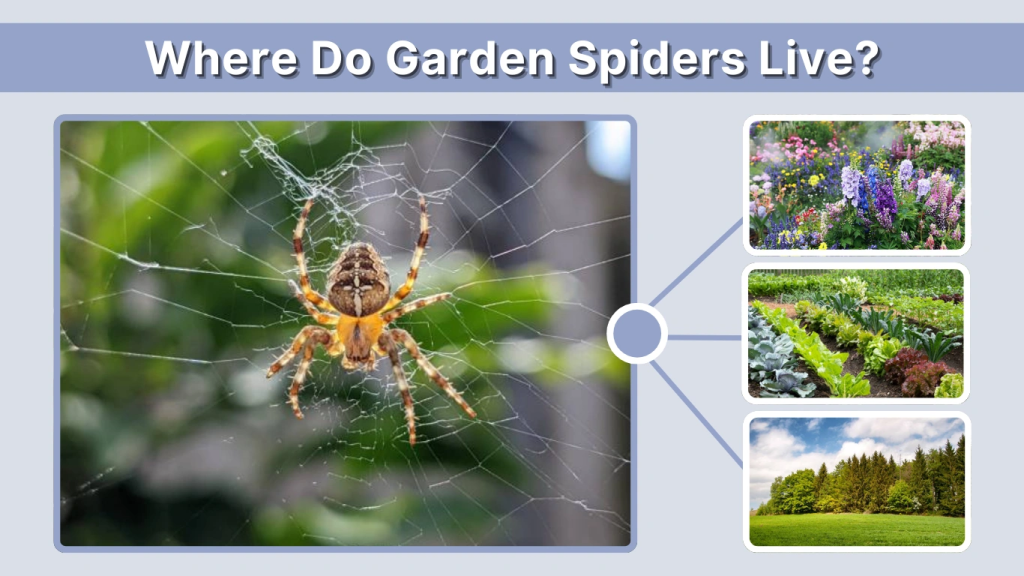
Garden spiders prefer environments where insects are plentiful and vegetation provides good support for building webs.
Natural Habitat
These spiders are commonly found in outdoor areas such as:
- Flower gardens
- Vegetable gardens
- Forest edges
- Meadows and fields
- Tall grasses
- Bushes and shrubs
They usually place their webs between plants, tree branches, fences, or garden structures.
Garden Spider Locations
In residential areas, garden spiders are often seen in quiet corners of the yard where insects frequently pass through. Common places include:
- Between tomato plants or corn stalks
- Along fences and garden trellises
- Near porch lights where insects gather
- Among flowering plants that attract pollinators
Because these locations attract flying insects, they provide ideal hunting grounds for spiders.
Seasonal Activity
Garden spiders are most active during the late summer and early fall, when insect populations are high. During this time, their webs become more visible in gardens and fields.
Many garden spiders live for about one year. After mating in the fall, females produce egg sacs that protect hundreds of spider eggs through the winter. In spring, the young spiderlings hatch and begin the cycle again.
What Do Garden Spiders Eat?
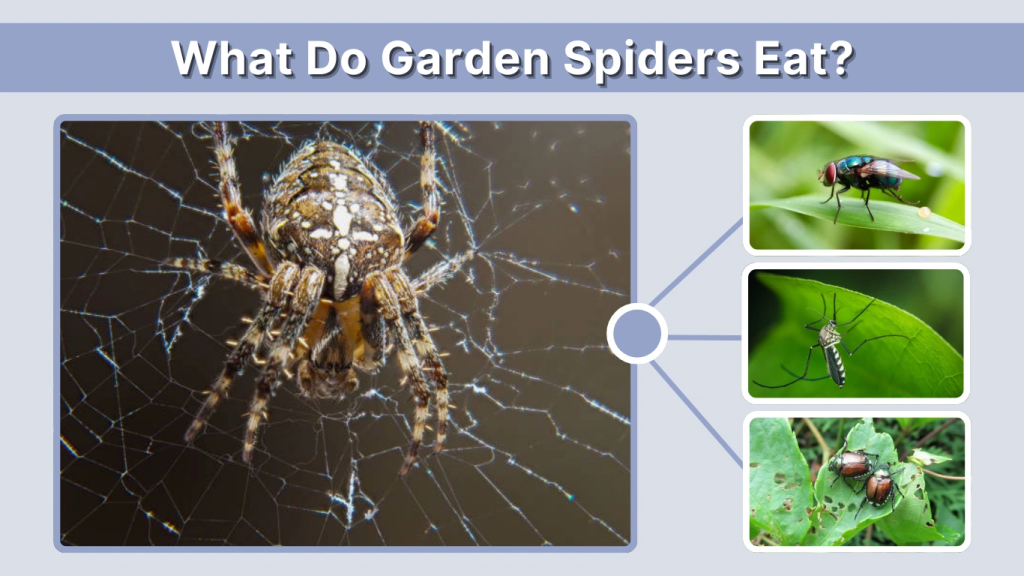
Garden spiders are carnivorous predators that mainly feed on insects. Their diet makes them extremely valuable for gardeners because they help reduce pest populations naturally. By catching and eating insects that damage plants, these spiders act as a form of natural pest control.
Common Prey
Garden spiders catch many types of flying and crawling insects, including:
- Flies
- Mosquitoes
- Beetles
- Grasshoppers
- Moths
- Wasps
- Aphids
Because their webs are large and sticky, insects that fly through them quickly become trapped. Once an insect is caught, the spider moves toward the prey and wraps it in silk before feeding.
How Garden Spiders Catch Their Prey
Garden spiders rely on their orb-shaped webs to hunt. These webs act like natural traps that capture insects passing through the garden. When an insect hits the web, the vibrations alert the spider waiting nearby.
The spider then rushes toward the prey, injects venom to immobilize it, and wraps it tightly with silk. Later, the spider uses digestive enzymes to break down the insect’s body and consume the nutrients.
Role in Natural Pest Control
One of the biggest benefits of garden spiders is their ability to control insect populations. A single spider can eat dozens of insects in a short period of time. This helps protect plants from pests without the need for chemical pesticides.
Because of this, many gardeners consider garden spiders to be helpful allies rather than pests.
Are Garden Spiders Dangerous?
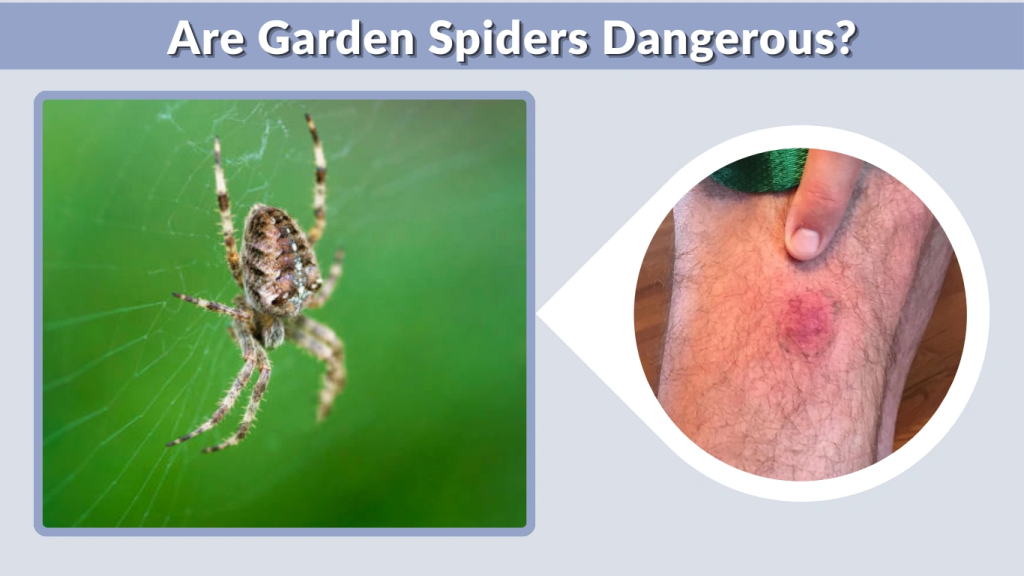
Despite their large size and sometimes bold colors, garden spiders are generally not dangerous to humans. They are shy creatures that prefer to avoid contact with people.
Most garden spiders will only bite if they feel threatened or are accidentally handled.
Are Garden Spider Bites Harmful?
A garden spider bite is usually mild and harmless. In most cases, the bite feels similar to a bee sting and may cause slight redness or swelling.
Severe reactions are very rare because the venom of garden spiders is not strong enough to cause serious harm to humans.
Symptoms of a Garden Spider Bite
If a bite occurs, the symptoms may include:
- Mild pain
- Redness around the bite area
- Slight swelling
- Minor itching
These symptoms usually disappear within a short time without medical treatment.
When to Seek Medical Attention
Although rare, a person should seek medical help if they experience:
- Severe allergic reactions
- Difficulty breathing
- Intense pain or spreading swelling
For most people, however, garden spiders pose very little risk.
Benefits of Garden Spiders in Your Garden
Garden spiders provide several important benefits that make them valuable for maintaining a healthy garden ecosystem.
Natural Pest Control
The most important advantage is pest control. Garden spiders eat insects that can damage plants, vegetables, and flowers. By reducing pest populations, they help protect crops naturally.
Maintaining Ecosystem Balance
Spiders play an important role in the food chain. They help keep insect populations balanced and also serve as food for birds, reptiles, and other animals.
Reducing the Need for Pesticides
Because garden spiders control pests naturally, gardeners can rely less on chemical pesticides. This helps create a healthier environment for plants, pollinators, and beneficial insects.
Garden Spider Life Cycle
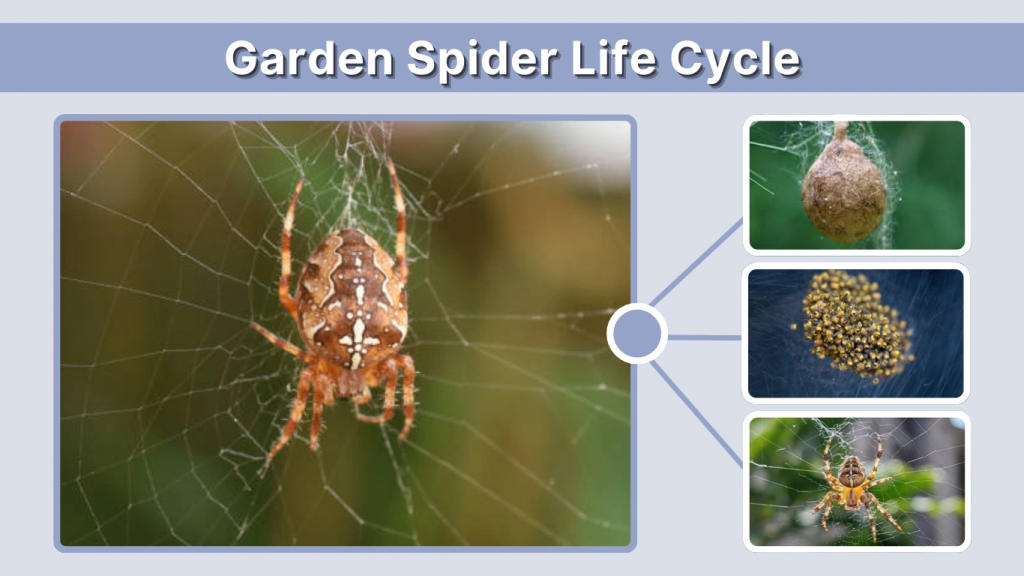
Like most spiders, garden spiders go through several stages during their life cycle.
Egg Sac Stage
After mating in the fall, the female spider produces egg sacs that may contain hundreds of eggs. These sacs are usually attached to plants or hidden in protected areas.
The eggs remain inside the sac throughout the winter.
Spiderling Development
When spring arrives, tiny spiders called spiderlings hatch from the eggs. Many spiderlings disperse by a process called ballooning, where they release silk threads that allow the wind to carry them to new locations.
Adult Stage and Lifespan
As spiderlings grow, they molt several times before reaching adulthood. Most garden spiders live for about one year, completing their life cycle within a single season.
Interesting Garden Spider Facts
Garden spiders have several fascinating characteristics that make them unique among spiders.
- Many garden spiders rebuild their webs every day.
- Female garden spiders are often much larger than males.
- Their webs can be over two feet wide.
- Some species create decorative zigzag patterns called stabilimentum in the center of their webs.
- Garden spiders can help reduce thousands of insects in a single season.
These features show how well adapted these spiders are to life in gardens and natural environments.
FAQs
Are garden spiders poisonous?
Garden spiders are venomous like most spiders, but their venom is not dangerous to humans. They rarely bite and usually avoid contact with people.
Should I remove garden spiders from my garden?
In most cases, it is better to leave them alone. Garden spiders help control harmful insects and support a healthy ecosystem.
Why do garden spiders build zigzag webs?
The zigzag pattern, called a stabilimentum, may help strengthen the web or make it visible to birds and larger animals so the web is not accidentally destroyed.
How long do garden spiders live?
Most garden spiders live for about one year, completing their life cycle from egg to adult within a single season.
Conclusion
Garden spiders are fascinating and beneficial creatures that play an important role in maintaining healthy gardens. Although they may look intimidating, they are harmless to humans and extremely useful for controlling insect pests. Their beautiful orb-shaped webs and unique behaviors make them one of the most interesting animals commonly found in gardens. By allowing garden spiders to live in your yard, you can support natural pest control and promote a balanced ecosystem.