
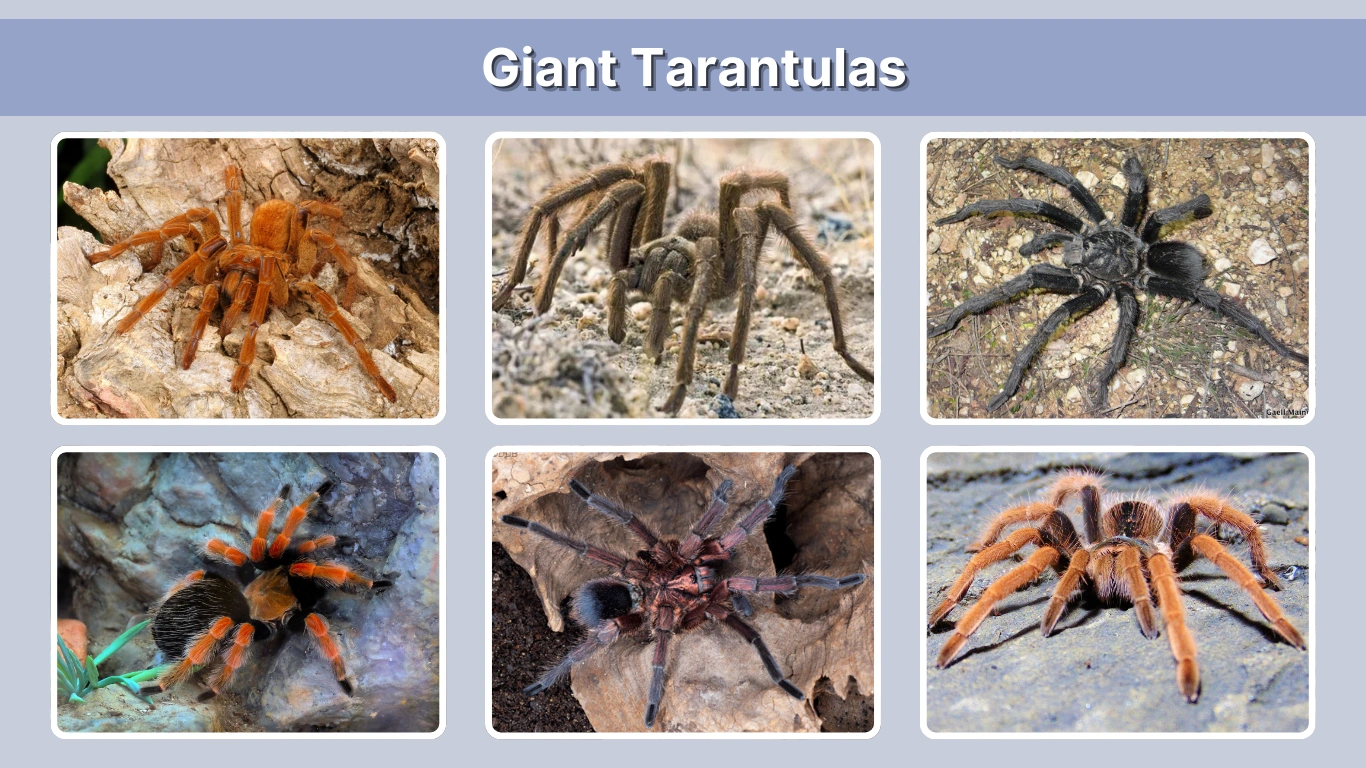
Giant tarantulas are among the most fascinating spiders in the animal kingdom. Known for their enormous size, striking colors, and intimidating presence, they have captivated both researchers and enthusiasts. From Brazilian blonde giants to Colombian redlegs, these spiders vary in appearance, behavior, and habitat. Beyond their natural diversity, giant tarantulas have also gained fame in movies and cultural stories. This article explores their most well-known species, color patterns, and even their survival battles against hornets, wasps, and other predators.
General Giant Tarantulas
When people think of a “giant tarantula,” they often picture a massive, hairy spider crawling across the jungle floor or appearing in classic monster films. The idea of giant tarantulas has fueled myths and pop culture references for decades, with titles like The Giant Tarantula movie highlighting their fearsome reputation.
However, in reality, the term “giant tarantula” is not one species but rather a category describing the largest members of the tarantula family. These spiders can span up to 11 inches with leg span and are admired for both their beauty and intimidation factor.
Brazilian Giant Tarantulas
Brazil is home to some of the most spectacular tarantula species. Among the most famous is the Brazilian giant blonde tarantula, renowned for its golden hairs and impressive size. Enthusiasts often seek care sheets to better understand their feeding habits, humidity needs, and safe handling. Some variants, like the Brazilian giant blonde birdeater and the Brazilian giant salmon birdeater, belong to the group of bird-eating tarantulas that hold world records for size.
Another striking variety is the Brazilian giant white knee tarantula, instantly recognizable for the bold white stripes on its legs. Available for sale among exotic pet keepers, this species is admired for its robust body and adaptability in captivity. The tawny red and black-and-white Brazilian tarantulas add even more diversity to the country’s tarantula population, each offering unique coloration that appeals to collectors.
Colombian Giant Tarantulas
Colombia also boasts several giant tarantula species, including the Colombian giant redleg and red leg tarantulas. These spiders stand out for their bright orange-red leg joints, which provide them with a vibrant, fiery appearance. Many enthusiasts look for detailed care sheets and size information before acquiring one as a pet, as they require specific conditions to thrive.
Other Colombian varieties include the giant copperhead tarantula and the giant black tarantula, both impressive in size and presence. Their adaptability to South American rainforests makes them a common subject of study for researchers and a sought-after choice among exotic animal keepers.
Mexican Giant Tarantulas
Mexico is well-known for producing one of the most iconic species: the Mexican red knee tarantula. The giant variant of this tarantula is particularly popular in the exotic pet trade thanks to its calm temperament and striking appearance. Its black body contrasted with bright red-orange knees makes it one of the most photographed and recognizable tarantulas worldwide.
Whether referred to as the giant Mexican red knee or simply the giant red knee tarantula, this species has become a favorite for both beginners and experienced tarantula keepers. Their manageable size, hardy nature, and eye-catching looks make them ideal ambassadors of the tarantula world.
Other Regional Species
Beyond Brazil, Colombia, and Mexico, several other regions host unique giant tarantulas. The Haitian giant tarantula and Hispaniolan giant tarantula highlight the Caribbean’s contribution to tarantula diversity. These species are often less known but still impressive in their size and behavior.
In the Amazon rainforest, the giant Amazon tarantula showcases the extreme biodiversity of the region. Similarly, the giant desert tarantula adapts to arid environments with survival techniques that allow it to endure harsher climates.
Africa contributes with species like the giant baboon tarantula, recognized for its aggressive behavior and formidable presence. Meanwhile, the giant Australian tarantula demonstrates how these spiders have evolved differently across continents, adapting to unique environments while maintaining their giant size and imposing appearance.
Bird-Eating Tarantulas
Perhaps the most famous of all giant tarantulas are the bird-eating species. The Goliath bird-eating tarantula holds the title of the world’s largest spider by mass, with some individuals reaching over 170 grams in weight and nearly a foot in leg span.
Other notable members include the giant goliath tarantula and the Cascada giant birdeater, all belonging to the same impressive family. While the name “bird eater” suggests that they prey on birds regularly, in reality, they mostly consume insects, amphibians, and small mammals. Bird predation is rare but possible, adding to their dramatic reputation.
These bird-eating tarantulas have become a symbol of extreme spider size, often featured in documentaries and wildlife programs as the ultimate representation of tarantula power.
Color-Pattern Varieties
Giant tarantulas are not just large; many are also visually stunning thanks to their unique color patterns. The giant white knee tarantula is among the most admired, with bold, contrasting stripes running along its legs. Similarly, the giant red leg and giant orange knee tarantulas are recognized for their vibrant hues that make them popular choices in the pet trade.
Other varieties, such as the giant pink toe and giant pink bloom tarantulas, stand out due to their unusual shades of pink that add rarity to their appearance. Blue morphs, including the giant blue tarantula and giant blue bloom tarantula, are prized for their metallic sheen, which can shimmer under light. Collectors also find interest in the giant purple tarantula and giant blonde tarantula, each presenting unique aesthetics.
These color patterns are not just for beauty—they play important ecological roles. Bright colors can serve as camouflage in tropical foliage, warning signals to predators, or even methods to attract mates. For enthusiasts, the wide variety of colors is a significant reason why giant tarantulas remain highly sought-after.
Tarantula Hawk & Hornet Battles
One of the most dramatic aspects of tarantula life is its rivalry with the tarantula hawk wasp. This wasp, known for one of the most painful stings in the insect world, specifically hunts tarantulas. In a typical encounter, the wasp paralyzes the tarantula with its sting and drags it into a burrow to serve as a living food source for its larvae.
These interactions have fascinated people worldwide, leading to comparisons like tarantula hawk vs Asian giant hornet or giant hornet vs tarantula. While hornets and tarantula hawks are both deadly in their own ways, the wasp remains one of the few natural predators that can reliably take down a tarantula.
The spectacle of these battles is widely documented in documentaries and viral videos, sparking both fear and awe. They reveal the delicate balance of nature, where even the mightiest spiders can fall prey to specialized predators.
Tarantulas vs Other Creatures
Aside from wasps and hornets, tarantulas sometimes face rivalries with other large arachnids and invertebrates. The goliath tarantula vs giant huntsman spider matchup is often imagined by enthusiasts, though they typically occupy different niches. Still, their comparison shows the fascination with predator-versus-predator dynamics.
Another common natural rivalry is the giant centipede vs tarantula scenario. Centipedes are agile and venomous, capable of overpowering tarantulas despite their size. These encounters highlight the competitive and dangerous ecosystems where giant tarantulas live.
While these clashes are not everyday occurrences, they capture the imagination of people who are intrigued by how two massive predators interact. They also emphasize the challenges tarantulas face in the wild, despite their intimidating size.
Conclusion
Giant tarantulas are more than just oversized spiders—they are a symbol of diversity, survival, and intrigue. From the dazzling Brazilian blonde to the formidable goliath bird eater, each species contributes to the fascination people hold for these creatures. Their rivalries with wasps, hornets, and other predators add a layer of drama that has elevated them in both science and pop culture.
FAQs
How big can giant tarantulas get?
Some species, like the goliath bird eater, can reach up to 11 inches in leg span and weigh over 170 grams, making them the largest spiders on Earth.
Are giant tarantulas dangerous to humans?
Their bites are venomous but not deadly to humans. The effects are usually similar to a bee sting, though their large fangs can cause painful puncture wounds.
What is the largest tarantula species?
The goliath bird-eating tarantula (Theraphosa blondi) is the largest species, known for its massive size and weight.
Can you keep giant tarantulas as pets?
Yes, many species like the Mexican red knee and Brazilian white knee are popular in the pet trade. However, they require proper enclosures, humidity, and handling precautions.
Do giant tarantulas really eat birds?
Despite their name, bird-eating tarantulas rarely eat birds. Their diet mostly consists of insects, small reptiles, and amphibians, though they can occasionally prey on small birds.