

The Golden Garden Spider (also called the Yellow Garden Spider or Golden Orb Weaver) is one of the most beautiful and beneficial spiders found in gardens across the world. With its bright golden color, large web, and calm behavior, this spider captures both attention and curiosity. Despite its intimidating appearance, it is harmless to humans and plays a vital role in maintaining ecological balance by controlling pests naturally.
What Is a Golden Garden Spider?
The Golden Garden Spider belongs to the Argiope genus, a group of orb-weaving spiders known for their striking color patterns and circular webs. This species is often confused with the Golden Orb Weaver, but while they share similar traits, they belong to different families. The Golden Garden Spider is commonly found throughout North America, Europe, and Asia, especially in sunny gardens, fields, and near rivers or wooded areas.
Their most distinctive feature is their shiny yellow abdomen adorned with black bands. The contrast of gold and black gives them their “golden” name. These spiders are often seen hanging upside down in the center of their webs, waiting patiently for prey to become trapped in the sticky silk.
Identification: How to Recognize the Golden Garden Spider
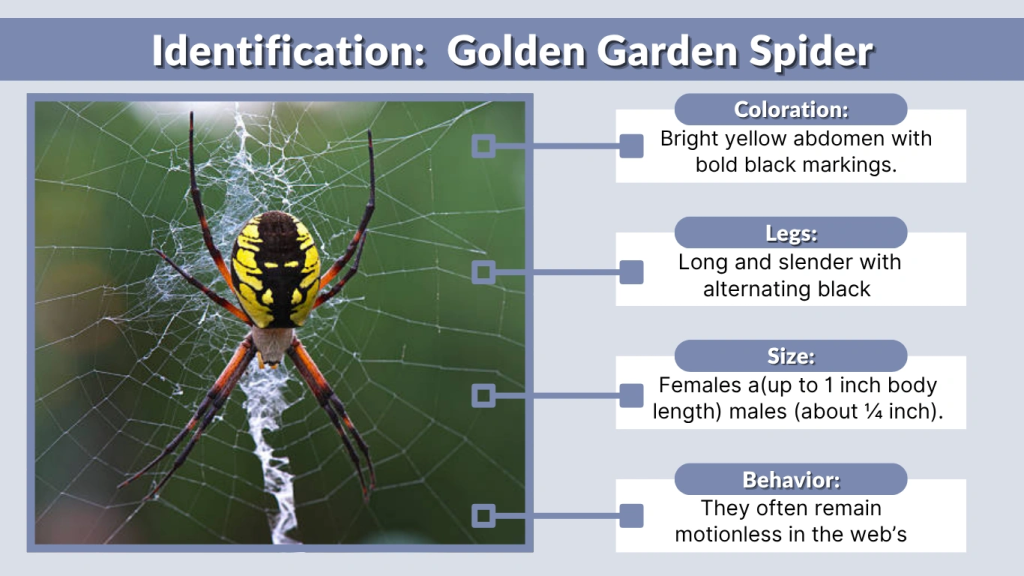
Recognizing the Golden Garden Spider is quite simple due to its unique appearance and web structure.
Key Identification Traits:
- Coloration: Bright yellow abdomen with bold black markings.
- Legs: Long and slender with alternating black and yellow bands.
- Web Structure: A large circular web featuring a noticeable zigzag stabilimentum (a thick white silk line).
- Size: Females are much larger (up to 1 inch body length) than males (only about ¼ inch).
- Behavior: They often remain motionless in the web’s center but may “bounce” or shake the web if disturbed.
This spider’s elegant look and shimmering gold patterns often make it a subject of fascination for nature photographers and enthusiasts.
Habitat and Geographic Range
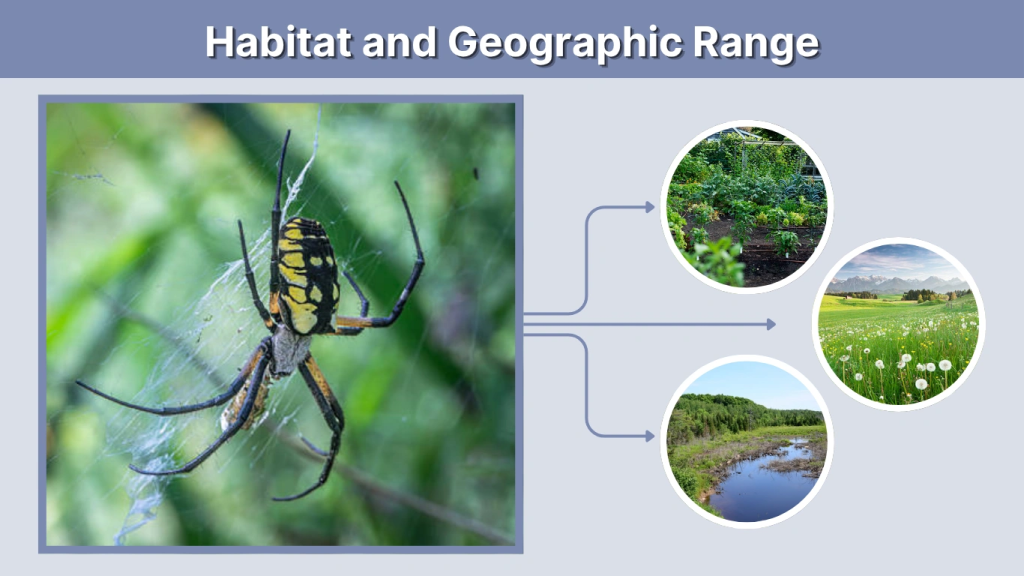
Golden Garden Spiders thrive in warm, sunny environments. You’ll typically find them in:
- Backyard gardens and farms
- Meadows and open fields
- Near water sources such as ponds or rivers
They prefer areas with tall plants or structures to support their large webs. While most common in North America, especially the United States, they also appear in parts of the United Kingdom, Australia, and Asia.
Their presence is most noticeable during late summer and early fall, which is their peak web-building and mating season. During these months, their golden hue appears brighter under sunlight, making them easier to spot.
Golden Garden Spider Web and Behavior
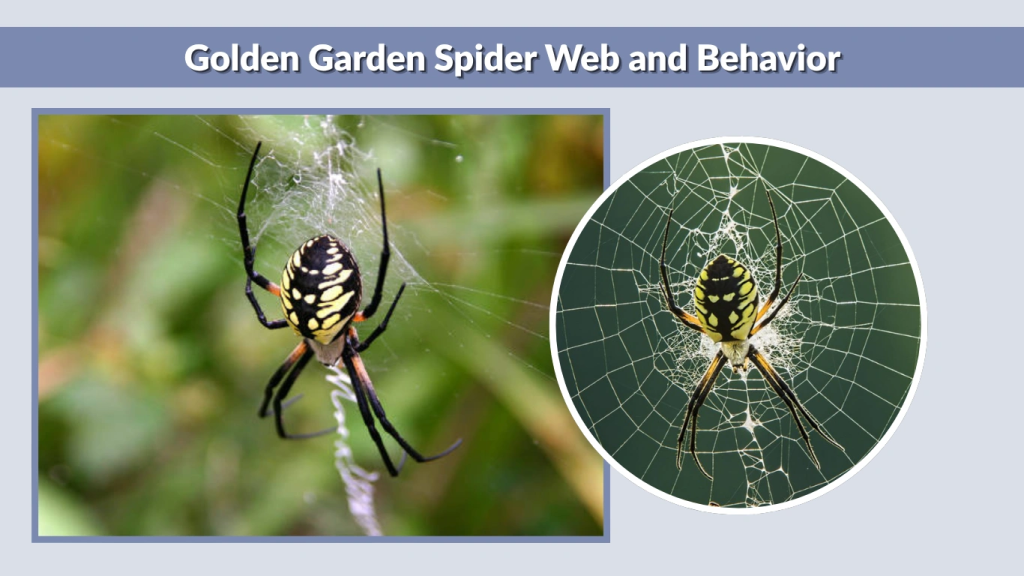
The Golden Garden Spider creates one of the most spectacular webs in the spider world. Measuring up to two feet across, the web is a near-perfect circle made of silk that glows under sunlight. The spider sits at the center, facing downward, with its legs spread in an “X” shape.
A fascinating feature of this web is the zigzag stabilimentum — a thick, silk pattern that may serve multiple purposes, such as attracting prey, camouflaging the spider, or reinforcing the web’s structure.
When threatened or disturbed, the spider performs a “web bounce” — vibrating rapidly to blur its appearance, confusing predators. This defensive motion also deters birds and larger insects from attacking.
Golden Garden Spiders are diurnal hunters, meaning they are active during the day. They feed primarily on flies, mosquitoes, and small moths, making them extremely beneficial for natural pest control.
Golden Garden Spider Bite: Is It Dangerous?

Despite their fierce look, Golden Garden Spiders are not dangerous to humans. Their venom is designed to paralyze small insects, not large animals or people. Bites are rare and usually occur only when the spider is provoked or accidentally pressed against the skin.
Are Golden Garden Spiders Poisonous?
The short answer is no. They are venomous, meaning they use venom to subdue prey, but the toxin is harmless to humans. The bite causes only minor irritation similar to a mosquito bite.
Symptoms of a Bite
If a bite occurs, symptoms might include mild redness, slight swelling, or itching. These effects fade within a few hours without medical treatment. Washing the area and applying a cold compress usually provides relief.
The Golden Garden Spider’s venom is not medically significant, and there are no reports of serious allergic reactions or long-term side effects from their bites. Most people who encounter these spiders in their gardens never experience any harm — only admiration for their beauty.
Comparison Section
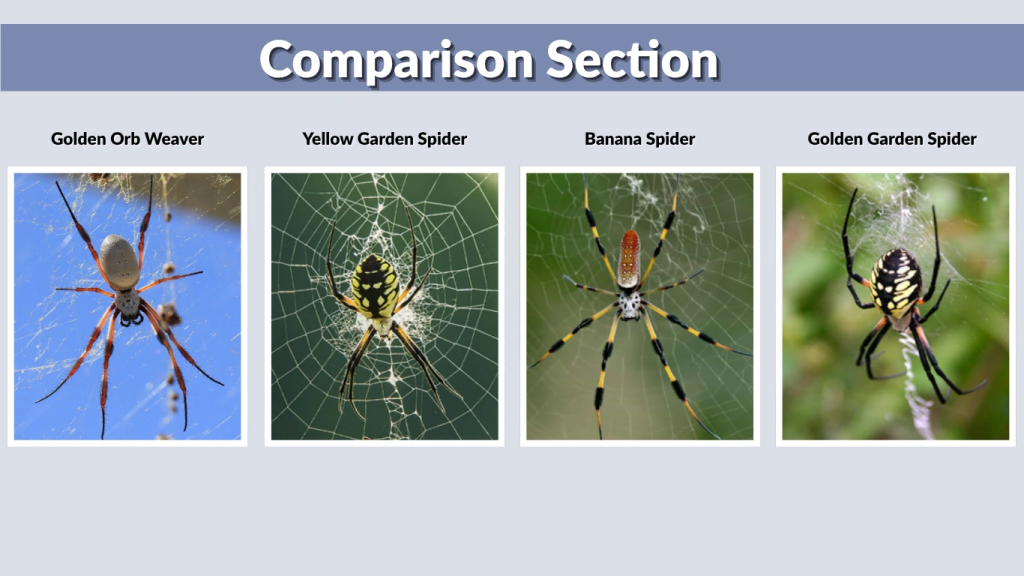
The Golden Garden Spider is often mistaken for several similar species. Understanding their differences helps identify them more accurately.
Golden Orb Weaver vs Yellow Garden Spider:
The Golden Orb Weaver has a deeper, metallic gold body and builds larger, more golden webs, while the Yellow Garden Spider has a more defined black-and-yellow contrast.
Black and Yellow Garden Spider vs Golden Orb Weaver:
The Black and Yellow Garden Spider has bold black stripes and a smaller frame compared to the softer, rounded golden tones of the Orb Weaver.
Banana Spider vs Golden Garden Spider:
Banana Spiders are generally larger and have a more tropical distribution. Their webs can span several meters, while Golden Garden Spider webs are smaller and found in temperate zones.
Each species contributes uniquely to insect control, but the Golden Garden Spider stands out for its elegance, balanced color, and calm temperament.
Male vs Female Golden Garden Spider
Among Golden Garden Spiders, there’s a noticeable difference between males and females. Female Golden Garden Spiders are significantly larger, reaching up to 1 inch in body length, while males are only about a quarter of that size. The female’s abdomen is vividly colored in bright gold and black, whereas the male’s coloring is duller and often brownish-yellow for camouflage.
During the mating season, males cautiously approach the female’s web, often spinning a smaller “signal thread” to alert her presence. After mating, males sometimes die shortly after, as females may consume them — a common behavior in many spider species. Females then create egg sacs protected within silk coverings, ensuring the next generation’s survival.
Golden Garden Spider Lifespan and Growth
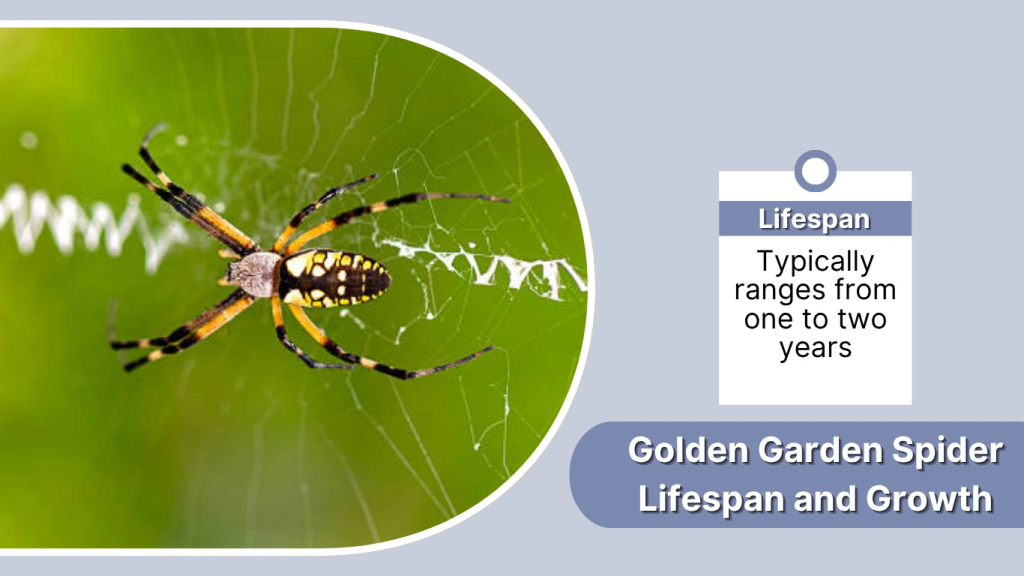
The lifespan of a Golden Garden Spider typically ranges from one to two years, depending on the environment and climate. Females generally live longer than males, especially since males usually die soon after mating.
Young spiders hatch from egg sacs in early spring and spend their first weeks in the safety of silk shelters. Once they molt a few times, they start building their own small webs. As summer progresses, they mature rapidly, reaching full size by late August.
Their lifespan is influenced by factors like temperature, food supply, and predator threats. In warmer climates, they can live through multiple mating cycles, while in colder regions, most die at the end of the season after laying eggs.
Interesting Golden Garden Spider Facts
Here are some fascinating facts about the Golden Garden Spider that highlight its uniqueness and ecological value:
- Garden Helpers: They naturally control pests like flies, mosquitoes, and aphids, reducing the need for chemical pesticides.
- Web Rebuilders: They rebuild their webs daily, consuming old silk and spinning new patterns overnight.
- Color Shift: Their golden hue can appear blue or silver in sunlight, especially on the abdomen edges.
- Smart Defense: When threatened, they shake or “bounce” the web to appear blurry, confusing predators.
- Egg Sac Marvel: A single female can produce several hundred eggs, wrapped in a golden silk sac resembling a tiny lantern.
These behaviors make them one of the most fascinating spiders to observe in a natural garden environment.
Myths and Misconceptions
Many people fear the Golden Garden Spider because of its size and bright color, but these fears are unfounded. They are not aggressive and rarely bite unless severely provoked. Their venom is too mild to harm humans or pets.
Another common myth is that they are the same as banana spiders or golden orb weavers. Although they share a similar golden sheen, they belong to different genera. The Golden Garden Spider prefers temperate climates, while the Banana Spider thrives in tropical regions.
Additionally, some believe they are signs of bad luck when found near homes. In reality, having one in your garden is a positive sign — it indicates a healthy environment and natural pest balance.
Golden Garden Spider Benefits
Golden Garden Spiders are beneficial for gardens and ecosystems. By trapping harmful insects, they naturally reduce pest populations, protecting plants from damage. They also serve as a food source for birds and small mammals, playing an important role in the food chain.
Their presence indicates a balanced, pesticide-free ecosystem. Gardeners often consider them allies, as a single spider can capture dozens of insects daily. Observing one of these golden beauties in your yard means your garden is thriving and ecologically healthy.
Golden Garden Spider Egg Sac and Reproduction
After mating, the female Golden Garden Spider produces one or more silken egg sacs, each containing hundreds of eggs. These sacs are golden-brown and securely attached to plants, fences, or hidden corners of the web.
The eggs hatch after several weeks, but spiderlings usually remain protected through the winter, emerging in spring. Only a few survive to adulthood due to natural predators and environmental challenges. This life cycle ensures continuous population renewal in gardens year after year.
Golden Garden Spider Lifespan and Range
The species has a wide distribution across North America, parts of Europe, and Asia. In the United States, they are commonly found from Florida to Texas, and as far north as Canada during warm months.
Their lifespan averages about one year for males and up to two years for females. They thrive best in open, sunny habitats where flying insects are abundant. Their golden webs often glisten at dawn, making them easy to spot along garden paths or forest edges.
Golden Garden Spider Facts Summary
The Golden Garden Spider is a visually stunning and ecologically beneficial arachnid. Its golden web, gentle nature, and impressive pest control abilities make it one of the most admired spiders in the natural world. Contrary to myths, it is not dangerous but rather a sign of a healthy, balanced garden ecosystem.
Whether you find one near your home or in the wild, the Golden Garden Spider stands as a symbol of nature’s beauty, resilience, and silent contribution to maintaining balance in our environment.