

The golden silk orb weaver (Nephila clavipes), often called the banana spider or giant wood spider, is a striking arachnid admired for its glittering golden webs. One of the most fascinating aspects of this species is the clear difference between males and females. Known as sexual dimorphism, these differences are so extreme that male and female orb weavers almost look like entirely different species. Understanding these contrasts provides insight into their roles, survival strategies, and behaviors in the wild.
Physical Differences Between Male and Female
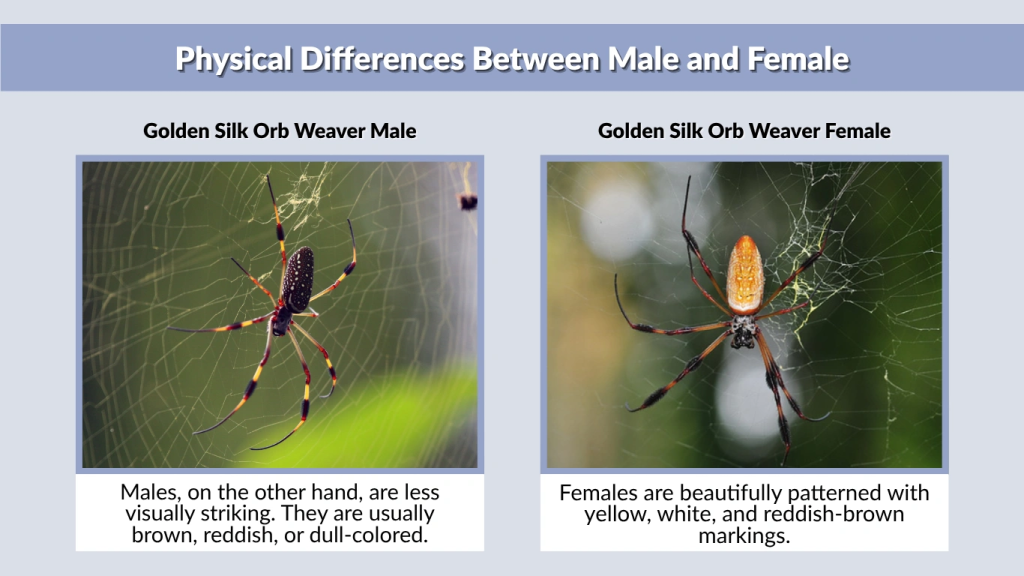
The first noticeable distinction is size. Female golden silk orb weavers are among the largest orb-weaving spiders, with body lengths ranging from 1.5 to 2 inches and leg spans that can stretch over 5 inches. In contrast, males are tiny, often less than half the size of females, with more slender bodies and legs. This dramatic size gap is one of the most extreme examples of sexual dimorphism in spiders.
Coloration also sets the sexes apart. Females are beautifully patterned with yellow, white, and reddish-brown markings, often displaying vivid colors on their legs and abdomen. Their long, robust legs are frequently banded with golden or orange hues, making them highly recognizable. Males, on the other hand, are less visually striking. They are usually brown, reddish, or dull-colored, with shorter and thinner legs. This subtle appearance makes them less noticeable and harder to spot.
The overall build of the two sexes reflects their roles. Females are designed for strength, size, and egg production, while males are adapted for speed, agility, and survival in proximity to females.
Web-Building and Habitat Use
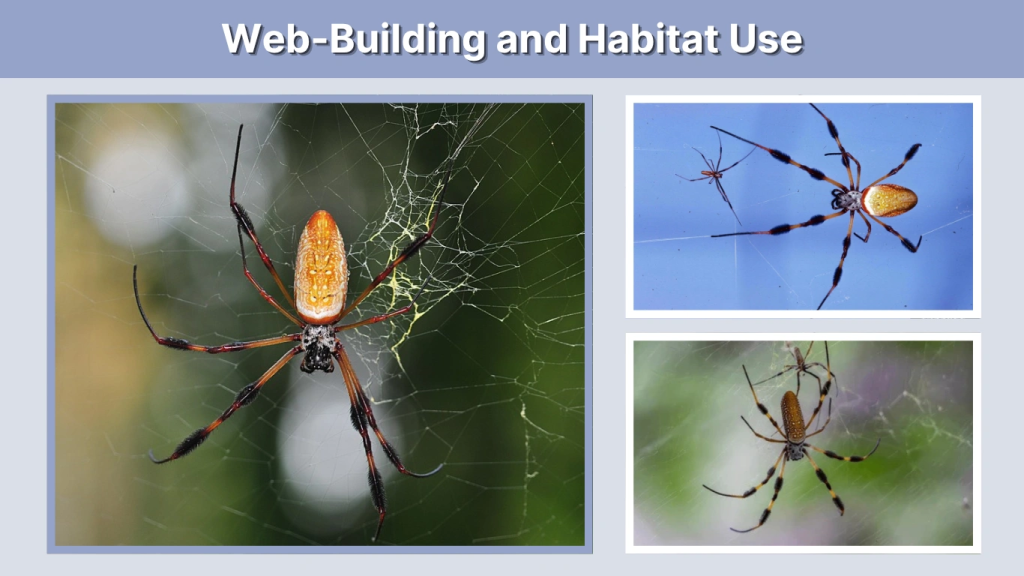
Another stark difference lies in web construction. Female golden silk orb weavers are the master builders. They create the iconic golden-colored webs that can span up to six feet in diameter. These webs are strong enough to catch a wide variety of insects, from small flies to large grasshoppers. The shimmering silk not only strengthens the structure but also camouflages the spider and lures prey.
Males, in contrast, rarely spin large webs of their own. Instead, they often live at the edges of a female’s web, taking advantage of her hunting skills. This behavior allows them to feed on smaller trapped insects without drawing too much attention. Living within the female’s web also gives them proximity for mating opportunities, though it comes with certain risks.
By relying on females for web resources, males conserve energy and focus on survival until they reach reproductive maturity. This difference in web-building roles highlights the evolutionary division of labor between the sexes.
Behavioral Differences

Golden silk orb weavers also exhibit notable behavioral contrasts. Feeding habits are one example. Female orb weavers, with their larger size and expansive webs, consume bigger prey, including beetles, moths, and wasps. They require more energy to sustain their larger bodies and egg production, making their diet critical.
Males, being smaller and less aggressive hunters, rely on opportunistic feeding. They scavenge from the female’s web, picking off small insects that she ignores. This reduced need for large meals suits their smaller bodies and shorter lifespans.
When it comes to mating behavior, the differences become even more dramatic. Males approach females cautiously, often using subtle vibrations on the web to signal that they are not prey. Despite these efforts, mating remains risky. Females may mistake males for food, leading to sexual cannibalism. Still, this dangerous courtship is vital for species continuation, and males are evolutionarily adapted to take the risk.
Reproductive Roles
In the world of golden silk orb weavers, reproduction highlights just how different males and females are. Males mature earlier and dedicate their short lives almost entirely to finding mates. Once mature, they leave their small hiding spots and carefully approach females on their webs.
Mating is a dangerous affair for males. They must create rhythmic vibrations on the web to signal that they are potential mates and not prey. Still, there is always the risk of sexual cannibalism, where the female may eat the male either during or after mating. While this may sound brutal, it is not uncommon among spiders, and biologists believe it provides extra nourishment for the female to support egg production.
Females, being much larger, invest energy into producing multiple egg sacs. Each sac may contain hundreds of eggs, ensuring the survival of the species. The female’s large size gives her a reproductive advantage, allowing her to carry and guard eggs until spiderlings hatch.
Lifespan and Survival Strategies
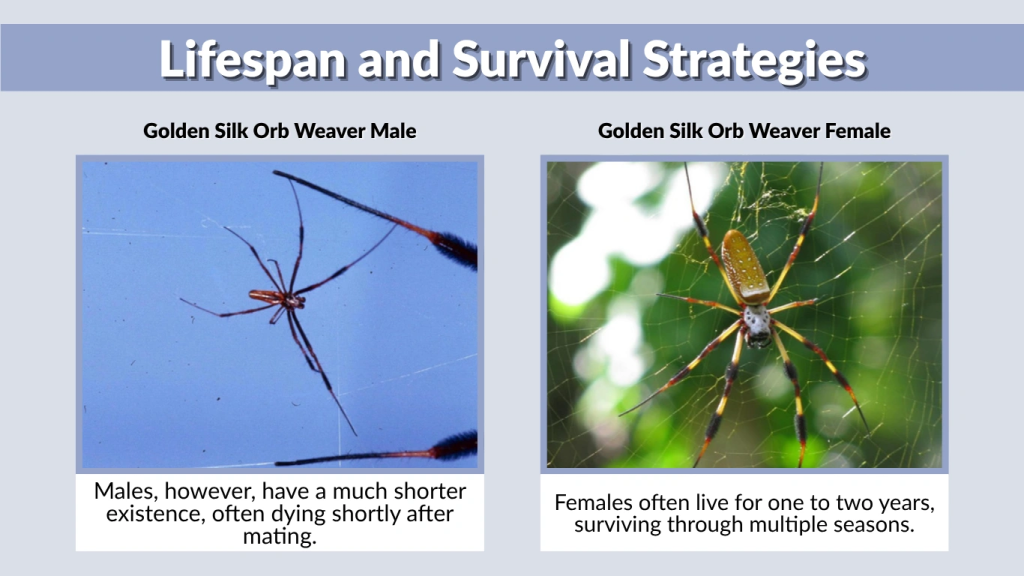
The lifespan difference between males and females is significant. Females often live for one to two years, surviving through multiple seasons. Their strength and web-building skills ensure they can thrive longer in the wild. Males, however, have a much shorter existence, often dying shortly after mating.
This difference is explained through evolutionary strategy. Females need longevity to produce and protect offspring, while males prioritize speed, agility, and reproduction. Their smaller size allows them to mature faster and avoid predation until they locate a female.
Myths and Misconceptions
Because of their dramatic size difference, golden silk orb weaver males are often overlooked or misidentified. Many people assume that the species only consists of large, colorful females. In reality, the males are just less visible due to their smaller size and dull coloring.
Another common misconception is that males are less venomous than females. Both sexes produce venom, but neither is harmful to humans. Their venom is only strong enough to subdue insects. The idea that golden silk orb weavers are “dangerous” spiders is a myth—they are shy, non-aggressive, and play an important role in maintaining ecological balance.
Human Encounters and Observation Tips
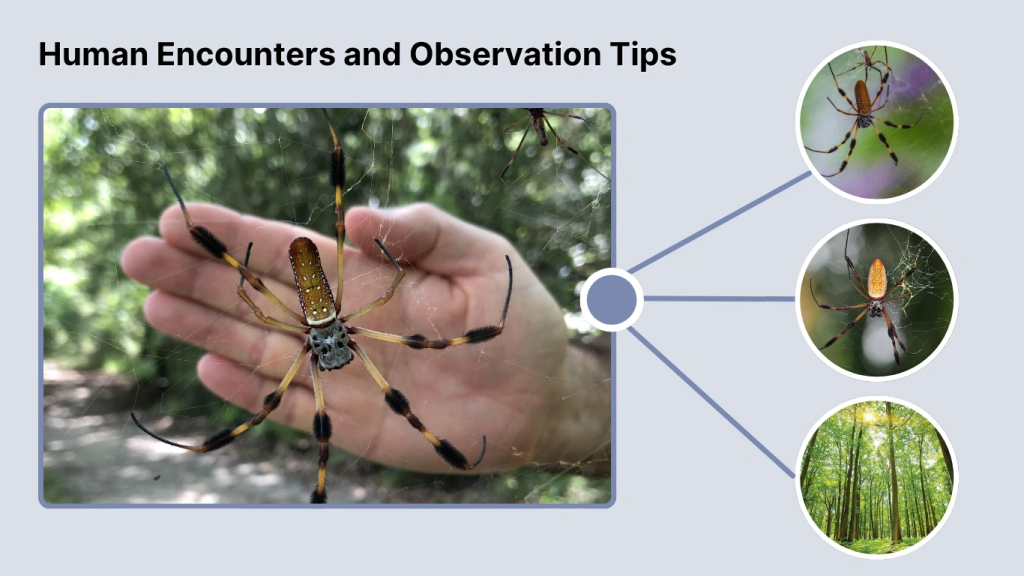
People are far more likely to see female orb weavers because of their large webs, often stretched between trees, fences, or garden plants. Their webs are hard to miss, shimmering golden in the sunlight. Males, being small and web-independent, are much harder to spot, usually lurking on the edges of a female’s web.
For those observing in gardens or nature, identification is simple: the large, brightly colored spider is the female, while any small, dull-colored spider nearby is likely the male. Both should be left undisturbed, as they help control insect populations and pose no threat to humans.
FAQs
Why are female golden silk orb weavers so much larger than males?
Females are larger because they need extra body mass to produce and protect eggs. Their size also gives them strength to build large webs and capture bigger prey. Males remain small for agility and survival, focusing on reproduction rather than hunting or web-building.
Do male golden silk orb weavers build webs?
Males do not build large webs like females. Instead, they live around the edges of a female’s web and rely on her catches. They may create small strands for support, but their energy is conserved for mating rather than web construction.
Are male golden silk orb weavers less venomous than females?
No, both males and females produce venom, but it is only effective on insects. For humans, a bite from either sex is harmless, causing only mild irritation or redness. Their venom is not medically significant and does not pose a danger to people or pets.
Why do males risk being eaten by females after mating?
Sexual cannibalism, while risky for males, benefits the species. Females gain nourishment that can support egg production, and males still achieve reproductive success by passing on their genes. Evolution favors this risky strategy despite the dangers involved.
Which sex lives longer: male or female golden silk orb weavers?
Females typically live longer, often surviving one to two years, while males usually die soon after mating. The female’s extended lifespan allows her to continue building webs, hunting, and producing egg sacs, ensuring the survival of the next generation of spiders.