

The Goliath birdeater (Theraphosa blondi) is the largest spider in the world, and just the name alone sparks curiosity—and sometimes fear. But behind its massive legs and powerful fangs lies a fascinating creature full of surprising traits. Found deep in the rainforests of South America, this tarantula can grow larger than your hand and even hiss when threatened.
In this article, I’ll walk you through 23 amazing facts about the Goliath birdeater, including its size, diet, bite, habitat, and whether it really eats birds.
Goliath Birdeater Full Size and Weight
The Goliath birdeater holds the record as the largest spider on Earth by mass and size. Its enormous body, wide leg span, and dense weight make it one of the most intimidating yet fascinating creatures in the arachnid world. This species belongs to the tarantula family and can be found deep within the tropical rainforests of northern South America.
1. Average Leg Span and Body Length
A fully grown Goliath birdeater can have a leg span of up to 11 inches (28 cm), which is nearly the size of a standard dinner plate. The body itself can measure around 4.5 to 5 inches (11–13 cm) in length. Despite its massive appearance, its body is proportioned for movement through dense forest floor vegetation, using powerful legs to navigate terrain and dig burrows.
2. How Much a Full-Grown Goliath Birdeater Weighs
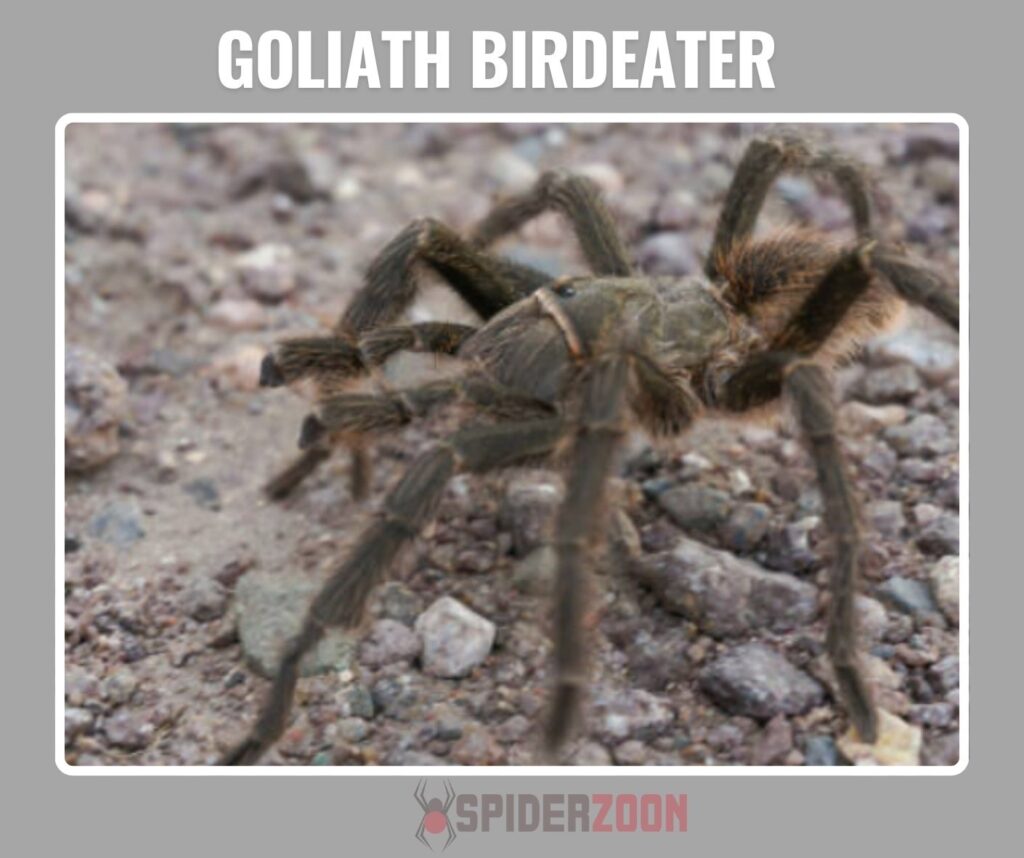
This spider is the heaviest in the world, weighing as much as 6 ounces (170–180 grams) when fully mature. While some spiders might match its leg span, no other species comes close to its sheer weight. This heavy build is due to the muscular structure of the legs and dense abdomen. Its weight helps in overpowering prey, but it also means it doesn’t climb well and prefers staying on the ground.
3. Female vs Male Size Differences
Female Goliath birdeaters are larger, bulkier, and longer-living than males. Females often grow slightly wider in body, with more robust legs and a thicker abdomen. Males may have longer legs but are generally more slender and lighter. Another major difference is lifespan—females can live up to 15–20 years, while males usually live only 3 to 6 years, typically dying shortly after reaching maturity and mating.
Goliath Birdeater Habitat and Location
The Goliath birdeater lives in some of the most humid and dense rainforests of South America. This species prefers undisturbed, tropical environments where it can hide, hunt, and build deep burrows in peace. Its range is limited to specific regions where climate and soil conditions support its survival.
4. Natural Habitat
Goliath birdeaters are ground-dwelling spiders that thrive in swampy, marshy, and heavily forested areas. They spend most of their lives hidden in underground burrows, which they either dig themselves or take over from other animals. These burrows are lined with silk and provide protection from predators, moisture retention, and a perfect place to ambush prey at night.
5. Where They Are Commonly Found

These spiders are native to northern South America, especially in countries like Suriname, Guyana, Venezuela, northern Brazil, and French Guiana. Most sightings come from the Amazon rainforest region, where the warm and humid climate offers the ideal environment for their survival. Their presence is often revealed only at night, when they emerge to hunt.
6. Living Conditions They Prefer
Goliath birdeaters prefer areas that stay consistently humid and warm, with plenty of soft soil or leaf litter for burrow construction. They are most active during the wet season, when prey is abundant and the forest floor stays moist. While they avoid human interaction, habitat destruction has pushed some closer to rural areas, though they still favor remote forest floors away from direct disturbance.
Goliath Birdeater Lifespan and Growth
The life cycle of the Goliath birdeater is both fascinating and complex. From tiny spiderlings to massive adults, their development includes multiple molting phases and drastic differences between males and females. Their long lifespan and slow growth make them especially unique among arachnids.
7. Average Lifespan of Females and Males
One of the most striking differences between male and female Goliath birdeaters is their lifespan. Females can live up to 15–20 years, making them long-lived compared to most spiders. Males, on the other hand, only live around 3 to 6 years, and typically die shortly after reaching maturity and mating. This makes females more commonly seen in captivity and long-term observations.
8. Life Stages – From Baby to Adult

The Goliath birdeater begins its life as one of 100 to 200 spiderlings hatched from a single egg sac. After emerging, these spiderlings stay in or near the burrow for a short period before dispersing. They undergo multiple molts—shedding their exoskeletons to grow. With each molt, their body size increases. Females molt even after sexual maturity, while males stop molting after reaching adulthood.
9. Molting Process and Growth
Molting is critical to a Goliath birdeater’s growth and health. During this process, the spider lays on its back and pushes itself out of its old exoskeleton. This can take several hours and requires a safe, undisturbed environment. Molting not only allows growth but also helps regenerate damaged legs and refresh fangs. Right after molting, the spider’s body is soft and vulnerable, so it stays hidden until it hardens completely.
Goliath Birdeater Diet and Eating Behavior

Despite its name, the Goliath birdeater doesn’t regularly feast on birds. Its diet is diverse and adapted to what’s available on the forest floor. As an ambush predator, it relies on stealth and strength to overpower a wide range of small animals at night.
10. What the Goliath Birdeater Eats
The Goliath birdeater feeds on a wide variety of prey, including insects, frogs, toads, lizards, small rodents, and even snakes. Its powerful fangs pierce the prey and inject venom that immobilizes and begins digestion. The spider then liquefies the prey’s insides and sucks up the nutrient-rich fluid. Though rare, it can consume birds, especially hatchlings, but that’s not a common part of its diet.
11. Does It Really Eat Birds?
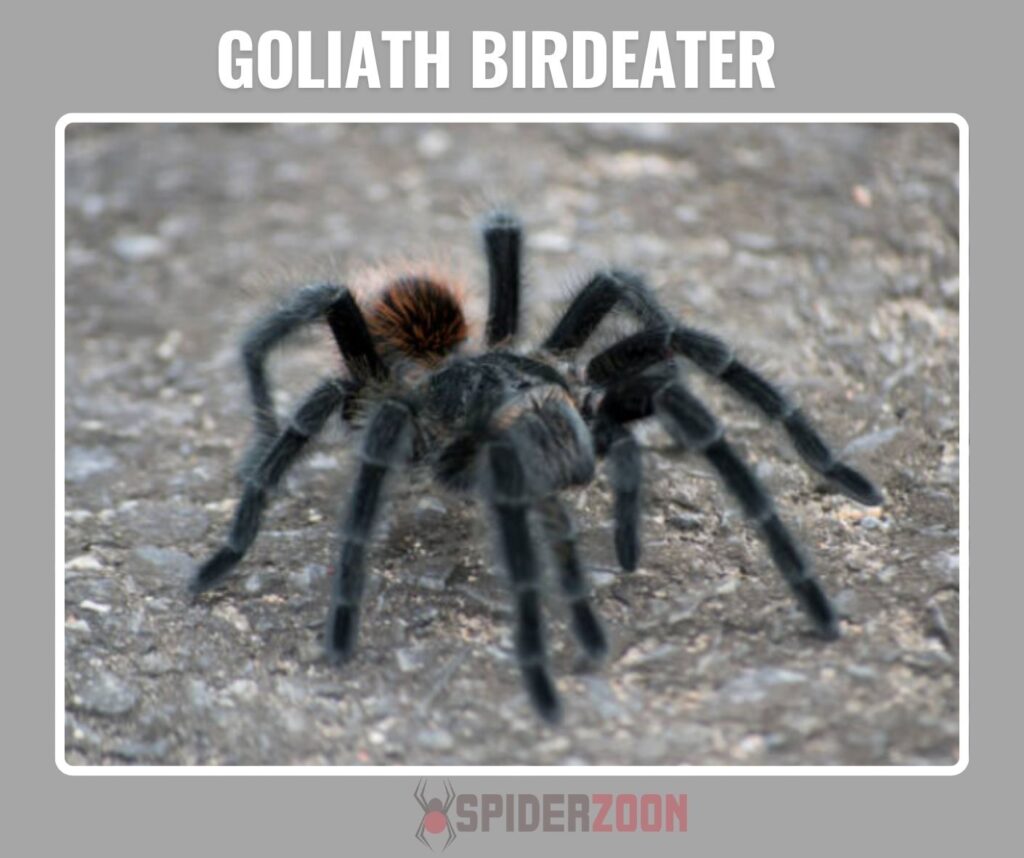
The name “birdeater” originated when a 19th-century explorer observed one eating a hummingbird. However, such occurrences are extremely rare and not representative of its normal diet. The Goliath birdeater is more likely to feed on animals that can’t escape quickly, such as worms, beetles, and amphibians. Hunting birds is not efficient or practical for this ground-dwelling spider.
12. How It Hunts and Eats
This spider doesn’t spin webs to catch prey. Instead, it uses ambush tactics. It waits quietly near its burrow and senses vibrations through the ground using the fine hairs on its legs. Once prey is detected, the Goliath birdeater lunges with speed, bites with its 2-centimeter fangs, and injects venom. After immobilization, digestive enzymes liquefy the prey’s internal tissues so the spider can consume it.
Goliath Birdeater Venom, Bite, and Defense Mechanisms
Although intimidating in appearance, the Goliath birdeater is not deadly to humans. It relies on a combination of venom, powerful fangs, and unique defensive behaviors to protect itself from predators and subdue prey. These adaptations are crucial for its survival on the rainforest floor.
13. Is the Goliath Birdeater Poisonous or Venomous?
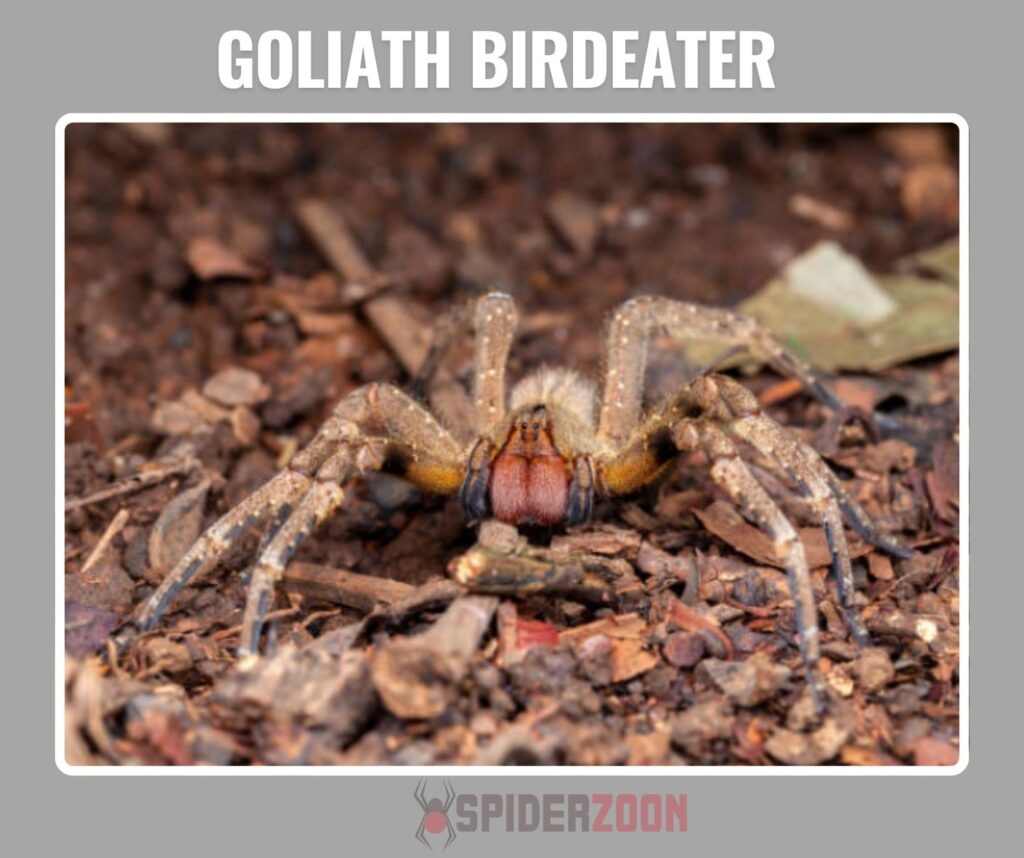
The Goliath birdeater is venomous, not poisonous. It uses venom to paralyze and digest its prey, but the venom is relatively harmless to humans. A bite may cause mild pain, swelling, and irritation, similar to a wasp sting, but it’s not considered medically dangerous unless an allergic reaction occurs.
14. Bite Symptoms and Effects on Humans
While a bite from this spider is rare and usually defensive, it can be quite painful due to the size of its fangs, which can reach up to 2.5 cm (1 inch). Symptoms of a bite include localized pain, redness, itching, and slight muscle cramping. There’s no record of a Goliath birdeater bite causing serious harm or fatalities in humans.
15. Defensive Behavior: Urticating Hairs and Threat Displays
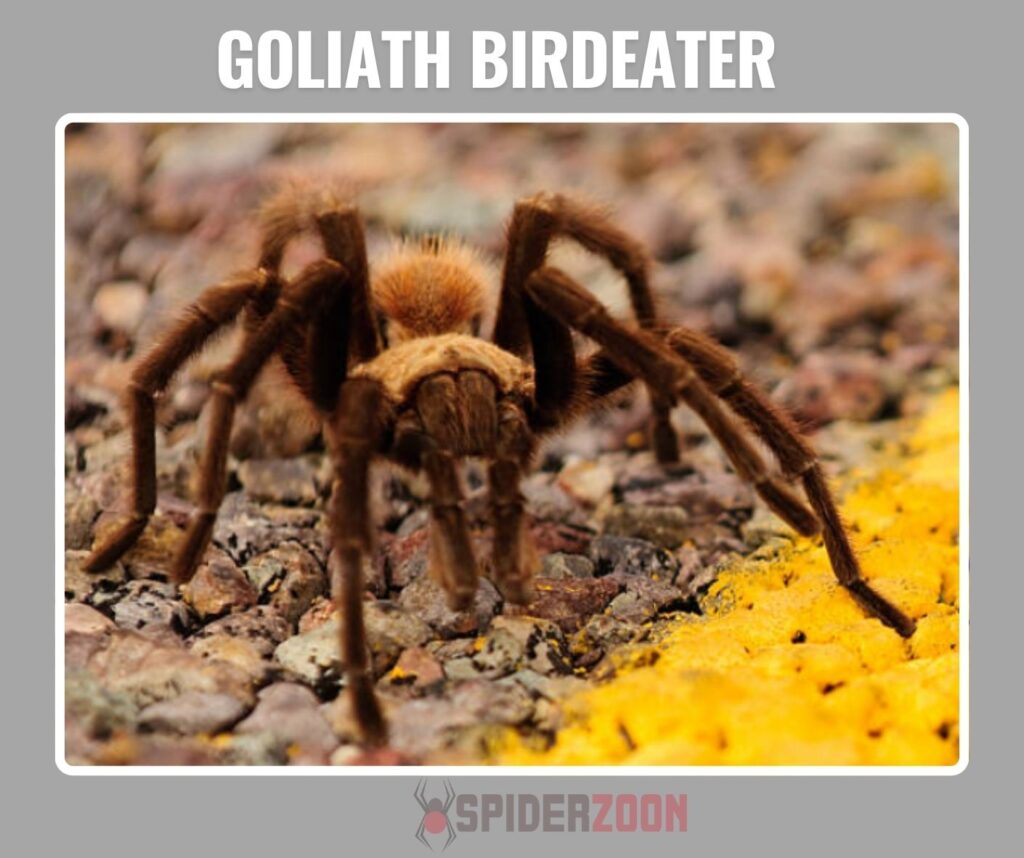
Instead of biting, the Goliath birdeater often relies on a more passive form of defense—flicking urticating hairs from its abdomen. These tiny barbed hairs can irritate the skin, eyes, and respiratory tract of predators. When threatened, the spider may also produce a hissing sound (called stridulation) by rubbing leg bristles together, serving as a warning. If the threat persists, it may rear up on its hind legs in a threat posture before attacking.
Goliath Birdeater Behavior and Adaptations
The Goliath birdeater is a solitary and nocturnal creature, highly adapted to the dense and dark environment of the rainforest floor. Its behavior and physical traits are fine-tuned for stealth, survival, and efficient hunting in challenging habitats.
16. Nocturnal and Solitary Habits
Goliath birdeaters are strictly nocturnal, spending daylight hours hidden inside their burrows. At night, they emerge to hunt or patrol their territory. They are also highly territorial and solitary, avoiding other spiders unless it’s mating season. Their solitary nature reduces the risk of cannibalism, which is common among large tarantulas.
17. Sensory Adaptations: Legs and Eyes
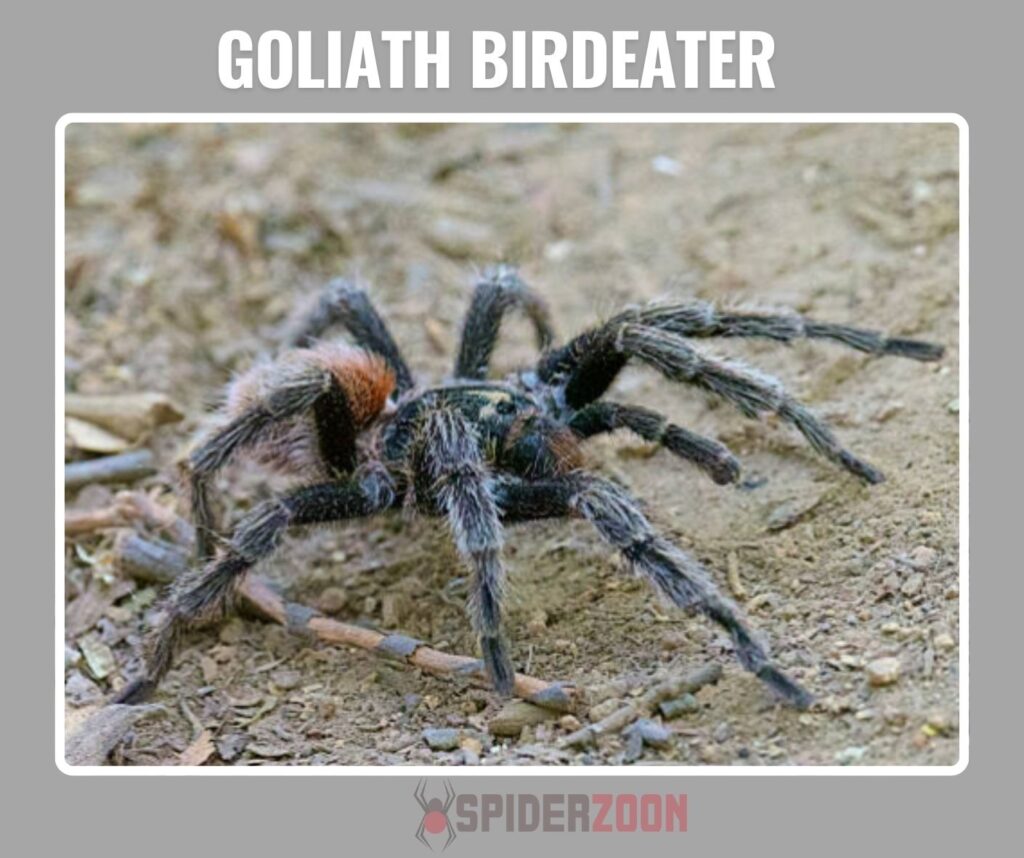
Although they have eight eyes, Goliath birdeaters don’t rely heavily on vision. Their eyesight is poor. Instead, they use specialized sensory hairs on their legs to detect vibrations from prey or approaching threats. These hairs pick up the slightest ground movements and help them “feel” the world around them, allowing them to react quickly in total darkness.
18. Camouflage and Coloration
Their bodies are covered in dense, earth-toned hairs ranging from brown to reddish or golden hues, which help them blend into the forest floor. This natural camouflage makes them hard to detect by predators and prey. In some cases, slight color variations may occur depending on age, environment, or molting cycle, offering better concealment in their specific surroundings.
Goliath Birdeater Reproduction and Eggs
The reproduction process of the Goliath birdeater is both strategic and high-risk, especially for the males. From courtship to egg-laying, this phase in their life cycle involves careful behavior, protection of offspring, and a high number of spiderlings to ensure survival.
19. Mating Behavior and Risk to Males
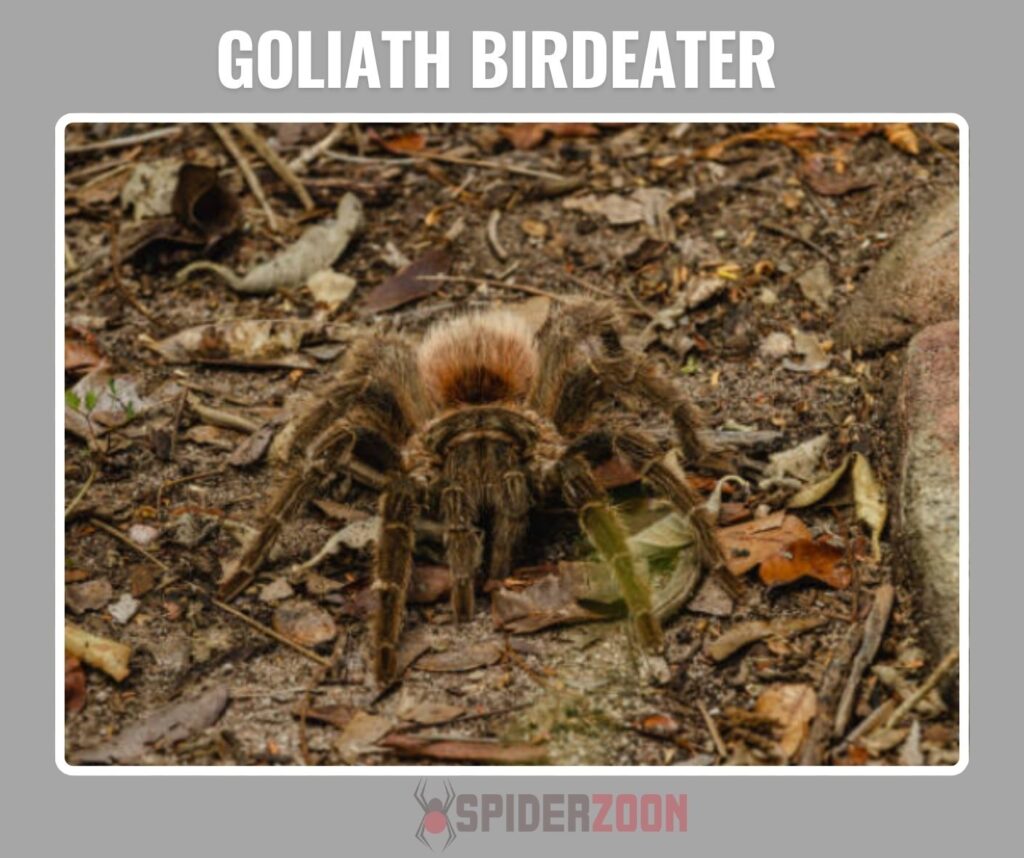
Mating usually occurs during the rainy season when males leave their burrows in search of a mate. After locating a female’s burrow, the male taps his legs at the entrance to signal his presence. If the female is receptive, mating begins—but it’s risky. Males often die shortly after mating, and in some cases, the female may attack or consume the male if she feels threatened or is hungry.
20. Egg Sac Size and Number of Eggs
After mating, the female produces a large, silk egg sac, which she guards fiercely inside her burrow. Each egg sac can contain up to 150–200 eggs, which she protects by turning the sac regularly to prevent fungal growth. The incubation period lasts about 6 to 8 weeks, depending on temperature and humidity.
21. Appearance and Development of Spiderlings
When the eggs hatch, tiny pale spiderlings emerge and remain in the safety of the burrow for a few days to weeks. During this time, they are highly vulnerable and rely on the shelter provided by their mother’s burrow. Once ready, they disperse and begin their independent lives, starting the cycle of growth and molting on their own.
Goliath Birdeater as a Pet and Final Facts
Although intimidating, the Goliath birdeater has attracted interest from exotic pet enthusiasts. However, keeping one requires special care, space, and understanding of their behavior. Additionally, a few final facts highlight just how unique this spider truly is.
22. Can You Keep a Goliath Birdeater as a Pet?
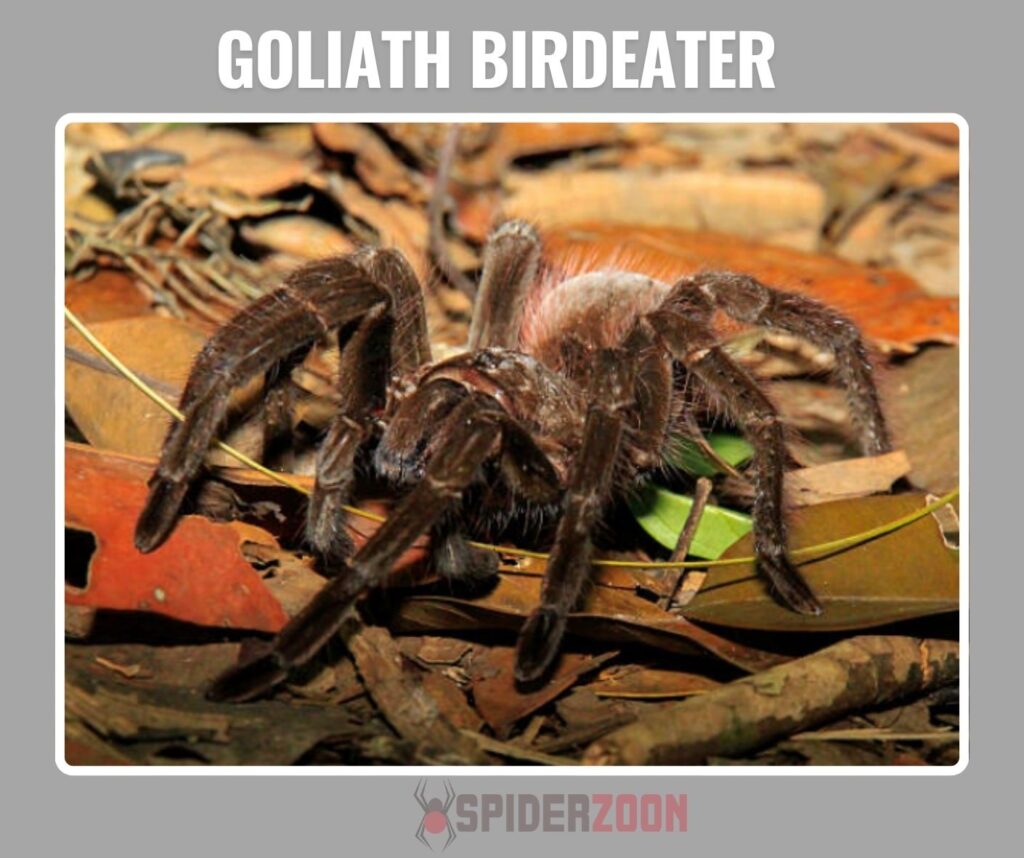
Yes, it is possible to keep a Goliath birdeater as a pet, but it’s not for beginners. These spiders need a large, humid, and secure terrarium, preferably mimicking their natural rainforest environment. Proper substrate, temperature control, and hiding spaces are essential. They are not aggressive if left alone, but they should not be handled, as their hairs can irritate human skin and their large size makes them prone to injury when dropped. Captive females can live for 15+ years, offering long-term companionship for experienced keepers.
23. Unique Traits That Make Them Stand Out
The Goliath birdeater isn’t just the largest spider—it also produces an audible hissing sound when threatened, created by rubbing bristles on its legs (a behavior called stridulation). This sound can scare off predators like snakes and mammals. Another rare trait is that it can regrow lost limbs during molting, especially when young. These features, combined with its size and power, make it one of the most fascinating spiders on Earth.
Conclusion:
The Goliath birdeater is more than just a giant spider—it’s a powerful survivor with incredible adaptations. From its enormous size and ground-shaking hunts to its quiet life in rainforest burrows, this species commands respect rather than fear. While it may not be for the average pet owner, it’s a fascinating creature to study and appreciate. Whether you’re an arachnid enthusiast or simply curious about the world’s biggest spider, understanding the Goliath birdeater reveals the beauty and complexity of nature’s most misunderstood predators.