When people imagine giant spiders, few species capture the imagination quite like the Goliath Tarantula. Known scientifically as Theraphosa blondi, this enormous arachnid is often called the Goliath Bird-Eating Tarantula—a name that sparks both fear and fascination. Native to the tropical rainforests of South America, it is the heaviest spider in the world and among the largest by leg span. Despite its intimidating appearance, the Goliath Tarantula is more misunderstood than menacing.
General Overview of the Goliath Tarantula

The Goliath Tarantula belongs to the Theraphosidae family, which includes over 1,000 tarantula species worldwide. What makes it stand out is its size and weight, far exceeding that of most other spiders.
- Scientific Name: Theraphosa blondi
- Common Names: Goliath Tarantula, Goliath Bird-Eating Spider, Goliath Birdeater
- Classification: Arachnid, Order Araneae, Family Theraphosidae
The nickname “bird-eating spider” comes from early explorers who witnessed one eating a small bird. While it can overpower birds, this is rare—its diet mostly consists of insects, worms, and small vertebrates.
Names and Variations

Many people are confused by the different names attached to this spider. “Goliath Tarantula,” “Goliath Birdeater,” and “Goliath Bird-Eating Tarantula” all refer to the same primary species, Theraphosa blondi. However, there are closely related tarantulas that are sometimes grouped under the “Goliath” label.
- Goliath Birdeater (Theraphosa blondi): The true giant and most widely recognized.
- Burgundy Goliath Birdeater (Theraphosa stirmi): Slightly smaller, reddish coloration.
- Brazilian Goliath Tarantula (Theraphosa apophysis): Known for long, pink-tipped legs.
Each variation shares similar traits, though size, lifespan, and coloration may differ slightly.
Size and Physical Characteristics

The Goliath Tarantula is record-breaking in many ways.
- Leg Span: Up to 12 inches (30 cm), about the size of a dinner plate.
- Weight: Can exceed 170 grams (6 oz), making it the heaviest spider on Earth.
- Body Length: Around 5 inches (12–13 cm) without legs.
This massive frame makes the Goliath larger by weight than the Huntsman Spider, though Huntsman species may have slightly longer legs. Its bulk and fangs give it an intimidating presence, but size doesn’t necessarily mean extreme danger to humans.
Appearance
- Covered in dense brown hair that helps with sensory detection.
- Equipped with urticating hairs on the abdomen, which it flicks at predators.
- Large, powerful fangs capable of delivering venom.
- Females tend to be larger and stockier than males.
Habitat and Distribution

The Goliath Tarantula is native to the tropical rainforests of northern South America, particularly in:
- Venezuela
- Guyana
- Suriname
- Northern Brazil
Preferred Environment
This species thrives in warm, humid climates. It is a terrestrial spider that spends most of its time on the forest floor. Instead of building webs like orb-weaver spiders, it creates silk-lined burrows in soft, swampy soil.
Lifestyle and Behavior
- Nocturnal: Hunts mostly at night, staying hidden in burrows during the day.
- Solitary: Only interacts with other tarantulas during mating.
- Ground-dwelling: Relies on ambush tactics rather than active pursuit.
Because of its environment, the Goliath requires high humidity and stable temperatures—conditions that are important to replicate when kept in captivity.
Species and Color Morphs
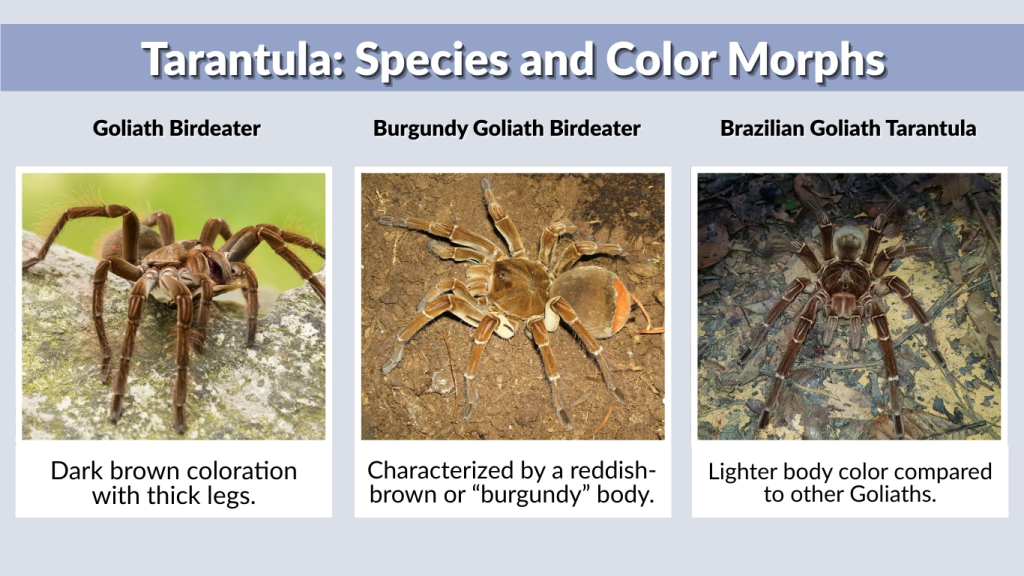
Although Theraphosa blondi is the species most people recognize, other related tarantulas are often referred to as “Goliaths.”
1. Goliath Birdeater (Theraphosa blondi)
- Largest and heaviest tarantula in the world.
- Dark brown coloration with thick legs.
- Found mostly in Guyana and Venezuela.
2. Burgundy Goliath Birdeater (Theraphosa stirmi)
- Slightly smaller than T. blondi.
- Characterized by a reddish-brown or “burgundy” body.
- Popular in the exotic pet trade due to its striking color.
3. Brazilian Goliath Tarantula (Theraphosa apophysis)
- Known for long legs tipped with pink coloration.
- Lighter body color compared to other Goliaths.
- Considered rarer and more delicate in captivity.
Why Is It Called a “Bird-Eating” Spider?
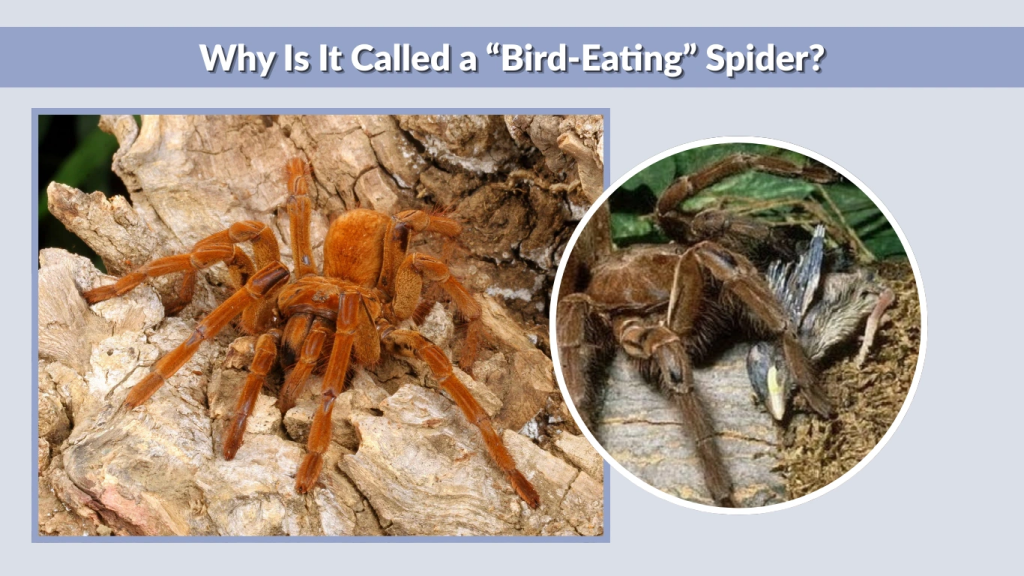
The term “bird-eating” originates from an 18th-century account by explorers who reportedly observed a Goliath Tarantula eating a hummingbird. While they can overpower small birds, this is unusual. In reality, birds are not their primary food source.
- Diet in the wild: Mostly insects, earthworms, frogs, lizards, and small rodents.
- Occasional prey: Birds, snakes, or other spiders when the opportunity arises.
The “bird-eating” label stuck because it highlighted the spider’s immense size and ability to take down prey larger than itself.
Venom and Bite Concerns

Like all tarantulas, the Goliath Birdeater is venomous, not poisonous. It delivers venom through its large fangs when biting.
Effects on Humans
- The venom is comparable to a wasp sting in terms of pain.
- Symptoms may include swelling, redness, and localized discomfort.
- Severe allergic reactions are rare but possible in sensitive individuals.
- The biggest danger comes from the spider’s 1–2 cm fangs, which can puncture skin deeply, leading to secondary infections.
Urticating Hairs
In addition to venom, the Goliath has another defense: urticating hairs on its abdomen. When threatened, it kicks these microscopic, barbed hairs into the air.
- They cause skin irritation, rashes, and eye discomfort.
- For predators, they act as an effective deterrent.
- For humans, handling without protection can lead to itching and eye irritation if hairs make contact.
Are Goliath Tarantulas Deadly?
Despite their size and fierce reputation, Goliaths are not deadly to humans. Their venom is far weaker than that of spiders like the black widow or funnel-web. Most encounters result in defensive postures rather than bites.
Pet Trade and Care
The Goliath Tarantula is highly sought after in the exotic pet trade, though it is not recommended for beginners. Its massive size and defensive nature make it best suited for experienced keepers.
Buying Considerations
- Captive-Bred vs. Wild-Caught: Captive-bred specimens are healthier and reduce strain on wild populations.
- Price: Ranges from $80–$350, with females being more expensive due to their 15–20 year lifespan.
Enclosure Requirements
- Size: A terrarium of at least 20–30 gallons is recommended.
- Substrate: 6+ inches of moist soil or coconut fiber for burrowing.
- Humidity: 70–80%, mimicking rainforest conditions.
- Temperature: 75–85°F (24–29°C).
- Decor: Hides, cork bark, and a shallow water dish.
Handling
Experts recommend minimal to no handling. These spiders stress easily, may flick hairs, or bite defensively. Admiring them from behind glass is the safest approach.
Feeding and Diet
The Goliath’s size allows it to consume prey much larger than that of typical tarantulas.
In the Wild
- Diet includes insects, earthworms, frogs, lizards, and snakes.
- Occasionally preys on birds, inspiring its common name.
- Ambushes prey at night from its burrow.
In Captivity
- Fed crickets, roaches, mealworms, and locusts.
- Large adults may occasionally eat pinky mice or small reptiles (though not required).
- Feeding frequency:
- Juveniles: Twice weekly.
- Adults: Once every 7–10 days.
- Juveniles: Twice weekly.
Hunting Behavior
The Goliath uses its size and powerful fangs to pierce prey, injecting venom and digestive enzymes. It then liquefies the meal before consuming it.
Comparisons with Other Creatures
The Goliath often sparks fascination when compared to other giant arthropods or predators.
- Goliath vs. Huntsman Spider: Huntsmans may have longer legs, but the Goliath is far heavier and more powerful.
- Goliath vs. Camel Spider: Camel spiders are fast and intimidating but not true spiders; the Goliath is larger by weight.
- Goliath vs. Scorpions and Snakes: Encounters are rare, but both scorpions and snakes can be prey or predators depending on size.
- Goliath vs. Tarantula Hawk Wasp: The wasp’s venom can paralyze tarantulas, but it typically hunts smaller species.
- Goliath vs. Other Tarantulas: By mass, it is the largest tarantula in the world, though others like the Gooty Sapphire are more colorful.
Facts and Records
The Goliath Tarantula is not only impressive in size but also full of unique traits:
- Largest Spider by Weight: Up to 170 g, heavier than a sparrow.
- Leg Span Record: Up to 12 inches (30 cm).
- Lifespan: Females 15–20 years; males 3–6 years.
- Defensive Hissing: Produces a stridulating sound by rubbing hairs on its legs when threatened.
- Rare Bird Predation: While capable of eating birds, such events are unusual.
- Record Holder: Recognized in the Guinness World Records as the largest spider by mass.
FAQs
How big can a Goliath Tarantula get?
The Goliath can reach up to 12 inches in leg span and weigh more than 170 grams, making it the heaviest spider on Earth.
Are Goliath Birdeater Tarantulas poisonous?
No. They are venomous, not poisonous. Their venom is relatively mild and not dangerous to humans, though bites can be painful.
Where does the Goliath Tarantula live?
It inhabits the rainforests of northern South America, particularly Venezuela, Guyana, Suriname, and Brazil, where it lives in burrows on the forest floor.
Can a Goliath Tarantula eat birds?
Yes, but rarely. Despite its name, the Goliath primarily feeds on insects, frogs, lizards, and small rodents. Bird predation is uncommon.
How much does a Goliath Tarantula cost as a pet?
Prices range from $80–$350, depending on species, size, and sex. Females cost more because they live much longer than males.