

The Gooty Sapphire Tarantula (Poecilotheria metallica) is one of the rarest and most visually stunning tarantulas in the world. Known for its shimmering metallic blue coloration, this species is native to a very limited forested region in India. Because of habitat loss and over-collection, it is considered endangered in the wild, making it both a prized and controversial species in the exotic pet trade. Despite its beauty, the Gooty Sapphire is not a beginner tarantula. Its speed, defensive temperament, and potent venom make it a challenge even for experienced keepers.
Identification
The Gooty Sapphire Tarantula belongs to the genus Poecilotheria, a group of arboreal (tree-dwelling) tarantulas known as “ornamentals.” Its scientific name, Poecilotheria metallica, references its metallic sheen, while the name “Gooty” comes from the town of Gooty in Andhra Pradesh, India, where the species was first discovered.
Common Names:
- Gooty Sapphire Tarantula
- Sapphire Ornamental Tarantula
- Blue Gooty Tarantula
This species is instantly recognizable by its vibrant blue coloration, which appears iridescent under light. Unlike many tarantulas that fade as they age, the Gooty Sapphire retains its striking appearance into adulthood, making it highly sought after by collectors.
Size, Growth & Lifespan

The Gooty Sapphire Tarantula is a medium-to-large species, with adults reaching 6 to 8 inches in leg span. Females are bulkier and more robust, while males are usually slimmer and lighter in build.
- Growth Rate: They grow at a moderate pace, with spiderlings reaching juvenile size within a year if fed regularly.
- Molting Stages: Each molt brings out more of the vivid blue coloration, which may not be fully developed until later juvenile or subadult stages.
- Lifespan:
- Females can live 12 to 15 years with proper care.
- Males typically live 3 to 4 years after reaching maturity, as is common with many tarantula species.
- Females can live 12 to 15 years with proper care.
This long lifespan for females makes them highly prized in the trade, as they represent a long-term commitment for keepers.
Habitat & Distribution
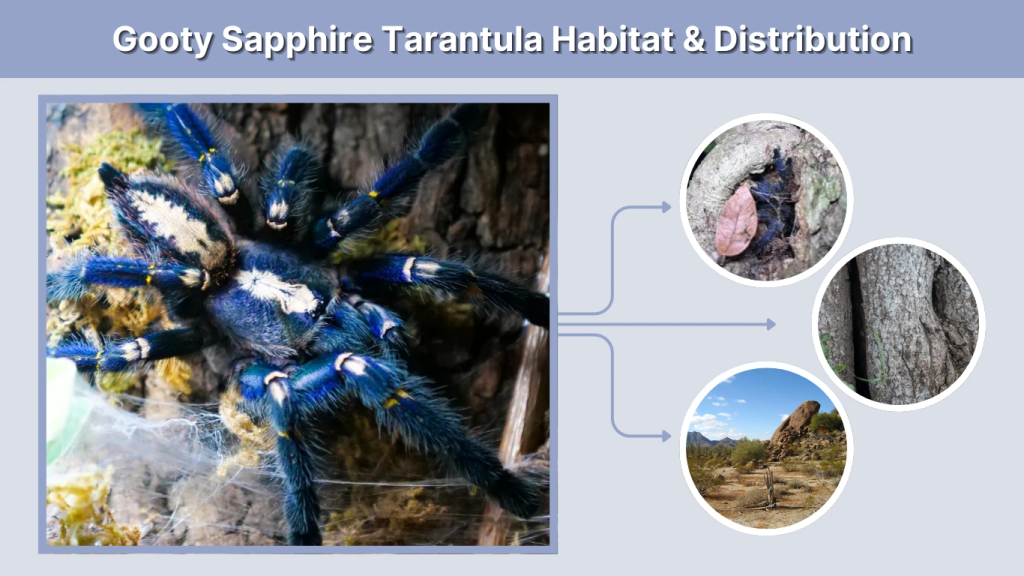
The Gooty Sapphire Tarantula has one of the most restricted natural ranges of any tarantula species. It is native to a small forest reserve in Andhra Pradesh, India, where it lives in deciduous, tree-filled habitats.
Arboreal Nature: Unlike terrestrial tarantulas that burrow, the Gooty Sapphire prefers tree hollows, bark crevices, and elevated retreats.
Climate: Its natural environment features high humidity and warm temperatures, conditions that need to be replicated in captivity.
Distribution: Due to deforestation and habitat fragmentation, its population is critically endangered. This limited distribution adds to its rarity and demand among hobbyists.
Because of its conservation status, the Gooty Sapphire is listed on CITES Appendix II, meaning international trade is regulated to prevent overexploitation.
Care & Enclosure

Keeping a Gooty Sapphire Tarantula in captivity requires precise care, especially because of its arboreal nature and defensive temperament.
- Enclosure Size: An adult should be housed in a tall enclosure of at least 12x12x18 inches, providing enough vertical space for climbing.
- Substrate & Décor: While deep substrate is less critical, adding cork bark, branches, and vertical hides is essential for their webbing and retreat-building.
- Temperature & Humidity: Maintain temperatures between 75–85°F and humidity around 70–80%, ensuring good ventilation to prevent mold.
- Sling Care: Baby Gooty Sapphires (slings) can be raised in small containers with vertical hides. As they grow, they should be transferred to taller enclosures.
- Safety: Because of their speed, all maintenance (like feeding or cleaning) should be done carefully to prevent escapes.
This species is not for beginners. Only keepers with prior experience handling fast arboreal tarantulas should attempt to care for them.
Diet & Feeding
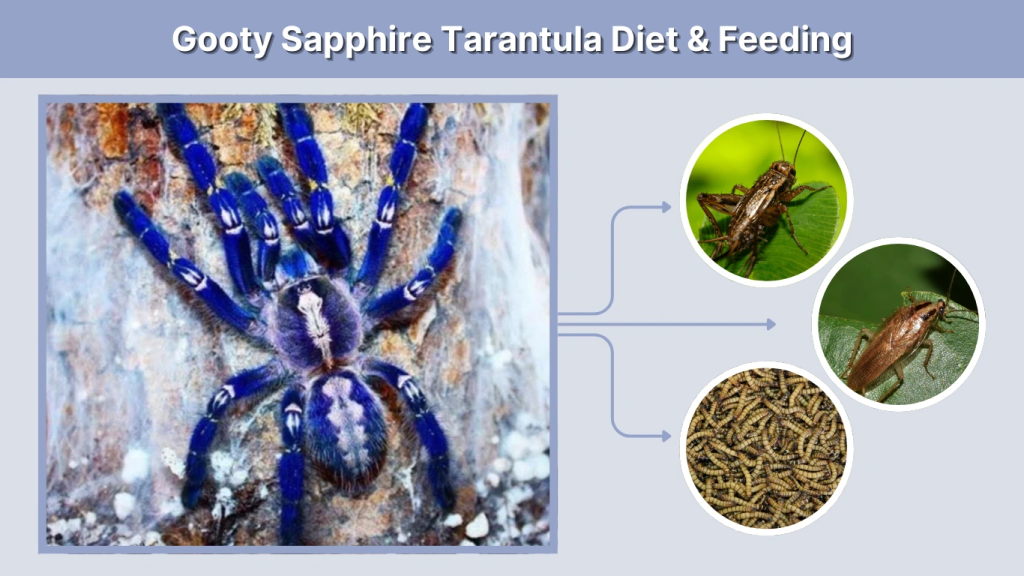
Like most tarantulas, the Gooty Sapphire is a carnivorous hunter that relies on ambush tactics.
In Captivity: They thrive on feeder insects such as crickets, roaches, and mealworms. Larger adults may take the occasional pinky mouse, though this is not necessary for a balanced diet.
Feeding Frequency:
- Spiderlings (Slings): Should be fed 2–3 times per week on small prey such as pinhead crickets or flightless fruit flies.
- Juveniles: Can be fed medium crickets or roaches twice weekly.
- Adults: One or two large meals per week are sufficient.
Feeding Style: Gooty Sapphires are known for their speed and dramatic lunges when capturing prey, making feeding time an exciting (though intimidating) process.
Uneaten prey should be removed promptly, as live insects can stress or even injure a molting tarantula.
Temperament & Behavior

The Gooty Sapphire Tarantula has a reputation for being skittish, defensive, and extremely fast. While not overtly aggressive, its speed and tendency to retreat or bite when cornered make it unsuitable for handling.
Are They Aggressive? They are not naturally aggressive but are highly defensive when threatened. Their speed can make them difficult to manage in captivity.
Defensive Displays: When stressed, they may assume a threat posture by raising their front legs. Unlike some species, they do not flick urticating hairs, relying instead on intimidation and speed.
Communal Experiments: Some keepers have attempted communal setups with multiple Gooty Sapphires, but success is mixed. Cannibalism remains a risk, especially if food is scarce.
Handling Risks: Handling is strongly discouraged. Their defensive nature, speed, and venom potency make them a “look but don’t touch” species.
For many enthusiasts, the appeal of this tarantula lies in its beauty and rarity, not its suitability as a handling pet.
Venom & Bites
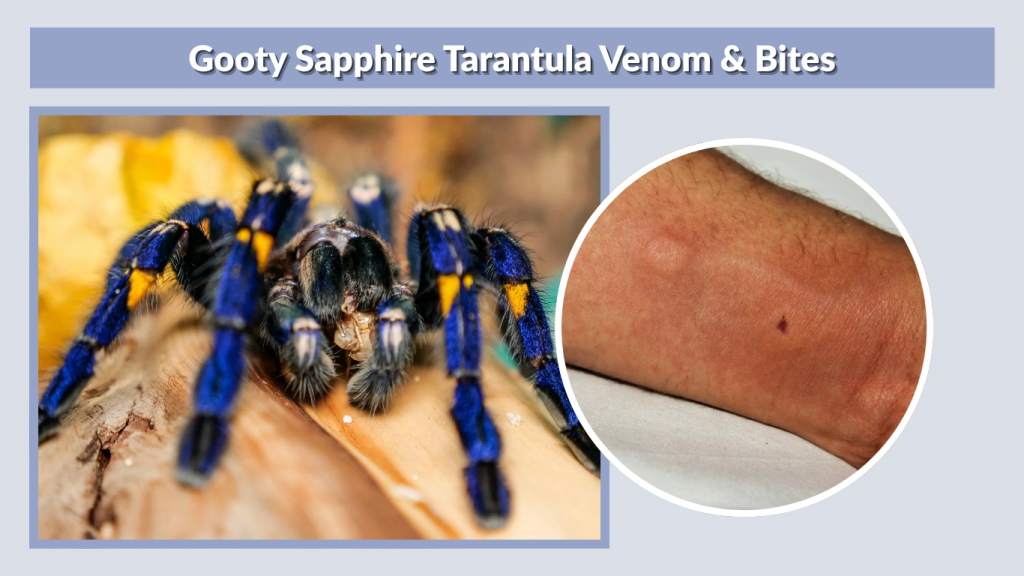
The Gooty Sapphire Tarantula has venom that is considered medically significant compared to many other tarantulas. While fatalities are not documented in humans, its bite is extremely painful and can produce strong systemic reactions.
- Venom Potency: The venom contains neurotoxins that can cause localized pain, swelling, and muscle cramps.
- Bite Symptoms: Pain lasting several hours to days, muscle spasms, sweating, nausea, and in some cases prolonged recovery time.
- Pain Scale: Hobbyists often describe it as one of the more painful tarantula bites, ranking high compared to New World species that rely on urticating hairs for defense.
- Danger to Animals: There are anecdotal reports that its venom could kill small pets such as dogs, making extra caution essential for keepers.
- Poisonous vs Venomous: Like all tarantulas, it is venomous (injects venom via fangs) rather than poisonous (toxic when eaten).
Because of this, handling should never be attempted, and enclosures must always be secured to avoid accidents.
Breeding & Reproduction
Breeding Gooty Sapphire Tarantulas is challenging due to their temperament, endangered status, and specific needs.
- Mating Behavior: Males perform courtship rituals, but females may attack if not receptive. Careful timing and supervision are necessary.
- Egg Sac Production: A female can produce an egg sac containing 50–150 eggs. She guards it until spiderlings hatch.
- Slings (Spiderlings): The babies are delicate and require careful feeding with tiny prey and high humidity.
- Molting: Like all tarantulas, Gooty Sapphires molt regularly to grow. Premolt signs include reduced feeding and darker coloration. Molting can take several hours, and disturbances should be avoided.
- Breeding Programs: Some breeders participate in captive breeding programs to reduce pressure on wild populations. These efforts are important given the species’ endangered status.
Male vs Female & Sexing
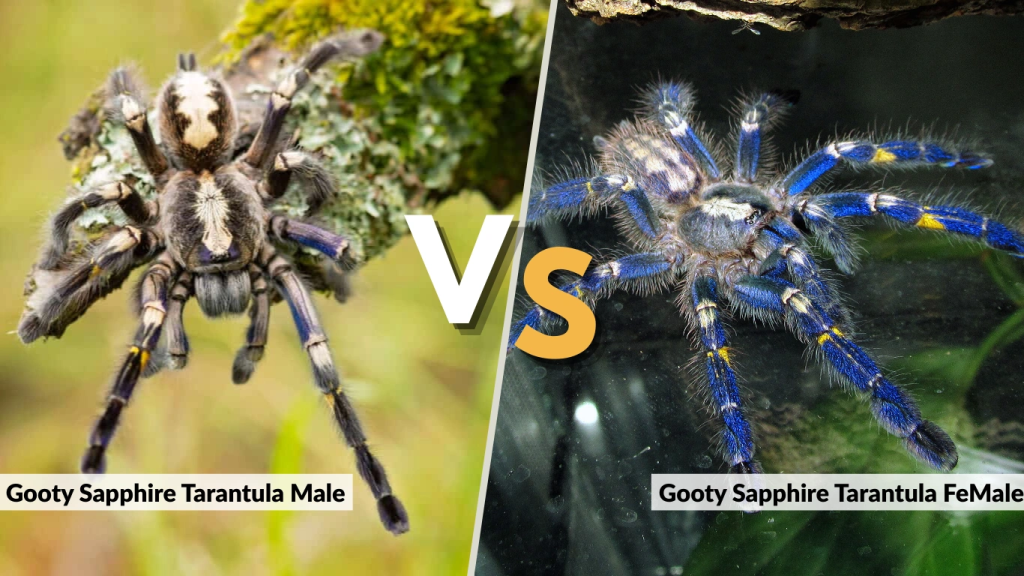
Sexing Gooty Sapphire Tarantulas is vital for keepers who want to breed or estimate lifespan.
- Females: Larger, stockier, and live up to 15 years in captivity. They have broader abdomens and less leg length compared to males.
- Males: Slimmer, with longer legs and typically brighter coloration after maturity. They only live about 3–4 years once mature.
- Sexing Methods: Examining molts under a microscope is the most reliable method. Females have spermathecae, a reproductive structure absent in males.
Females are more desirable in the pet trade due to their longevity, which often drives higher prices.
Conservation & Demand
The Gooty Sapphire Tarantula is listed as critically endangered by the IUCN due to habitat destruction and its very limited range in India.
- How Many Are Left? Estimates suggest only a few hundred to a few thousand remain in the wild.
- Threats: Logging, deforestation, and human settlement have drastically reduced their natural habitat.
- Exotic Pet Trade: Their rarity and striking appearance have created high demand, sometimes fueling illegal collection.
- Captive Breeding: Fortunately, many breeders now produce captive-bred spiderlings, helping to reduce wild collection pressure.
Conservation remains critical, as without continued habitat protection, this species risks extinction in its natural environment.
Buying & Selling
Because of its rarity and beauty, the Gooty Sapphire is one of the most expensive tarantulas in the hobby.
- Price Range: Slings typically cost $150–$250, while adult females can sell for $300–$500 or more, depending on availability.
- Availability: Sold through reputable breeders, exotic pet shops, and reptile expos. In the US, UK, Australia, Canada, and South Africa, captive-bred specimens are available.
- Slings vs Adults: Slings are cheaper and adapt well to captivity, while adult females are prized but significantly more expensive.
- Legality: International trade is regulated under CITES Appendix II. Buyers should ensure they are purchasing from legal, ethical sources.
- Beginner Suitability: This tarantula is not suitable for beginners due to its speed, defensive temperament, and potent venom.
Extras & Media
The Gooty Sapphire is a favorite subject of photographers and enthusiasts. Its metallic blue sheen makes it one of the most photogenic tarantulas.
- Interesting Facts:
- Only blue tarantula in its genus (Poecilotheria).
- Can live communally in rare cases if food is abundant.
- One of the most endangered tarantulas worldwide.
- Only blue tarantula in its genus (Poecilotheria).
- Media: Featured in YouTube videos, GIFs, and educational documentaries.
- Merchandise: Plush toys, posters, and collectibles featuring the Gooty Sapphire are popular among arachnid fans.
FAQs
How big does the Gooty Sapphire Tarantula get?
Adults reach 6 to 8 inches in leg span, making them medium-to-large compared to other ornamental tarantulas.
Is the Gooty Sapphire Tarantula venomous?
Yes. Its venom is medically significant, causing intense pain, cramps, and other symptoms, though bites are rarely life-threatening to humans.
How long does a Gooty Sapphire Tarantula live?
Females live 12–15 years, while males survive 3–4 years after maturity.
Can you handle a Gooty Sapphire Tarantula?
No. They are extremely fast, defensive, and venomous. They should only be admired as display animals.
Why is the Gooty Sapphire Tarantula endangered?
Due to deforestation and habitat loss in its limited range in India, combined with collection for the pet trade, the species faces a high risk of extinction in the wild.