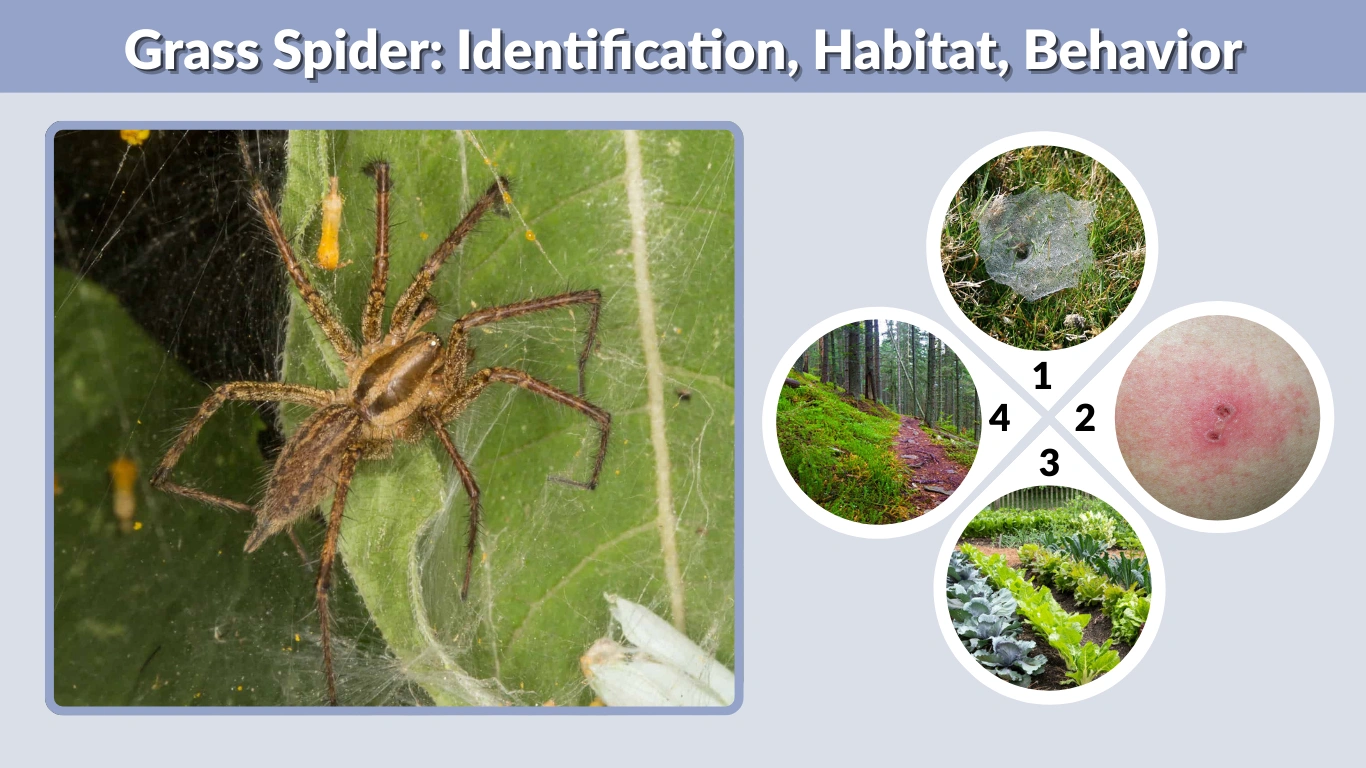
Grass spiders are among the most common spiders found in lawns, gardens, and outdoor spaces across North America. These fast-moving spiders are known for building distinctive funnel-shaped webs in grass and shrubs, making them easy to spot in the early morning when dew highlights their silk structures. Despite their somewhat intimidating appearance, grass spiders are generally harmless to humans and play an important role in controlling insect populations. Understanding their appearance, habitat, and behavior can help homeowners identify them correctly and appreciate their ecological benefits.
What is a Grass Spider?
A grass spider is a type of funnel weaver spider belonging to the genus Agelenopsis. These spiders are commonly found in grassy areas, gardens, and outdoor landscapes, which is why they are called “grass spiders.” They are part of the Agelenidae family, a group known for creating funnel-shaped webs that allow them to ambush prey quickly.
Grass spiders are frequently mistaken for other spiders, especially wolf spiders, because of their similar body patterns and quick movements. However, grass spiders differ in several ways, particularly in their web structure and distinctive spinnerets. Unlike wolf spiders that hunt without webs, grass spiders rely on their funnel webs to trap and detect prey.
These spiders are beneficial predators that feed on many common garden pests such as flies, mosquitoes, aphids, and other small insects. Because of this, they are often considered helpful for maintaining a balanced ecosystem in gardens and yards.
How to Identify a Grass Spider
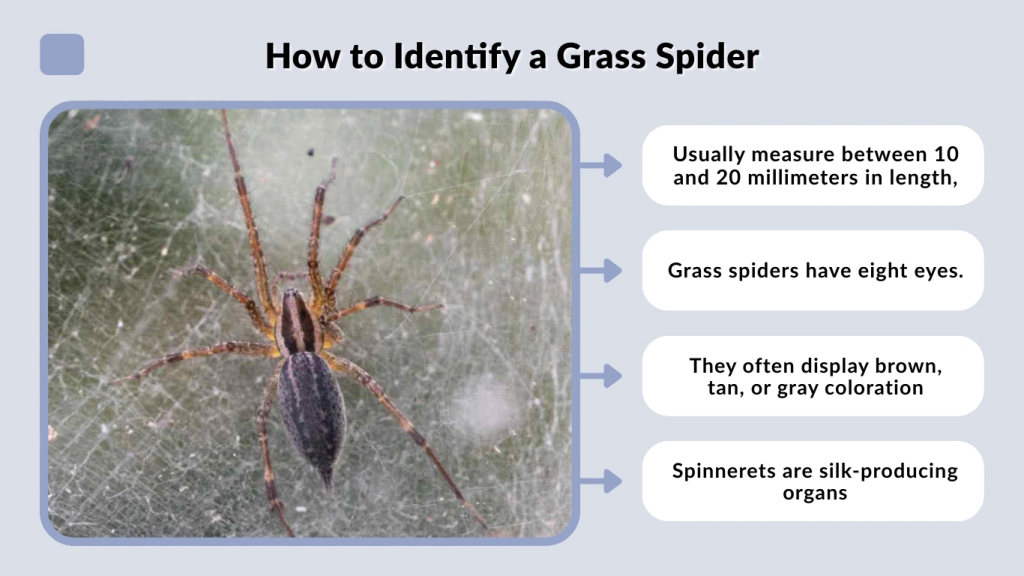
Correct identification is important because grass spiders are often confused with other species. Recognizing their physical features can help you distinguish them easily.
Physical Appearance
Grass spiders typically have slender bodies and long legs that allow them to move quickly across surfaces. Their bodies usually measure between 10 and 20 millimeters in length, though the leg span may appear much larger.
They often display brown, tan, or gray coloration with dark stripes running along the cephalothorax (the front body section). The abdomen may show a herringbone or chevron-like pattern that helps camouflage them in grassy environments.
Eye Arrangement
Like many spiders, grass spiders have eight eyes. Their eyes are arranged in two rows, which can make them look similar to wolf spiders at first glance. However, the eye pattern is less prominent than that of wolf spiders, making it a subtle but noticeable difference for experts.
Long Spinnerets
One of the most distinctive features of grass spiders is their long spinnerets located at the end of the abdomen. Spinnerets are silk-producing organs, and in grass spiders they extend noticeably outward. These elongated spinnerets are one of the easiest ways to distinguish grass spiders from similar-looking species.
Grass Spider Web
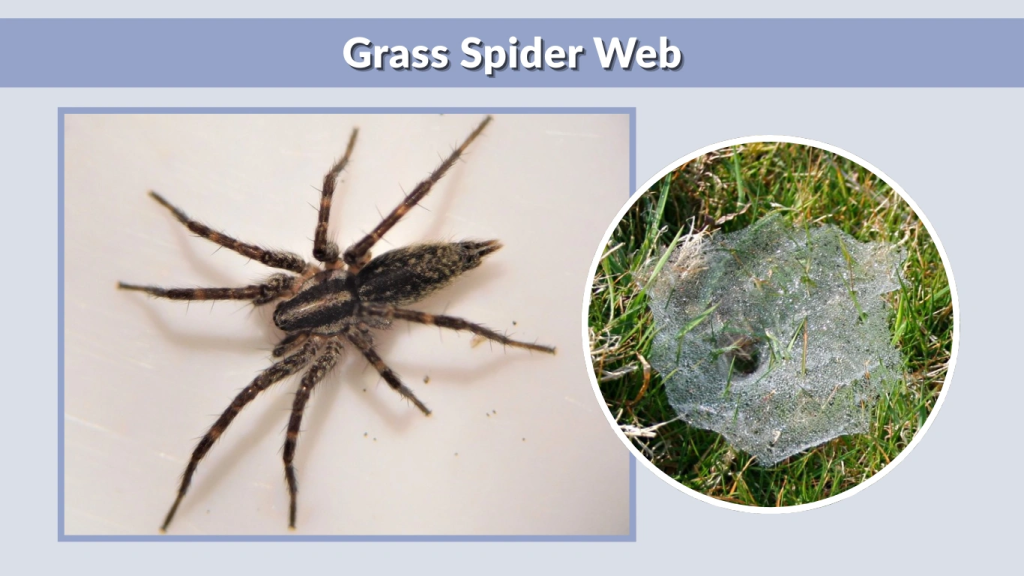
Grass spiders are famous for their unique funnel-shaped webs, which play a central role in their hunting strategy.
Funnel-Shaped Web Structure
The web of a grass spider is usually flat and sheet-like with a narrow funnel leading into a small retreat area. The spider waits inside the funnel and quickly rushes out when vibrations signal that prey has landed on the web.
These webs do not contain sticky silk like many orb webs. Instead, the web’s structure slows down insects, allowing the spider to detect movement and capture prey quickly.
Where They Build Webs
Grass spiders commonly build their webs in areas with plenty of vegetation or shelter. Typical locations include:
- Tall grass and lawns
- Bushes and shrubs
- Garden beds
- Corners of fences or buildings
- Around rocks or landscape decorations
Early in the morning, these webs can become highly visible because dew collects on the silk strands, outlining the funnel shape.
How Grass Spiders Use Their Webs to Hunt
Unlike active hunters that chase prey, grass spiders rely on their web as a detection system. When an insect touches the web, vibrations travel along the silk threads. The spider senses these vibrations and rapidly emerges from the funnel to capture the prey.
Grass spiders are extremely fast and can reach their prey in a fraction of a second. After capturing the insect, they drag it back into the funnel retreat to feed safely away from predators.
Grass Spider Habitat
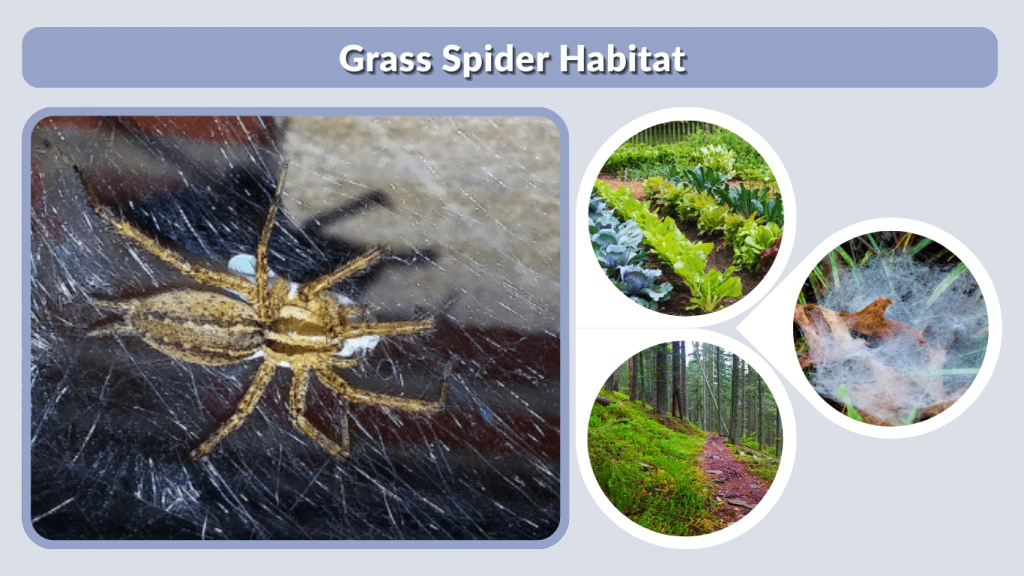
Grass spiders prefer environments where vegetation provides cover and web-building opportunities.
Where Grass Spiders Live
These spiders are most commonly found in outdoor environments such as lawns, gardens, fields, and wooded edges. However, they may occasionally wander indoors while searching for new places to build webs.
They are particularly attracted to areas with dense grass, shrubs, or ground cover that allow them to anchor their funnel webs securely.
Grass Spider Behavior
Grass spiders are known for their speed and alert behavior. Unlike many spiders that remain still for long periods, grass spiders stay close to their funnel retreats and are ready to react instantly when prey touches their web.
Hunting Techniques
Grass spiders are ambush predators. They stay hidden inside the narrow funnel section of their web while monitoring vibrations across the sheet-like web surface. When an insect lands or crawls onto the web, the spider rushes out at high speed to capture it.
Their speed is one of their greatest advantages. Grass spiders can move extremely quickly across their webs, allowing them to grab prey before it escapes. After catching the insect, the spider drags it back into the funnel retreat where it feeds safely.
Activity Patterns
Grass spiders are usually most active during warmer months, especially from late spring through early fall. During this time, their webs are commonly seen across lawns and gardens.
They may be active both day and night, but many species are particularly active in the evening when insect activity increases. In the morning, their webs are often easier to notice because dew highlights the delicate silk structure.
Interaction With Humans
Grass spiders generally avoid humans and prefer to escape rather than confront potential threats. If disturbed, they usually run away quickly and hide in vegetation or inside their funnel web.
Occasionally, they may wander indoors by accident, especially during seasonal changes. However, they rarely stay inside homes for long because indoor environments are not ideal for their web-building behavior.
Grass Spider Bite
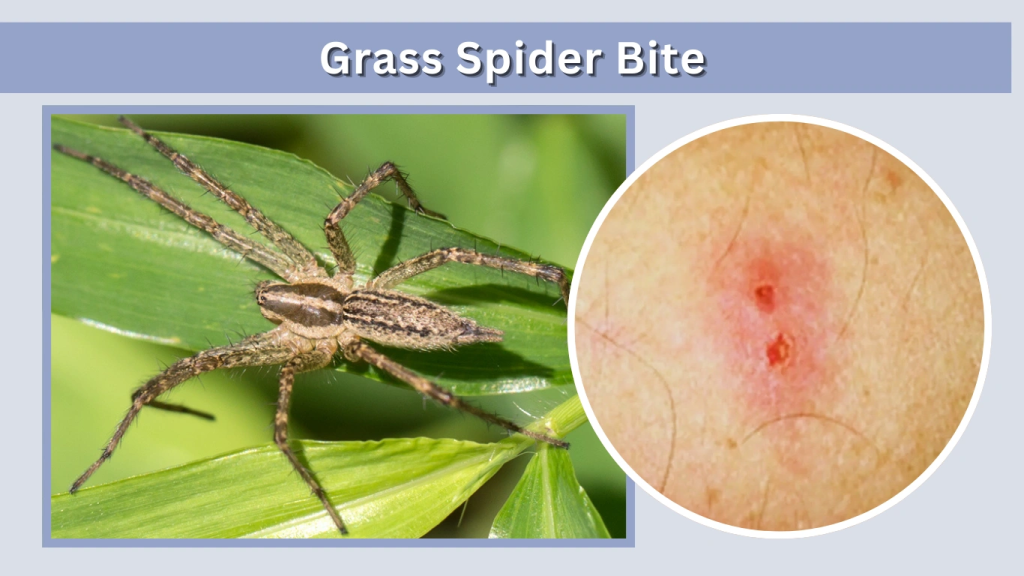
One of the most common questions people ask about grass spiders is whether they are dangerous.
Do Grass Spiders Bite Humans?
Grass spiders can bite if they feel trapped or threatened, but bites are extremely rare. These spiders are not aggressive and usually try to escape instead of biting.
Most encounters with grass spiders result in the spider quickly running away rather than attacking.
Are Grass Spiders Dangerous?
Grass spiders are not considered dangerous to humans. Their venom is designed to subdue small insects rather than affect large animals. For most people, a grass spider bite is harmless and causes only minor symptoms.
Because of their shy nature, bites are uncommon and usually occur only if the spider is accidentally pressed against the skin.
Symptoms of a Grass Spider Bite
If a bite does occur, symptoms are typically mild and may include:
- Slight redness
- Minor swelling
- Mild itching or irritation
These symptoms usually disappear within a short time without medical treatment.
What to Do If Bitten
If you suspect a spider bite, basic first aid is usually sufficient. Washing the area with soap and water and applying a cold compress can help reduce irritation. In most cases, no further treatment is necessary.
However, if unusual symptoms appear, it is always best to seek medical advice.
Grass Spider vs Wolf Spider
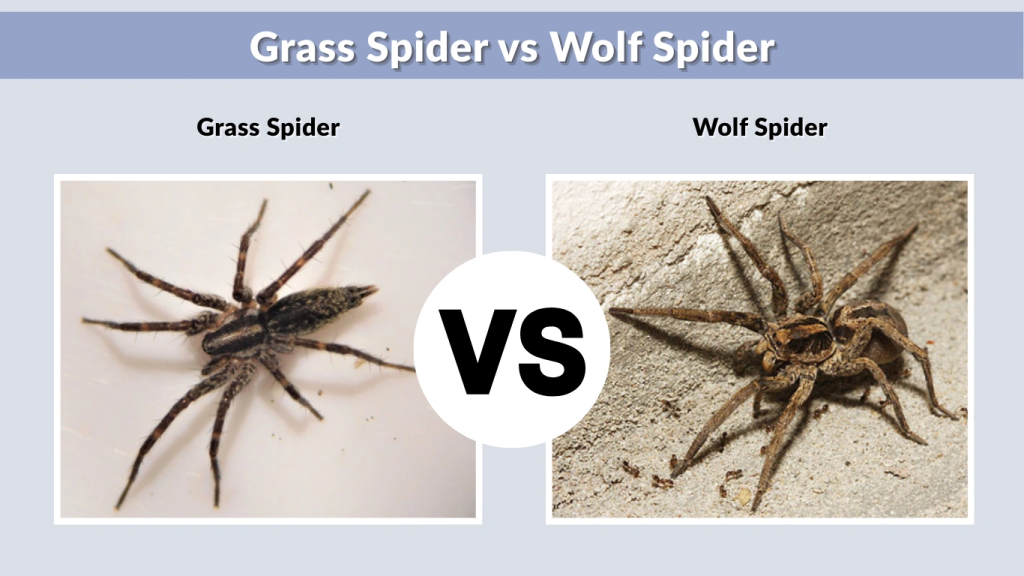
Grass spiders are often mistaken for wolf spiders because they share similar body colors and patterns. However, several differences can help distinguish between the two.
Key Physical Differences
Grass spiders typically have longer, more visible spinnerets extending from the end of the abdomen. Wolf spiders, on the other hand, have shorter spinnerets that are less noticeable.
Grass spiders also tend to have slimmer bodies compared to the more robust build of wolf spiders.
Differences in Webs
One of the biggest differences is how they hunt. Grass spiders build funnel-shaped webs and rely on them to detect prey. Wolf spiders do not build webs for hunting and instead actively chase their prey across the ground.
Behavior Comparison
Wolf spiders are active hunters that roam freely, while grass spiders usually stay close to their funnel webs. Seeing a funnel-shaped web in grass or shrubs is often a strong sign that a grass spider is nearby.
Benefits of Grass Spiders in Your Garden
Although some people are uncomfortable around spiders, grass spiders actually provide several benefits.
These spiders help control insect populations by feeding on pests such as flies, mosquitoes, and other small insects. By reducing pest numbers, they contribute to a healthier garden ecosystem.
Because they rarely bite humans and prefer outdoor environments, grass spiders are generally considered harmless and helpful neighbors in the garden.
How to Get Rid of Grass Spiders (If Necessary)
In most cases, grass spiders do not need to be removed. However, if their presence becomes bothersome, simple preventive steps can help reduce their numbers.
Natural Prevention Methods
Keeping grass trimmed and removing excess vegetation can make yards less attractive for web building. Clearing debris such as leaves, wood piles, or unused garden items can also limit hiding spots.
Home Maintenance Tips
Sealing small cracks around windows, doors, and foundations can prevent spiders from entering homes. Keeping outdoor lighting away from entrances may also reduce insect activity, which in turn discourages spiders.
Safe Spider Control Methods
If webs appear near entryways or patios, they can simply be removed using a broom or garden tool. Since grass spiders rely on their webs for hunting, removing the web usually encourages them to relocate elsewhere.
Interesting Grass Spider Facts
Grass spiders have several fascinating traits that make them unique among spiders.
They are incredibly fast runners and can quickly disappear into their funnel webs when disturbed. Their webs act as sensitive vibration detectors, allowing them to sense even the slightest movement of prey.
Most grass spiders live for about one year. During late summer or early fall, females produce egg sacs that hatch the following season, continuing the cycle.
FAQs
Are grass spiders poisonous?
Grass spiders are venomous like most spiders, but their venom is not harmful to humans.
Do grass spiders come inside houses?
They may occasionally wander indoors, but they usually prefer outdoor habitats where they can build their funnel webs.
How big do grass spiders get?
Most grass spiders have a body length between 10 and 20 millimeters, though their long legs can make them appear larger.
What attracts grass spiders?
Grass spiders are attracted to areas with tall grass, shrubs, and plenty of insects for food.