

The Green Lynx Spider is a striking, bright green predator often seen in gardens, fields, and flowering plants. Known for its agility and excellent vision, this spider doesn’t spin webs to catch prey—it hunts with speed and precision. Though it may look intimidating, it’s harmless to humans and highly beneficial for pest control. In this article, you’ll discover its behavior, bite safety, identification tips, and fascinating facts.
What is a Green Lynx Spider?

The Green Lynx Spider (Peucetia viridans) is a vibrant, agile spider species belonging to the family Oxyopidae. It’s best known for its striking green body, long spiny legs, and its sharp vision. Found predominantly in the southern United States, especially Texas, as well as in Central America and the Caribbean, it thrives in open fields, gardens, and flowering plants where prey is abundant.
This spider doesn’t rely on webs for hunting. Instead, it uses its cat-like reflexes to pounce on prey—hence the name “lynx.” With excellent camouflage among green leaves and stems, the Green Lynx Spider is both a beautiful and beneficial predator.
Besides the main species, there are related types like the:
- Western Lynx Spider (Oxyopes scalaris) – Found in dry regions of North America
- Lesser Green Lynx Spider (Peucetia longipalpis) – Native to South and Southeast Asia
- Bark Lynx Spider (Hamataliwa grisea) – Found on tree bark, camouflaged in brown
Identification Guide
Identifying a Green Lynx Spider is fairly easy due to its vivid coloration and body shape. Here are the main traits:
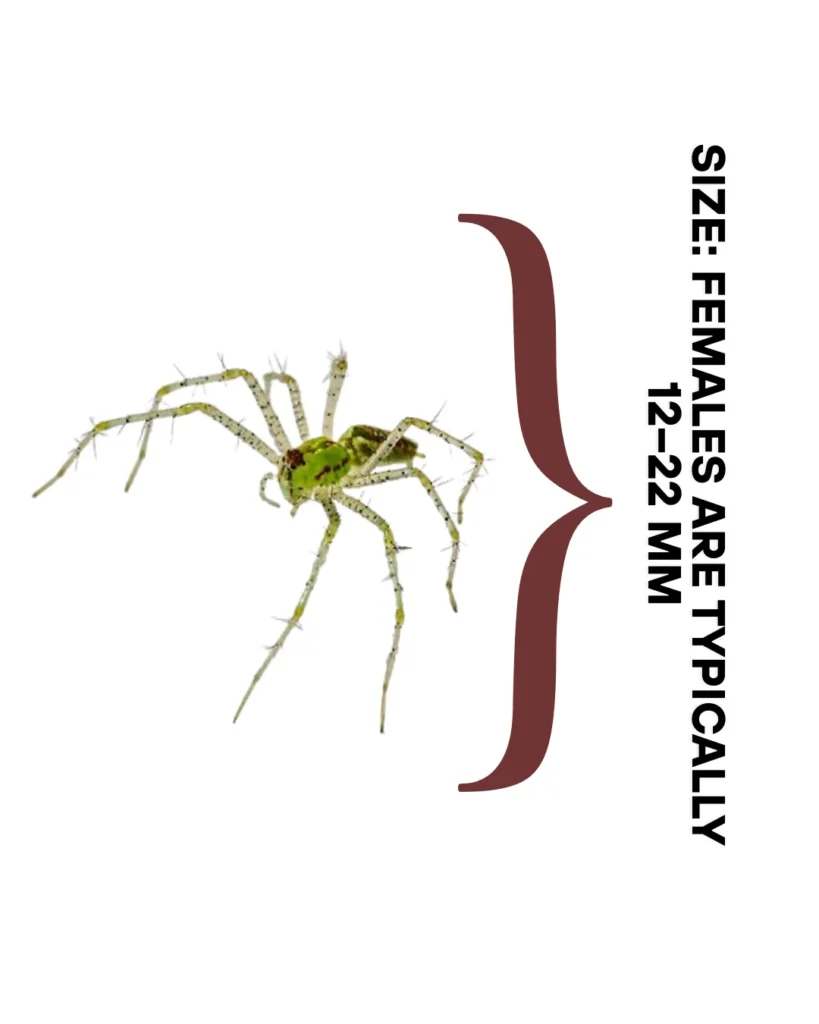
- Color: Bright green body with red spots and translucent legs covered in black spines
- Size: Females are typically 12–22 mm, males are smaller
- Eyes: 8 arranged in a hexagon pattern
- Legs: Long, fine, with many visible spines
You might also encounter baby green lynx spiders, which hatch from egg sacs guarded by the mother. These spiderlings are pale green and stay close to the sac until they are ready to disperse.
Other color variations include:
- White Lynx Spider: A rarer morph or a term used for species with pale coloration
- Lean Lynx Spider: May refer to juvenile or slender-bodied individuals
The green lynx spider egg sac is a papery white or light green sphere that the female attaches to leaves. Females are known to fiercely defend their sacs until the spiderlings emerge.
Photos and visual references (green lynx spider pictures) can help distinguish between similar-looking spiders and confirm sightings.
Are Lynx Spiders Dangerous or Venomous?

A common question is: Are green lynx spiders poisonous? The answer lies in understanding the terms:
- Venomous: Yes. The Green Lynx Spider is venomous to its prey. It uses venom to immobilize insects.
- Poisonous: No. It’s not poisonous to humans, meaning it’s not harmful if ingested or touched.
More broadly, lynx spiders are venomous, like most spiders, but their venom is designed for small arthropods. They pose no serious threat to humans. Even if bitten, there are no long-term effects or systemic symptoms like those from black widow or brown recluse spiders.
Their venom contains enzymes that help digest prey and subdue insects rapidly, making them excellent natural pest controllers.
Life Cycle and Lifespan of the Green Lynx Spider

The life cycle of the Green Lynx Spider is a fascinating process that highlights its maternal instincts and survival skills. Unlike many spiders, the female green lynx spider is highly protective of her eggs and young, making this species unique among arachnids.
Mating and Egg Laying
Mating usually takes place in the warmer months. After successful mating, the female constructs a silken egg sac, which she attaches to the underside of a leaf or stem. The green lynx spider egg sac is spherical, light green to white in color, and can contain 100 to 300 eggs.
Maternal Protection
One of the most notable behaviors is how the mother guards the egg sac. She stays nearby, fending off potential predators and ensuring the sac remains undisturbed. This protective behavior continues even after the spiderlings hatch.
Green Lynx Spider Babies
After a few weeks, the baby green lynx spiders emerge from the sac. They are pale green, tiny, and fragile. They usually stay around the egg sac for several days before dispersing into the environment to begin hunting on their own. Like adults, they don’t spin webs for food but rely on their agility to catch small prey.
Lifespan
The average lifespan of a green lynx spider is approximately one year. Most individuals die during winter if exposed to cold temperatures. In warmer climates, females may live slightly longer, especially if conditions allow them to reproduce again.
This life cycle, marked by intense parental care and fast development, allows the green lynx spider to thrive in gardens, fields, and natural environments where insects are plentiful.
Green Lynx Spider Bite on Humans: Symptoms and Safety Tips
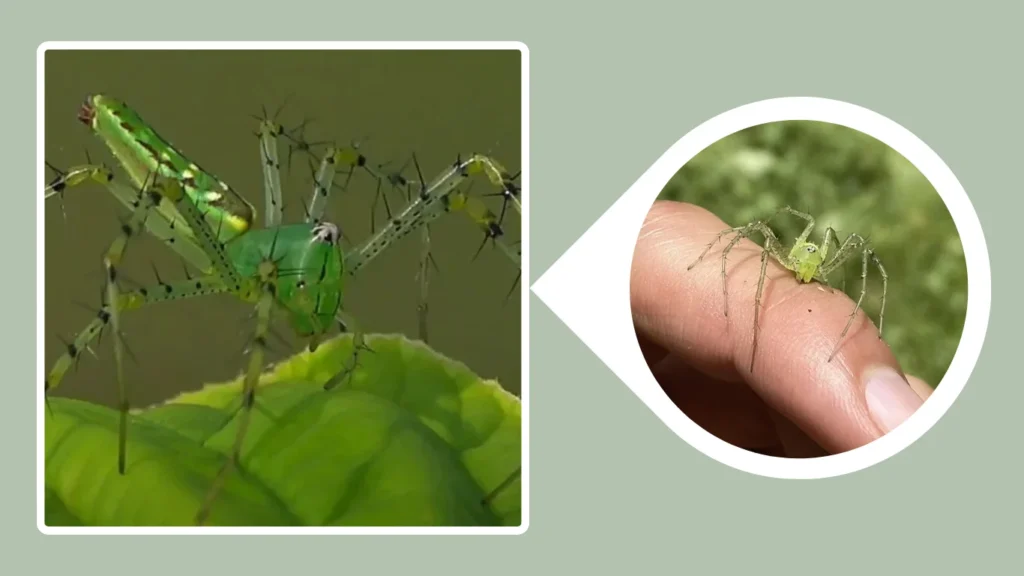
Although the Green Lynx Spider looks fierce with its long spiny legs and vivid green body, it is generally not dangerous to humans. These spiders are not aggressive and will only bite if provoked—such as when being handled roughly or when a female is guarding her egg sac.
Is the Green Lynx Spider Venomous?
Yes, the Green Lynx Spider is venomous, but only to its prey. Its venom is designed to immobilize small insects, not harm humans. Despite this, it’s not considered medically significant like the black widow or brown recluse.
What Happens If a Green Lynx Spider Bites You?
In the rare case that a bite occurs, symptoms are typically mild and localized, such as:
- A sharp stinging or burning sensation
- Redness and slight swelling around the bite site
- Occasional itchiness or tenderness
These symptoms often resolve within a few hours to a couple of days without any medical treatment.
What to Do If You’re Bitten
If bitten, you can manage the bite at home with the following steps:
- Clean the area with soap and water
- Apply a cold compress to reduce swelling
- Avoid scratching the area to prevent infection
- Monitor for unusual symptoms, especially if you have allergies
While extremely rare, if you notice signs of an allergic reaction—such as difficulty breathing, dizziness, or severe swelling—seek medical attention immediately.
Lynx Spider Diet and Hunting Behavior

The Green Lynx Spider is a skilled predator with a diet made up almost entirely of live insects. It doesn’t spin webs to catch prey like orb-weavers; instead, it actively hunts, relying on its keen eyesight, speed, and agility.
What They Eat
The typical lynx spider diet includes:
- Moths
- Flies
- Leafhoppers
- Grasshoppers
- Caterpillars
- Bees and wasps (occasionally)
This spider is often found on flowers or leaves, where prey insects are abundant. It waits motionlessly, then leaps forward with lightning speed to catch its target. Its strong legs and venom allow it to subdue prey quickly.
Green Lynx Spider Web – Myth or Fact?
Many wonder about the green lynx spider web, but in reality, this spider does not build webs to trap prey. It uses silk only for:
- Making an egg sac
- Anchoring itself during jumps
- Creating a retreat under leaves
Some confusion may come from unrelated terms like lynx spyder net mount, which refers to unrelated gear and not the spider itself.
This web-less hunting style makes lynx spiders excellent natural pest controllers, especially in gardens and crops where chemical pesticides are avoided.
Green Lynx Spider Facts
The Green Lynx Spider isn’t just biologically interesting—it also carries symbolic and cultural meaning, and its presence often surprises those who spot it.
Fascinating Facts
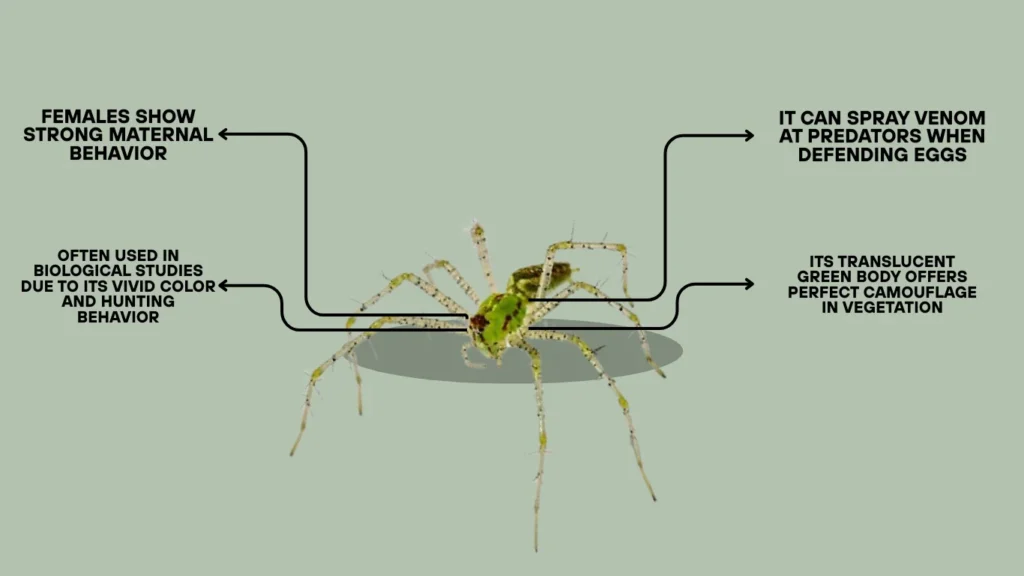
- It can spray venom at predators when defending eggs—a rare trait among spiders
- Females show strong maternal behavior, guarding eggs and young
- Its translucent green body offers perfect camouflage in vegetation
- Often used in biological studies due to its vivid color and hunting behavior
- The green lynx spider is sometimes sold by collectors or kept briefly as a pet, though it’s not common in the exotic pet trade
Spiritual Meaning
In spiritual symbolism, the lynx is associated with secrecy, vision, and stealth. Seeing a lynx spider may symbolize:
- A need to observe your surroundings carefully
- Trusting your instincts
- Being quick and agile in decision-making
While not traditionally included in folklore, some interpret the appearance of a lynx spider—especially the green one—as a message of clarity and hidden insight.