
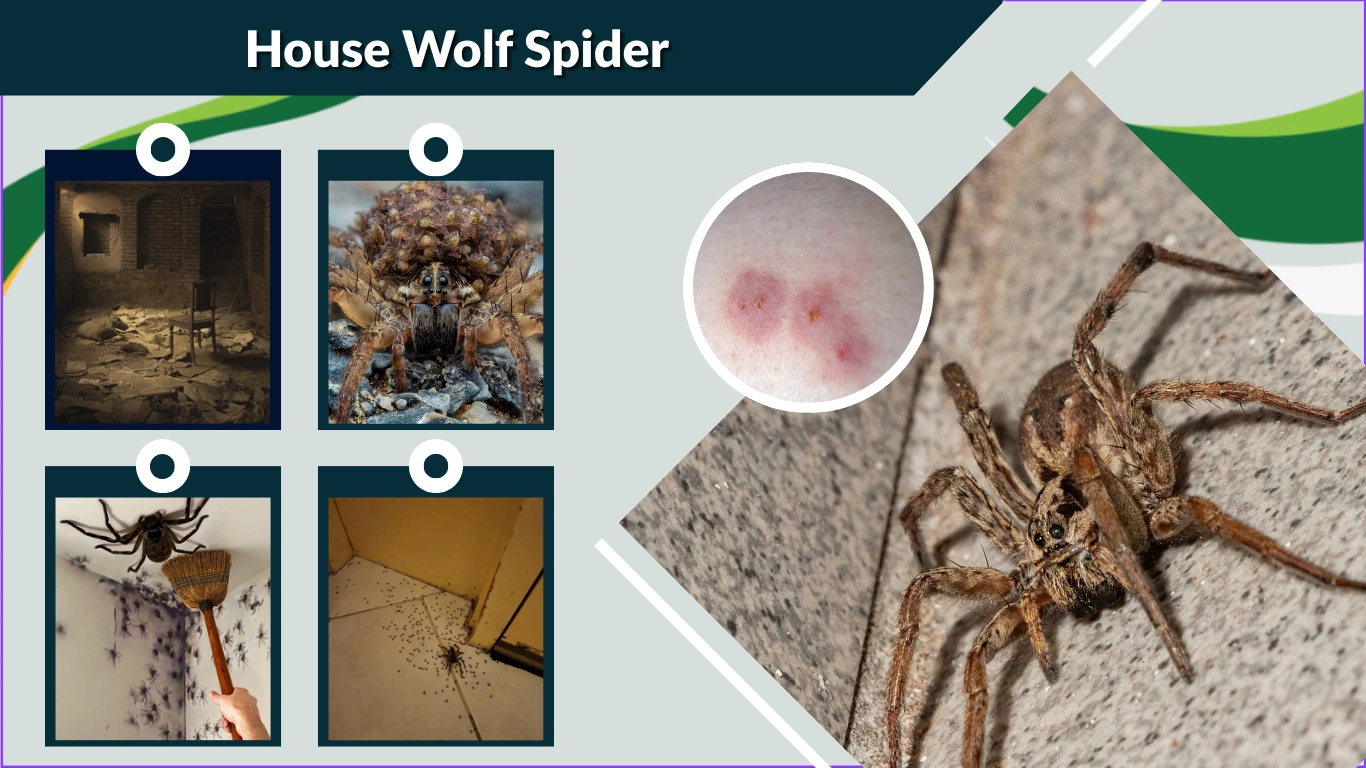
Finding a large, hairy spider inside your home can be unsettling, and many people immediately assume they are dealing with a dangerous species. Among the most common culprits are wolf spiders, often referred to as house wolf spiders when found indoors. These spiders are widely misunderstood, frequently confused with the common house spider, the giant house spider, or even the venomous brown recluse. Understanding how to identify wolf spiders, their behavior inside houses, and the actual risks they pose can help you manage encounters with confidence.
What Is a House Wolf Spider?
The term house wolf spider is used when wolf spiders wander inside homes, garages, or basements. Unlike house spiders that live in webs, wolf spiders are active hunters that roam at night looking for prey such as ants, cockroaches, and other small insects.
Wolf spiders are found worldwide, including across North America, Europe, and Australia. Indoors, they often surprise homeowners because of their large size, hairy body, and quick movements. Variations such as the black house wolf spider or brown house wolf spider are simply color differences within the species.
These spiders do not rely on webs to trap food, which makes them more visible inside human dwellings. Instead, they use their excellent eyesight and strong legs to chase and ambush prey.
Identification of House Wolf Spiders
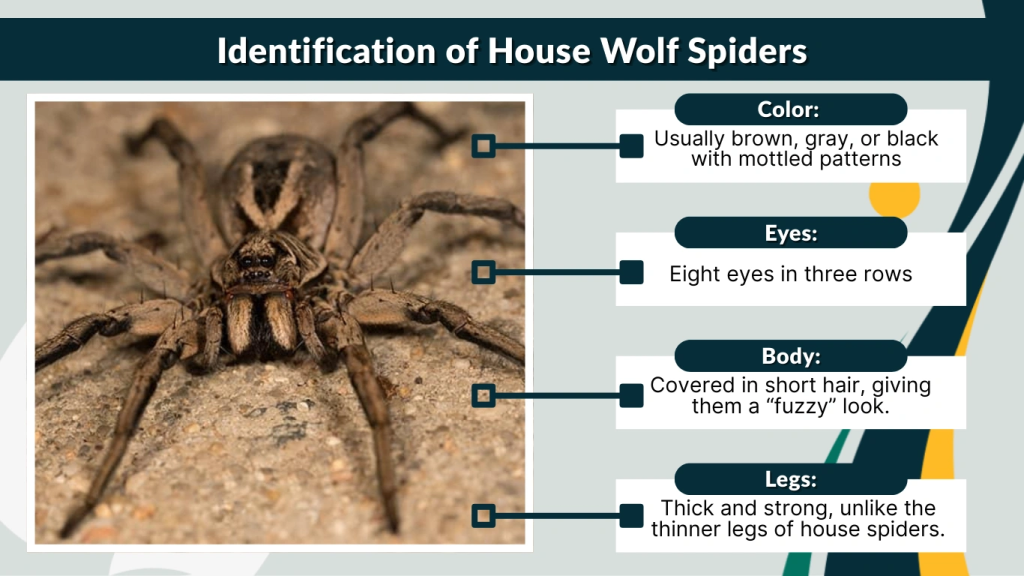
Wolf spiders are robust arachnids that can range from 0.5 to 2 inches in body length, with their legs making them appear even larger.
Key Identification Features
- Color: Usually brown, gray, or black with mottled patterns that provide camouflage.
- Eyes: Wolf spiders have eight eyes in three rows, with the middle row containing two very large forward-facing eyes that reflect light.
- Body: Covered in short hair, giving them a “fuzzy” look.
- Legs: Thick and strong, unlike the thinner legs of house spiders.
- Behavior: They run quickly across floors and walls but rarely climb to ceilings.
Babies and Young Wolf Spiders
Wolf spider mothers are unique because they carry their egg sacs attached to their abdomen. After hatching, baby wolf spiders climb onto the mother’s back and stay there until they are ready to disperse. Finding a wolf spider with dozens of tiny babies can be alarming, but it’s a normal part of their lifecycle.
Why Do Wolf Spiders Come Into Houses?
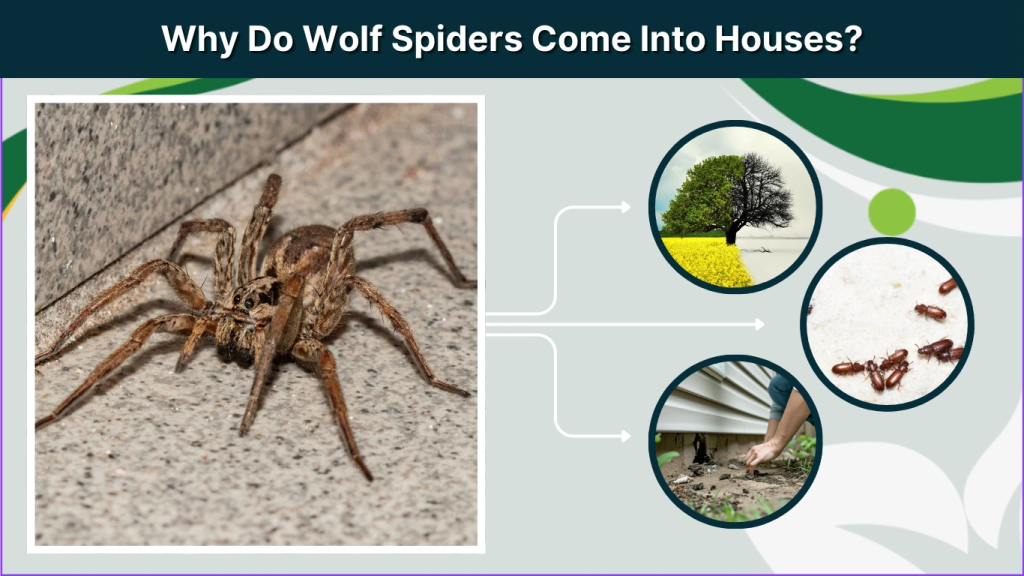
Wolf spiders are outdoor hunters by nature, but several factors can drive them inside:
- Seasonal changes: As temperatures drop in autumn, they look for warmer shelters.
- Prey availability: Homes with insect problems attract wolf spiders.
- Entry points: Gaps under doors, window cracks, and basement vents provide easy access.
- Accidental wandering: Many wolf spiders simply end up indoors while hunting at night.
If you notice a wolf spider nest in house corners or basements, it may mean a female has laid eggs nearby. However, wolf spiders are generally solitary and do not form large colonies, so an infestation is uncommon.
House Wolf Spider vs Common House Spider

Homeowners often confuse wolf spiders with common house spiders (Parasteatoda tepidariorum). While both are frequently seen indoors, their differences are significant:
| Feature | Wolf Spider | Common House Spider |
| Size | Larger (up to 2 inches) | Smaller (0.25–0.5 inch) |
| Eyes | 8 eyes, large central pair | 8 eyes, less prominent |
| Body & Legs | Thick, hairy body and legs | Slender legs, less hair |
| Web | Does not spin capture webs | Spins irregular webs to trap prey |
| Hunting Style | Active hunter, fast runner | Waits for insects to fall in web |
The common house spider is much less intimidating and rarely leaves its web, while wolf spiders move freely and actively patrol your home.
House Wolf Spider vs Giant House Spider

Another frequent confusion occurs with the giant house spider (Eratigena atrica), especially in Europe. The giant house spider is famous for its enormous leg span, sometimes exceeding 4 inches, which can make it appear even larger than most wolf spiders.
- Giant House Spider: Long, slender legs, lives in webs, extremely fast runner.
- Wolf Spider: Shorter, stockier legs, does not use webs, hunts on the ground.
While both species may cause alarm indoors, neither is considered highly dangerous to humans.
Wolf Spider vs Brown Recluse in the House
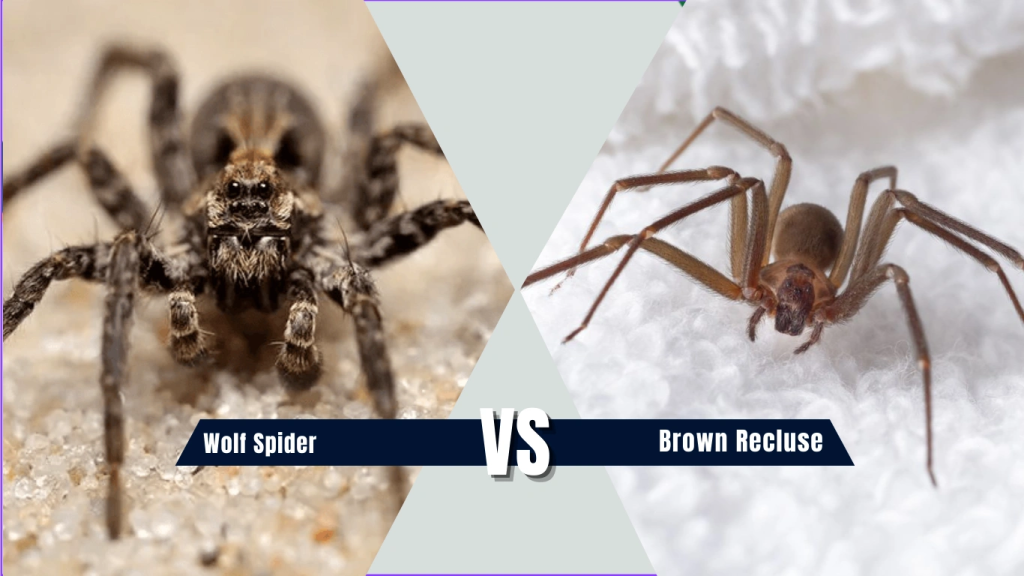
Perhaps the most concerning confusion is between wolf spiders and brown recluse spiders (Loxosceles reclusa). Brown recluse bites can cause serious necrotic wounds, while wolf spider bites are generally harmless.
Differences:
- Markings: Brown recluse has a distinctive violin-shaped marking on its back. Wolf spiders have mottled patterns, not violin shapes.
- Eye arrangement: Recluse spiders have 6 eyes in pairs, whereas wolf spiders have 8 eyes with a distinct large pair in the middle.
- Behavior: Recluse spiders are shy and often hide in clothing, while wolf spiders actively hunt.
It is important to correctly identify spiders indoors, as many people mistake harmless wolf spiders for dangerous brown recluses.
Are House Wolf Spiders Poisonous?
A common question is: “Are house wolf spiders poisonous?” The correct term is venomous, not poisonous. Wolf spiders do have venom, but it is not deadly to humans.
- Bite symptoms: Redness, swelling, mild pain, and itching.
- Severity: Symptoms usually subside within a few hours to a couple of days.
- Danger level: Not considered medically significant except for allergic reactions.
Wolf spider bites are not comparable to the dangers of brown recluse or black widow spiders. Their venom is primarily designed to subdue insects, not harm humans.
House Wolf Spider Bites

Although wolf spiders rarely bite unless threatened, encounters indoors increase the chances.
Symptoms of a Wolf Spider Bite
- Immediate sharp pain (like a bee sting)
- Localized swelling and redness
- Itching or minor rash
Treatment
- Clean the area with soap and water
- Apply ice to reduce swelling
- Use over-the-counter pain relievers if necessary
- Seek medical help only if you experience severe allergic reactions
Most bites are harmless and heal quickly, but the spider’s intimidating size often causes more panic than the bite itself.
Behavior of Wolf Spiders Inside Houses

Wolf spiders are nocturnal hunters, which means you’re more likely to spot them at night. Instead of building webs to catch prey, they rely on their speed and eyesight to stalk and chase insects. When indoors, this behavior makes them highly noticeable as they dart across floors, walls, or even furniture in search of food.
Common indoor hiding spots include:
- Dark corners of basements and attics
- Behind boxes, storage containers, and clutter
- Under sinks, bathtubs, and laundry rooms where moisture attracts insects
- Along baseboards and garage floors
Unlike social insects or web-building spiders, wolf spiders are solitary. They do not form colonies, which means a true infestation is rare. Still, the presence of multiple wolf spiders in a house often suggests that other insects are abundant and attracting them inside.
House Wolf Spider Size Variations
Wolf spiders vary significantly in size depending on species and region.
- Small house wolf spiders: Often under 1 inch in body length; less noticeable but still quick and intimidating when moving indoors.
- Large wolf spiders: Can reach 2 inches in body length, with leg spans appearing 3–4 inches across.
- Rabid wolf spider: A well-known species in the U.S. that can grow up to 1 inch, often mistaken for a recluse because of its darker coloration.
Their size can seem even larger due to their stocky, hairy legs. In many cases, homeowners report seeing a “big wolf spider in house”, which is typically a fully grown adult seeking warmth or prey.
House Wolf Spider Babies

Wolf spiders have one of the most fascinating reproductive behaviors in the arachnid world.
- Egg sacs: Female wolf spiders create a round silk sac that they carry attached to their abdomen.
- Maternal care: After the eggs hatch, dozens of tiny wolf spider babies climb onto their mother’s back and remain there for several days to weeks.
- Dispersal: Once strong enough, the spiderlings leave the mother and begin their independent lives.
Finding a mother wolf spider with babies indoors can be startling. If disturbed, the babies may scatter in all directions, creating the illusion of a spider “exploding” into many small ones. While unnerving, these babies are not dangerous and rarely survive long indoors.
How Did a Wolf Spider Get in My House?
Many homeowners wonder how such large spiders manage to sneak inside. The truth is, wolf spiders are excellent at finding entry points.
- They crawl under doors without sweeps or weather stripping.
- Gaps in window frames and basement vents serve as open doors.
- Cracks in foundations or siding allow them in during seasonal changes.
Wolf spiders often end up indoors by accident while chasing prey. If your home has insects like crickets, moths, or ants, you are more likely to encounter wolf spiders.
Wolf Spider Infestation in House

Although wolf spiders don’t live in colonies, multiple sightings may feel like an infestation.
Signs of a wolf spider problem include:
- Frequent sightings of large spiders on floors or walls
- Increased presence of baby wolf spiders after an egg sac hatches
- A steady population indoors during cooler months
In reality, a “wolf spider infestation” usually points to another underlying issue: a steady food source of insects. Addressing the insect problem often reduces wolf spider numbers naturally.
House Wolf Spider Control and Prevention
Wolf spiders can be beneficial since they eat many household pests, but most people prefer to keep them outside.
Safe Removal
- Use a jar or cup with a stiff piece of paper to capture and release them outside.
- Avoid squashing, as it can release baby spiderlings if the female is carrying them.
Preventing Entry
- Seal cracks in walls, foundations, and window frames.
- Install door sweeps and repair damaged screens.
- Keep storage areas tidy and reduce clutter that provides hiding spots.
- Control insect populations indoors to eliminate their food source.
Professional Pest Control
If wolf spiders are appearing in large numbers or causing significant distress, a professional pest control service can apply treatments that reduce both insects and spiders.
Common Myths and Misconceptions
Wolf spiders are often misunderstood, leading to unnecessary fear.
- Myth: Wolf spiders are aggressive.
In truth, wolf spiders prefer to escape rather than fight. They bite only when directly handled or trapped. - Myth: Wolf spiders are deadly.
Their venom is not dangerous to humans. While bites can hurt, they are not comparable to brown recluse or black widow spiders. - Myth: A wolf spider indoors means an infestation.
Most wolf spiders wander in by accident. Even if you see several, they are not colony-living spiders. - Myth: All large, dark spiders are wolf spiders.
Many homeowners misidentify giant house spiders or even harmless fishing spiders as wolf spiders. Proper eye and body identification is essential.
FAQs
What attracts wolf spiders into the house?
Wolf spiders usually enter homes searching for food, warmth, or shelter. If your house has an abundance of insects such as ants, moths, or cockroaches, wolf spiders are more likely to follow. Seasonal changes, like colder weather, also drive them indoors through small gaps in windows, doors, and foundations.
Are house wolf spiders dangerous to humans?
House wolf spiders are not considered dangerous. While they are venomous, their venom is designed to subdue insects, not people. A bite can cause mild pain, swelling, and redness, but it rarely requires medical treatment. Severe reactions are uncommon and usually only happen in individuals with specific allergies.
How can I tell the difference between a wolf spider and a brown recluse?
Wolf spiders are hairy with robust bodies and have eight eyes arranged in three rows, including two large central eyes that shine in light. Brown recluse spiders, on the other hand, are smoother, smaller, and have only six eyes arranged in pairs. Recluse spiders also have a distinctive violin-shaped marking.
Do wolf spiders build nests in houses?
Wolf spiders do not build typical nests or webs inside homes. Instead, they may hide in dark corners, basements, or under furniture while hunting for prey. Female wolf spiders sometimes carry egg sacs indoors, and after hatching, baby spiders may briefly stay with the mother before dispersing independently.
What is the best way to get rid of wolf spiders indoors?
The most effective approach is prevention. Seal entry points like cracks, windows, and door gaps, and reduce clutter where spiders may hide. Controlling other household insects naturally discourages wolf spiders. If you find one indoors, gently trap it with a jar and release it outside rather than killing it.