

Garden spiders are among the most striking arachnids found in gardens, fields, and forests worldwide. Their size, coloration, and web-building habits often make them stand out, especially during late summer when they reach full maturity. While most garden spiders are harmless, their large size and bold colors—like yellow, black, brown, or orange—often capture attention and spark curiosity. Understanding how big these spiders can get depends on their species, gender, and living environment.
Average Size of a Garden Spider

The average garden spider measures between 0.5 to 1 inch (12–25 mm) in body length, with a total leg span of up to 3 inches (about 7.5 cm). Female garden spiders are noticeably larger than males, often doubling their size. Their large, rounded abdomens and long legs contribute to their dramatic appearance, especially when suspended in the center of their webs.
Male spiders, on the other hand, are smaller and more slender, rarely exceeding 0.4 inches (10 mm). This size difference plays an important role in reproduction since females require more body mass to produce and protect their eggs. The large size of garden spiders is not a sign of danger—they are non-aggressive and beneficial for pest control.
How Big Can a Garden Spider Get?
Under ideal conditions, some female garden spiders can reach up to 1.1 inches (28 mm) in body length, with leg spans stretching beyond 3 inches (8 cm). The largest species, especially those living in warmer climates like Texas or Florida, grow faster and achieve greater body mass due to an abundance of prey and favorable temperatures.
Spiders that experience consistent access to food sources such as flies, moths, and beetles tend to grow larger. Conversely, those living in cooler regions like the UK or northern Europe remain smaller, often limited by shorter feeding seasons.
Big Yellow Garden Spider
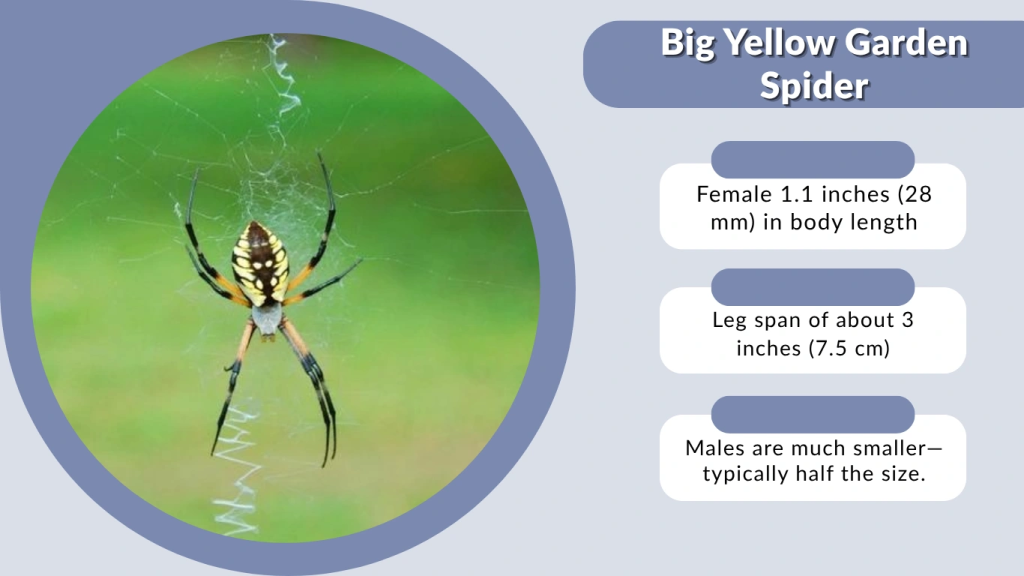
The yellow garden spider (Argiope aurantia) is one of the most recognized species in North America. Known for its bold black and yellow body pattern, it’s often called the black and yellow garden spider or writing spider because of the zigzag silk (stabilimentum) in its web.
Female yellow garden spiders can grow up to 1.1 inches (28 mm) in body length, with a leg span of about 3 inches (7.5 cm). Males are much smaller—typically half the size. In Texas and Florida, where the climate stays warm most of the year, these spiders reach their largest sizes due to year-round feeding.
Despite their intimidating look, yellow garden spiders are completely harmless. They use their size primarily for protection and to support large egg sacs containing hundreds of offspring.
Big Black and Yellow Garden Spider
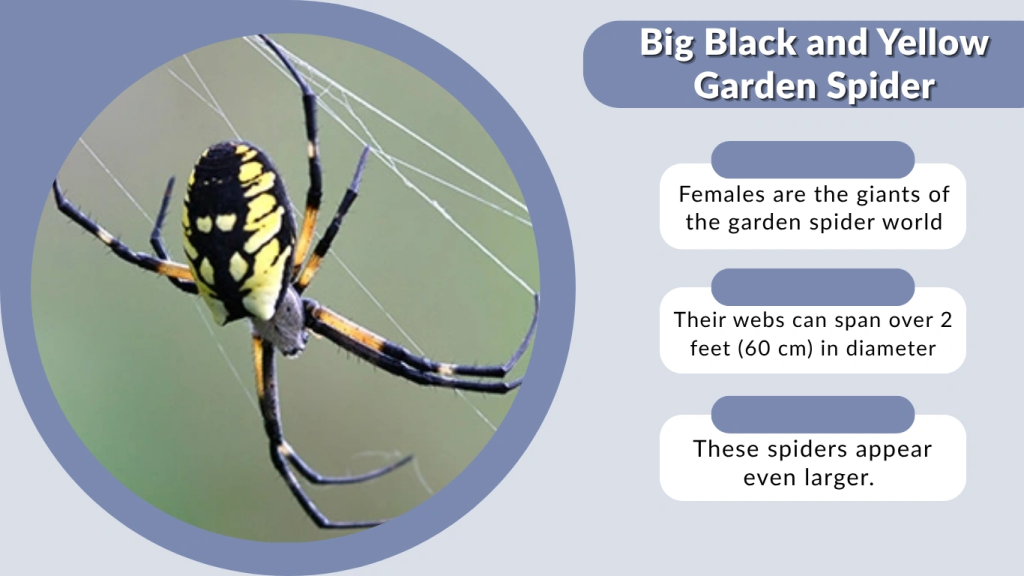
The big black and yellow garden spider, often another name for Argiope aurantia or Argiope bruennichi, is famous for its vivid markings and large web structures. Females are the giants of the garden spider world, with thick legs banded in black and yellow and a rounded abdomen that can appear swollen before laying eggs.
Their webs can span over 2 feet (60 cm) in diameter, often catching the sunlight, which makes these spiders appear even larger. In gardens, they are helpful predators that consume mosquitoes, flies, and small insects, maintaining ecological balance while decorating yards with their intricate webs.
Big Brown Garden Spider
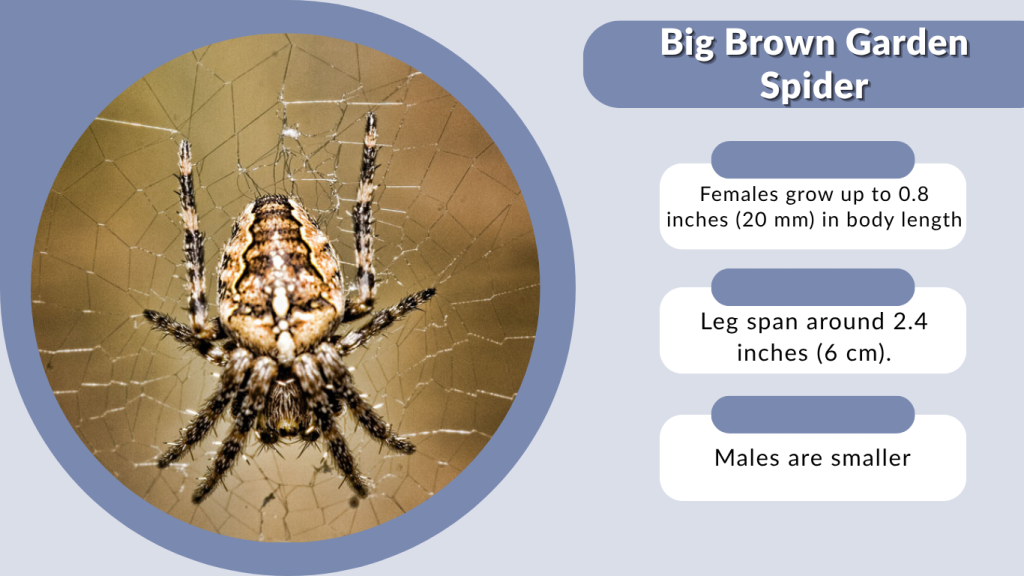
The big brown garden spider usually refers to the European garden spider (Araneus diadematus), also called the cross orb-weaver because of the white cross-shaped markings on its abdomen. These spiders are common across Europe and the UK, especially in late summer when they reach adulthood.
Females grow up to 0.8 inches (20 mm) in body length, with a leg span around 2.4 inches (6 cm). Males are smaller but more mobile, often seen wandering in search of mates. Their coloration ranges from light tan to dark brown, and some appear reddish depending on temperature and lighting. Despite their name, big brown garden spiders are gentle creatures that rarely bite and pose no threat to humans.
Big Black Garden Spider
In the UK and northern regions, people often encounter the big black garden spider, a term commonly referring to Zygiella x-notata or dark-colored Araneus species. These spiders can appear nearly black, especially when mature, with subtle patterns that blend into shadows.
They are medium to large in size, with females averaging 0.6 inches (15 mm) and males smaller. Their dark color helps them absorb warmth from sunlight, aiding survival in cooler climates. The big black garden spider in the UK is frequently found around window frames, fences, and garden furniture, where they spin asymmetrical orb webs to trap flying insects.
Color Variations and Regional Differences
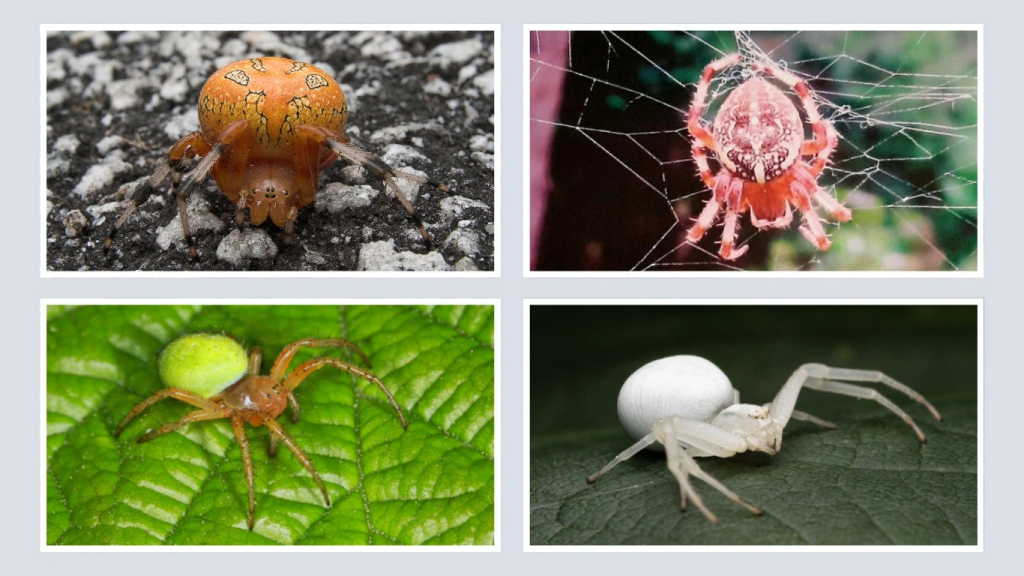
Garden spiders display remarkable color variation based on species, genetics, and habitat. Some are bright orange or red, while others are green, white, or brown. This diversity helps them camouflage against flowers, leaves, or wooden structures.
- Big orange garden spiders are often female orb-weavers nearing egg-laying season, when their abdomens enlarge.
- Big red garden spiders may appear in late summer, especially under warm sunlight that enhances pigmentation.
- Big green garden spiders are younger orb-weavers or species like Araniella cucurbitina, known for their bright green bodies.
- Big white garden spiders are usually pale morphs or spiders covered in silk residue from their webs.
These variations prove how adaptable and visually diverse garden spiders are across the world, from the UK to tropical regions like Hawaii and southern U.S. states.
Big Garden Spider in the UK
The big garden spider in the UK, often the European garden spider (Araneus diadematus), is one of Britain’s most iconic arachnids. Fully grown females can reach about 0.8 inches (20 mm) in body length, while males are half that size. Including their legs, they span up to 2.5 inches (6–6.5 cm). These spiders are most noticeable from August to October, when they reach maturity and construct large, symmetrical orb webs across garden plants and fences.
Their impressive size during this period is due to increased feeding before the winter months. As autumn approaches, females develop swollen abdomens filled with eggs, which makes them appear even larger. Despite their intimidating look, they are completely harmless and play an essential role in controlling flying insects like mosquitoes and gnats.
Garden Spider Body Features
Garden spiders have a distinct appearance that contributes to their “big” look. Their large abdomen, sometimes called the “big bum,” stores nutrients and develops eggs. The abdomen may have bold markings or cross-like patterns depending on the species. Their eight long, spindly legs enhance their size visually, especially when spread out on their webs.
The big eyes of a garden spider are actually a set of eight small eyes arranged in rows. They are more sensitive to movement than detail, which helps detect vibrations in their webs. The head and thorax (combined into the cephalothorax) are smaller and covered with fine hair, giving them tactile awareness of their surroundings. Overall, their anatomy is designed for efficiency—catching prey, spinning silk, and surviving predators.
How Big Are Male vs. Female Garden Spiders?
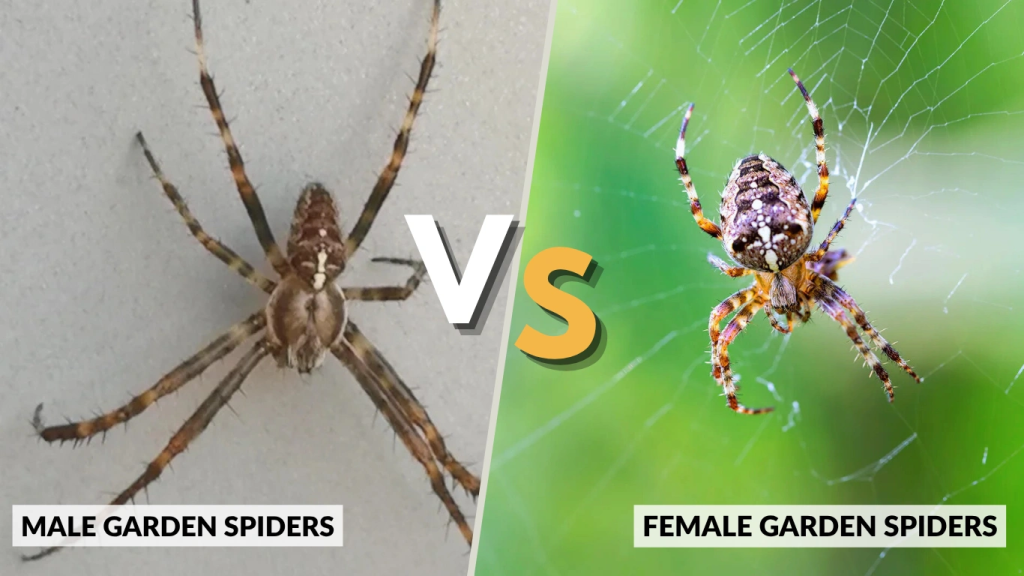
Female garden spiders are always larger and heavier than males. The average female can grow up to twice the body size of a male, mainly because she must produce and carry hundreds of eggs. This size also allows her to spin large, strong webs capable of trapping multiple insects at once.
Males, however, are smaller and more agile, enabling them to wander in search of mates. Once they locate a female, they often risk being mistaken for prey, as the size difference is extreme. After mating, males usually die or are consumed by the female, marking the end of their short adult phase. This natural difference ensures energy efficiency and reproductive success across generations.
Regional Size Comparisons
Big Garden Spiders in Florida and Texas
In Florida and Texas, garden spiders grow larger due to the year-round warmth and steady food supply. The yellow garden spider (Argiope aurantia) and banded garden spider (Argiope trifasciata) dominate these regions. Females here can reach 1.1 inches (28 mm) in body length, among the largest of all orb-weavers. Their leg spans often exceed 3 inches (7.5 cm), making them impressive garden residents.
The humid climate also supports faster growth, allowing them to complete their development sooner and reach full size earlier in the year. Their bold colors—especially yellow, black, and silver—stand out vividly against green vegetation, making them both beautiful and functional hunters.
Big Garden Spiders in Virginia
Virginia’s temperate climate supports similar species, though slightly smaller in size than those in southern states. Females typically grow up to 0.9 inches (23 mm). These spiders thrive from late summer to early autumn, when insect activity peaks. Their webs can span up to two feet (60 cm), often found between tall plants or porch corners. Their size and distinctive striped legs often alarm homeowners, but they are gentle, beneficial predators.
Big Black Garden Spider in the UK
The big black garden spider seen in the UK is often Zygiella x-notata, also known as the missing sector orb-weaver. Its body length ranges between 0.4–0.6 inches (10–15 mm), and it builds partial orb webs on window frames or garden posts. Although smaller than its yellow or brown cousins, its dark color and web placement make it appear larger, especially at night. These spiders remain active longer into the year, often seen in autumn evenings catching insects drawn to house lights.
Common Misunderstandings About Big Garden Spiders
Many people assume that big garden spiders are dangerous or venomous, but they are not harmful to humans. Their venom is mild and used only to subdue small insects. Bites are extremely rare and usually occur only when a spider is trapped against skin.
Another common misunderstanding is that size equals aggression. In reality, larger garden spiders are shy and retreat when disturbed. Their size increase is a sign of good health and abundant food, not aggression.
Lastly, some believe that big garden spiders live for many years. However, most only live for about one year, dying after laying eggs. The appearance of “the same big spider” every summer actually represents new generations returning to the same habitat.
Why Garden Spiders Get So Big
Several natural factors explain their large size:
- Climate: Warm and humid environments accelerate growth.
- Diet: A steady supply of insects allows for larger body mass.
- Sex: Females grow larger to reproduce efficiently.
- Species variation: Some types, like the yellow or banded garden spider, are genetically predisposed to greater size.
These conditions combined make garden spiders among the most impressive and visible arachnids in residential areas.
FAQs
How big can a garden spider get?
A fully grown female garden spider can reach 1.1 inches (28 mm) in body length and up to 3 inches (7.5 cm) in total leg span. Males are smaller, usually around half this size. Their overall size depends on climate, food, and species.
How big is a yellow garden spider?
The yellow garden spider is one of the largest, with females reaching up to 1 inch (25 mm) in body length. Their long legs make them appear even bigger, especially in warm states like Texas and Florida, where they grow to maximum size.
Why are some garden spiders black and yellow?
The black and yellow coloration helps with both camouflage and predator deterrence. It’s most common in Argiope aurantia, the black and yellow garden spider, whose patterns mimic warning colors in nature but are completely harmless to humans.
Are big garden spiders dangerous?
No, garden spiders are non-aggressive and harmless. They rarely bite and only do so when provoked. Their venom is weak and poses no danger to humans or pets. Instead, they serve as natural pest controllers in gardens.
Do garden spiders get bigger in warm climates?
Yes, warmth directly affects their growth. In regions like Florida, Texas, and Hawaii, garden spiders grow larger due to a constant supply of insects and extended breeding seasons, allowing them to live longer and reach full size.