

Black widow spiders are infamous for their venom and striking appearance—but how long do they actually live? Their lifespan varies by gender, species, and environment. While females can live for years, males often survive just a few months. In this guide, you’ll learn how long each type lives, what affects their lifespan, and which ones live the longest.
What Are Black Widow Spiders?
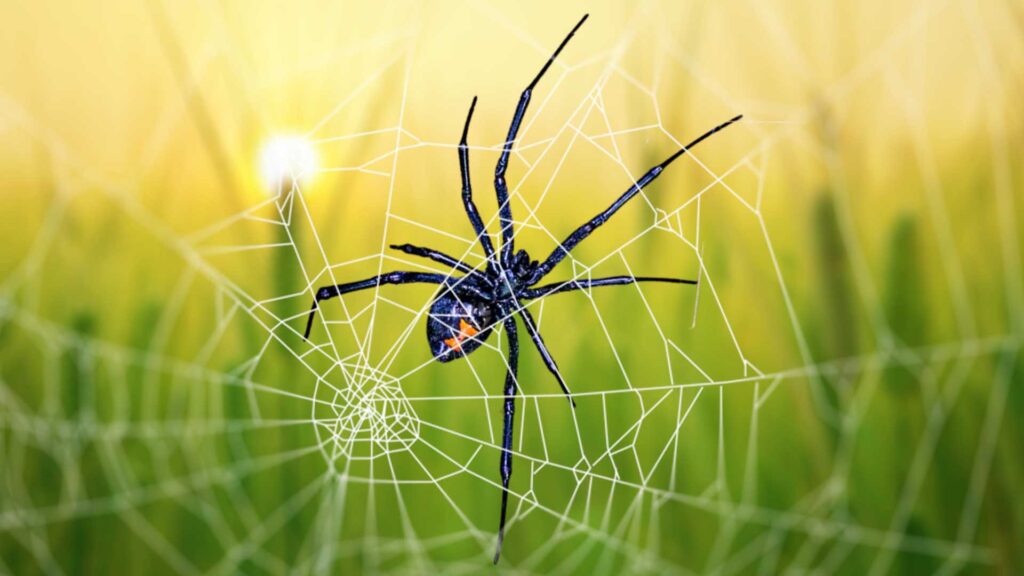
Black widow spiders belong to the Latrodectus genus and are known for their glossy black bodies and the iconic red hourglass marking on the underside of the abdomen. These spiders are found across the United States and many other parts of the world. Although feared for their venom, they are generally shy and prefer to stay hidden in dark, undisturbed areas.
Life Cycle of a Black Widow Spider

Black widow spiders go through a complete development cycle, moving through several stages before reaching adulthood. Each stage contributes to their overall lifespan, and the duration of each can vary depending on environmental conditions like temperature and food supply.
Life Stages
- Egg:
A female black widow lays hundreds of eggs at a time in a silken sac. The incubation period lasts about 20 to 30 days. - Spiderling:
Once hatched, spiderlings remain in or near the egg sac for a short period, then disperse. At this stage, cannibalism is common, and only a few will survive. This phase can last several weeks. - Juvenile:
Spiderlings molt multiple times (up to 9 molts for females) before becoming adults. The juvenile stage can last 2 to 4 months, depending on species and food availability. - Adult:
Males reach adulthood faster, often in a few months. Females take longer and may live for years after becoming fully mature.
Average Lifespan of Black Widow Spiders

Not all black widow spiders live the same amount of time. Several factors—like gender, species, and living conditions—play a major role in how long they survive.
Female vs Male Lifespan
- Females:
Female black widows generally live between 1.5 to 3 years. In captivity, with stable food and no predators, some can live up to 4 years. - Males:
Males have much shorter lives. After reaching maturity (which happens in just a couple of months), most die shortly after mating. Their total lifespan rarely exceeds 4 months.
Why Do Females Live Longer?
- Females invest more in reproduction over time and do not die immediately after mating.
- Males, on the other hand, often face death soon after mating, either from natural decline or being eaten (though cannibalism is rarer than believed).
This significant gap in lifespan makes female black widows the longest-living members of the species.
Species-Wise Lifespan Comparison
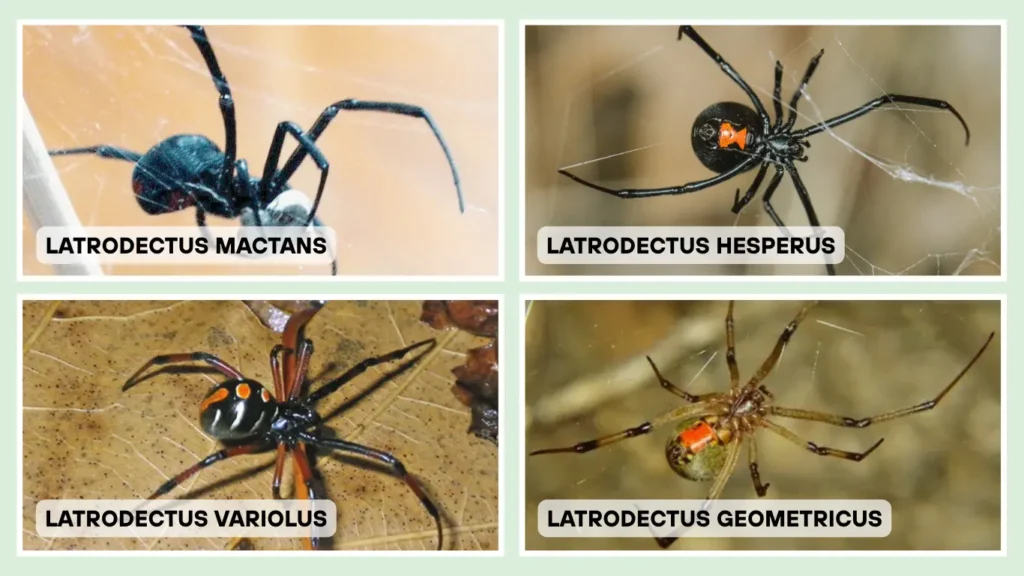
Different black widow species have slightly different lifespans due to variations in habitat, climate, and behavior. While all share similar life cycles, the average lifespan can differ across regions and species types.
Lifespan by Species Table
| Species | Female Lifespan | Male Lifespan | Key Notes |
| Latrodectus mactans | 1.5 – 3 years | 2 – 3 months | Known as the Southern Black Widow; common in southeastern U.S. |
| Latrodectus hesperus | 1 – 3 years | ~2 months | Western Black Widow; found in western North America |
| Latrodectus variolus | 1.5 – 2 years | ~3 months | Northern Black Widow; less aggressive, mostly in northeastern U.S. |
| Latrodectus geometricus | 1 – 2 years | 1 – 2 months | Brown Widow; less venomous, found in warmer global regions |
Which Type Lives Longest?
Among the listed species, female Latrodectus mactans (Southern Black Widow) tends to have the longest lifespan in both wild and captive conditions. Males across all species generally live short lives, typically just long enough to mature and reproduce.
What Affects Their Lifespan?
The lifespan of black widow spiders isn’t fixed—it depends on multiple environmental and biological factors. Both external conditions and internal biological traits play a role in how long they live.
Environmental Factors
- Temperature: Warmer climates can accelerate development, while colder conditions may extend juvenile stages and overall lifespan.
- Humidity: Low humidity can increase mortality in spiderlings, while stable moisture levels support healthy development.
- Threats and Predators: In the wild, birds, wasps, and other spiders can reduce their survival chances.
Diet and Food Availability
- A steady food supply increases lifespan. Insects like flies, beetles, and ants are common prey.
- Starvation or inconsistent food availability can delay development or cause early death.
Captivity vs Wild
- In captivity: With controlled temperature, no predators, and regular feeding, females can live up to 4 years.
- In the wild: Lifespan is shorter due to environmental stress, lack of food, and risk of being killed.
Do Black Widow Spiders Die After Mating?
What Happens to Males After Mating?
Males typically die soon after mating—either from exhaustion, natural causes, or sometimes being eaten by the female. However, sexual cannibalism is not guaranteed; many males simply die shortly after reproduction due to their short biological lifespan.
What About Females?
Unlike males, female black widows do not die after mating. In fact, they may live another 1–2 years and can mate multiple times throughout their life, storing sperm to fertilize several batches of eggs.
This reproductive difference contributes significantly to the longer average lifespan of females.
FAQs
Do all black widow species live the same lifespan?
No, lifespans vary slightly between species due to environmental and genetic differences. For example, Latrodectus mactans often lives longer than Latrodectus geometricus.
Why do male black widows live such short lives?
Males mature faster, focus solely on reproduction, and often die shortly after mating due to biological design—not just cannibalism.
Can black widows live longer in captivity?
Yes, especially females. With stable conditions, no predators, and regular food, they can live up to 4 years.
Do black widow females die after laying eggs?
No, females continue to live and may lay multiple egg sacs during their lifetime.
How can I tell if a black widow spider is old?
Look for sluggish movement, faded coloration, and reduced feeding or web-spinning behavior.