

Tarantulas are among the most fascinating arachnids, known for their impressive size and surprisingly long lifespans. Unlike many spiders that live only a year or two, tarantulas can thrive for decades under the right conditions. Lifespan varies significantly between males and females, across species, and depending on whether they live in the wild or captivity. Understanding these differences helps owners set realistic expectations and provide better care.
Tarantula Lifespan at a Glance
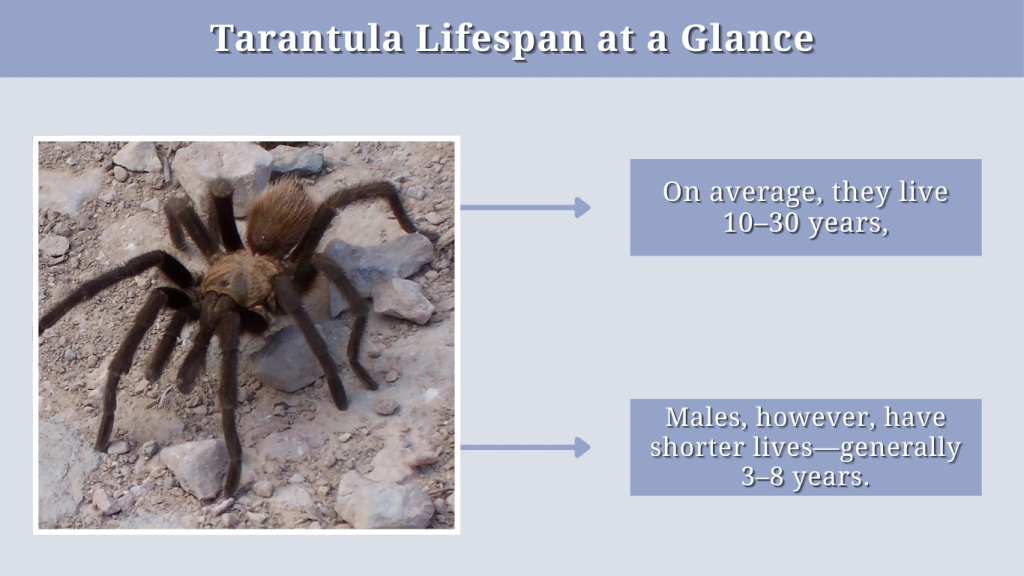
Female tarantulas are the true long-livers of the arachnid world. On average, they live 10–30 years, with some species surpassing that under excellent care. Males, however, have shorter lives—generally 3–8 years. The main difference comes after their final molt: males become sexually mature, focus on mating, and usually die within one to two years afterward.
In captivity, tarantulas tend to outlive their wild counterparts. Stable temperatures, consistent feeding, and freedom from predators give them a strong survival advantage.
Why Female Tarantulas Outlive Males
Sexual biology plays the biggest role in lifespan differences. Females continue molting periodically, which refreshes their bodies and extends life. Males, however, experience an ultimate molt, after which they reach maturity. This stage marks a ticking clock: males often stop molting, roam in search of mates, and face higher risks from predators or exhaustion. Even in captivity, this pattern remains, limiting their years after maturity.
Captivity vs Wild
Tarantulas in the wild face natural dangers like predation, drought, and parasites. Lifespans are typically shorter because of these stressors. In captivity, with controlled humidity, proper enclosures, and reliable feeding schedules, they regularly reach the upper end of their potential. That’s why many pet owners report female tarantulas lasting decades.
Species-by-Species Lifespan Guide
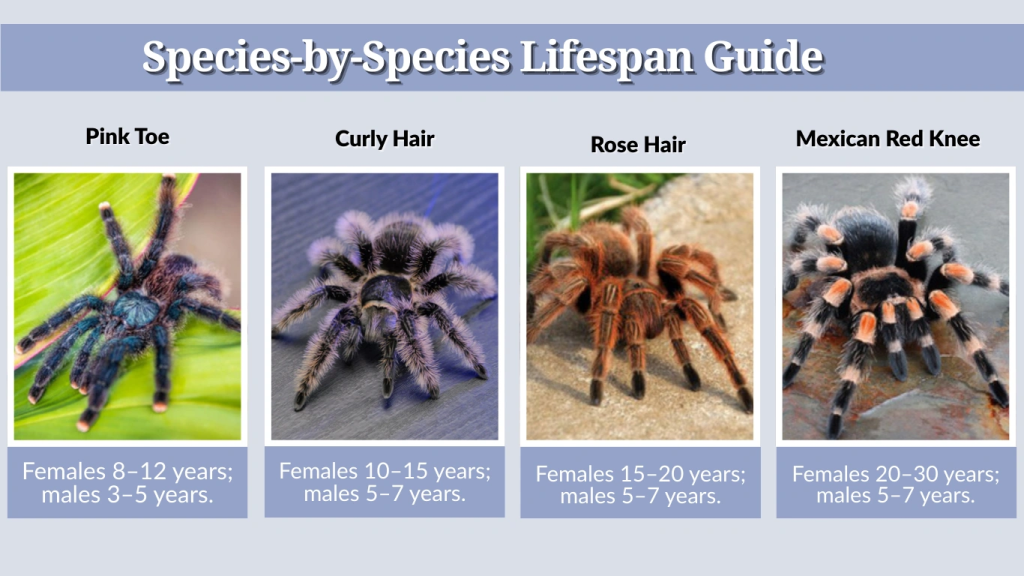
Different tarantula species show unique longevity ranges. Here are some common examples:
- Pink Toe (Avicularia & Avicularia versicolor): Females 8–12 years; males 3–5 years.
- Curly Hair (Tliltocatl albopilosus): Females 10–15 years; males 5–7 years.
- Rose Hair / Chilean Rose (Grammostola rosea/porteri): Females 15–20 years; males 5–7 years.
- Mexican Red Knee (Brachypelma hamorii/smithi): Females 20–30 years; males 5–7 years.
- Brazilian Black (Grammostola pulchra): Females 20–30 years; males 6–8 years.
- Green Bottle Blue (Chromatopelma cyaneopubescens): Females 10–15 years; males 4–6 years.
- Texas Brown / Arizona Blonde / Desert Blonde (Aphonopelma spp.): Females 15–25 years; males 5–8 years.
- Costa Rican Zebra (Aphonopelma seemanni): Females 10–15 years; males 4–6 years.
- Cobalt Blue (Cyriopagopus lividus): Females 12–15 years; males 4–5 years.
- Orange Baboon (Pterinochilus murinus): Females 10–15 years; males 4–6 years.
- Goliath Birdeater (Theraphosa spp.): Females 15–25 years; males 3–6 years.
These figures highlight how care, species, and sex influence longevity. While all tarantulas live longer than most spiders, the gap between species can be dramatic.
Factors That Affect Longevity

Several conditions influence how long tarantulas live, whether in the wild or as pets:
- Diet: Steady feeding with appropriate insects supports growth and health.
- Environment: Correct humidity and temperature help avoid stress.
- Enclosure Safety: Falls and poor ventilation can shorten lifespans.
- Handling: Minimizing stress by limiting handling extends life expectancy.
- Molting Success: Stuck molts or dehydration often prove fatal.
Molting and Lifespan
Molting is central to a tarantula’s life. Young spiders molt frequently, while adults molt less often. For females, each molt can refresh their system and prolong life. For males, the ultimate molt signals adulthood and an approaching decline. Molting problems—such as incomplete sheds—are a major threat to longevity, emphasizing the importance of proper humidity and hydration.
How Long Can Tarantulas Go Without Food?

Tarantulas are surprisingly resilient when it comes to food. Healthy adults can survive weeks, and sometimes months, without eating. This is especially common before a molt, when they refuse prey altogether. However, water is far more critical. Dehydration quickly becomes life-threatening, so keepers should always provide a clean water dish and watch for signs of shriveling or weakness. As long as hydration is maintained, fasting is normal and rarely a cause for alarm.
Deep-Dive: Gooty Sapphire Tarantula (Poecilotheria metallica)
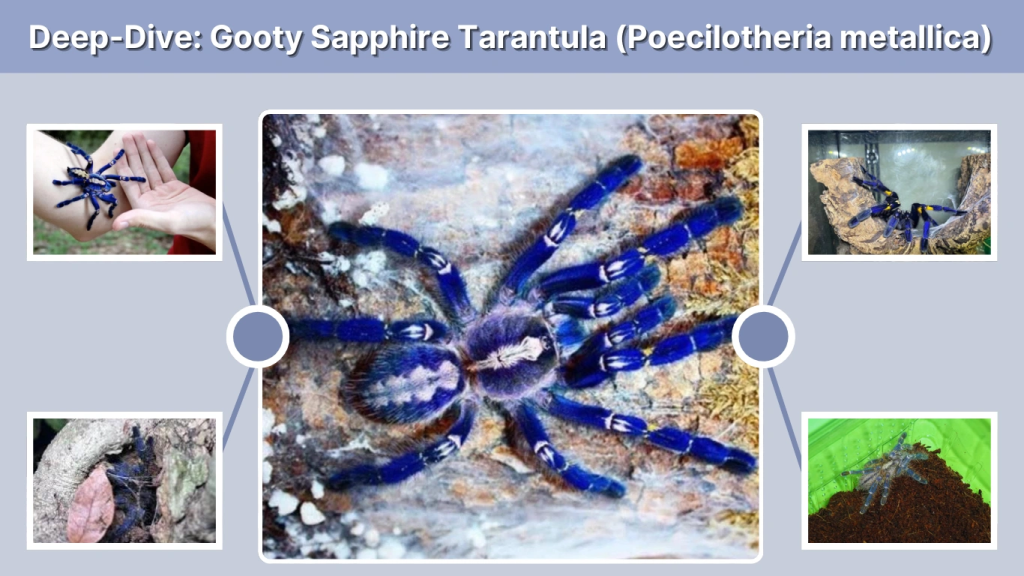
Overview & Conservation
The Gooty sapphire tarantula is one of the most visually stunning spiders, with electric blue coloration. Native to a small forest reserve in India, it is classified as critically endangered due to habitat loss and limited range. Because of this, captive breeding is the only ethical source for enthusiasts. Any wild-caught trade poses a serious conservation risk, making awareness essential for responsible keepers.
Lifespan & Maturity
Like many tarantulas, females live longer than males. A female Gooty sapphire typically reaches 12–15 years, while males average 3–5 years. They grow fairly quickly compared to some New World species, reaching maturity within a few years. Once males mature, their lifespan shortens dramatically as their focus shifts toward breeding.
Temperament & Handling
This arboreal species is both fast and defensive. While their venom is not known to be deadly, bites can be extremely painful and medically significant. Claims that they could “kill a dog” are exaggerated. Handling is strongly discouraged—observation is the safest way to enjoy these spiders. Secure, escape-proof enclosures are crucial due to their speed and climbing ability.
Husbandry & Diet
Being arboreal, Gooty sapphires need tall enclosures with vertical climbing structures like cork bark. Cross ventilation helps prevent stagnant air, and moderate humidity is essential. Temperatures around 75–82°F with humidity between 65–75% suit them well. Their diet includes crickets, roaches, and other appropriately sized insects. Slings require smaller prey, while adults feed comfortably on larger insects once or twice weekly.
Molting Timeline & Care
Molting is an important stage, and owners should recognize the signs: decreased activity, refusal to eat, and a darker exoskeleton. Molts may last hours, but recovery requires days before the tarantula can safely eat again. Patience is key—feeding too soon after a molt risks injury. Proper humidity helps ensure clean molts and reduces complications.
Communal Setups?
Although some reports suggest communal success in spacious enclosures, cannibalism is a constant risk. The overwhelming consensus among experienced keepers is to house Gooty sapphires individually. Communal attempts should be reserved for controlled breeding programs focused on maintaining genetic diversity.
Regional Sale & Legal Issues
Interest in Gooty sapphires is high, but legality varies. In regions like Australia, Canada, or South Africa, strict laws govern ownership. Buyers should confirm local regulations and only purchase from captive-bred, licensed sources. This protects both the species and the hobby’s reputation, discouraging unethical trade.
Care Checklist to Maximize Longevity
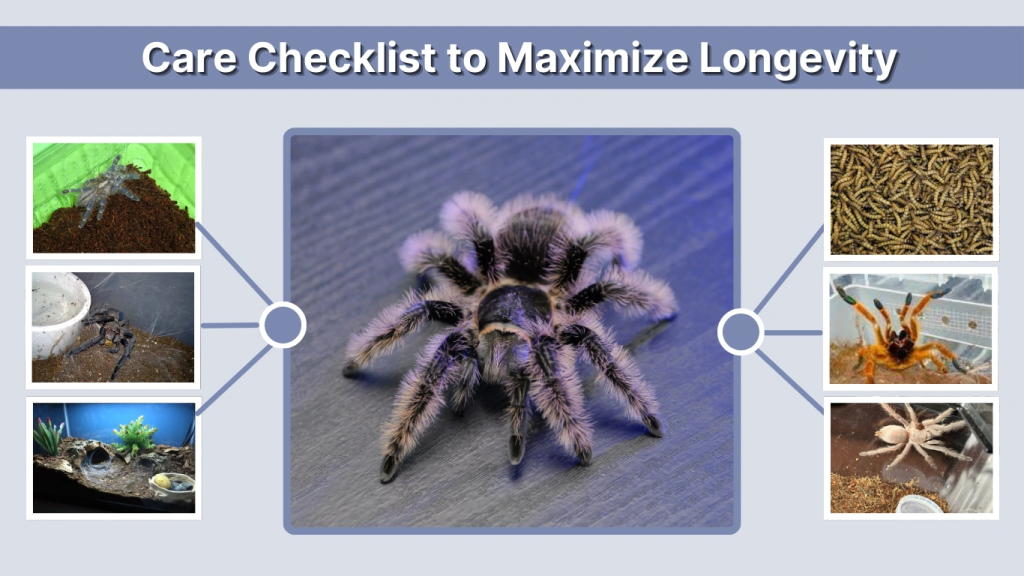
- Provide species-appropriate enclosures (arboreal vs terrestrial).
- Maintain correct humidity and temperature ranges.
- Offer fresh water at all times.
- Feed regularly with suitable prey, adjusting for age and size.
- Minimize handling and reduce stress.
- Track molts, feeding, and enclosure conditions for long-term care.
Summary
Tarantulas are unique pets with exceptional lifespans compared to most spiders. Females can live decades, while males generally live shorter lives after maturity. Factors like species, environment, and care play vital roles in their longevity. The Gooty sapphire, with its brilliant blue coloration and endangered status, highlights the responsibility that comes with tarantula ownership. With proper husbandry, patience, and ethical sourcing, keepers can ensure their tarantulas live long, healthy lives.
FAQs
How long do female tarantulas live?
Females commonly live 10–30 years depending on species, with some New World tarantulas surpassing two decades in captivity.
How long do male tarantulas live?
Males typically live 3–8 years total, often dying within 6–24 months after reaching maturity.
How long do tarantulas live in captivity vs the wild?
Captive tarantulas usually outlive wild ones thanks to stable conditions, steady feeding, and protection from predators.
How long can a tarantula go without food?
Adults may fast for weeks or months, particularly before molting, but must always have access to fresh water.
What’s the lifespan of a Gooty sapphire tarantula?
Females live around 12–15 years, while males average 3–5 years. Ethical, captive-bred ownership is strongly encouraged.