
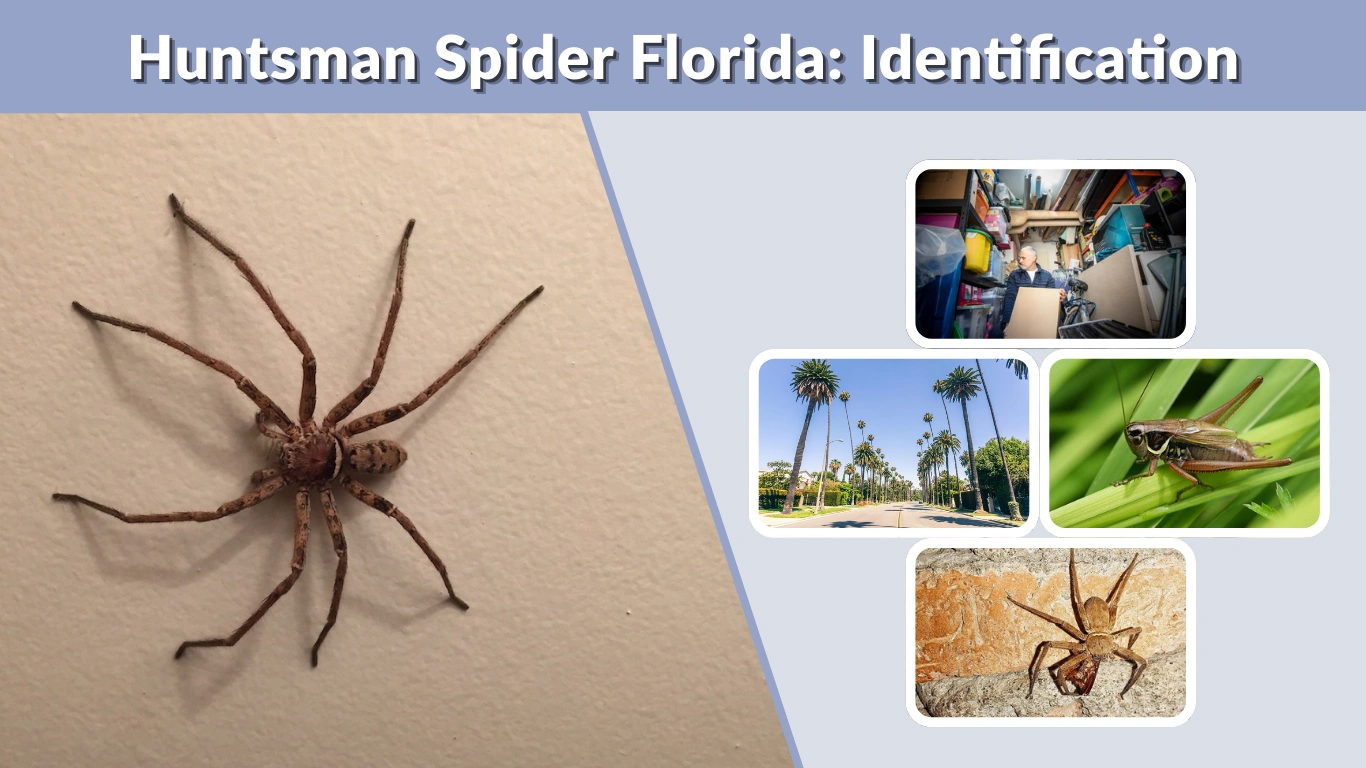
Huntsman spiders are large, fast-moving spiders that are occasionally found in Florida, especially in warm and tropical areas. Their long legs and crab-like appearance often make them look intimidating, but these spiders are usually harmless to humans. In fact, huntsman spiders play an important role in controlling insect populations. Learning how to identify huntsman spiders in Florida, where they live, and how they behave can help residents understand these fascinating creatures and reduce unnecessary fear when encountering them.
What Is a Huntsman Spider?
A huntsman spider is a type of large spider belonging to the Sparassidae family, commonly known for its speed and wide leg span. These spiders are sometimes called giant crab spiders because their legs extend sideways, giving them a crab-like posture.
Unlike many other spiders, huntsman spiders do not rely on webs to capture prey. Instead, they actively hunt insects using their speed and strong legs.
Scientific Classification
Huntsman spiders belong to the following classification:
- Kingdom: Animalia
- Phylum: Arthropoda
- Class: Arachnida
- Family: Sparassidae
There are more than 1,000 species of huntsman spiders worldwide, most of which live in warm climates.
The Tropical Huntsman Spider (Heteropoda venatoria)
One of the most well-known huntsman species found in Florida is the tropical huntsman spider (Heteropoda venatoria). This species is native to Asia but has spread to many tropical and subtropical regions around the world.
In Florida, it is often found in areas with high humidity, such as:
- Palm trees
- Gardens
- Sheds and garages
- Older buildings
The tropical huntsman spider is known for its ability to hunt pests like cockroaches, which makes it beneficial in some environments.
Huntsman Spider Identification in Florida
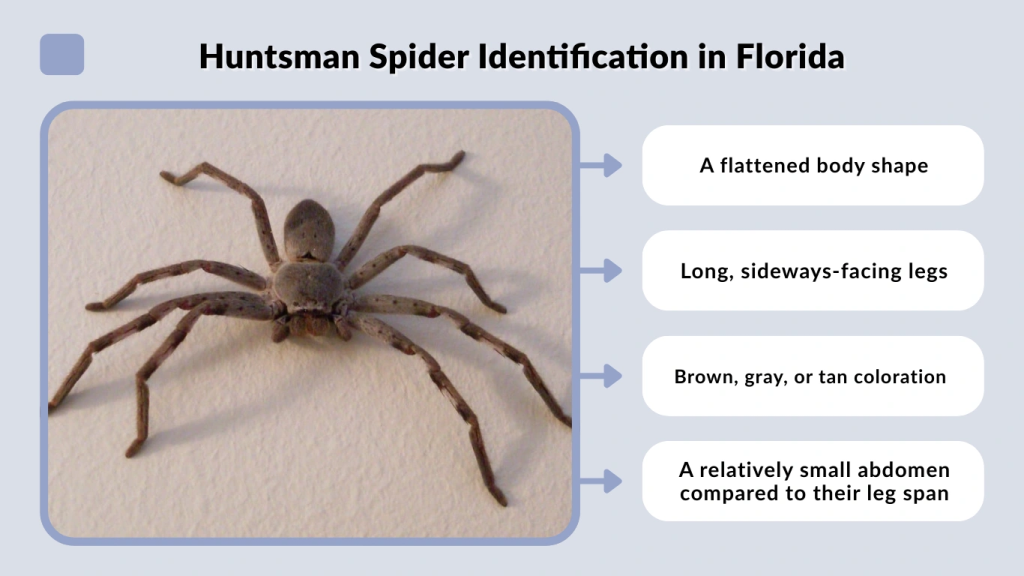
Because huntsman spiders are large and unusual in appearance, they are often mistaken for other spiders. Knowing how to identify them can help distinguish them from species like wolf spiders or giant house spiders.
Physical Characteristics
Huntsman spiders have several features that make them easy to recognize:
- A flattened body shape
- Long, sideways-facing legs
- Brown, gray, or tan coloration
- A relatively small abdomen compared to their leg span
- Fast, smooth movements
Their legs are arranged in a way that allows them to move quickly in multiple directions.
Huntsman Spider Size
One of the reasons huntsman spiders attract attention is their size. Although their body is not extremely large, their legs can stretch widely.
Typical size measurements include:
- Body length: about 1 to 2 inches
- Leg span: up to 5 inches or more
Because of their long legs, they often appear much larger than they actually are.
Huntsman Spider vs Wolf Spider
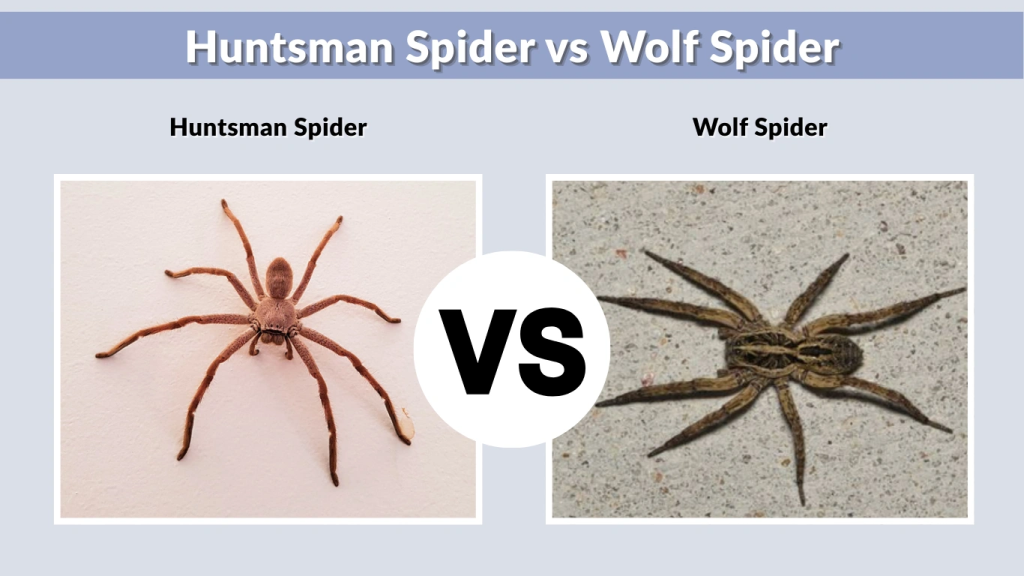
Many people in Florida confuse huntsman spiders with wolf spiders, but the two species have several differences.
Huntsman spiders:
- Have flattened bodies
- Legs extend sideways like a crab
- Move very quickly across walls and surfaces
Wolf spiders:
- Have thicker bodies
- Legs point downward rather than sideways
- Usually live on the ground instead of walls
Understanding these differences can help people correctly identify the spider they encounter.
Where Are Huntsman Spiders Found in Florida?
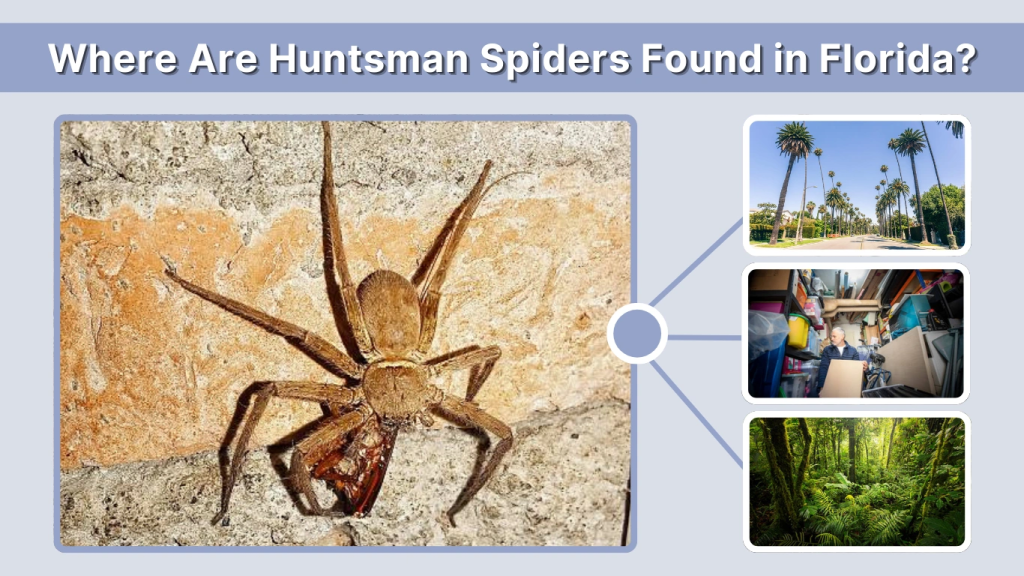
Huntsman spiders prefer warm environments with plenty of insects to hunt. Florida’s climate provides suitable conditions for them to survive, especially in tropical or coastal regions.
Natural Habitats
In the wild, huntsman spiders are commonly found in places such as:
- Palm trees
- Tree bark
- Dense vegetation
- Under loose bark or rocks
- Tropical forests and gardens
These locations provide shelter during the day and access to insects at night.
Huntsman Spiders in Homes
Although huntsman spiders usually live outdoors, they sometimes enter homes. In Florida, they may appear in:
- Garages
- Attics
- Basements
- Behind furniture
- On ceilings or walls
Because they can climb smooth surfaces easily, they are sometimes seen moving across walls or windows.
Why Huntsman Spiders Enter Houses
There are several reasons huntsman spiders may enter homes in Florida.
One common reason is searching for food. Houses often contain insects such as cockroaches, moths, and flies, which attract spiders.
Another reason is seeking shelter during extreme weather or cooler temperatures. Buildings provide protection from rain, predators, and environmental changes.
In many cases, the spider will eventually leave once it finds a better hunting area.
Behavior of Huntsman Spiders
Huntsman spiders are known for their speed and unique hunting behavior. Unlike many spiders that build webs and wait for prey, huntsman spiders actively search for insects.
Hunting Style
Huntsman spiders are active hunters. They rely on their excellent eyesight, speed, and strong legs to catch prey. Instead of trapping insects in webs, they move quietly along walls, tree bark, or plants until they locate an insect.
Once the spider spots its prey, it quickly rushes forward and captures it using its legs and venom.
Speed and Movement
One of the most notable traits of huntsman spiders is their incredible speed. They can move very quickly across walls, floors, and ceilings, which is why they sometimes startle people.
Their legs are positioned sideways, allowing them to move in multiple directions, including sideways like a crab. This unique movement makes them extremely agile hunters.
No Web Hunting Strategy
Unlike orb-weaver spiders or garden spiders, huntsman spiders do not build webs to catch food. Instead, they use webs mainly for shelter or egg protection.
Their hunting strategy involves:
- Stalking insects
- Quickly grabbing prey
- Using venom to immobilize the insect
This behavior makes them efficient predators in both natural environments and homes.
What Do Huntsman Spiders Eat?
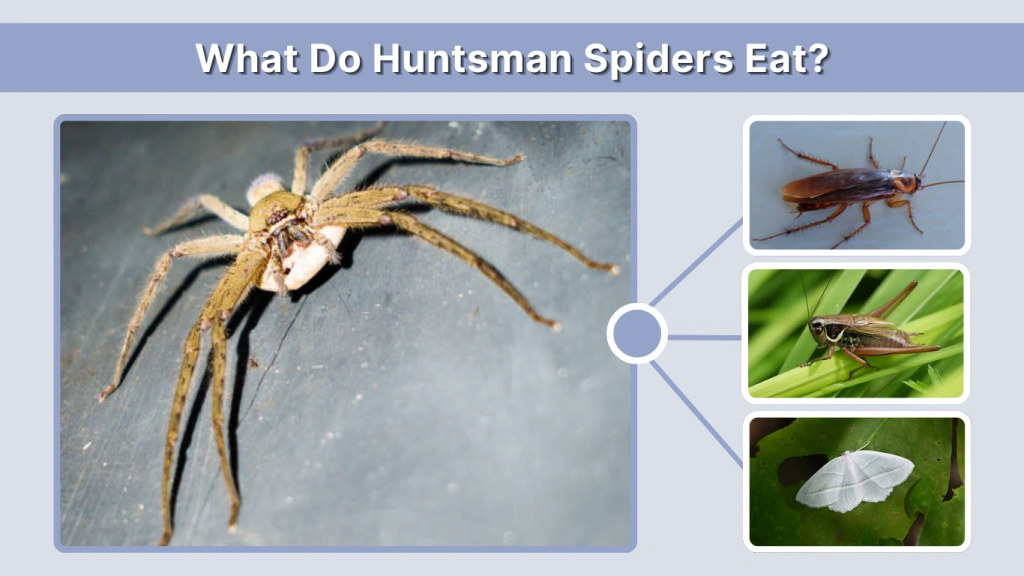
Huntsman spiders are carnivorous predators that feed primarily on insects and other small arthropods. Their diet makes them beneficial in many environments because they help control pest populations.
Common Prey
Huntsman spiders commonly eat:
- Cockroaches
- Crickets
- Beetles
- Moths
- Flies
- Grasshoppers
- Other small insects
Because they are strong hunters, they can catch relatively large insects compared to their body size.
Natural Pest Control Benefits
One of the biggest benefits of huntsman spiders is their ability to reduce pest populations. In many tropical regions, these spiders are valued because they hunt cockroaches and other household pests.
By feeding on insects, huntsman spiders help maintain a balanced ecosystem both indoors and outdoors.
Are Huntsman Spiders Dangerous in Florida?
Despite their large size and intimidating appearance, huntsman spiders are generally not dangerous to humans. They are shy creatures that usually try to avoid people.
Most encounters occur when a spider is accidentally disturbed.
Huntsman Spider Bite Risk
Huntsman spiders rarely bite humans. If they do bite, it is usually because they feel threatened or are handled directly.
Their venom is designed to immobilize insects rather than harm large animals.
Symptoms of a Huntsman Spider Bite
A huntsman spider bite may cause mild symptoms such as:
- Localized pain
- Redness around the bite area
- Slight swelling
- Mild itching
These symptoms usually disappear within a short period without serious complications.
Are They Aggressive?
Huntsman spiders are not aggressive toward humans. In most situations, they prefer to escape rather than attack.
If you encounter a huntsman spider, it will usually run away quickly instead of approaching you.
Huntsman Spider Life Cycle
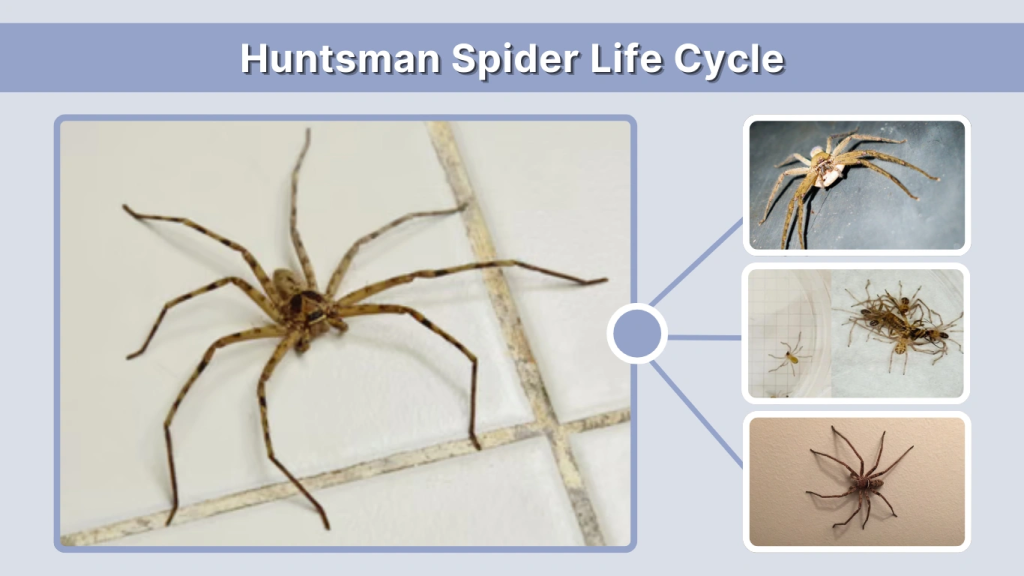
Like most spiders, huntsman spiders go through several stages during their life cycle.
Egg Sac Stage
After mating, the female huntsman spider produces an egg sac that contains dozens or even hundreds of eggs. The female often guards the egg sac to protect it from predators.
The eggs develop inside the sac until the young spiders are ready to hatch.
Spiderlings
When the eggs hatch, tiny spiders called spiderlings emerge. These young spiders look like miniature versions of adults but are much smaller.
As they grow, they shed their outer skin several times in a process called molting.
Adult Development and Lifespan
Once huntsman spiders reach adulthood, they begin hunting independently and may reproduce.
Many huntsman spiders live for one to two years, depending on environmental conditions.
How to Prevent Huntsman Spiders in Your Home
Although huntsman spiders are generally harmless, some people prefer to keep them outside the house. There are several simple steps that can reduce the chances of spiders entering your home.
Seal Entry Points
Check your home for small openings where spiders may enter. These can include:
- Cracks around windows
- Gaps under doors
- Holes in walls or foundations
Sealing these entry points can prevent spiders and insects from getting inside.
Reduce Outdoor Lighting Insects
Outdoor lights attract insects, which in turn attract spiders. Reducing unnecessary lighting or using insect-resistant bulbs can help decrease insect activity near your home.
Natural Spider Prevention Tips
Other helpful methods include:
- Keeping the home clean and clutter-free
- Removing insect infestations
- Trimming vegetation close to the house
- Using screens on windows and doors
These steps make your home less attractive to both insects and spiders.
Interesting Facts About Huntsman Spiders
Huntsman spiders have several fascinating characteristics that make them unique among spiders.
- They are one of the fastest spiders in the world.
- Their legs allow them to run sideways like crabs.
- Some species can have a leg span of over five inches.
- Huntsman spiders are often found in tropical and subtropical climates.
- In some regions, they are valued because they hunt cockroaches and pests.
These traits make huntsman spiders highly effective predators.
FAQs
Are huntsman spiders common in Florida?
Huntsman spiders are not extremely common, but they do appear in parts of Florida, particularly in warm and tropical areas.
How big can huntsman spiders get in Florida?
Some huntsman spiders can have a leg span of about five inches, making them appear very large when seen indoors.
Do huntsman spiders live in houses?
They can occasionally enter houses while searching for insects, but they usually prefer outdoor environments.
Should I remove a huntsman spider if I see one?
In most cases, it is safe to leave the spider alone or gently relocate it outside. Huntsman spiders are beneficial because they help control insect populations.
Conclusion
Huntsman spiders are large, fast-moving spiders that occasionally appear in Florida’s warm environments. Although their size and speed may seem alarming, they are generally harmless and play a useful role in controlling insects such as cockroaches and flies. By understanding how to identify huntsman spiders and learning about their behavior, people can better appreciate these fascinating creatures. In many cases, huntsman spiders are helpful predators that contribute to a healthier and more balanced ecosystem.