
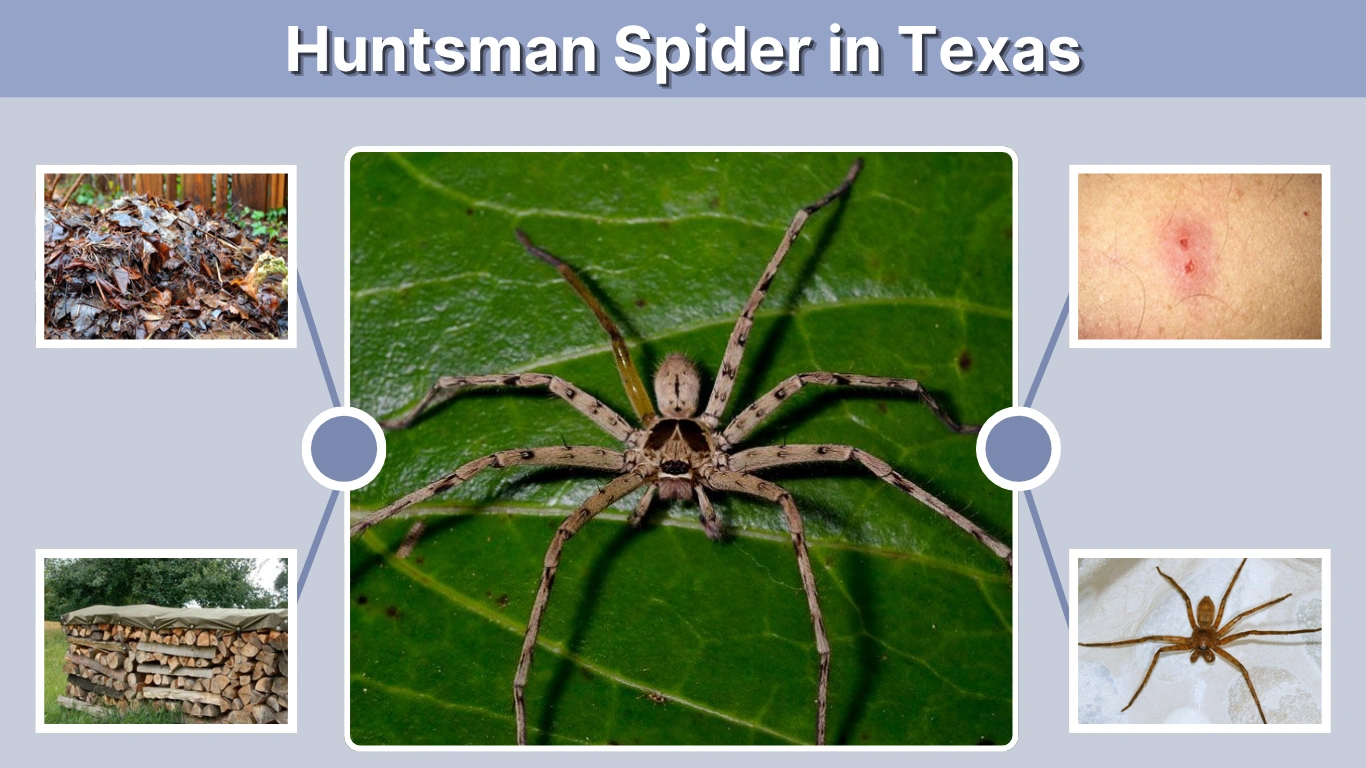
The huntsman spider in Texas is one of the most talked-about arachnids in the southern United States. Known for its impressive size, crab-like legs, and incredible speed, it often startles homeowners who mistake it for a dangerous species. In truth, the Texas huntsman spider is harmless and plays a valuable role in controlling household pests such as cockroaches and moths. Though originally tropical, it has adapted remarkably well to the Texas climate, making it a familiar sight across the state.
Is the Huntsman Spider Native to Texas?
The huntsman spider (Heteropoda venatoria) is not native to Texas. It originated in tropical Asia and Australia but has spread globally through trade routes and shipping containers. Over time, it has successfully established populations in many southern U.S. states, including Florida, Louisiana, and Texas.
In Texas, the species thrives in areas that mimic its native habitat — warm, humid regions with abundant shelter. The spider’s adaptability allows it to survive both outdoors and inside homes, particularly during cooler months when it seeks warmth and insects.
Appearance and Identification
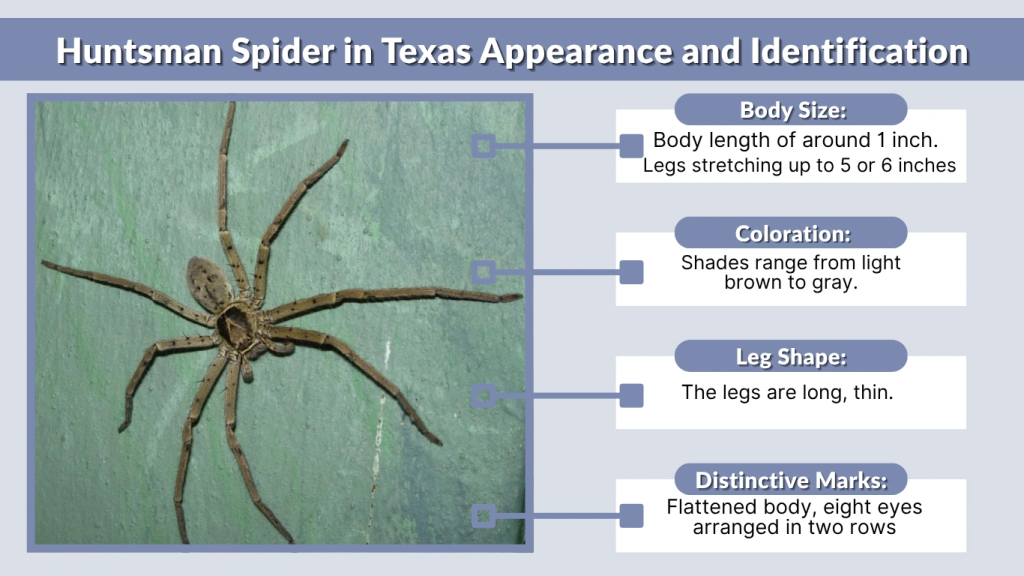
Huntsman spiders have a distinctive look that sets them apart from most other Texas spiders. Their long legs extend outward, allowing them to move sideways like crabs, which is why they’re sometimes called “giant crab spiders.”
Key identification features include:
- Body Size: Adults have a body length of around 1 inch, with legs stretching up to 5 or 6 inches across.
- Coloration: Shades range from light brown to gray, sometimes with darker bands on the legs.
- Leg Shape: The legs are long, thin, and slightly curved forward for quick, fluid movement.
- Distinctive Marks: Flattened body, eight eyes arranged in two rows, and a subtle stripe running along the cephalothorax.
These spiders are often mistaken for wolf spiders, but their flatter bodies and sideways movement make them easy to distinguish once you know what to look for.
Common Species of Huntsman Spiders Found in Texas
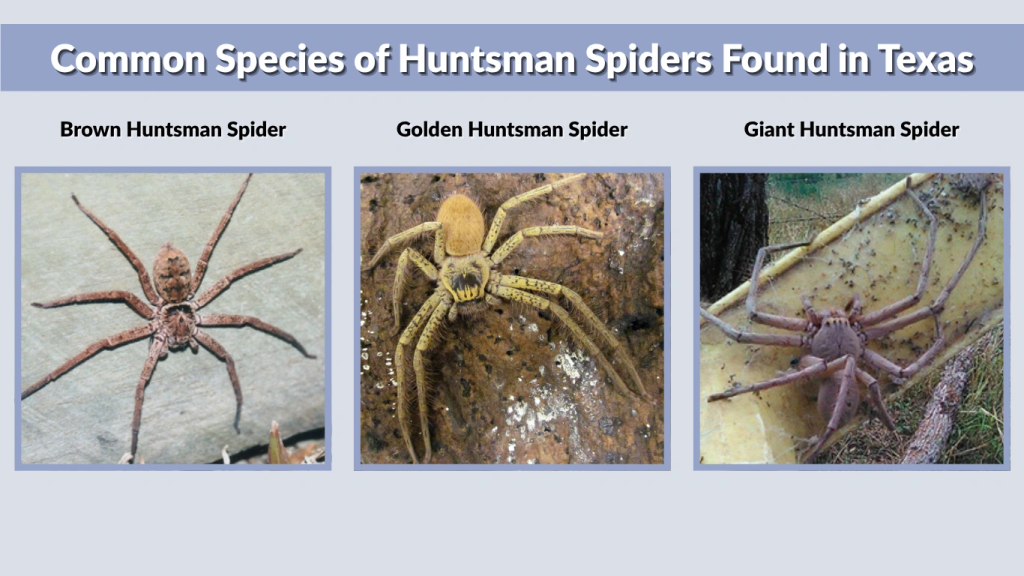
Although most sightings in Texas involve the brown huntsman spider (Heteropoda venatoria), other color variants occasionally appear.
- Brown Huntsman Spider: The most widespread type, often seen in homes, garages, and warehouses.
- Golden Huntsman Spider: A lighter yellow-tan variant sometimes found in warmer southern regions of the state.
- Giant Huntsman Spider: Usually refers to large individuals or imported species, not a separate native population.
All these spiders share similar habits — fast-moving, nocturnal, and non-aggressive toward humans.
Size and Growth of the Texas Huntsman Spider
The Texas huntsman’s size often causes alarm. Adults can have a leg span of up to 15 centimeters (about 6 inches), which makes them appear “giant” compared to other household spiders. Males are slimmer, while females are more robust and tend to stay close to protected areas.
They grow through multiple molts, shedding their exoskeleton as they mature. Juveniles are paler and smaller but already display the same hunting behavior as adults. Since huntsman spiders rely on stealth rather than webs, they actively roam in search of insects at night, helping to keep local pest populations under control.
Habitat and Range Across Texas

Texas provides an ideal climate for huntsman spiders. They thrive in warm, sheltered environments, often near human structures where insects are plentiful.
In North Texas, they’re less common due to cooler winters, but occasional sightings occur during late summer. In Central Texas, they are frequently seen in garages, storage sheds, and garden areas. South Texas, with its tropical humidity, supports the largest populations, especially in cities like Houston, Corpus Christi, and San Antonio.
These spiders favor dark hiding spots such as behind wall hangings, under bark, and within crevices — any location that offers warmth and a ready food supply.
Huntsman Spider Behavior and Lifestyle
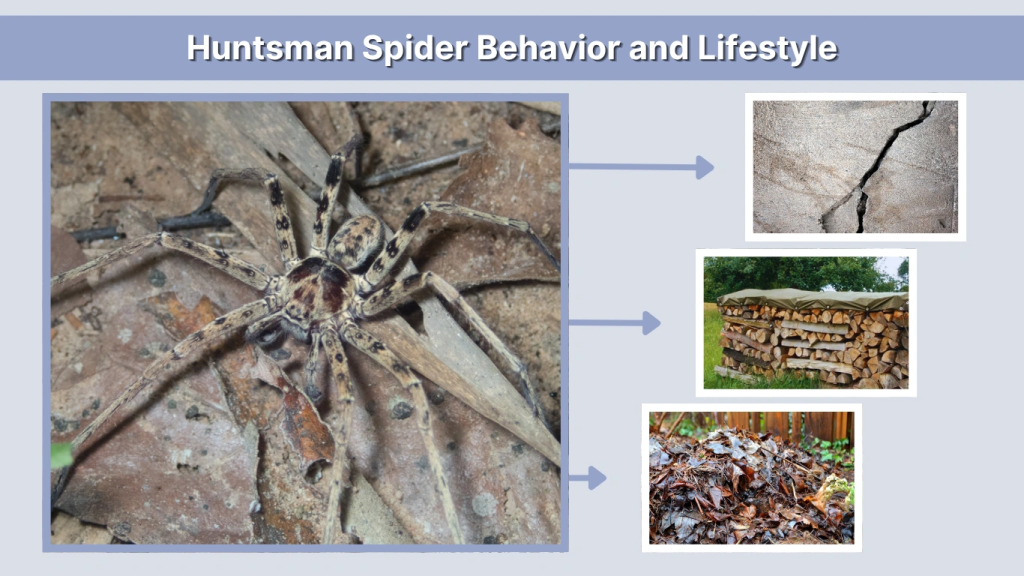
Huntsman spiders are primarily nocturnal hunters that rely on speed and vision to capture prey. They do not spin webs to trap insects; instead, they stalk and pounce, similar to a cat’s hunting style. During the day, they rest in cool, shaded locations like cracks, woodpiles, or under leaves.
Their calm nature often surprises people who encounter them. Rather than attacking, huntsman spiders usually retreat when disturbed. If handled roughly, they might deliver a defensive bite, but the venom is mild and not considered dangerous. Most bites result in minor redness or swelling and resolve without treatment.
Giant Huntsman Spider Sightings in Texas
Over the years, online stories and viral photos have fueled the myth of a giant huntsman spider in Texas. While these tales attract attention, most are exaggerated. The species found in Texas rarely exceed a 6-inch leg span, far smaller than the true Heteropoda maxima — the world’s largest huntsman native to Laos.
Misidentification is common because lighting, camera angles, and perspective make ordinary huntsman spiders appear enormous. Despite their dramatic reputation, Texas huntsman spiders are shy, helpful predators that pose no threat to people or pets.
Huntsman Spider in North vs. South Texas
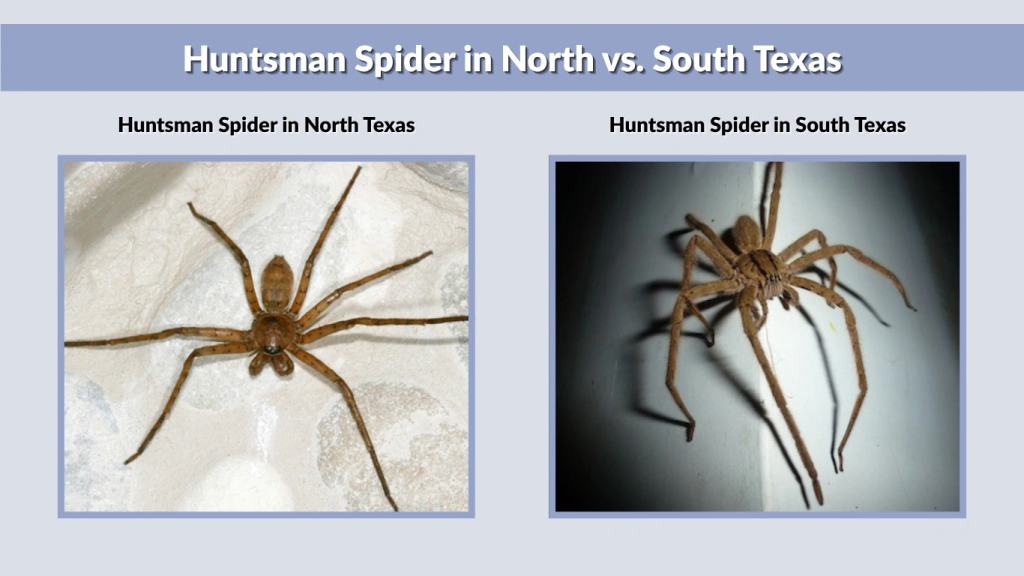
Huntsman Spider in North Texas
In North Texas, the huntsman spider is less abundant due to colder winters and seasonal temperature drops. However, they are occasionally seen in attics, garages, and sheds during summer. They prefer warm, dry areas where insects are active and often hide during winter months until the weather warms up again.
Huntsman Spider in South Texas
In contrast, South Texas offers the ideal environment for these spiders. Cities like Houston, San Antonio, and Brownsville have humid climates that allow huntsman spiders to thrive year-round. Residents often spot them in outdoor gardens, beneath patio furniture, or around porch lights where insects gather at night.
Are Huntsman Spiders Dangerous to Humans?
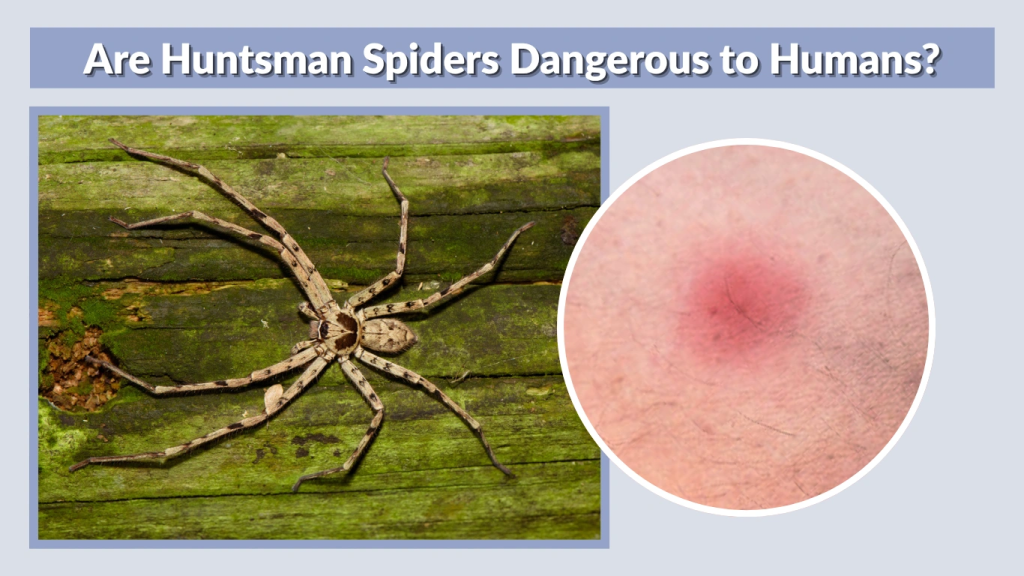
Despite their large size and quick movements, huntsman spiders are not dangerous. They are non-aggressive and rarely bite unless physically trapped or threatened. Even then, their venom is mild and not harmful to humans.
A bite may cause temporary irritation or mild swelling but usually resolves without medical attention. Most people who encounter them describe the experience as startling but harmless. In fact, many Texans consider them natural pest controllers rather than pests themselves.
How to Handle a Huntsman Spider Encounter
Seeing a large spider indoors can be intimidating, but huntsman spiders are gentle creatures. Here’s how to respond safely:
- Stay calm: Avoid panicking — they will not chase or attack.
- Trap carefully: Use a glass or plastic container and a piece of paper to capture it.
- Relocate outdoors: Release the spider near shrubs or trees where it can continue hunting insects.
- Seal entry points: Close gaps around windows and doors to prevent future visits.
- Avoid pesticides: These spiders help control pests naturally and do not cause infestations.
These simple actions allow homeowners to remove spiders humanely while protecting beneficial species.
Role of Huntsman Spiders in Texas Ecosystems
The huntsman spider plays an important ecological role across Texas. As skilled hunters, they feed on insects such as cockroaches, moths, and crickets, helping to keep pest populations balanced. In gardens, they reduce harmful insect activity, supporting healthy ecosystems without the need for chemical control.
Farmers and homeowners alike benefit from their presence. By preying on unwanted pests, huntsman spiders serve as a natural and efficient form of pest management throughout the warmer months.
Climate Influence on Huntsman Spider Range in Texas
Texas’s climate diversity has a direct impact on the huntsman spider’s distribution. In humid coastal areas, populations remain steady throughout the year. In central and desert regions, they are more active during spring and summer when conditions are warm.
Climate change could gradually expand their range northward, allowing them to survive in areas that were once too cool. Urban heat also helps maintain populations in cities, providing artificial warmth during colder months.
Myths and Misconceptions
The huntsman spider’s intimidating size often fuels myths across Texas. Some believe they are aggressive or poisonous, but that’s far from true. Others claim they grow as large as dinner plates — another exaggeration.
Reality shows a different picture: they are shy, beneficial, and essential to natural pest control. Viral photos and sensational stories have unfairly given them a frightening reputation, but most “giant” sightings are simply optical illusions or misidentified wolf spiders.
Comparison: Huntsman Spider vs. Wolf Spider in Texas
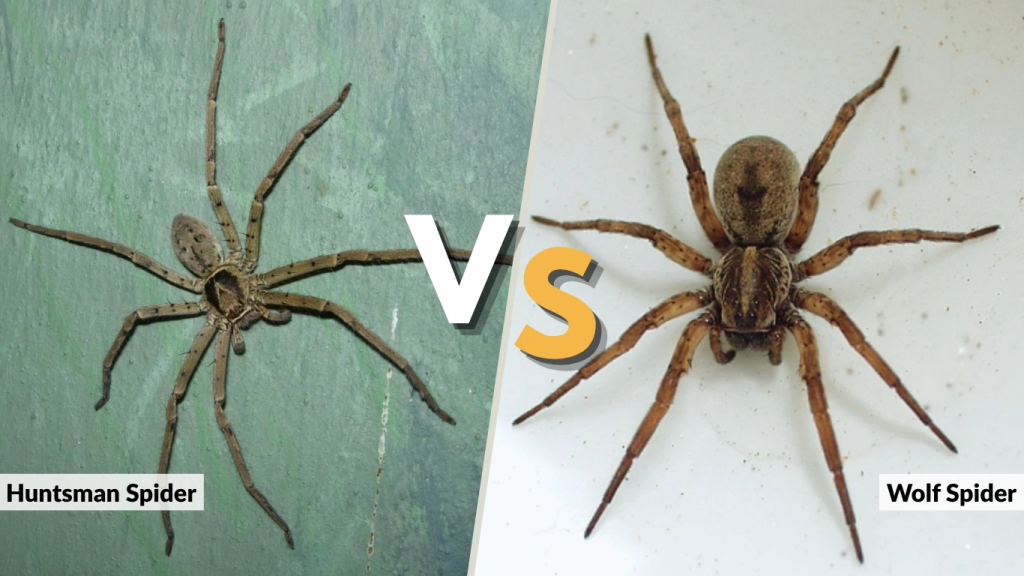
Because both species are large and fast, huntsman and wolf spiders are frequently confused. Here’s how to tell them apart:
| Feature | Huntsman Spider | Wolf Spider |
| Leg Orientation | Sideways, crab-like | Straight downward |
| Body Shape | Flat and wide | Round and thick |
| Movement | Smooth, lateral | Forward-running |
| Habitat | Indoors & outdoors | Mostly ground-dwelling |
| Temperament | Timid and shy | Defensive when disturbed |
Knowing these differences helps Texans identify the harmless huntsman more easily.
Reproduction and Life Cycle
Female huntsman spiders lay eggs in silk sacs, often containing 150–200 eggs. The mother guards the sac until the spiderlings hatch, showing an unusual level of maternal care for spiders. After emerging, the young disperse quickly and begin hunting small insects.
Their growth is rapid, with several molting stages before adulthood. Most live for around two years, with peak activity during Texas’s warm spring and summer seasons.
Seasonal Activity
Huntsman spiders are most active from April to October when temperatures favor hunting and reproduction. During these months, sightings increase around homes and outdoor spaces. In cooler seasons, they seek shelter indoors, hiding in cracks, attics, and behind furniture.
Their nocturnal habits mean they’re rarely seen during the day — instead, they emerge at night to chase insects drawn to lights and warmth.
FAQs
Are huntsman spiders native to Texas?
No. Huntsman spiders are not native to Texas but were introduced from tropical regions. They have since adapted well to the warm climate and are now common across the southern parts of the state.
How big do huntsman spiders get in Texas?
Adult huntsman spiders in Texas can reach a leg span of about 5 to 6 inches. While they look enormous, their bodies are flat and lightweight, helping them move quickly through narrow spaces.
Are there giant huntsman spiders in Texas?
Reports of “giant huntsman spiders” are exaggerated. The species found in Texas are large but not as big as the true Heteropoda maxima found in Southeast Asia. Most “giant” sightings are simply larger-than-average individuals.
Where can huntsman spiders be found in Texas?
They are most common in Central and South Texas, particularly in cities like Houston, Austin, and Corpus Christi. They live near homes, trees, and structures that attract insects.
Are huntsman spiders beneficial?
Yes. Huntsman spiders are extremely beneficial because they feed on pest insects. Their presence helps naturally reduce cockroach and moth populations without the need for pesticides.