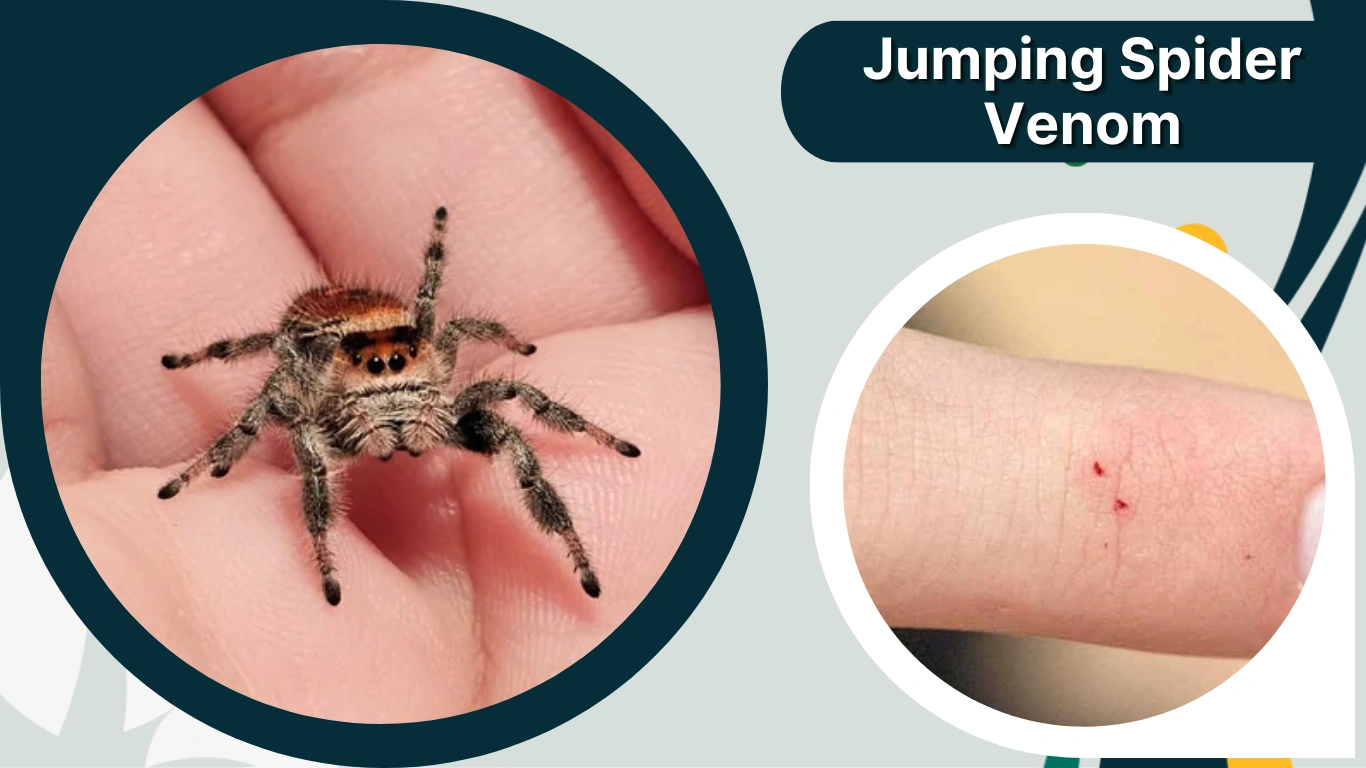
Jumping spiders are among the most popular and recognizable arachnids thanks to their bright colors, excellent vision, and curious personalities. Yet, many people wonder: are jumping spiders venomous? This concern often arises when one shows up in the house, on a window, or even as a pet. To answer properly, we need to look at the role venom plays in jumping spiders and whether it poses any danger to humans or pets.
Do Jumping Spiders Have Venom?
Yes, jumping spiders do have venom. Like most spiders, they rely on venom to immobilize and digest their prey. Unlike highly dangerous spiders such as black widows or brown recluses, the venom of jumping spiders is weak against humans and other large animals.
Venom vs Poison
It’s important to understand the difference. Venomous creatures inject venom through bites or stings, while poisonous creatures are harmful when eaten or touched. Jumping spiders are venomous because they inject venom into insects, but they are not poisonous, and their venom is not dangerous to people.
Are Jumping Spiders Dangerous to Humans?

For humans, jumping spiders are generally harmless. Their venom is adapted for tiny prey such as flies, crickets, and other insects. Bites are rare and usually only occur if the spider feels trapped or threatened.
Are Jumping Spider Bites Venomous?
Yes, their bites are venomous, but the effects are extremely mild. Most people experience little more than redness, slight swelling, or itching at the site. The reaction is often less severe than a bee sting. Serious medical issues from a jumping spider bite are almost unheard of.
Who Might Be Sensitive?
In rare cases, children, individuals with insect allergies, or pets may have stronger reactions. Even so, these are usually mild and resolve on their own without treatment.
Species-Specific Venom Questions

Different jumping spider species are often asked about specifically. While all jumping spiders have venom, none are considered dangerous to humans.
Bold Jumping Spider (Phidippus audax)
The bold jumping spider is one of the most common species in North America. While its venom is strong enough to subdue large prey, it poses no risk to humans. A bite may cause localized irritation, but nothing serious.
Regal Jumping Spider (Phidippus regius)
Often kept as pets, regal jumping spiders are admired for their size and vivid markings. Their venom is only effective on insects, and they are not harmful to humans.
Daring Jumping Spider
Similar to bold jumpers, daring jumping spiders rely on venom to capture prey but are harmless to people. Reports of bites are extremely rare, and the effects are minimal.
Zebra Jumping Spider
Known for their striped pattern, zebra jumpers are small and docile. Their venom helps them hunt small flies, but their bite is barely noticeable to humans.
Other Species Mentions
Whether it’s the twin flagged, canopy, peacock, magnolia green, or tan jumping spider, all species use venom in the same way—for hunting and self-defense. None are considered medically significant. Even the Australian jumping spiders, sometimes feared due to Australia’s reputation for venomous creatures, are safe to handle and not dangerous to humans.
Jumping Spider Venom Effects

The primary role of jumping spider venom is to subdue prey and begin digestion. It breaks down the internal tissues of insects, allowing the spider to consume a liquid meal. For humans, the venom has no comparable effect.
Venom in Pets (Cats and Dogs)
Some pet owners worry about whether jumping spider bites are dangerous to cats or dogs. In most cases, the venom has little to no effect beyond mild irritation. Pets may show temporary signs such as paw licking or scratching but recover quickly without treatment.
The Myth of the “Most Venomous Jumping Spider”
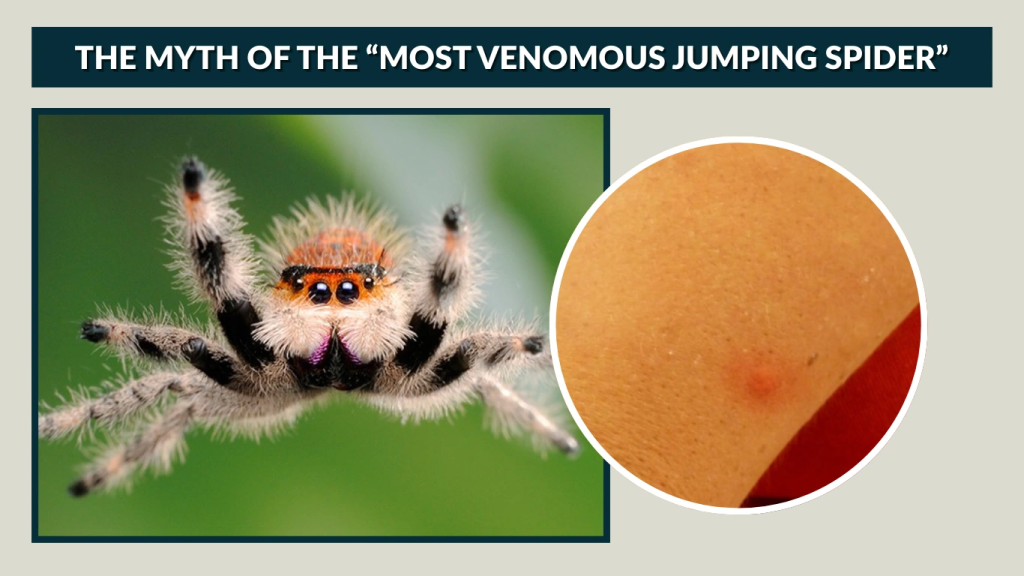
A common internet rumor claims that certain jumping spiders are “the most venomous.” In truth, no jumping spider species is dangerous to humans. Their venom is effective against small prey but poses no medical threat. Unlike black widows or funnel-web spiders, jumping spiders have never been linked to severe bites.
Do Any Jumping Spider Species Have Deadly Venom?
No. While all jumping spiders produce venom, none have toxins that affect humans in a life-threatening way. Their fangs are also small, making it difficult to even pierce human skin deeply.
Comparison With Other Spiders
To understand jumping spider venom better, it helps to compare them with other spider families.
- Widow spiders (Latrodectus): Possess neurotoxic venom dangerous to humans.
- Brown recluse (Loxosceles): Has necrotic venom causing tissue damage.
- Australian funnel-web spiders (Atrax): Extremely venomous, potentially fatal without treatment.
- Jumping spiders (Salticidae): Mild venom, effective only on insects, harmless to humans.
This comparison highlights that while jumping spiders are venomous, they fall into the category of “non-dangerous spiders.”
Pop Culture & Venom
Jumping spiders often get wrapped into superhero myths thanks to their unique look.
Spider-Man References
The connection between spiders and “venom” is especially strong in comic books and films. Characters like Venom and Miles Morales’s Venom Jump ability in video games draw from the idea of spiders having powerful toxins.
Venom Jumping Over Spider-Man Memes
Social media often features memes like “venom jumping over Spider-Man basketball dunk”, playing on the association between real spider venom and fictional powers. Of course, real jumping spiders don’t come close to these exaggerated portrayals—but their quick leaps and hunting skills are impressive in their own right.
Conclusion
Jumping spiders are venomous, but only in the sense that they use venom to subdue prey. For humans and pets, their venom is harmless, causing little more than mild irritation in rare bite cases. Far from being a danger, these spiders are safe, curious, and beneficial creatures that help control insect populations. The myth of the “deadly jumping spider” is just that—a myth.
FAQS
1. Do jumping spiders have venom?
Yes, all jumping spiders produce venom to immobilize their prey. However, their venom is harmless to humans and pets, causing at most mild irritation if they bite.
2. Are bold jumping spiders venomous to humans?
Bold jumping spiders are venomous to insects, not to humans. Their bite may cause slight redness or itching, but it is not medically dangerous.
3. Can jumping spider bites hurt cats or dogs?
Jumping spider venom is not harmful to pets. At worst, a bite may cause temporary irritation, which usually resolves on its own.
4. Which jumping spider is the most venomous?
No jumping spider species is considered dangerous to humans. All have mild venom meant only for catching prey.
5. What should I do if a jumping spider bites me?
Clean the bite with soap and water, and apply a cold compress for swelling. Seek medical advice only if you experience unusual or severe symptoms, which are extremely rare.