
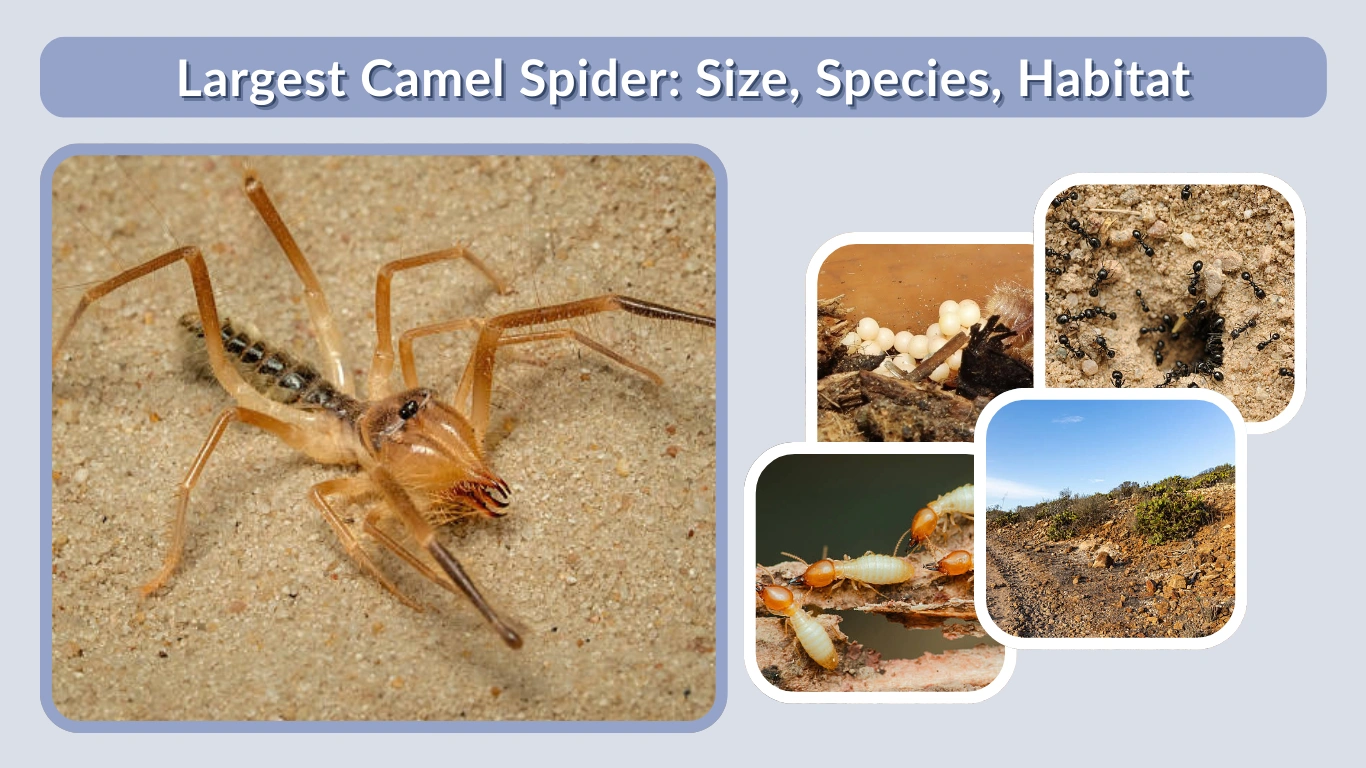
Camel spiders are fascinating desert-dwelling arachnids known for their speed, powerful jaws, and unusual appearance. Many people are curious about the largest camel spider and just how big these creatures can grow. Although their name suggests they are true spiders, camel spiders actually belong to a different arachnid group called solifuges. These fast hunters live mainly in hot and dry regions, where they actively search for prey rather than using webs. Understanding the size, species, and behavior of the largest camel spiders helps separate scientific facts from the many myths that surround them.
What Is a Camel Spider?
A camel spider is a type of arachnid that belongs to the order Solifugae, a group of fast-moving predators adapted to life in deserts and arid environments. While they are often called spiders, they are not true spiders. Instead, they are closely related to other arachnids such as scorpions and mites.
Camel spiders have gained a reputation for being large and frightening because of their powerful jaws and quick movements. However, they are simply efficient hunters that play an important role in desert ecosystems by controlling insect populations.
Unlike many spiders, camel spiders do not spin webs to capture prey. Instead, they actively chase and seize their food using their speed and strong mouthparts.
Scientific Classification
Camel spiders belong to a unique group within the arachnid class.
Scientific classification:
- Kingdom: Animalia
- Phylum: Arthropoda
- Class: Arachnida
- Order: Solifugae
Scientists have identified over 1,000 species of camel spiders worldwide. These species are divided into several families, each with slightly different characteristics.
Common Names
Camel spiders are known by several different names depending on the region. Some of the most common names include:
- Camel spider
- Wind scorpion
- Sun spider
- Solifuge
The name sun spider comes from the Latin word Solifugae, which means “those that flee from the sun.” Many species prefer to avoid direct sunlight and become active at night when temperatures are cooler.
Why They Are Called Camel Spiders
The name “camel spider” likely originated from their association with desert regions where camels are common. Early travelers and soldiers in desert environments frequently encountered these arachnids and began using the name.
Another explanation suggests that the spider’s raised body shape resembles a camel’s hump. Regardless of its origin, the name has remained popular even though it can be misleading.
What Is the Largest Camel Spider?
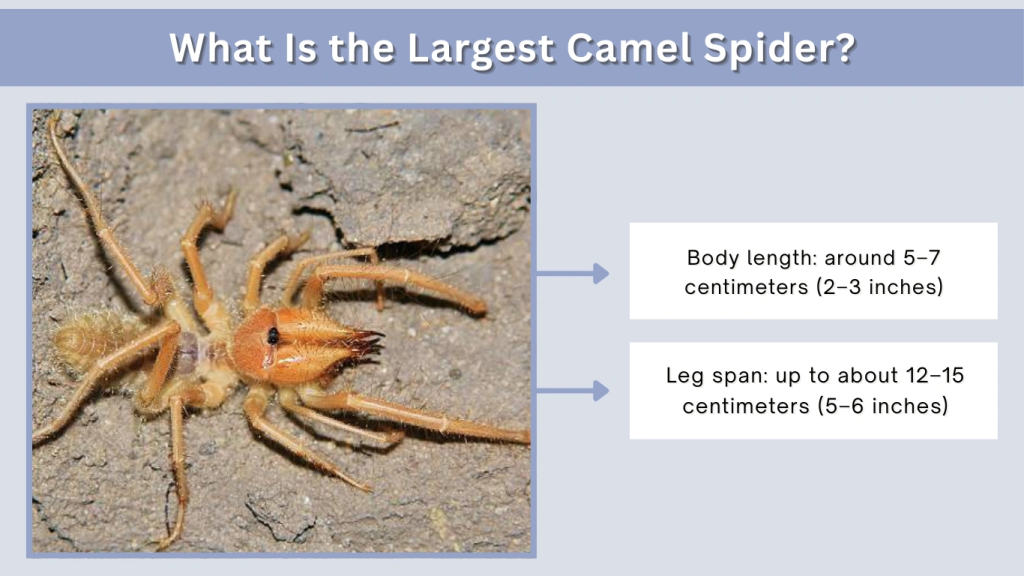
Many people wonder about the largest camel spider species and how big these creatures can actually grow. While camel spiders can appear quite large due to their long legs and large jaws, their size is often exaggerated in stories and photographs.
Largest Camel Spider Species
Some species of camel spiders are larger than others. Two of the most well-known groups include:
- Galeodes species, commonly found in the Middle East, North Africa, and parts of Asia
- Eremobates species, which live mainly in North America
These species are among the largest members of the Solifugae order and are often the ones people refer to when discussing giant camel spiders.
Maximum Size of Camel Spiders
The largest camel spiders can reach impressive sizes compared to many other arachnids.
Typical size measurements include:
- Body length: around 5–7 centimeters (2–3 inches)
- Leg span: up to about 12–15 centimeters (5–6 inches)
When their legs are spread out, these animals may appear even larger. Their large jaws also contribute to their intimidating appearance.
Largest Camel Spider Ever Recorded
Stories about extremely large camel spiders have circulated for years, especially from desert regions such as the Middle East. Some photographs show camel spiders appearing unusually large.
However, many of these images use perspective tricks, making the spider look much bigger than it really is. Scientific measurements confirm that most camel spiders rarely exceed a 6-inch leg span.
While they may look frightening, they are generally similar in size to other large arachnids.
Size Comparison With Other Arachnids
Compared with other arachnids, camel spiders are moderately large but not the largest.
For example:
- Tarantulas usually have thicker bodies and can have larger leg spans.
- Huntsman spiders may have longer legs and appear larger overall.
Camel spiders stand out mainly because of their speed and powerful jaws, rather than their overall size.
Physical Characteristics of the Largest Camel Spider
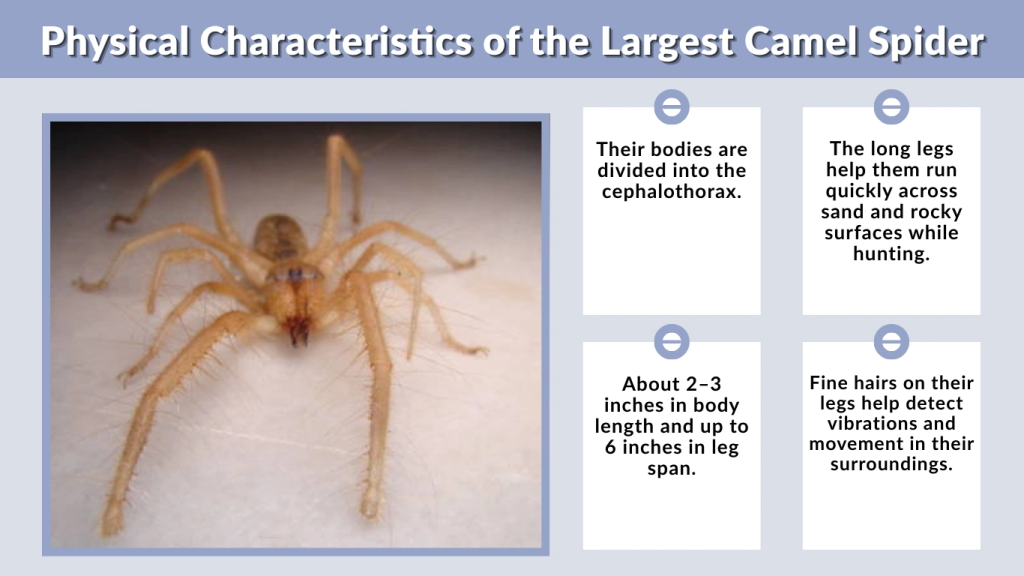
The largest camel spiders have a unique and somewhat intimidating appearance that easily distinguishes them from other arachnids. Their bodies are specially adapted for speed, hunting, and survival in harsh desert environments. While they may look similar to true spiders at first glance, their body structure and mouthparts are quite different. These features allow camel spiders to move quickly across desert terrain and capture prey efficiently.
Below are some of the key physical characteristics of the largest camel spiders:
- Large Chelicerae (Jaws) – Camel spiders have extremely powerful jaws used to grab, crush, and tear apart prey.
- Two Main Body Segments – Their bodies are divided into the cephalothorax (front section) and the abdomen (rear section), which is typical of arachnids.
- Long, Strong Legs – The long legs help them run quickly across sand and rocky surfaces while hunting.
- Medium to Large Size – The largest camel spiders can reach about 2–3 inches in body length and up to 6 inches in leg span.
- Hairy Body and Legs – Fine hairs on their legs help detect vibrations and movement in their surroundings.
- Large Pedipalps – These leg-like appendages near the mouth help them sense objects and handle prey.
- Sandy or Brown Coloring – Their color usually ranges from tan to light brown, allowing them to blend into desert environments.
- Multiple Eyes – Camel spiders have a pair of prominent central eyes that help them detect movement.
These physical adaptations make camel spiders fast, efficient predators that are well suited for life in hot and dry environments.
Habitat and Distribution
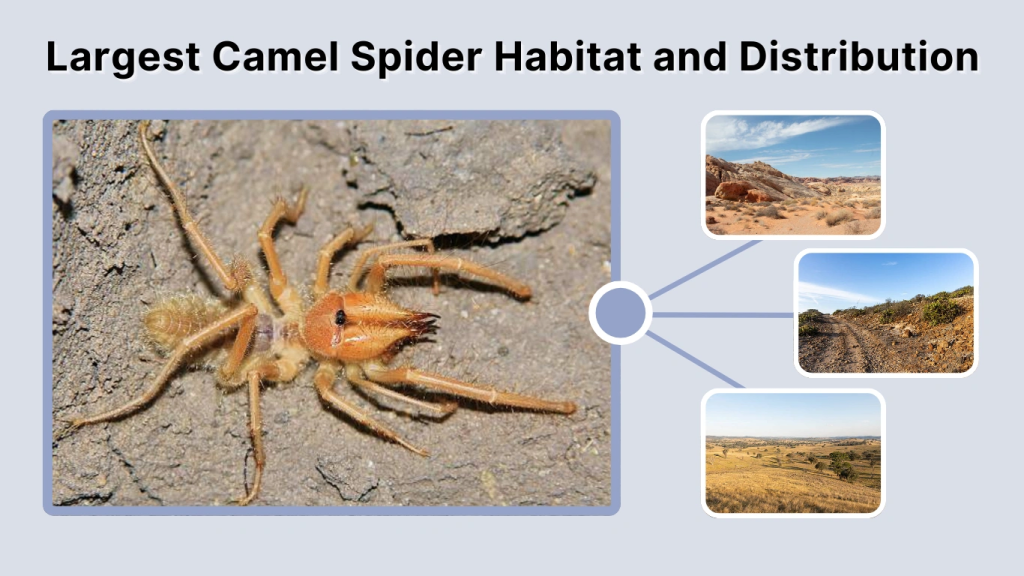
Camel spiders are primarily found in hot, dry environments where they are well adapted to survive harsh conditions. Their bodies and behavior allow them to thrive in regions with extreme temperatures and limited water.
Where Camel Spiders Live
The largest camel spiders usually live in deserts and semi-arid areas. These regions provide plenty of insects and small animals for food, as well as sandy or rocky terrain suitable for hiding.
Common habitats include:
- Desert landscapes
- Dry grasslands
- Rocky areas
- Sandy dunes
- Desert scrublands
During the day, camel spiders often hide under rocks, in burrows, or beneath debris to protect themselves from the intense desert heat.
Geographic Distribution
Camel spiders are widely distributed across several parts of the world. Many of the largest species are found in regions such as:
- Middle East
- North Africa
- Central Asia
- Southwestern United States
- Mexico
The Middle East is especially well known for large species belonging to the Galeodes genus.
Preferred Environmental Conditions
Camel spiders prefer environments with:
- High temperatures
- Dry climates
- Sandy or loose soil
- Abundant insect populations
These conditions allow them to hunt effectively and find shelter when necessary.
Behavior of the Largest Camel Spider
Camel spiders are active predators that rely on speed and quick reflexes rather than webs to capture prey.
Nocturnal Lifestyle
Many camel spider species are nocturnal, meaning they are most active at night. Hunting after sunset helps them avoid the extreme daytime heat found in desert regions.
At night, they leave their hiding places to search for insects and other small animals.
Burrowing and Shelter
During the day, camel spiders usually stay hidden in burrows or shaded areas. They may dig their own burrows in soft soil or use natural shelters such as cracks in rocks.
These shelters provide protection from both predators and the intense desert sun.
High-Speed Movement
Camel spiders are famous for their speed. Their long legs allow them to move quickly across sand and rocky terrain while hunting.
Some species can reach speeds of up to 10 miles per hour (16 km/h) for short bursts, making them among the fastest arachnids on land.
Why Camel Spiders Appear to Chase Humans
A common myth suggests that camel spiders aggressively chase humans. In reality, they are usually seeking shade rather than attacking.
If a person is standing in bright sunlight, the shadow they cast may provide a cooler area. The camel spider may run toward this shadow to escape the heat, creating the impression that it is chasing the person.
Diet and Hunting Behavior
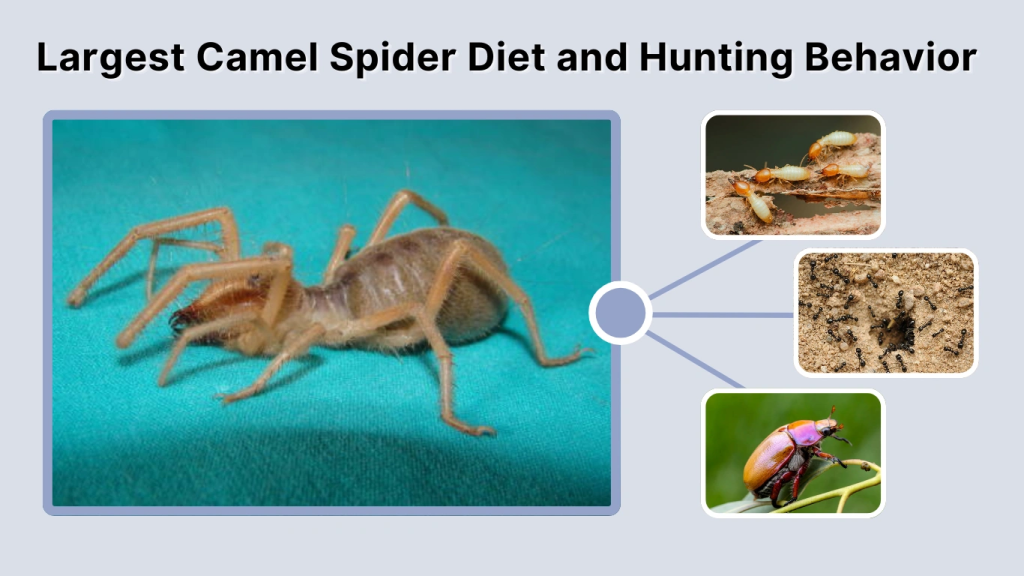
Camel spiders are carnivorous hunters that feed on a wide variety of small animals.
What Camel Spiders Eat
Their diet typically includes:
- Insects
- Beetles
- Ants
- Termites
- Small lizards
- Other arachnids
Large camel spiders may occasionally attack slightly larger prey if the opportunity arises.
Hunting Strategy
Unlike true spiders, camel spiders do not spin webs. Instead, they actively hunt for food by moving across the desert floor.
They rely on their strong senses and quick reactions to detect prey.
How They Capture Prey
When a camel spider finds prey, it quickly runs toward it and grabs it with its powerful chelicerae.
The jaws crush and tear the prey apart, allowing the camel spider to feed. Because camel spiders lack venom glands, they depend entirely on their strong jaws to subdue prey.
Life Cycle of Camel Spiders
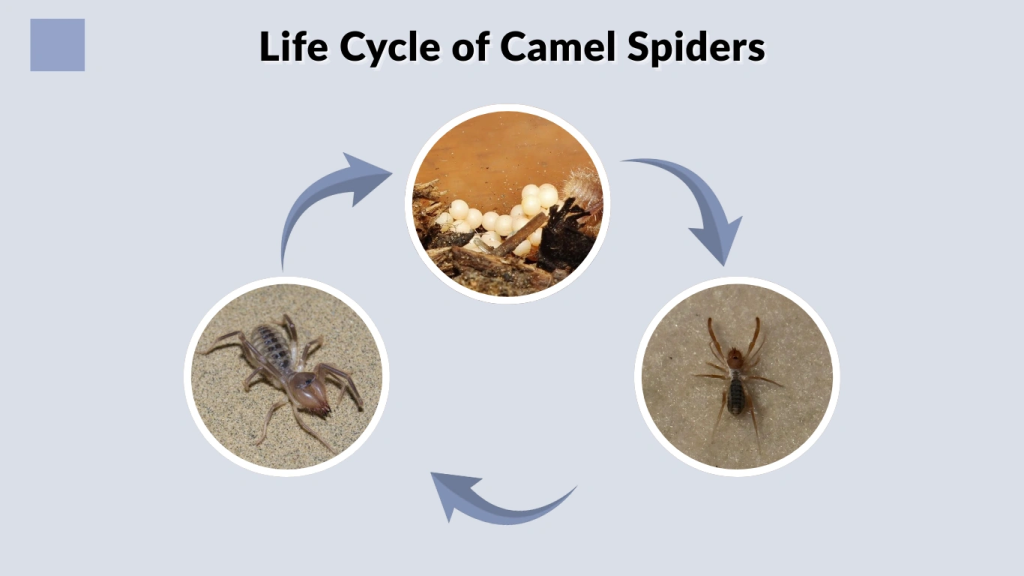
Camel spiders pass through several stages during their life cycle, beginning as eggs and eventually developing into adult hunters.
Mating Behavior
Mating behavior can be complex and sometimes aggressive. Male camel spiders approach females carefully to avoid being attacked.
In some species, the male uses specialized movements and mouthparts to transfer sperm to the female.
Egg Laying
After mating, the female lays dozens to hundreds of eggs inside a burrow. She may guard the eggs until they hatch to protect them from predators.
Spiderling Development
Once the eggs hatch, the young camel spiders begin developing through several stages. As they grow, they shed their outer skeleton in a process known as molting.
Each molt allows the spider to grow larger.
Lifespan
Camel spiders generally have a short lifespan, usually living for about one to two years depending on the species and environmental conditions.
Are Large Camel Spiders Dangerous?
Camel spiders often look intimidating because of their size and large jaws, but they are not considered dangerous to humans.
Do Camel Spiders Bite?
Camel spiders can bite if they feel threatened or are handled. Their bite may be painful due to their strong jaws.
However, bites are rare because these animals usually try to escape rather than attack.
Venom Myth
A common myth claims that camel spiders are highly venomous. In reality, camel spiders do not possess venom glands, so they cannot inject venom like many spiders or scorpions.
Bite Effects
If a bite occurs, symptoms may include:
- Temporary pain
- Minor swelling
- Slight redness
These symptoms usually heal quickly without serious complications.
Debunking Camel Spider Myths
Many stories about giant camel spiders appeared on the internet and in popular media. Some myths claim that they can grow extremely large or attack people aggressively.
In reality, most of these claims are greatly exaggerated, and camel spiders are simply fast desert predators.
Largest Camel Spider vs Other Large Arachnids
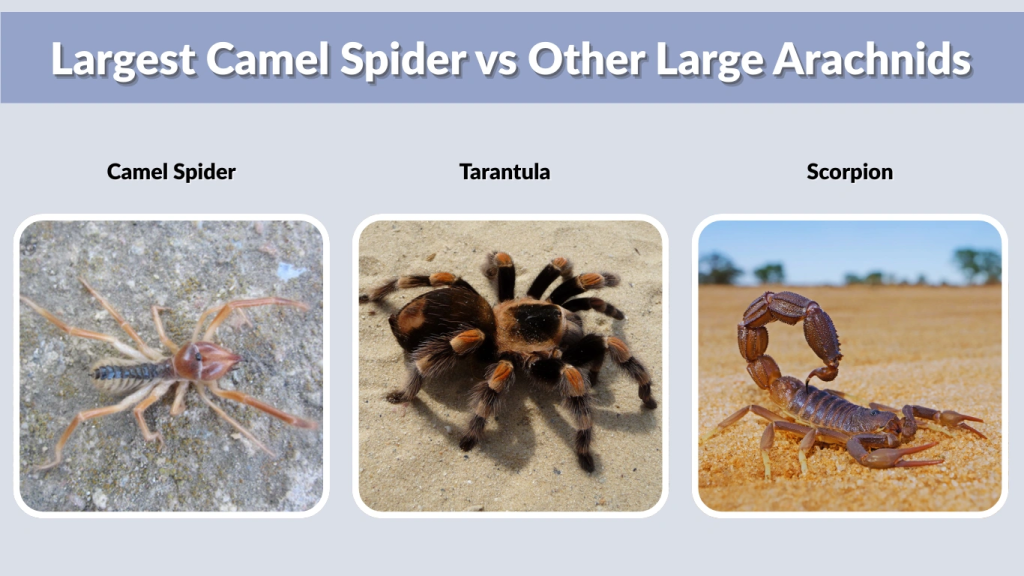
Camel spiders are often compared with other well-known arachnids.
Camel Spider vs Tarantula
Tarantulas typically have larger bodies and thicker legs, while camel spiders are lighter and faster.
Tarantulas also possess venom, while camel spiders rely solely on their jaws.
Camel Spider vs Scorpion
Scorpions have venomous stingers in their tails, while camel spiders lack both venom and stingers.
Camel spiders instead depend on speed and powerful mouthparts.
Camel Spider vs Huntsman Spider
Huntsman spiders are known for their long legs and large size. However, camel spiders are generally faster runners and more active hunters.
Interesting Facts About the Largest Camel Spider
Camel spiders have several fascinating traits:
- They are among the fastest arachnids on land.
- They do not build webs to catch prey.
- Their jaws are extremely powerful for their size.
- Some species produce a rasping sound with their mouthparts.
- They play an important role in controlling insect populations.
FAQs
How large can the largest camel spider get?
The largest camel spiders can reach about 6 inches (15 cm) in leg span, depending on the species.
Where are the largest camel spiders found?
Many of the largest species live in Middle Eastern, North African, and Central Asian deserts.
Are camel spiders dangerous to humans?
No. Camel spiders are not venomous and rarely bite humans.
Do camel spiders really chase people?
They may run toward people because they are seeking shade rather than trying to attack.
What do camel spiders eat?
They feed on insects, small reptiles, and other small animals.
Conclusion
The largest camel spider is an impressive arachnid known for its speed, powerful jaws, and unique desert adaptations. Although their appearance can be intimidating, they are not dangerous to humans and are often misunderstood. Found mainly in deserts and arid regions, camel spiders are skilled hunters that help control insect populations. By learning about their size, behavior, and habitat, we can better appreciate these fascinating desert predators and separate scientific facts from the many myths surrounding them.
