
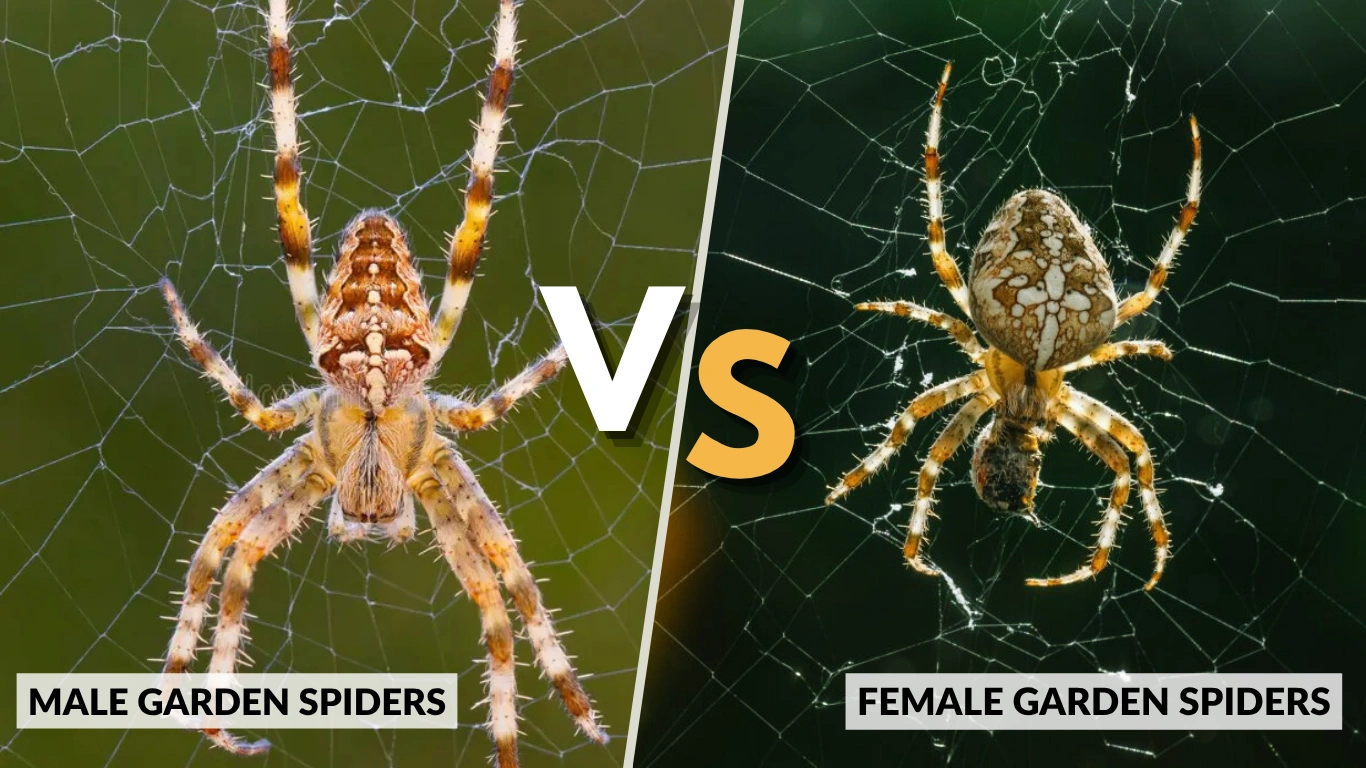
Garden spiders are fascinating orb-weavers found in gardens, fields, and wooded areas worldwide. These spiders, especially the yellow, black, banded, and European varieties, exhibit clear sexual dimorphism — meaning males and females look and behave differently. Understanding these contrasts helps identify species and appreciate how each plays a role in nature’s balance. This article explores the physical, behavioral, and ecological differences between male and female garden spiders.
What Is a Garden Spider?
Garden spiders belong to the orb-weaver family, known for their intricate circular webs. Common species include the yellow garden spider (Argiope aurantia), banded garden spider (Argiope trifasciata), and European garden spider (Araneus diadematus). They are harmless to humans and thrive in sunny, open areas where they can spin large, sticky webs to capture flying insects. These spiders are essential garden allies, naturally reducing pest populations.
Male vs Female Garden Spider: Key Overview
The most striking difference between male and female garden spiders is size. Females are large, strong, and brightly colored, while males are small and less vibrant. This contrast is common among orb-weavers and serves evolutionary purposes. Females need larger bodies to produce eggs and build resilient webs, while males focus on locating mates rather than hunting. The male’s smaller body allows faster movement across webs, helping him find a receptive female quickly during the breeding season.
Females typically stay in one web throughout their life, whereas males often wander to locate potential partners. This mobility explains why males are rarely seen compared to the prominently displayed females in gardens.
Physical Differences Between Male and Female Garden Spiders
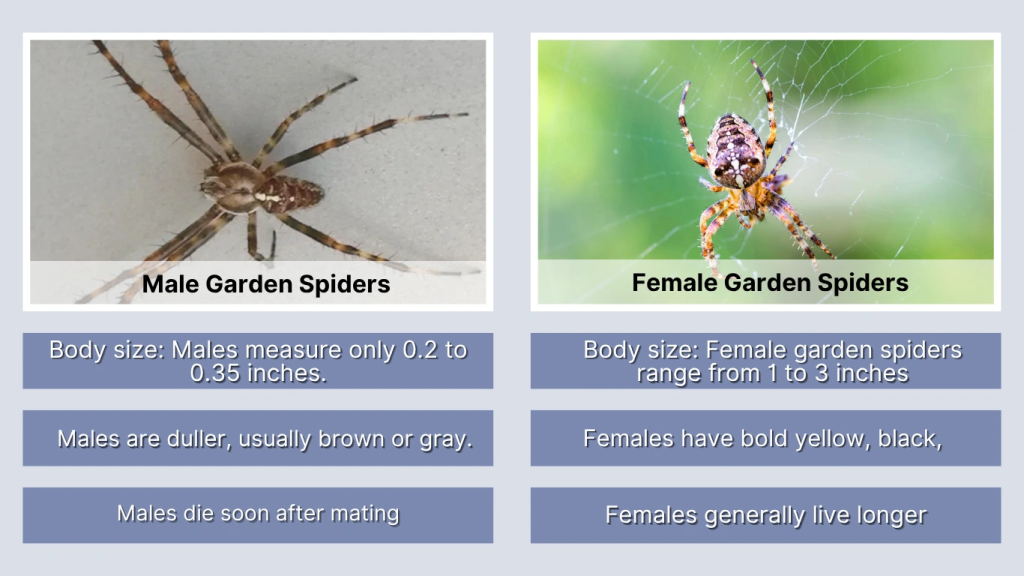
The physical variations between male and female garden spiders are easy to spot once you know what to look for:
- Body size: Female garden spiders range from 1 to 3 inches in total leg span, while males measure only 0.2 to 0.35 inches.
- Coloration: Females have bold yellow, black, or silver markings, depending on the species. Males are duller, usually brown or gray.
- Legs: Females’ legs are thicker and longer, providing stability on large webs. Males’ legs are shorter and slender.
- Web behavior: Females construct and maintain large orb webs. Males either create small temporary webs or inhabit the female’s web edge.
- Lifespan: Females generally live longer, surviving until after egg-laying. Males die soon after mating, often being eaten by the female.
These differences ensure both sexes fulfill unique ecological roles — females as hunters and reproducers, males as pollinators of genetic diversity.
Yellow Garden Spider (Argiope aurantia)
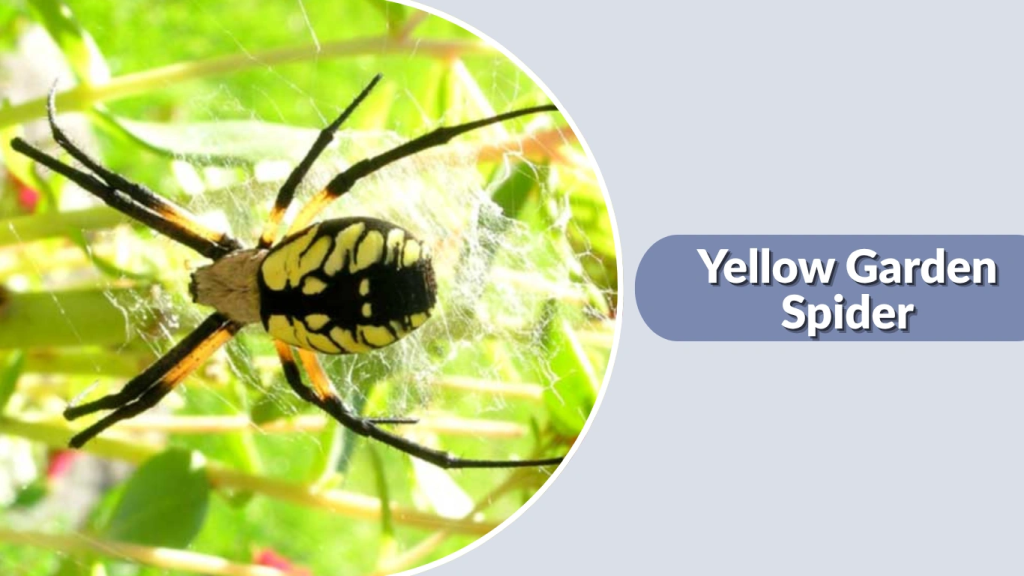
The yellow garden spider, also called the black and yellow garden spider, is one of the most recognizable species. Its female form is eye-catching — large, with vivid yellow and black bands across the abdomen and long legs with orange or brown joints. Females are typically around one inch long, while males are only about a quarter of that size.
Male yellow garden spiders are less colorful and often overlooked. They build small webs near the female’s large orb and cautiously approach when she is ready to mate. After mating, males frequently die or are consumed by the female — a behavior that provides her with nutrients for egg production.
Despite their intimidating look, female yellow garden spiders are not dangerous to humans. Their venom is mild, comparable to a bee sting, and they prefer avoiding confrontation. Their primary focus is maintaining their web and catching insects such as flies, bees, and grasshoppers.
Black and Yellow Garden Spider Differences
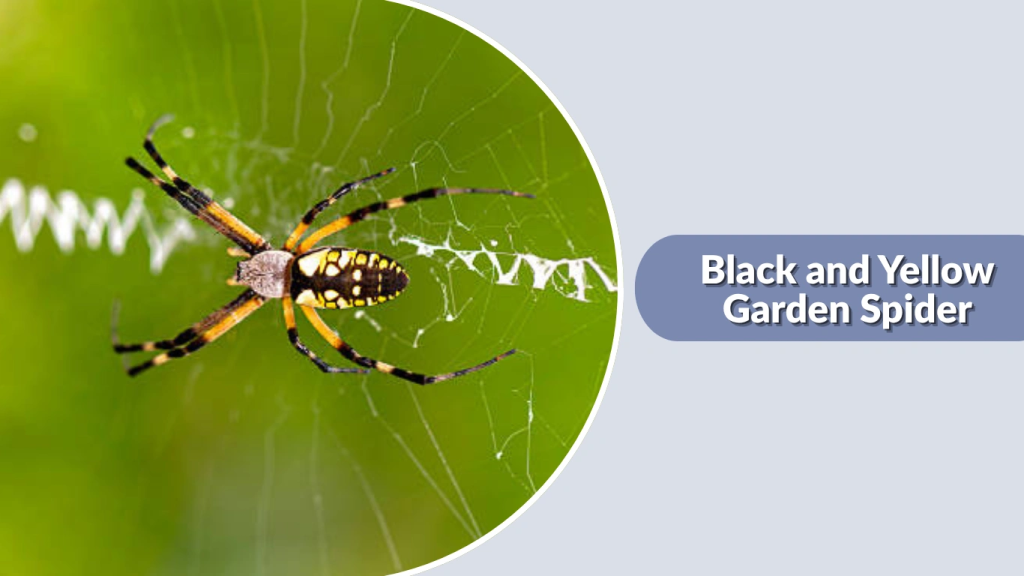
In the black and yellow garden spider species, females dominate in both size and appearance. They create stunning orb webs often featuring a zigzag silk pattern called a stabilimentum, which reflects sunlight and attracts prey.
- Female Appearance: Bright yellow and black abdomen, robust body, and wide leg span.
- Male Appearance: Much smaller, dull brown coloration, and often located on the edges of the female’s web.
- Behavior: Females spend most of their time in the center of the web waiting for prey, while males focus on locating and mating with females.
Interestingly, the stabilimentum silk serves more than one purpose — it helps camouflage the spider and prevent birds from flying into the web. This unique adaptation is primarily constructed by females, highlighting their superior web-building abilities.
After mating, males either retreat or fall victim to the female’s appetite. This behavior is common in orb-weaver species, driven by evolutionary advantage. The nutrients gained from consuming the male help the female strengthen her eggs and improve offspring survival rates.
Banded Garden Spider (Argiope trifasciata)

The banded garden spider, another member of the Argiope genus, is known for its silver, white, and black horizontal stripes. These bands run across the abdomen, creating a beautiful yet intimidating look.
Female banded garden spiders are notably larger and brighter, with long legs and distinct lateral bands. Males, on the other hand, are small and more camouflaged, blending easily with their surroundings. During the breeding season, males build small webs close to the female’s and wait for the right moment to mate.
Though their appearance may seem threatening, banded garden spiders are non-aggressive and rarely bite unless provoked. Their venom is harmless to humans and only used for paralyzing small insects. The female’s primary purpose after mating is to lay eggs — she spins protective silk sacs that hold hundreds of eggs, ensuring the next generation’s survival.
The female banded garden spider’s web can stretch up to two feet across, often built in high, sunny areas where prey is abundant. Males construct smaller, less visible webs nearby, making them much harder to spot.
European Garden Spider (Araneus diadematus)
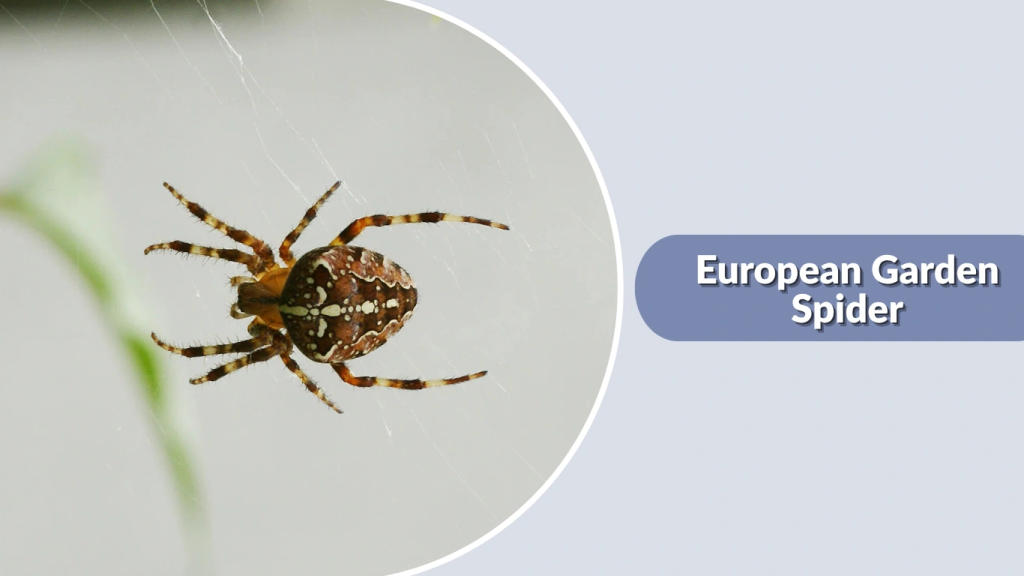
The European garden spider, also known as the cross orb-weaver, is one of the most common spiders in Europe and parts of North America. Females of this species are particularly striking, with a white cross pattern on their back.
Females are plump and colorful, ranging from orange to brown with cream markings. Males are smaller, slimmer, and less vibrant. While the female remains in her web for most of her life, the male roams in search of partners, often risking his life to approach a female.
Their webs are typically large and symmetrical, rebuilt daily to ensure efficiency in capturing prey. The female consumes the old silk every morning to recycle proteins and produce new web threads.
European garden spiders are most active in late summer and early autumn. By this time, females are fully grown, and their presence is noticeable in gardens and forests alike.
Behavioral and Life Cycle Differences
The behavioral patterns of male and female garden spiders differ greatly, especially during mating and survival phases. Females are stationary builders, relying on large orb webs to trap prey, while males are more transient and risk-taking. Their behaviors complement each other, ensuring species continuity.
During mating season, males locate females through pheromones released on silk threads. Once they find a web, they cautiously approach, tapping the silk to signal peaceful intent. If the female accepts, mating occurs quickly, often followed by the male’s death. In many cases, the female consumes the male afterward — a phenomenon called sexual cannibalism. This behavior benefits the female by providing nutrients essential for egg development.
After mating, females focus on egg sac construction. They spin a thick silk casing that holds hundreds of eggs, which are safely suspended within the web or hidden in vegetation. These egg sacs endure the winter, allowing spiderlings to emerge in spring. Males, however, rarely live beyond mating, as their biological purpose is complete.
Female garden spiders generally live for one year, though some may survive slightly longer in warm climates. Their lifecycle includes hatching, several molting stages, mating, and egg production. Males live for only a few months, highlighting the evolutionary strategy of investing energy in reproduction rather than longevity.
Are Female Garden Spiders Dangerous?

Despite their intimidating size and color, female garden spiders are not dangerous to humans. Their venom is mild and designed to paralyze small insects, not mammals. A bite might cause minor redness or itching similar to a bee sting but is extremely rare. These spiders prefer to retreat rather than attack and only bite in self-defense.
In fact, garden spiders are beneficial garden dwellers. They help control insect populations by catching mosquitoes, flies, and pests in their webs. Farmers and gardeners appreciate them as natural pest control agents, contributing to ecological balance without harmful chemicals.
It’s also worth noting that the female’s web is her territory. She rarely leaves it unless environmental conditions change drastically. If you see one in your garden, it’s best to admire it from a distance and let her continue her valuable work.
Quick Comparison Table
| Feature | Female Garden Spider | Male Garden Spider |
| Size | 1–3 inches (including legs) | 0.2–0.35 inches |
| Coloration | Bright yellow, black, silver, or orange | Dull brown or gray |
| Web | Builds and maintains large orb web | Often stays near female’s web |
| Behavior | Stationary, defensive, predatory | Mobile, mate-seeking |
| Lifespan | Up to 1 year | Few months |
| Role in Reproduction | Lays hundreds of eggs | Mates once and dies |
This table summarizes the major contrasts between male and female garden spiders across multiple species — yellow, banded, black, and European. It highlights how their differing features serve specific biological purposes essential for reproduction and survival.
Female Garden Spider Facts (List Section #3)
- Egg Production: Females can lay up to 1,000 eggs in several silk sacs.
- Web Repair: They rebuild and reinforce their webs daily to maintain strength.
- Feeding Habits: They feed on large insects such as grasshoppers and wasps.
- Life Expectancy: Most live through one breeding season.
- Post-Mating Behavior: After laying eggs, females gradually weaken and die with the onset of cold weather.
These traits demonstrate the resilience and precision of female garden spiders. Their lifecycle ensures the continuation of future generations while keeping insect populations under control.
Male Garden Spider Behavior
Males play a brief but vital role in the species’ lifecycle. They spend most of their adulthood searching for females, guided by pheromones on web silk. Upon finding a mate, males exhibit cautious courtship behaviors, often vibrating the web rhythmically to show they’re not prey.
Once mating occurs, males usually die soon afterward. In many cases, the female consumes them, but even if not, they rarely survive beyond this phase. Their small size and limited hunting ability mean they rely mostly on small prey or leftovers caught in female webs. Though their life is short, males ensure genetic variation and species continuity, fulfilling their evolutionary role efficiently.
How to Identify a Female Garden Spider
Identifying a female garden spider is simple when you know the signs:
- Large, rounded abdomen with distinct color bands or patterns.
- Positioned in the center of the web, facing downward.
- Web with a zigzag stabilimentum, particularly in Argiope species.
- Less movement compared to males, who are usually seen wandering.
Females are also more visible during late summer and autumn when they reach full size. They often remain in the same web until death, making them easy to observe in consistent locations.
Benefits of Garden Spiders in Ecosystems
Both male and female garden spiders play important roles in maintaining natural pest balance. By capturing insects such as moths, beetles, and flies, they reduce the need for chemical pesticides. This helps protect plant health and supports pollinator populations indirectly.
Female garden spiders, in particular, consume hundreds of insects throughout their lifetime. Their webs act as both a trap and an ecological filter, keeping pest numbers manageable. Males contribute to this balance by ensuring continuous reproduction, allowing spider populations to renew annually.
Interesting Facts About Garden Spiders
- Garden spiders are diurnal, active mostly during the day.
- The zigzag pattern in their web may reflect ultraviolet light to lure prey.
- Females can consume and rebuild an entire web daily, recycling silk proteins.
- Spiderlings disperse by ballooning, using silk threads to float on the wind.
- The European garden spider is also known as the “cross spider” due to its white dorsal markings.
These fascinating behaviors make garden spiders a perfect example of nature’s precision and adaptation. Observing their lives reveals the delicate balance of survival, reproduction, and cooperation within ecosystems.
FAQs
What is the main difference between male and female garden spiders?
The primary difference lies in size and color. Female garden spiders are much larger and more vibrant, building large webs for hunting and egg-laying. Males are smaller, duller, and focused solely on locating mates during the breeding season.
How can I identify a female yellow garden spider?
A female yellow garden spider features a bright black-and-yellow abdomen, large body, and a noticeable zigzag web pattern. Males, in contrast, are smaller, brownish, and typically found near the web’s edge during mating periods.
Are female garden spiders more dangerous than males?
No, both male and female garden spiders are harmless to humans. Their venom is designed for small insects and rarely affects people. Bites are extremely uncommon and cause only minor irritation if they occur.
Why does the female garden spider eat the male?
After mating, some female garden spiders eat the male to gain extra nutrients for egg development. This natural behavior ensures stronger offspring and helps sustain the female’s energy during the reproductive phase.
What size is a female garden spider compared to a male?
Female garden spiders can reach up to an inch in body length or more with legs extended, while males are about one-third that size. This difference allows females to handle larger prey and produce more eggs during reproduction.