
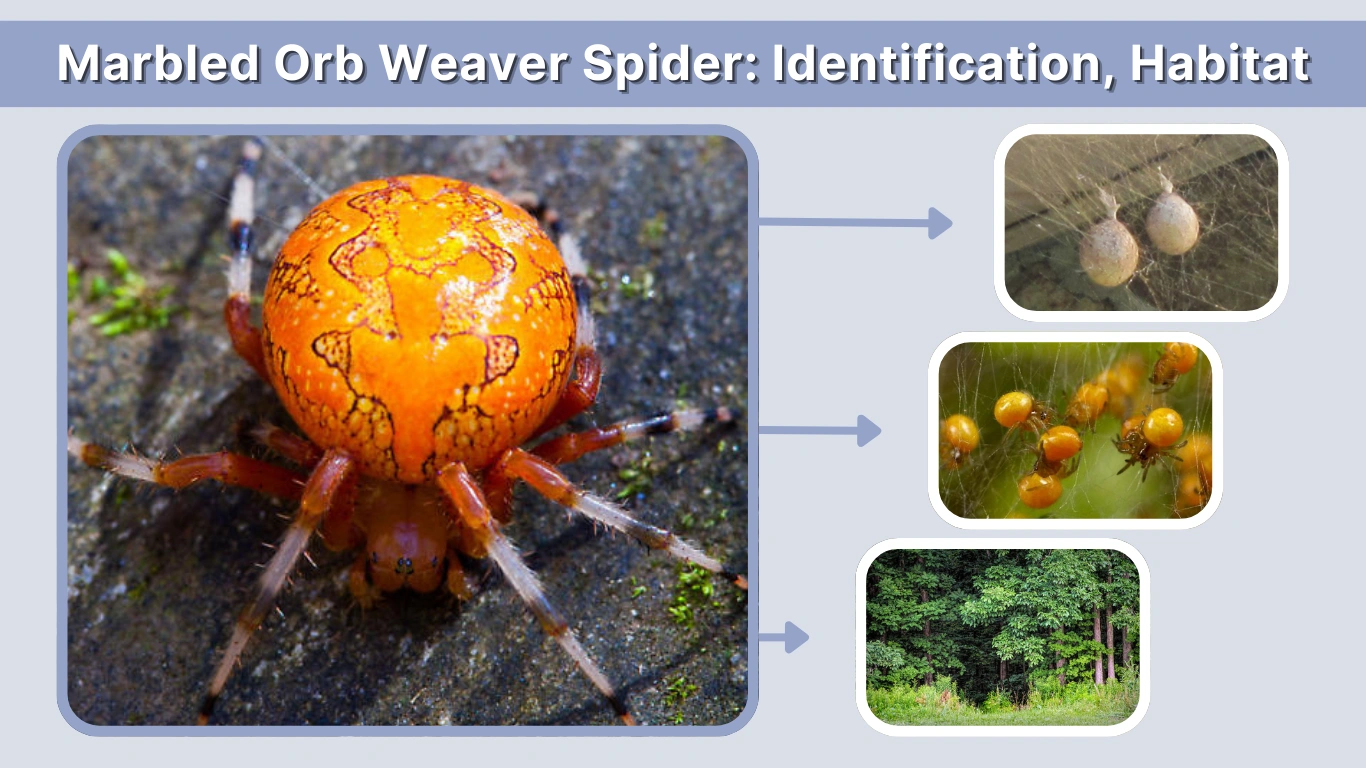
The marbled orb weaver spider is a striking species known for its bright colors and beautiful marbled patterns. Often called the pumpkin spider because of its orange, pumpkin-like appearance, this spider is commonly seen in late summer and autumn. It belongs to the orb-weaver family, famous for building large circular webs to catch flying insects. Despite their bold appearance, marbled orb weavers are harmless to humans and play an important role in controlling insect populations in gardens and natural habitats.
What Is a Marbled Orb Weaver Spider?
The marbled orb weaver spider is a species of orb-weaving spider that belongs to the Araneidae family, a large group of spiders known for their impressive circular webs. These spiders are skilled web builders and use their intricate silk structures to capture flying insects.
The marbled orb weaver is especially recognizable because of its rounded abdomen and distinctive marbled markings. Its bright colors and unique patterns make it one of the most visually striking orb weavers found in nature.
These spiders are typically active during the late summer and fall, when they reach maturity and begin building large webs to hunt for insects. During this time, they are often seen in gardens, forests, and fields.
Scientific Classification
The scientific name of the marbled orb weaver spider is Araneus marmoreus. It belongs to the genus Araneus, which includes many common orb-weaving spiders.
Scientific classification:
- Kingdom: Animalia
- Phylum: Arthropoda
- Class: Arachnida
- Order: Araneae
- Family: Araneidae
- Genus: Araneus
- Species: Araneus marmoreus
Orb weaver spiders in this genus share similar web-building behaviors and body structures.
Why It Is Called the Pumpkin Spider
One of the most interesting aspects of the marbled orb weaver is its nickname: pumpkin spider. This name comes from the spider’s bright orange coloration and its round abdomen, which often resembles a small pumpkin.
The pumpkin-like appearance becomes most noticeable during autumn, which is also when these spiders are most active and easiest to observe. Their vibrant color can vary from deep orange to yellow or brown.
This seasonal appearance and color give the spider a strong association with fall landscapes.
Physical Characteristics
Marbled orb weaver spiders have several distinctive physical features that make them easy to recognize.
Key characteristics include:
- A large, rounded abdomen
- Bright orange, yellow, or brown coloration
- Marble-like patterns on the abdomen
- Hairy legs
- Eight small eyes typical of orb weavers
The marbled pattern on the abdomen can appear as swirling or mottled markings, giving the spider its name. These patterns vary among individuals, so no two spiders look exactly the same.
Another notable feature is the spider’s relatively bulbous abdomen, which is much larger than its head and thorax.
Male vs Female Differences
Like many spider species, marbled orb weavers show clear differences between males and females.
Female marbled orb weavers are significantly larger and are responsible for building the large orb-shaped webs used for hunting. They often remain near the center of the web or hide nearby while waiting for prey.
Male marbled orb weavers are much smaller and more slender. Their main role is to search for females during the breeding season. Because they do not build large webs, males are less commonly seen.
These differences in size and behavior help ensure successful reproduction.
How to Identify a Marbled Orb Weaver Spider
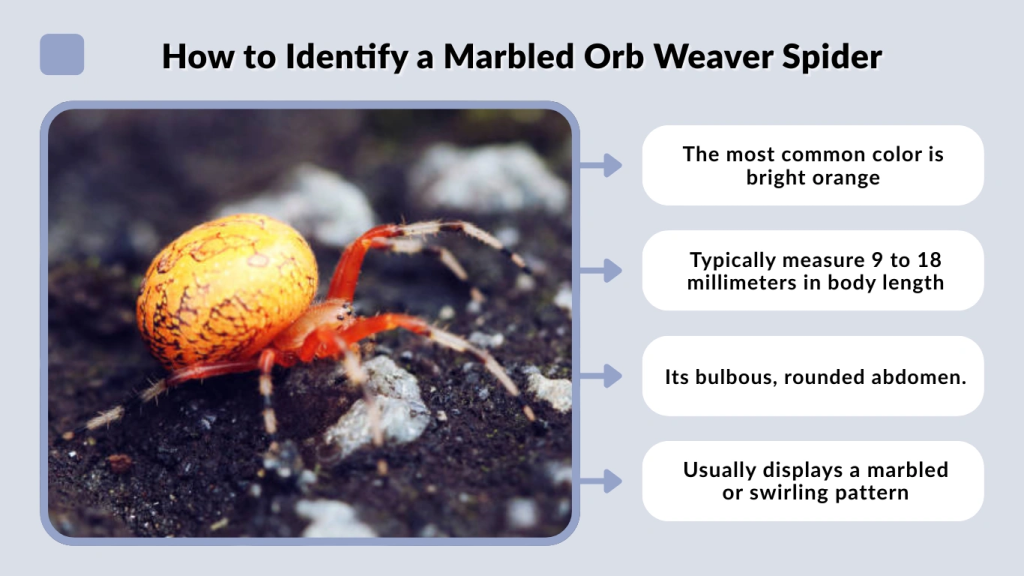
Identifying a marbled orb weaver spider is fairly straightforward because of its unique appearance. Its bright colors, rounded abdomen, and distinctive web make it stand out from many other spider species.
Body Color and Patterns
The marbled orb weaver is known for its vivid coloration and intricate patterns. The most common color is bright orange, but individuals may also appear yellow, tan, or brown.
The abdomen usually displays a marbled or swirling pattern, which may include lighter markings or dark patches. These patterns resemble marble stone textures, giving the spider its name.
Some variations of the species may show a more pronounced pattern, while others appear more uniformly colored.
Body Size
Marbled orb weavers are considered medium to large spiders. Adult females typically measure 9 to 18 millimeters in body length, while males are much smaller.
When their legs are fully extended, the spider may appear considerably larger. The large abdomen makes the spider look bulky compared to many other species.
Distinctive Abdomen Shape
One of the most noticeable features of the marbled orb weaver is its bulbous, rounded abdomen. This shape gives the spider its pumpkin-like appearance.
The abdomen is often wider than the spider’s cephalothorax, creating a distinct body profile that helps distinguish it from other orb weaver species.
Web Appearance
Like other orb weavers, the marbled orb weaver builds large circular webs that can span several feet across. These webs are typically constructed between plants, branches, or other structures.
The web contains radial lines connected by spiral threads coated with sticky silk. Flying insects that collide with these threads become trapped, providing food for the spider.
Habitat and Distribution
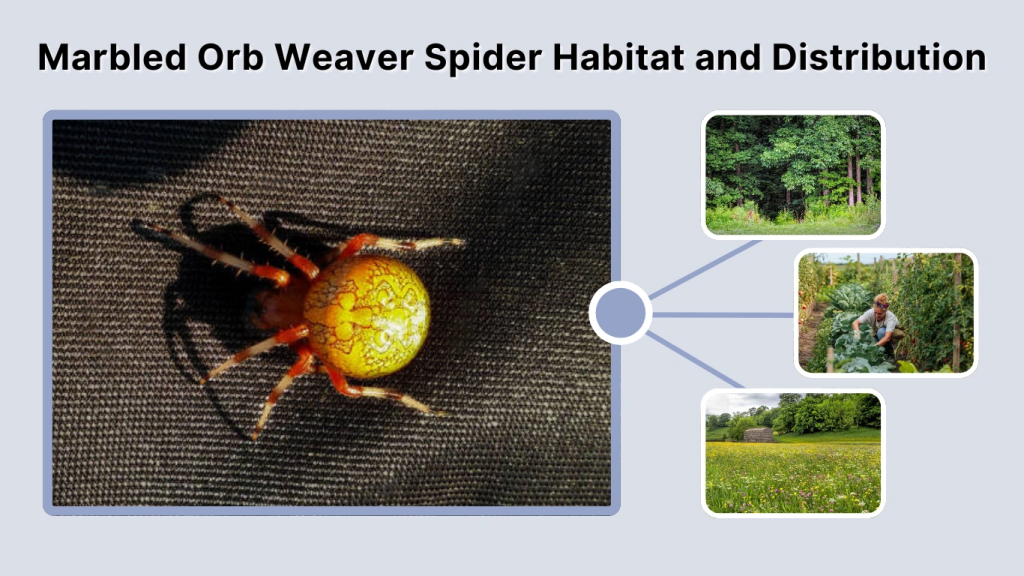
Marbled orb weaver spiders are adaptable and can be found in many types of environments. They prefer locations where insects are abundant and where suitable structures are available for web construction.
Where Marbled Orb Weavers Live
These spiders commonly live in areas with dense vegetation. Typical habitats include:
- Forest edges
- Gardens
- Meadows
- Fields
- Shrubs and bushes
They often build their webs between tall plants or across open spaces where flying insects are likely to pass.
Geographic Distribution
The marbled orb weaver spider has a wide geographic range. It can be found throughout North America, particularly in the United States and Canada.
The species is also present in Europe and parts of Asia, where it occupies similar habitats.
Preferred Environmental Conditions
Marbled orb weavers tend to prefer cooler and slightly moist environments. They are frequently found near wooded areas, streams, or locations with thick vegetation.
These conditions provide both shelter and a steady supply of insects. As a result, marbled orb weavers often become more noticeable during late summer and early autumn, when they reach maturity and their webs become larger.
Web Building Behavior
Marbled orb weaver spiders are excellent web builders. Like other orb weavers, they construct large circular webs that act as traps for flying insects. These webs are carefully designed structures made from different types of silk, each serving a specific purpose.
Orb Web Structure
The web of a marbled orb weaver typically has a classic orb shape, resembling a wheel. It contains several important parts that help capture prey efficiently.
These parts include:
- Anchor threads that attach the web to surrounding plants or structures
- Radial lines that extend from the center outward
- Spiral capture threads coated with sticky silk
The sticky spiral threads are responsible for trapping insects that fly into the web.
Web Placement
Marbled orb weavers usually build their webs in areas where insects frequently fly. Good web placement increases the spider’s chances of catching prey.
Common web locations include:
- Between shrubs and bushes
- Across garden paths
- Between tree branches
- In tall vegetation or near forest edges
Sometimes their webs stretch several feet across, making them quite noticeable.
When They Build Their Webs
These spiders are mostly nocturnal, meaning they are active at night. Marbled orb weavers typically build or repair their webs in the evening.
At night, they wait near the center of the web or hide nearby until an insect becomes trapped.
Daily Web Maintenance
Many orb weaver spiders rebuild their webs regularly. Marbled orb weavers may repair damaged areas or construct a new web when the old one becomes less effective.
Some spiders even consume parts of their old web to recycle the silk proteins.
Diet and Hunting Behavior
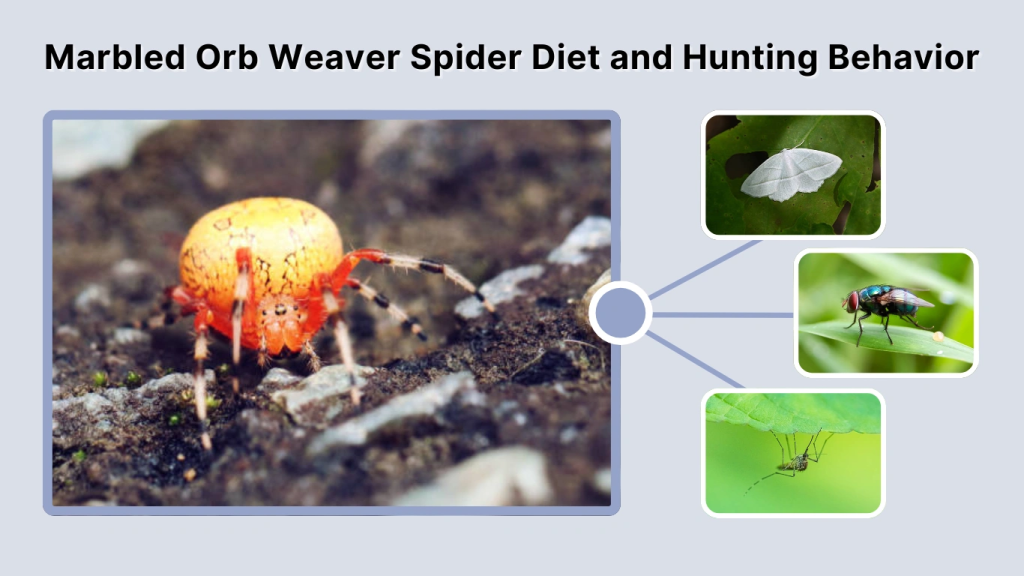
Marbled orb weaver spiders are carnivorous predators that mainly feed on insects. Their webs act as highly effective traps that allow them to capture prey without actively chasing it.
What Marbled Orb Weaver Spiders Eat
Their diet consists mostly of flying insects, including:
- Flies
- Mosquitoes
- Moths
- Beetles
- Small flying insects
Because they capture many insects, marbled orb weavers are considered helpful in gardens and natural environments.
How They Capture Prey
When an insect flies into the web, it becomes stuck in the sticky silk threads. As the insect struggles, vibrations travel through the web’s radial lines.
The spider senses these vibrations and quickly moves toward the trapped insect.
Feeding Process
Once the spider reaches its prey, it bites the insect and injects venom through its fangs. The venom immobilizes the prey and begins breaking down its internal tissues.
The spider may wrap the insect in silk before feeding or store it for later consumption.
Life Cycle of the Marbled Orb Weaver Spider
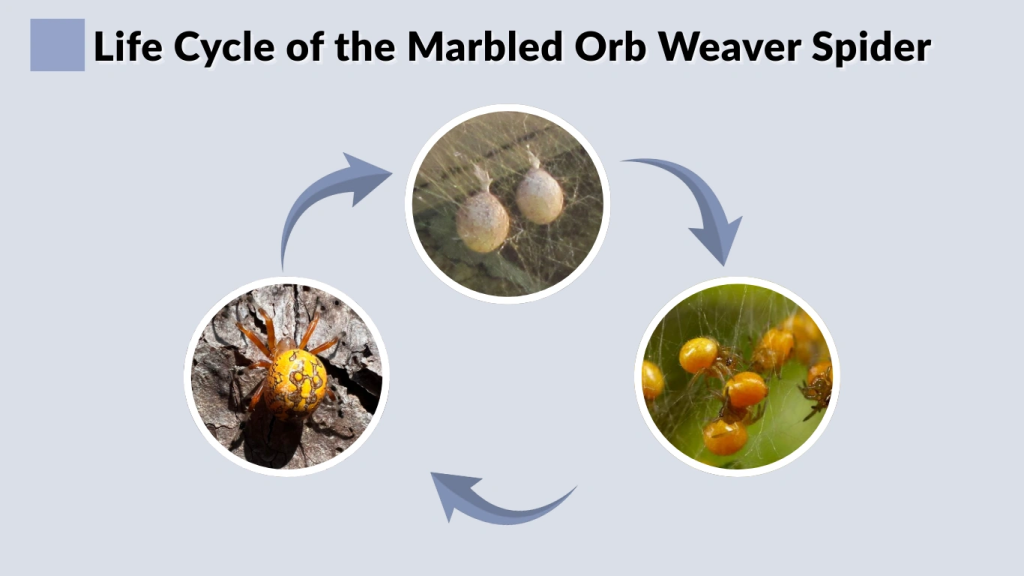
The life cycle of the marbled orb weaver spider follows several stages, beginning with eggs and ending with adult spiders that reproduce before the cycle repeats.
Egg Sac Production
After mating, female marbled orb weavers produce egg sacs that contain hundreds of eggs. These sacs are usually attached to leaves, tree bark, or other protected surfaces.
The egg sac protects the developing spiderlings from predators and environmental conditions.
Spiderling Stage
When the eggs hatch, tiny spiderlings emerge. At this stage, they are very small and vulnerable.
Many spiderlings disperse using a method known as ballooning. They release thin strands of silk that catch the wind, allowing them to travel to new locations.
Adult Stage
As the spiderlings grow, they molt several times before reaching adulthood. Adult marbled orb weavers are capable of building large webs and capturing larger prey.
Adult spiders are most commonly seen during late summer and fall.
Lifespan
Most marbled orb weaver spiders live for about one year. They hatch in spring, grow throughout summer, and reach maturity by autumn.
After reproducing, adult spiders usually die, while the eggs survive the winter and hatch the following season.
Are Marbled Orb Weaver Spiders Dangerous?
Despite their large size and bright colors, marbled orb weaver spiders are generally harmless to humans.
Venom and Toxicity
Like most spiders, marbled orb weavers use venom to immobilize prey. However, their venom is designed to affect small insects and is not dangerous to humans.
Spider Bite Symptoms
Bites from marbled orb weavers are extremely rare because these spiders prefer to avoid contact with humans.
If a bite does occur, symptoms are usually mild and may include:
- Minor redness
- Mild swelling
- Slight irritation
These symptoms usually disappear quickly without medical treatment.
Defensive Behavior
Marbled orb weavers are non-aggressive spiders. When disturbed, they often drop from their webs or hide rather than attacking.
This defensive behavior helps them avoid predators and human interaction.
Benefits of Marbled Orb Weaver Spiders
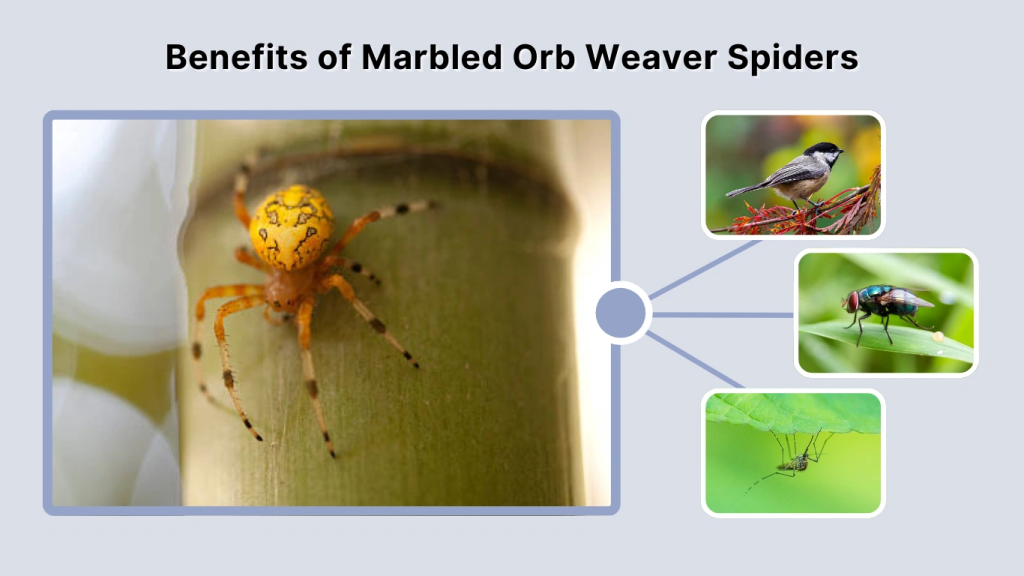
Marbled orb weaver spiders provide several ecological benefits and play an important role in controlling insect populations.
Natural Pest Control
By capturing insects such as flies and mosquitoes, these spiders help reduce pest populations naturally.
This makes them especially valuable in gardens and agricultural areas.
Importance in Ecosystems
Orb weavers are an important part of the food chain. They serve as predators of insects while also becoming prey for birds, reptiles, and other animals.
This balance helps maintain healthy ecosystems.
Garden Benefits
Gardeners often welcome orb weaver spiders because they reduce the number of harmful insects without the use of chemical pesticides.
Their presence contributes to a more balanced and natural garden environment.
Marbled Orb Weaver vs Other Orb Weaver Spiders
Marbled orb weavers share many characteristics with other orb weaver spiders, but they also have some distinct features.
Marbled Orb Weaver vs Spotted Orb Weaver
The marbled orb weaver usually has bright orange coloration and marbled patterns, while the spotted orb weaver often displays white spots on its abdomen.
Both species build similar circular webs.
Marbled Orb Weaver vs Cross Orb Weaver
The cross orb weaver is known for a cross-shaped pattern on its abdomen, which differs from the swirling marbled pattern of the marbled orb weaver.
Their habitats and behaviors are otherwise quite similar.
Similar Orb Weaver Species
Many spiders within the Araneus genus resemble the marbled orb weaver, but the unique marbled markings and pumpkin-like abdomen help distinguish it.
How to Manage Marbled Orb Weaver Spiders Around Your Home
Although marbled orb weavers are beneficial, some people may prefer to reduce spider webs near entrances or walkways.
When to Leave Them Alone
If the spider is located in a garden or away from frequently used areas, it is usually best to leave it alone. These spiders help control insect populations naturally.
Safe Removal Methods
If a spider builds its web in an inconvenient location, it can be gently relocated using a container or stick. Moving it to a nearby garden area allows it to continue catching insects.
Preventing Webs in Walkways
To reduce webs around your home:
- Turn off unnecessary outdoor lights at night
- Remove webs regularly with a broom
- Trim plants or branches near doorways
These steps help reduce the number of insects that attract spiders.
Interesting Facts About Marbled Orb Weaver Spiders
Marbled orb weavers have several fascinating characteristics:
- They are often called pumpkin spiders because of their orange color.
- They are most visible during the autumn season.
- Female spiders are significantly larger than males.
- Their webs can stretch several feet across.
- Each spider has a unique marbled pattern on its abdomen.
FAQs
What does a marbled orb weaver spider look like?
It has a round abdomen with marbled or swirling patterns and is often bright orange, yellow, or brown.
Are marbled orb weavers poisonous?
They have venom used to capture prey, but it is harmless to humans.
Why are they called pumpkin spiders?
Their bright orange color and round abdomen resemble a small pumpkin.
Where do marbled orb weavers live?
They are commonly found in forests, gardens, fields, and areas with dense vegetation.
Are orb weaver spiders beneficial?
Yes, they help control insect populations and contribute to healthy ecosystems.
Conclusion
The marbled orb weaver spider is a fascinating species known for its beautiful marbled patterns and pumpkin-like appearance. Found in forests, gardens, and fields, these spiders build impressive circular webs that help them capture flying insects. Although their large size and bright colors may seem intimidating, they are harmless and play an important role in controlling pests. By understanding their behavior, habitat, and ecological importance, people can learn to appreciate these remarkable spiders and the benefits they provide to the environment.
