

The Japanese spider crab (Macrocheira kaempferi) is one of the ocean’s most astonishing creatures. Famous for its enormous size and spider-like appearance, it has intrigued scientists, divers, and storytellers for centuries. As the largest living crab species in the world, it plays a unique role in marine ecosystems while also capturing human imagination. To truly appreciate this deep-sea giant, here are 12 fascinating facts about the Japanese spider crab that highlight its size, lifestyle, and importance.
1. Largest Crab in the World
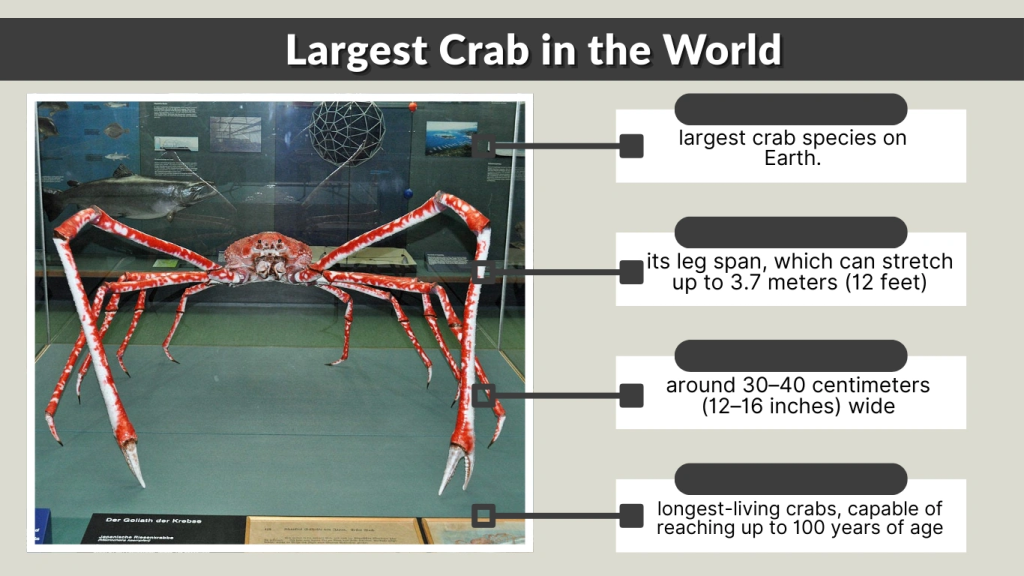
The Japanese spider crab holds the title of the largest crab species on Earth. No other crustacean rivals its enormous span, making it a standout among marine animals. Its sheer scale places it at the top of arthropods in terms of size, surpassing even lobsters and king crabs.
2. Incredible Leg Span
The crab’s most striking feature is its leg span, which can stretch up to 3.7 meters (12 feet). To put this in perspective, its reach is longer than the height of most humans. Despite its massive limbs, the crab moves slowly and carefully along the ocean floor, creating an eerie yet mesmerizing sight.
3. Modest Body Size
While its legs are massive, the crab’s carapace (body shell) is relatively modest. It usually measures around 30–40 centimeters (12–16 inches) wide. This contrast between a small body and extremely long legs gives the Japanese spider crab its unusual and almost alien-like appearance.
4. Impressive Lifespan
Japanese spider crabs are among the longest-living crabs, capable of reaching up to 100 years of age. Their slow growth and extended lifespan allow them to reach enormous sizes over decades. This remarkable longevity also means they play a long-term role in their ecosystems.
5. Deep-Sea Habitat

These crabs are native to the Pacific waters surrounding Japan, particularly near Honshu. They live at depths of 150 to 300 meters (490–980 feet), where the water is cold and dark. Their deep-sea environment keeps them hidden from most predators and makes human encounters relatively rare.
6. Seasonal Migrations
Although they usually remain in deep water, Japanese spider crabs migrate to shallower areas during mating season. This behavior makes them more visible to divers and fishermen at certain times of the year. Once mating is over, they return to their deeper habitats to continue their slow, solitary lives.
7. Scavenger Lifestyle
Japanese spider crabs are primarily scavengers, meaning they feed on what they find rather than actively hunting. Their diet includes:
- Dead fish and marine carcasses
- Mollusks such as clams and oysters
- Algae and seaweed
- Organic detritus from the seabed
This diet highlights their adaptability and importance in recycling nutrients.
8. Role in Ecosystem
By feeding on carrion and decaying matter, Japanese spider crabs act as natural recyclers. They help clean the ocean floor, preventing waste buildup and reducing potential disease spread in marine environments. Their ecological role makes them vital for the health of deep-sea ecosystems.
9. Camouflage Ability

Despite their size, Japanese spider crabs are skilled at camouflage. They often cover their shells with algae, sponges, and debris to blend into the rocky seafloor. This helps protect them from predators like octopuses, which are among their few natural threats. Their disguise also aids in ambush feeding.
10. Cultural Significance
In Japanese folklore, spider crabs have been linked to mysterious sea monsters. Stories often describe them as giant, ghostly creatures haunting the ocean depths. While these tales exaggerate reality, they reflect the awe and fear these crabs inspire due to their unusual appearance and size.
11. Aquarium Exhibits
Because of their unique size and appearance, Japanese spider crabs are featured in aquariums worldwide. Visitors are fascinated by their enormous legs stretching across tanks. Seeing one up close emphasizes just how extraordinary these crabs are compared to other marine life. Aquariums also use them to educate the public about deep-sea ecosystems.
12. Conservation Concerns
Although not currently endangered, Japanese spider crabs face conservation challenges. Overfishing during mating season, habitat disturbances, and environmental changes all threaten their populations. Efforts are being made in Japan to regulate fishing and protect this iconic species, ensuring it continues to thrive in the wild.
Conclusion
The Japanese spider crab is far more than just a giant crustacean—it is a living wonder of the deep sea. From its record-breaking leg span to its century-long lifespan and vital role as a scavenger, it represents the incredible diversity of marine life. These 12 facts remind us why the Japanese spider crab fascinates scientists, inspires folklore, and deserves protection. By understanding its unique biology and ecological importance, we can better appreciate the delicate balance of ocean ecosystems and the creatures that sustain them.
FAQs
How big can a Japanese spider crab get?
Japanese spider crabs can grow up to 3.7 meters (12 feet) across from leg tip to leg tip, making them the largest crab species in the world.
Where do Japanese spider crabs live?
They inhabit the Pacific Ocean around Japan, particularly near Honshu, usually at depths of 150–300 meters.
What do Japanese spider crabs eat?
They are omnivores and scavengers, feeding on dead fish, mollusks, algae, seaweed, and decaying organic matter.
Are Japanese spider crabs dangerous to humans?
Despite their size, they are generally not dangerous to humans. They are slow-moving and prefer scavenging over attacking.
Why are Japanese spider crabs important to the ocean ecosystem?
They act as natural recyclers, feeding on dead and decaying matter, which helps keep the seabed clean and balanced.