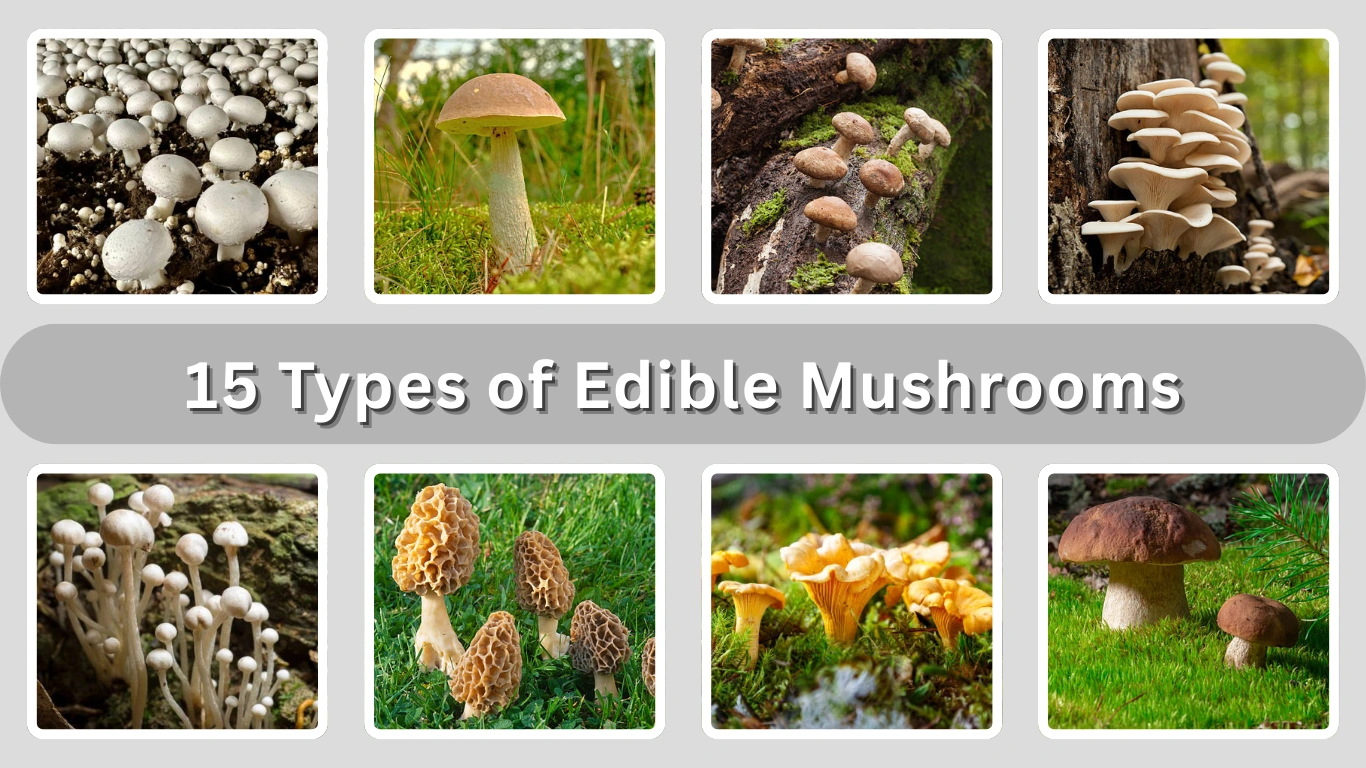





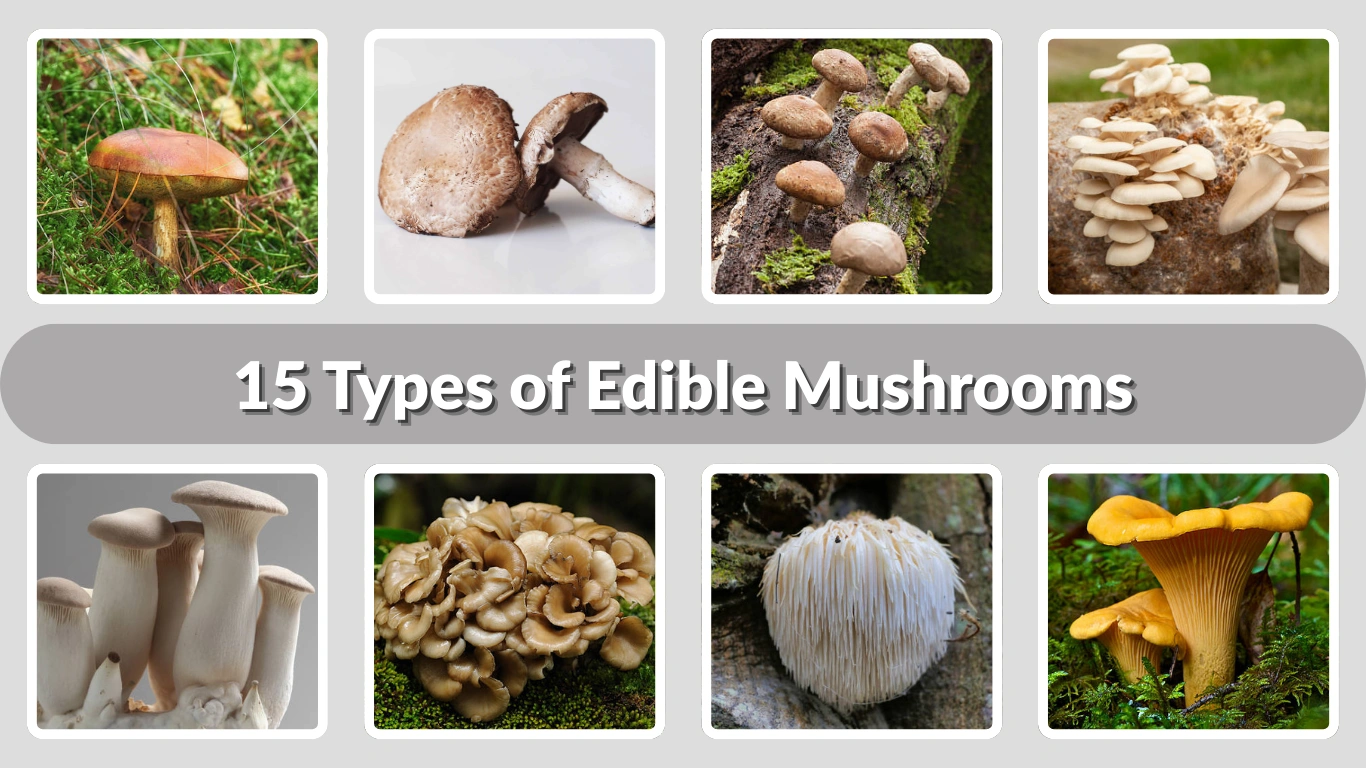
Mushrooms are a versatile and nutritious food enjoyed worldwide for their unique flavors, textures, and health benefits. From common varieties like button and shiitake to gourmet favorites like morel and chanterelle, each mushroom offers a distinct taste and culinary use. Some are cultivated, while others are foraged from the wild. Understanding different edible mushrooms helps enhance cooking, ensures safe consumption, and allows you to explore a variety of delicious and healthy dishes.
1. Button Mushroom (Agaricus bisporus)

Button mushroom is one of the most commonly consumed edible mushrooms worldwide. Known for its mild flavor and smooth texture, it is versatile in both raw and cooked dishes. It is the youngest stage of the Agaricus bisporus species, which later develops into cremini and portobello mushrooms. Its subtle taste allows it to blend easily with a variety of culinary preparations, making it a staple in kitchens globally.
Identification
- Small to medium-sized cap, usually 2–5 cm wide
- Smooth, round cap with white or off-white color
- Short, thick stem
- Pink gills when young, turning brown with maturity
- Mild, earthy aroma
Habitat
Button mushrooms are primarily cultivated rather than foraged in the wild. They grow best on nutrient-rich compost under controlled temperature and humidity. Wild relatives can occasionally be found in grasslands and meadows after rainfall.
Uses
Button mushrooms are eaten raw in salads or cooked in soups, stir-fries, pizzas, and sauces. They can be sautéed, roasted, or grilled, and their mild flavor makes them suitable for absorbing seasonings and sauces.
Nutrition
Button mushrooms are low in calories and fat while providing protein, fiber, B vitamins, potassium, and antioxidants. Their light taste and nutritional content make them ideal for everyday meals.
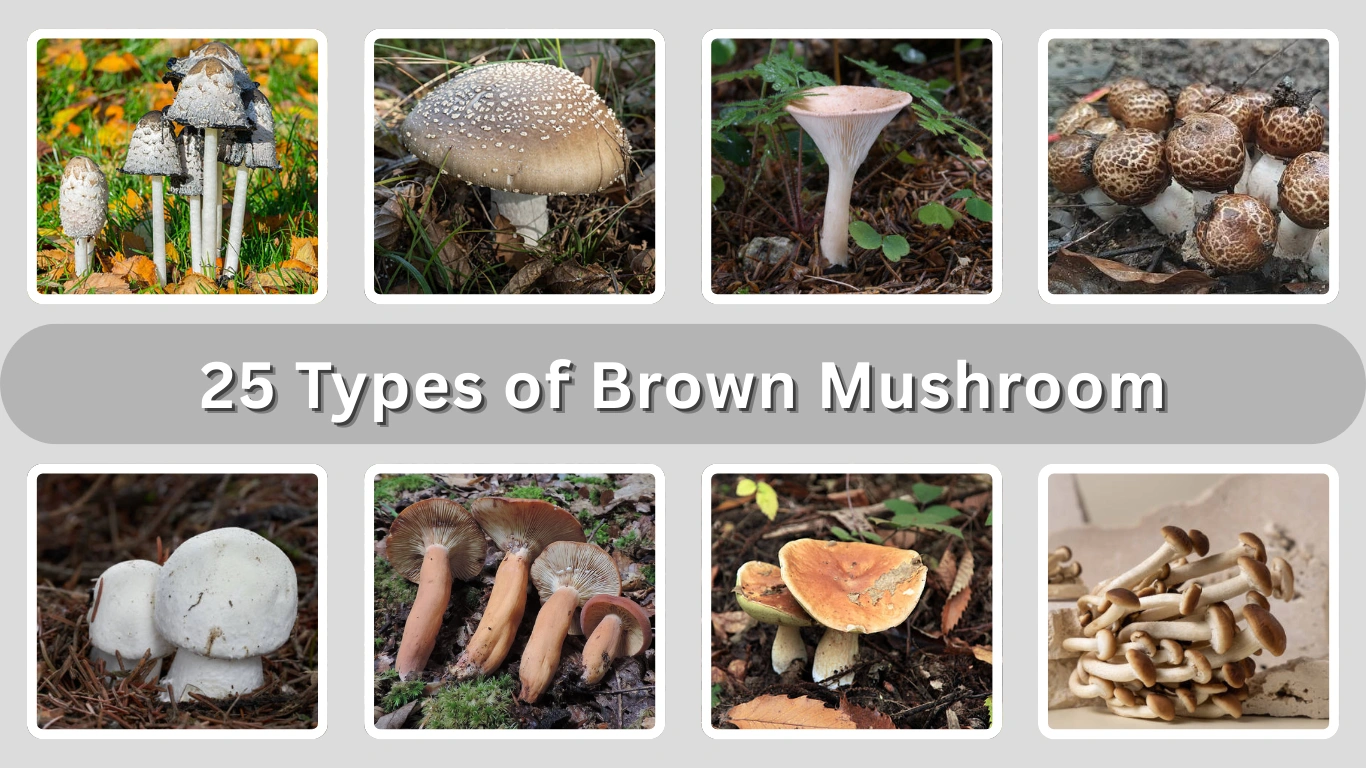
2. Cremini Mushroom (Agaricus bisporus)

Cremini mushroom, also known as baby bella or brown mushroom, is a slightly more mature version of the button mushroom. It has a firmer texture and a deeper, earthier flavor, making it ideal for sautéing and adding richness to dishes. Cremini mushrooms are versatile in cooking, blending well with meats, vegetables, and sauces while offering a subtle, umami taste that enhances a wide variety of recipes.
Identification
- Medium-sized cap, usually 3–7 cm wide
- Light to dark brown, smooth cap surface
- Short, sturdy stem
- Light brown gills, darkening as it matures
- Mild, earthy aroma
Habitat
Cremini mushrooms are mostly cultivated in controlled environments using composted organic matter. Wild forms are occasionally found in grasslands, meadows, and nutrient-rich soils, particularly in temperate climates.
Uses
Cremini mushrooms are used in soups, sauces, risottos, pasta, and stir-fries. Their firm flesh allows them to hold shape during cooking. They can be sautéed, roasted, or grilled to bring out their rich, savory flavor.
Nutrition
Cremini mushrooms are low in calories and fat, providing protein, fiber, B vitamins, potassium, and antioxidants. Their deeper flavor compared to button mushrooms makes them popular in both home and professional cooking.
3. Portobello Mushroom (Agaricus bisporus)

Portobello mushroom is the fully mature form of the Agaricus bisporus species. It is known for its large size, meaty texture, and rich, earthy flavor. Due to its dense flesh, it is often used as a meat substitute in vegetarian and vegan dishes. Portobello mushrooms absorb marinades well and develop a deep umami taste when grilled, roasted, or sautéed, making them a favorite in hearty meals.
Identification
- Large, flat cap, usually 10–15 cm wide
- Dark brown to deep tan color, smooth or slightly wrinkled surface
- Thick, sturdy stem
- Fully developed dark brown gills under the cap
- Strong, earthy aroma
Habitat
Portobello mushrooms are mainly cultivated commercially on composted substrates. In the wild, related forms grow in grasslands and nutrient-rich soils, often appearing after rainfall in temperate regions.
Uses
Portobello mushrooms are ideal for grilling, roasting, or stuffing. They are often used as burger patties, steak substitutes, or pizza toppings. Their large cap can also be stuffed with vegetables, cheese, or grains.
Nutrition
Portobello mushrooms are low in calories and fat, providing protein, fiber, B vitamins, potassium, selenium, and antioxidants. Their meaty texture and rich flavor make them popular for vegetarian and healthy meals.
4. Shiitake Mushroom (Lentinula edodes)

Shiitake mushroom is a popular edible mushroom prized for its rich, savory flavor and firm texture. Widely used in Asian cuisines, it adds depth to soups, stir-fries, and sauces. Shiitake mushrooms are available fresh or dried, with dried ones offering a more concentrated umami flavor. Beyond its culinary appeal, shiitake is also valued for its potential health benefits.
Identification
- Medium-sized cap, typically 5–10 cm wide
- Brown to dark brown, slightly cracked or scaly cap
- Cream-colored gills underneath the cap
- Tough, fibrous stem, often removed before cooking
- Distinct earthy, smoky aroma
Habitat
Shiitake mushrooms naturally grow on decaying hardwoods such as oak, chestnut, and beech. They are widely cultivated on logs or sawdust blocks in shaded, humid conditions.
Uses
Shiitake mushrooms are commonly sautéed, added to soups, stir-fries, and noodle dishes. Dried shiitake are rehydrated to enhance flavor in broths and sauces. They are valued for their savory taste and texture.
Nutrition
Shiitake mushrooms are low in calories, rich in fiber, protein, B vitamins, selenium, and antioxidants. They provide nutrients while enhancing flavor, making them a healthy addition to meals.
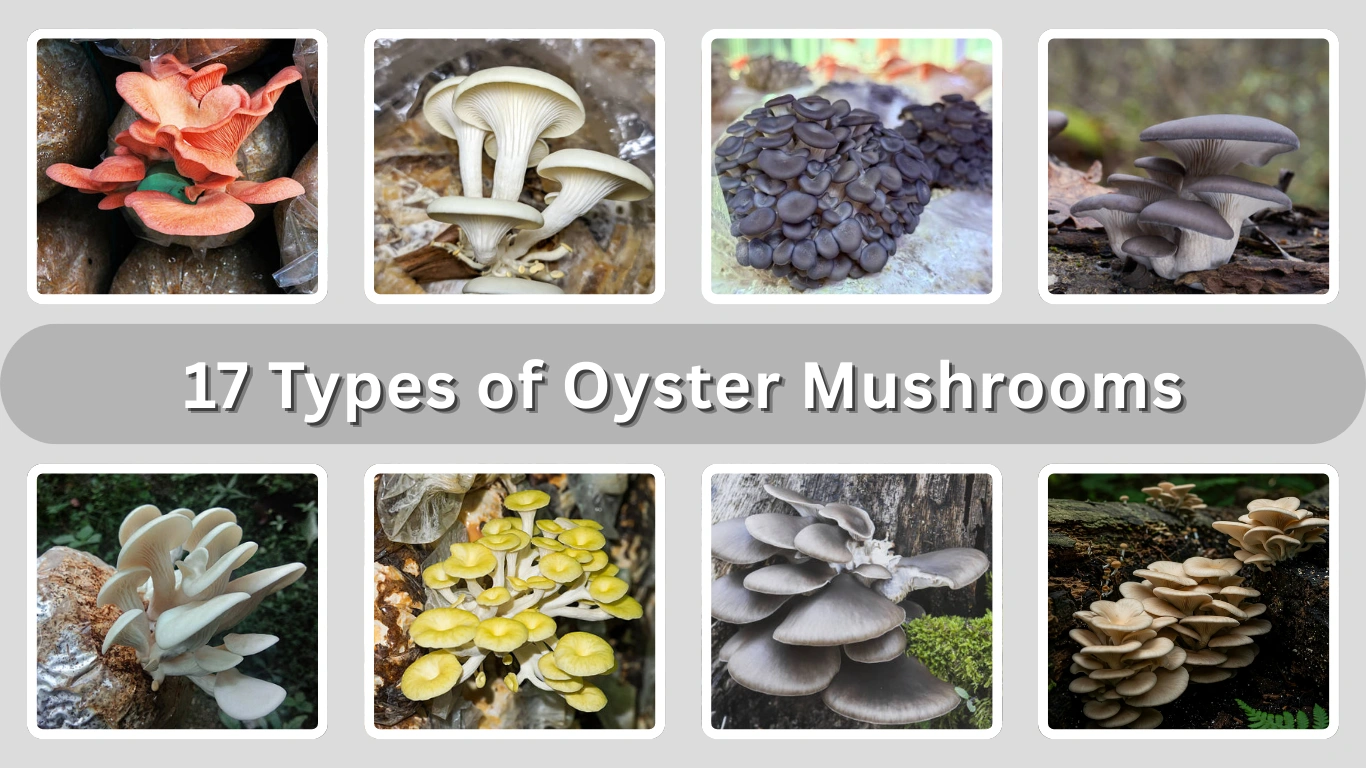
5. Oyster Mushroom (Pleurotus ostreatus)

Oyster mushroom is a popular edible mushroom known for its delicate texture and mild, slightly sweet flavor. Its fan-shaped cap resembles an oyster, giving it its name. It cooks quickly and absorbs the flavors of seasonings and sauces, making it a versatile ingredient in soups, stir-fries, and pasta dishes across various cuisines.
Identification
- Fan-shaped or oyster-like cap, usually 5–15 cm wide
- White, cream, gray, or light brown cap
- Short or off-center stem
- White to pale gills running slightly down the stem
- Delicate, mild aroma
Habitat
Oyster mushrooms grow naturally on decaying hardwood logs and trees, particularly beech, oak, and poplar. They are also widely cultivated on straw, sawdust, or other organic substrates in controlled environments.
Uses
Oyster mushrooms are used in soups, stir-fries, hot pots, and sautés. They can be roasted or grilled as well. Their tender texture allows quick cooking and easy absorption of seasonings.
Nutrition
Oyster mushrooms are low in calories and fat, providing protein, fiber, B vitamins, potassium, and antioxidants. Their mild flavor and nutritional value make them ideal for healthy, versatile dishes.
6. King Oyster Mushroom (Pleurotus eryngii)

King oyster mushroom, also called king trumpet, is known for its thick stem, firm texture, and mild, savory flavor. Unlike other oyster mushrooms, the stem is the main edible part and remains tender even after cooking. Its meaty texture makes it a popular choice for vegetarian dishes and gourmet recipes that mimic seafood or meat.
Identification
- Thick, cylindrical white stem
- Small to medium brown or tan cap
- Firm, dense flesh
- White gills running slightly down the stem
- Mild, pleasant aroma
Habitat
King oyster mushrooms naturally grow in Mediterranean regions but are mostly cultivated commercially on sawdust or straw-based substrates. They require moderate temperatures and high humidity for optimal growth.
Uses
King oyster mushrooms are excellent for grilling, roasting, sautéing, or adding to stir-fries and risottos. Their firm texture allows them to hold shape, and they absorb sauces well, making them ideal for hearty dishes.
Nutrition
King oyster mushrooms are low in calories and fat, rich in protein, fiber, B vitamins, potassium, and antioxidants. Their meaty texture and mild flavor make them suitable for nutritious and vegetarian-friendly meals.
7. Enoki Mushroom (Flammulina velutipes)

Enoki mushroom is a delicate, long-stemmed mushroom known for its crisp texture and mild, slightly sweet flavor. It is popular in East Asian cuisines, especially in soups, hot pots, and salads. Enoki mushrooms are often eaten lightly cooked or raw, preserving their crunchy texture and subtle taste.
Identification
- Very long, thin white stems growing in clusters
- Small, rounded caps at the top
- Smooth, fragile texture
- White gills, tightly packed
- Mild, fresh aroma
Habitat
Enoki mushrooms naturally grow on decaying hardwood trees such as elm and beech. Wild enoki are darker, while cultivated varieties are white due to low-light growth. They thrive in cool, humid environments.
Uses
Enoki mushrooms are commonly added to soups, hot pots, ramen, and stir-fries. They cook quickly and are often added at the final stage. Their crisp texture also makes them a popular garnish.
Nutrition
Enoki mushrooms are low in calories and fat, providing fiber, protein, B vitamins, potassium, and antioxidants. Their crunchy texture and subtle flavor make them ideal for light, nutritious meals.
8. Maitake Mushroom (Grifola frondosa)

Maitake mushroom, also called hen of the woods, is a wild edible mushroom known for its clustered, layered appearance and rich, earthy flavor. It has a tender but slightly firm texture and becomes more aromatic when cooked. Maitake mushrooms are prized in Asian and Western cuisines for both taste and potential health benefits.
Identification
- Large, multi-capped rosette forming clusters
- Gray to brown, fan-shaped caps with wavy edges
- Short, branching stems connected at the base
- White underside with tiny pores instead of gills
- Strong, earthy aroma
Habitat
Maitake mushrooms grow at the base of hardwood trees, especially oak and maple. They are commonly found in forests during late summer and autumn. Controlled cultivation mimicking natural forest conditions is also practiced.
Uses
Maitake mushrooms are used in stir-fries, soups, stews, and roasted dishes. Their layered structure absorbs sauces well and can be sautéed, braised, or grilled. They pair well with herbs, grains, and meats.
Nutrition
Maitake mushrooms are low in calories and fat, offering fiber, protein, B vitamins, potassium, and antioxidants. Their flavor and texture make them ideal for both gourmet and healthy cooking.
9. Lion’s Mane Mushroom (Hericium erinaceus)

Lion’s mane mushroom is a unique edible mushroom with a shaggy, white appearance resembling a lion’s mane. It has a mild, slightly sweet flavor often compared to seafood, such as crab or lobster. Lion’s mane is popular in gourmet cooking and is also valued for its potential health benefits, including support for cognitive function and nerve health.
Identification
- White, cascading spines hanging downward
- Rounded or clump-like growth with no distinct cap
- Soft, pom-pom–like appearance
- Firm but tender flesh
- Mild, slightly sweet aroma
Habitat
Lion’s mane mushrooms grow on dead or dying hardwood trees, including oak, beech, and maple. They are commonly found in temperate forests during late summer and autumn and are also cultivated on sawdust blocks under controlled humidity.
Uses
Lion’s mane mushrooms are sautéed, pan-fried, or added to soups and stir-fries. Their texture makes them suitable as a seafood substitute in vegetarian dishes. They absorb flavors well and pair with butter, garlic, or light sauces.
Nutrition
Lion’s mane mushrooms are low in calories, providing protein, fiber, B vitamins, potassium, and antioxidants. Their dense texture and mild flavor make them a nutritious and versatile ingredient in meals.
10. Chanterelle Mushroom (Cantharellus cibarius)

Chanterelle mushroom is a highly prized wild mushroom known for its bright golden-yellow color and delicate, fruity flavor. It has a firm yet tender texture and releases a pleasant aroma when cooked. Chanterelles are considered a gourmet delicacy, commonly used in European and North American cuisines, and are often foraged due to the difficulty of cultivation.
Identification
- Funnel-shaped cap with wavy, irregular edges
- Bright yellow to golden-orange color
- Thick, blunt stem that blends with the cap
- Underside has ridges instead of true gills
- Fruity, apricot-like aroma
Habitat
Chanterelle mushrooms grow in forests, forming symbiotic relationships with trees such as oak, pine, beech, and birch. They thrive on well-drained soil and are usually found in late summer to early autumn.
Uses
Chanterelles are sautéed in butter, added to pasta, risottos, sauces, or omelets. Careful cooking preserves their delicate texture and natural aroma. They pair well with light seasonings to highlight their flavor.
Nutrition
Chanterelle mushrooms are low in calories and fat, providing fiber, protein, vitamin D, B vitamins, potassium, and antioxidants. Their rich flavor and nutrients make them a gourmet and healthy addition to meals.
11. Morel Mushroom (Morchella esculenta)

Morel mushroom is a highly sought-after wild mushroom, prized for its honeycomb-like cap and rich, earthy flavor. It has a meaty yet delicate texture, making it a favorite among chefs and foragers. Morels are seasonal and difficult to cultivate, which adds to their value in gourmet cooking.
Identification
- Cone-shaped or oval cap with deep honeycomb pits
- Brown to dark tan color
- Cap attached directly to a hollow stem
- Hollow interior from tip to base
- Earthy, nutty aroma
Habitat
Morel mushrooms grow in forests, woodlands, and old orchards, often near ash, elm, oak, and apple trees. They typically appear in spring, especially after rainfall. They prefer moist, well-drained soil.
Uses
Morels must be cooked before eating to remove mild toxins. They are commonly sautéed, stuffed, added to sauces, pasta, or paired with meats. Cooking enhances their rich flavor and tender texture.
Nutrition
Morel mushrooms are low in calories and fat, providing protein, fiber, iron, copper, phosphorus, and antioxidants. Their strong flavor allows small amounts to enhance dishes significantly.
12. Porcini Mushroom (Boletus edulis)

Porcini mushroom is a highly prized wild mushroom known for its thick, meaty texture and rich, nutty flavor. It is especially popular in Italian and European cuisines, enhancing risottos, pastas, soups, and sauces. Porcini mushrooms are often dried to preserve their intense aroma and concentrated umami taste.
Identification
- Large, rounded brown cap with a smooth surface
- Thick, pale stem with a slightly bulbous base
- White to yellowish pores under the cap instead of gills
- Firm, dense flesh that stays white when cut
- Strong, earthy, nutty aroma
Habitat
Porcini mushrooms grow in forests and woodlands, forming symbiotic relationships with trees such as pine, spruce, oak, and beech. They are typically found in late summer and autumn. Cultivation is challenging, so most porcini are foraged.
Uses
Porcini mushrooms are used in risottos, pasta dishes, soups, and sauces. Fresh porcini can be sautéed or grilled, while dried porcini are rehydrated for a concentrated flavor. The soaking liquid can be used to add depth to recipes.
Nutrition
Porcini mushrooms are low in calories and fat while providing protein, fiber, B vitamins, potassium, selenium, and antioxidants. Their intense flavor and texture make them a favorite in gourmet cooking.
13. Honey Mushroom (Armillaria mellea)

Honey mushroom is a wild edible mushroom recognized for its honey-colored cap and clustered growth. It has a firm texture and a slightly sweet, earthy flavor when properly cooked. Although edible, honey mushrooms must always be thoroughly cooked, as raw or undercooked specimens can cause digestive discomfort. They are commonly used in traditional foraged dishes across Europe, North America, and Asia.
Identification
- Honey-yellow to light brown cap, often darker in the center
- Smooth or slightly scaly cap surface
- Long, pale stem with a noticeable ring
- White to cream-colored gills
- Grows in dense clusters at the base of trees
Habitat
Honey mushrooms grow on living or dead trees, stumps, and roots, especially hardwoods. They are parasitic and can spread underground, appearing in the same area year after year. Common in forests, woodlands, and occasionally gardens.
Uses
Honey mushrooms are boiled first to remove bitterness and then sautéed, roasted, or added to soups and stews. They are also pickled or incorporated into mixed mushroom dishes. Proper cooking is essential for safe consumption.
Nutrition
Honey mushrooms are low in calories and fat, offering protein, fiber, B vitamins, potassium, and antioxidants. When prepared correctly, they provide both flavor and nutrition in seasonal mushroom dishes.
14. Puffball Mushroom (Lycoperdon perlatum)

Puffball mushroom is an easily recognizable wild mushroom, round or pear-shaped, with no visible gills or distinct cap. When young, it has a soft, white interior and a mild, pleasant flavor, making it edible and suitable for cooking. As it matures, the interior turns yellow or brown and releases spores, at which point it is no longer edible.
Identification
- Round to pear-shaped fruiting body
- White to off-white outer surface, sometimes with small spines
- No visible cap, stem, or gills
- Interior is pure white when young and edible
- Produces a cloud of spores when mature
Habitat
Puffball mushrooms grow on soil in grasslands, meadows, and forest floors. They usually appear after rainfall in late summer and autumn and can grow singly or in small groups.
Uses
Young puffballs are sliced and cooked by frying, sautéing, or baking. They should always be checked carefully to ensure the interior is fully white. Their mild flavor complements herbs, eggs, and simple seasonings.
Nutrition
Puffball mushrooms are low in calories and fat, providing protein, dietary fiber, potassium, phosphorus, and antioxidants. Their mild taste and soft texture make them a nutritious seasonal food.
15. Beech Mushroom (Hypsizygus tessellatus)

Beech mushroom, also known as shimeji, is a cluster-growing edible mushroom popular in Japanese, Korean, and Chinese cuisines. It has a firm texture and a slightly nutty, umami-rich flavor. Beech mushrooms hold their shape well when cooked, making them ideal for stir-fries, soups, and hot pots.
Identification
- Small to medium-sized caps, 1–3 cm wide
- Light brown to beige caps with smooth surface
- Long, thin, white stems growing in dense clusters
- White gills running partially down the stem
- Mild, pleasant aroma
Habitat
Beech mushrooms naturally grow on decaying hardwoods, especially beech, oak, and chestnut trees. They are commonly found in temperate forests and are widely cultivated on sawdust or wood-based substrates in controlled environments.
Uses
Beech mushrooms are commonly used in stir-fries, soups, noodle dishes, and hot pots. They are sautéed or lightly boiled to maintain their firm texture and umami flavor. Clusters can be separated before cooking for even heat distribution.
Nutrition
Beech mushrooms are low in calories and fat, providing protein, fiber, B vitamins, potassium, and antioxidants. Their firm texture and mild, nutty taste make them a nutritious and versatile ingredient in meals.
FAQs
What is the easiest way to identify edible mushrooms?
Identifying edible mushrooms requires careful observation of their size, shape, color, gills, stem, and habitat. Using reliable field guides, consulting experts, and avoiding mushrooms that resemble toxic species are essential. Only consume mushrooms if you are 100% certain they are safe.
Can all edible mushrooms be eaten raw?
No, not all edible mushrooms are safe to eat raw. Some, like button and enoki mushrooms, can be eaten raw in moderation, while others, such as shiitake or shaggy mane, should be cooked to improve digestibility and remove mild toxins. Cooking also enhances flavor and texture.
How should mushrooms be stored after harvesting?
Fresh mushrooms should be stored in a paper bag in the refrigerator to absorb moisture and prevent spoilage. Avoid plastic bags, which trap moisture and encourage mold growth. Most mushrooms are best consumed within a few days or dried for long-term storage.
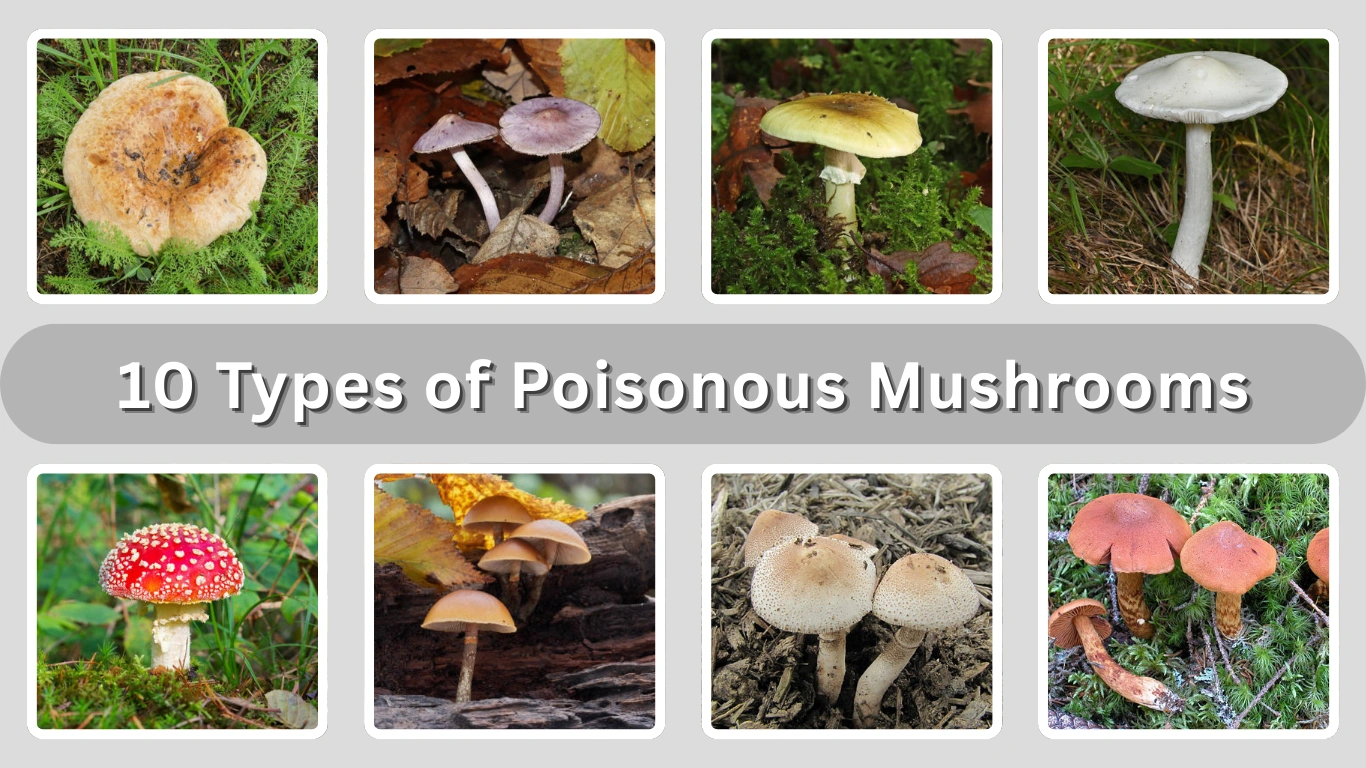
Are brightly colored mushrooms always poisonous?
Not all brightly colored mushrooms are poisonous, but many use bright colors as a warning, such as fly agaric. Bright-colored mushrooms should be approached with caution, and proper identification is critical before consuming any wild species.
What are some common edible mushrooms to cook with?
Common edible mushrooms include button, cremini, portobello, shiitake, oyster, king oyster, enoki, maitake, lion’s mane, chanterelle, morel, porcini, honey, puffball, and beech mushrooms. These are versatile, nutritious, and safe for culinary use when properly prepared.