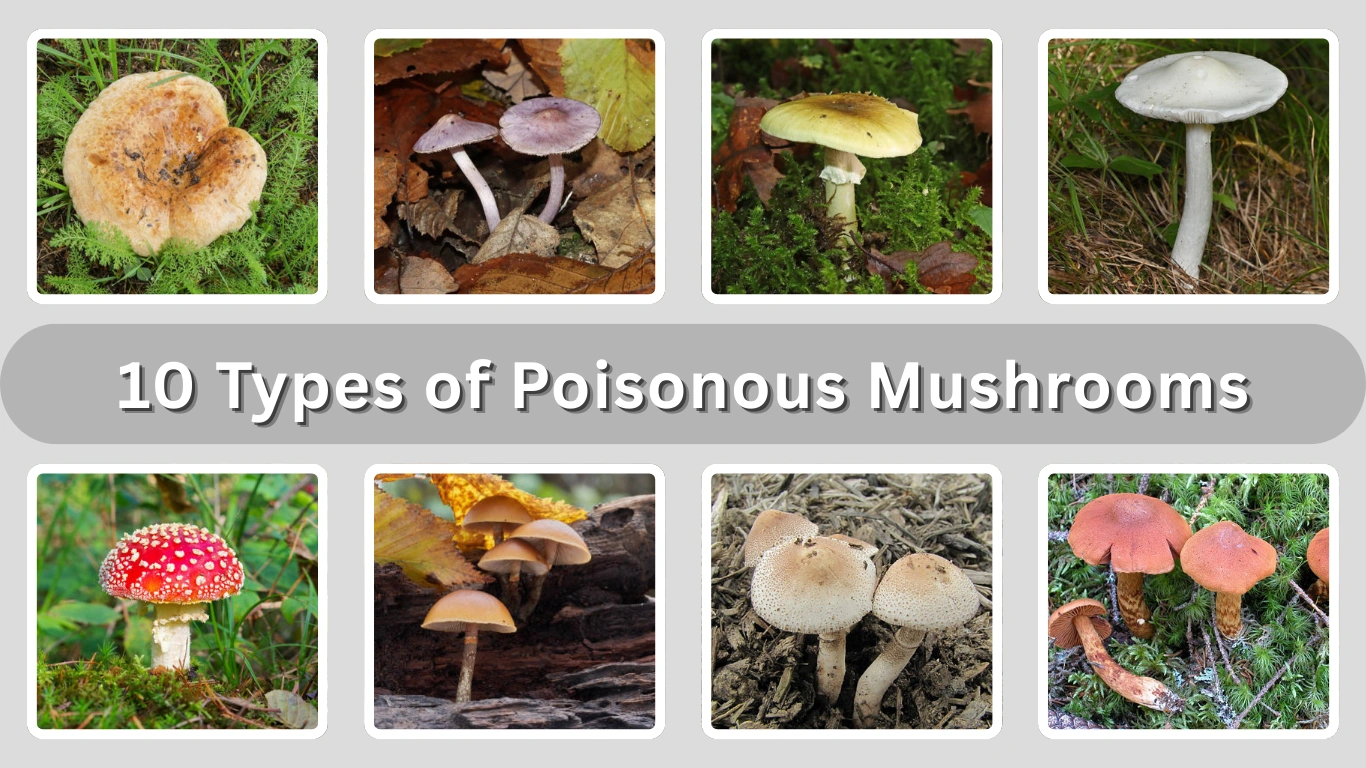





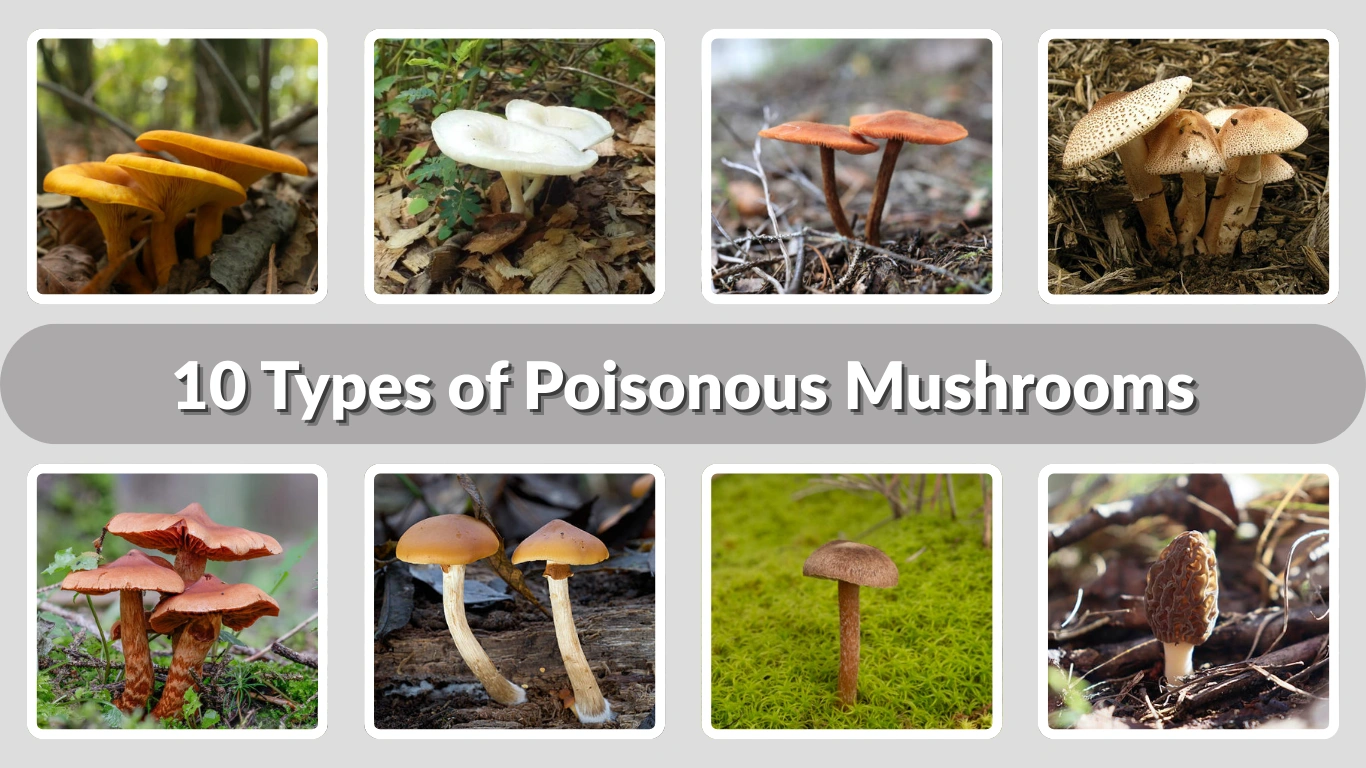
Poisonous mushrooms are among the most dangerous fungi found in forests, grasslands, and gardens worldwide. Many species closely resemble edible mushrooms, making accidental ingestion a serious risk. These toxic mushrooms contain powerful compounds such as amatoxins, muscarine, and orellanine, which can damage the liver, kidneys, or nervous system. Recognizing their characteristics, habitats, and symptoms of poisoning is crucial for foragers and mushroom enthusiasts to stay safe and prevent life-threatening incidents.
1. Amanita phalloides (Death Cap)

Amanita phalloides, commonly known as the Death Cap, is one of the most toxic mushrooms in the world. Responsible for the majority of fatal mushroom poisonings, it contains potent toxins called amatoxins that can severely damage the liver and kidneys. Even a small amount ingested can be deadly, making early identification critical for foragers and mushroom enthusiasts. Its appearance can sometimes resemble edible mushrooms, which increases the risk of accidental poisoning.
Identification
- Cap: Smooth, olive-green to yellowish, 5–15 cm in diameter.
- Gills: White, free from the stem, crowded.
- Stem: White with a bulbous base and a distinctive sac-like volva.
- Spore Print: White.
- Odor: Slightly sweet when young, unpleasant when mature.
Habitat
Death Caps are primarily found in deciduous forests, often growing near oak, chestnut, and pine trees. They are common in Europe but have spread to North America, Australia, and parts of Asia. These mushrooms typically appear in late summer to early autumn.
Toxicity
Amanita phalloides contains amatoxins, which inhibit RNA polymerase II, preventing protein synthesis in liver cells. Symptoms usually appear 6–12 hours after ingestion and include severe abdominal pain, vomiting, diarrhea, and dehydration. Without prompt medical treatment, organ failure and death can occur within days.
Treatment and Precautions
Immediate medical attention is essential. Activated charcoal may be administered to reduce toxin absorption, and supportive care including IV fluids and liver protection is critical. Liver transplantation may be necessary in severe cases. Foragers should never consume wild mushrooms unless absolutely certain of their identity.
2. Amanita virosa (Destroying Angel)

Amanita virosa, commonly known as the Destroying Angel, is an extremely poisonous mushroom closely related to the Death Cap. It is notorious for its lethality, as even small amounts can cause severe liver and kidney damage. Often mistaken for edible white mushrooms due to its pristine appearance, it poses a high risk to unsuspecting foragers. Its toxins act silently, meaning symptoms may not appear until hours after ingestion, making early identification and caution vital.
Identification
- Cap: Pure white, smooth, 5–12 cm in diameter, sometimes slightly conical.
- Gills: White, free from the stem, densely packed.
- Stem: White with a bulbous base and a prominent volva (cup-like structure).
- Spore Print: White.
- Odor: Mild, sometimes slightly sweet.
Habitat
Destroying Angels are typically found in deciduous and mixed forests, especially near beech, oak, and conifer trees. They grow from late summer through autumn, often emerging from mossy forest floors or leaf litter. This species is widespread across Europe, North America, and parts of Asia.
Toxicity
Like the Death Cap, Amanita virosa contains amatoxins that inhibit RNA polymerase II, disrupting protein synthesis and causing severe liver and kidney damage. Initial symptoms, such as nausea, vomiting, and abdominal cramps, usually appear 6–24 hours after ingestion. Delayed treatment significantly increases the risk of organ failure and death.
Treatment and Precautions
Immediate medical intervention is crucial. Supportive therapies include IV fluids, electrolyte management, and administration of activated charcoal to limit toxin absorption. Severe poisoning may require liver transplantation. Foragers should avoid any white mushrooms with a volva or bulbous stem unless positively identified by an expert.
3. Galerina marginata (Funeral Bell)

Galerina marginata, commonly called the Funeral Bell, is a highly toxic mushroom that contains deadly amatoxins similar to those in Death Caps and Destroying Angels. It is small and brown, making it easy to confuse with edible mushrooms like honey fungus. Despite its unassuming appearance, ingestion can lead to severe liver and kidney damage, sometimes proving fatal if not treated promptly.
Identification
- Cap: Brown to yellow-brown, 1–5 cm in diameter, convex to bell-shaped.
- Gills: Rusty-brown, adnate to slightly decurrent.
- Stem: Thin, brownish, often with a small ring, and fibrous texture.
- Spore Print: Rusty-brown.
- Odor: Faint, sometimes earthy or mushroomy.
Habitat
Galerina marginata grows on decaying wood, especially conifer logs, stumps, and fallen branches. It is common in temperate forests across Europe, North America, and Asia, appearing from late summer to autumn.
Toxicity
The mushroom’s amatoxins inhibit RNA polymerase II, causing delayed-onset symptoms such as nausea, vomiting, diarrhea, and abdominal cramps. Severe poisoning can lead to liver failure, kidney failure, and death within days if untreated.
Treatment and Precautions
Immediate hospitalization is critical. Treatment focuses on supportive care, intravenous fluids, and preventing toxin absorption with activated charcoal. Liver transplantation may be necessary in critical cases. Mushroom foragers should avoid small brown mushrooms growing on wood unless positively identified as safe.
4. Cortinarius rubellus (Deadly Webcap)

Cortinarius rubellus, also known as the Deadly Webcap, is a highly poisonous mushroom containing the toxin orellanine, which primarily damages the kidneys. Its subtle appearance and brownish coloration make it easy to mistake for edible mushrooms, posing a serious risk to foragers. Symptoms of poisoning often appear slowly, sometimes days after ingestion, making early detection difficult.
Identification
- Cap: Brown to reddish-brown, 3–7 cm in diameter, convex to flat, sometimes with a slightly sticky surface.
- Gills: Pale brown when young, turning rusty-brown with age.
- Stem: Slim, fibrous, slightly bulbous at the base, sometimes with remnants of a cortina (web-like veil).
- Spore Print: Rusty-brown.
- Odor: Mild, sometimes earthy.
Habitat
Deadly Webcaps grow in coniferous and mixed forests, particularly under pine and spruce trees. They are mainly found in Europe and parts of Asia, emerging in late summer to autumn, often in mossy or damp forest floors.
Toxicity
Orellanine toxin causes kidney damage that may appear 2–3 days after ingestion, with symptoms including fatigue, excessive thirst, nausea, and reduced urine output. Without proper treatment, poisoning can result in irreversible kidney failure.
Treatment and Precautions
Immediate medical attention is essential. Supportive care includes intravenous fluids and, in severe cases, dialysis to manage kidney failure. Foragers should exercise extreme caution with brown mushrooms in forested areas, particularly those with web-like veils, and avoid consuming them unless identified by experts.
5. Cortinarius orellanus (Fool’s Webcap)

Cortinarius orellanus, commonly called the Fool’s Webcap, is a deadly mushroom containing the nephrotoxin orellanine, which specifically targets the kidneys. Its subtle brownish appearance and resemblance to edible mushrooms make it particularly dangerous for unwary foragers. Symptoms of poisoning are often delayed, appearing several days after consumption, which can complicate diagnosis and treatment.
Identification
- Cap: Light brown to orange-brown, 2–6 cm in diameter, convex to flat, sometimes slightly sticky.
- Gills: Pale brown initially, turning rusty-brown with age.
- Stem: Thin, fibrous, slightly bulbous at the base, with remnants of a cortina (web-like veil).
- Spore Print: Rusty-brown.
- Odor: Mild, sometimes earthy or mushroomy.
Habitat
Fool’s Webcap is typically found in mixed and coniferous forests, especially under spruce, pine, and oak trees. It is native to Europe and parts of Asia and usually appears in late summer and autumn, often growing in mossy or damp forest soils.
Toxicity
Orellanine in Cortinarius orellanus causes kidney failure, which can appear 2–3 weeks after ingestion in some cases. Early symptoms include nausea, vomiting, fatigue, and increased thirst, progressing to reduced urine output and severe renal dysfunction if untreated.
Treatment and Precautions
Immediate hospitalization is critical. Supportive therapy includes IV fluids and dialysis for kidney failure. There is no antidote for orellanine poisoning, making prevention essential. Foragers should avoid brown mushrooms with web-like veils unless identified by experts.
6. Lepiota brunneoincarnata (Deadly Dapperling)

Lepiota brunneoincarnata, commonly known as the Deadly Dapperling, is a small but highly toxic mushroom. It contains amatoxins similar to those in Death Caps and Destroying Angels, which can cause severe liver damage. Often mistaken for edible Lepiota species, its subtle features make it extremely dangerous to consume accidentally.
Identification
- Cap: Cream to light brown, 2–5 cm in diameter, convex to flat with small brownish scales.
- Gills: White, free from the stem, crowded.
- Stem: White, slender, with a small ring and slightly bulbous base.
- Spore Print: White.
- Odor: Mild, sometimes slightly unpleasant.
Habitat
Deadly Dapperlings are found in grassy areas, gardens, and woodland edges. They appear primarily in Europe, emerging from late summer to autumn. They often grow in small groups or clusters, making them easy to overlook.
Toxicity
The mushroom contains amatoxins that inhibit RNA polymerase II, leading to liver and kidney damage. Initial symptoms, such as nausea, vomiting, and diarrhea, usually appear 6–12 hours after ingestion. Delayed treatment increases the risk of organ failure and death.
Treatment and Precautions
Immediate medical attention is crucial. Supportive care includes intravenous fluids, activated charcoal to reduce toxin absorption, and liver protection. Severe poisoning may require liver transplantation. Foragers should avoid consuming any small Lepiota mushrooms unless absolutely certain of their safety.
7. Inocybe spp. (Fiberhead Mushrooms)

Inocybe species, commonly referred to as Fiberhead Mushrooms, are a large group of small, brown mushrooms containing the toxin muscarine. While individually small, these mushrooms can cause serious poisoning if ingested. They are often mistaken for edible mushrooms due to their inconspicuous appearance, making careful identification essential.
Identification
- Cap: Brown to tan, 1–5 cm in diameter, conical to bell-shaped, sometimes fibrous.
- Gills: Adnexed to adnate, pale brown to grayish-brown.
- Stem: Thin, fibrous, matching cap color, sometimes with a faint veil.
- Spore Print: Brown.
- Odor: Mild, sometimes earthy or musty.
Habitat
Fiberhead Mushrooms are commonly found in forests, grasslands, and sometimes lawns. They grow singly or in small clusters, often under conifers or deciduous trees. These mushrooms are widespread in Europe, North America, and Asia, appearing from late summer to autumn.
Toxicity
Muscarine in Inocybe mushrooms affects the parasympathetic nervous system, causing symptoms like excessive salivation, sweating, nausea, vomiting, abdominal pain, and blurred vision. Severe cases can result in low blood pressure, slow heart rate, and respiratory distress, but fatalities are rare with prompt treatment.
Treatment and Precautions
Immediate medical attention is advised. Treatment includes supportive care, administration of atropine in severe cases, and monitoring vital signs. Foragers should avoid small brown mushrooms with fibrous caps unless positively identified by an expert.
8. Clitocybe dealbata (Sweating Mushroom)

Clitocybe dealbata, commonly known as the Sweating Mushroom, is a small but dangerously toxic mushroom containing muscarine. Its name comes from the profuse sweating it can induce upon ingestion. Often found in grassy areas, it is easily mistaken for edible mushrooms, making awareness and caution vital for foragers.
Identification
- Cap: White to pale cream, 2–5 cm in diameter, convex to flat, sometimes with a depressed center.
- Gills: White to cream, adnate, crowded.
- Stem: White, slender, smooth, lacking a ring.
- Spore Print: White.
- Odor: Mild, sometimes slightly mealy.
Habitat
Sweating Mushrooms are commonly found in lawns, meadows, and grassy clearings, often appearing in late summer to autumn. They are widespread in Europe and North America and usually grow singly or in small clusters.
Toxicity
Muscarine in Clitocybe dealbata overstimulates the parasympathetic nervous system. Symptoms include excessive sweating, salivation, nausea, vomiting, diarrhea, and blurred vision. Severe cases may cause low blood pressure, slowed heart rate, and respiratory difficulties, but deaths are uncommon with prompt treatment.
Treatment and Precautions
Immediate medical care is recommended. Supportive therapy may include administration of atropine in severe cases and monitoring vital signs. Foragers should avoid consuming small white mushrooms in grassy areas unless positively identified by an expert.
9. Gyromitra esculenta (False Morel)

Gyromitra esculenta, commonly called the False Morel, is a highly toxic mushroom that can be mistaken for edible morels. It contains gyromitrin, which is converted in the body to monomethylhydrazine (a potent toxin). Even small amounts can cause severe poisoning, affecting the liver, kidneys, and central nervous system. Cooking may reduce but does not eliminate toxicity.
Identification
- Cap: Reddish-brown to dark brown, brain-like, wrinkled or lobed, 4–10 cm in diameter.
- Gills: Irregular, not true gills; cap appears convoluted.
- Stem: Whitish to tan, stout, often hollow, with a fibrous texture.
- Spore Print: Cream to yellowish.
- Odor: Strong, often unpleasant, sometimes resembling raw potatoes.
Habitat
False Morels grow in sandy soils, under conifers, and near decaying wood in temperate forests. They are common in North America and Europe and typically appear in spring to early summer.
Toxicity
Gyromitrin interferes with the central nervous system and liver function. Symptoms usually appear within 6–12 hours after ingestion and include vomiting, diarrhea, abdominal pain, dizziness, and seizures. Severe cases can lead to liver failure, coma, and death if untreated.
Treatment and Precautions
Immediate hospitalization is essential. Treatment involves supportive care, intravenous fluids, and monitoring liver and kidney function. Consumption is extremely risky, and foragers should avoid any morel-like mushrooms unless positively identified by an expert.
10. Omphalotus olearius (Jack-o’-Lantern Mushroom)

Omphalotus olearius, commonly known as the Jack-o’-Lantern Mushroom, is a brightly colored poisonous mushroom famous for its orange glow in the dark due to bioluminescence. It contains the toxin illudin S, which causes severe gastrointestinal distress. Often mistaken for edible chanterelles, its striking appearance can be misleading for foragers.
Identification
- Cap: Bright orange, 5–15 cm in diameter, convex to flat, sometimes wavy at the edges.
- Gills: Sharp, decurrent, orange, and crowded.
- Stem: Orange, solid, smooth, tapering slightly toward the base.
- Spore Print: White.
- Odor: Mild, fruity to slightly earthy.
Habitat
Jack-o’-Lantern Mushrooms grow in clusters on decaying wood, tree stumps, or buried roots. They are native to North America and Europe and typically appear in late summer to autumn. They often form large, noticeable groups.
Toxicity
Illudin S causes nausea, vomiting, diarrhea, and abdominal cramps within a few hours of ingestion. While rarely fatal, the poisoning can be severe and extremely unpleasant. Cooking does not eliminate the toxin.
Treatment and Precautions
Treatment is mainly supportive, including hydration and symptom management. Foragers should avoid consuming bright orange mushrooms growing on wood unless positively identified as edible. Proper identification is essential to prevent accidental poisoning.
FAQs
What are the most dangerous poisonous mushrooms?
The most dangerous mushrooms include Amanita phalloides (Death Cap), Amanita virosa (Destroying Angel), and Galerina marginata (Funeral Bell). These mushrooms contain potent toxins like amatoxins that can cause severe liver and kidney damage, often leading to death if ingested.
How can I identify poisonous mushrooms safely?
Poisonous mushrooms can be identified by features such as cap color, gill structure, stem shape, presence of a volva, spore print, and habitat. However, many toxic mushrooms closely resemble edible species, so foragers should only rely on expert knowledge or field guides and avoid consuming wild mushrooms unless positively identified.
What symptoms occur after eating poisonous mushrooms?
Symptoms vary depending on the toxin but often include nausea, vomiting, diarrhea, abdominal pain, sweating, and fatigue. Severe toxins like amatoxins can cause liver and kidney failure, while orellanine targets the kidneys and muscarine affects the nervous system. Symptoms may appear hours or even days after ingestion.
Is cooking or boiling effective in removing mushroom toxins?
Cooking, boiling, or drying does not reliably remove toxins from highly poisonous mushrooms such as Death Caps, Destroying Angels, or False Morels. Some toxins like gyromitrin and illudin S may be reduced slightly by cooking, but ingestion remains extremely dangerous. Avoid consuming wild mushrooms unless fully verified as safe.
What should I do if someone eats a poisonous mushroom?
Immediate medical attention is essential. Call emergency services or poison control. Do not wait for symptoms to appear. Treatment may include activated charcoal, IV fluids, supportive care, and in severe cases, liver or kidney treatment or transplantation, depending on the toxin involved.