





The white carnation flower is admired around the world for its soft beauty, delicate fragrance, and deep symbolic meaning. With its ruffled petals and long-lasting blooms, the white carnation has become a popular choice for weddings, memorials, and everyday floral arrangements. Beyond its visual charm, this flower carries messages of purity, remembrance, and loyal love. Whether grown in gardens or used in bouquets, white carnations continue to hold a special place in both horticulture and human tradition.
What Is a White Carnation Flower?
The white carnation is a color variety of the carnation plant, scientifically known as Dianthus caryophyllus. Carnations belong to the Caryophyllaceae family and are native to the Mediterranean region. Over centuries of cultivation, breeders have developed many colors, shapes, and fragrances. The white carnation stands out for its clean, bright appearance and its strong association with formal and emotional occasions.
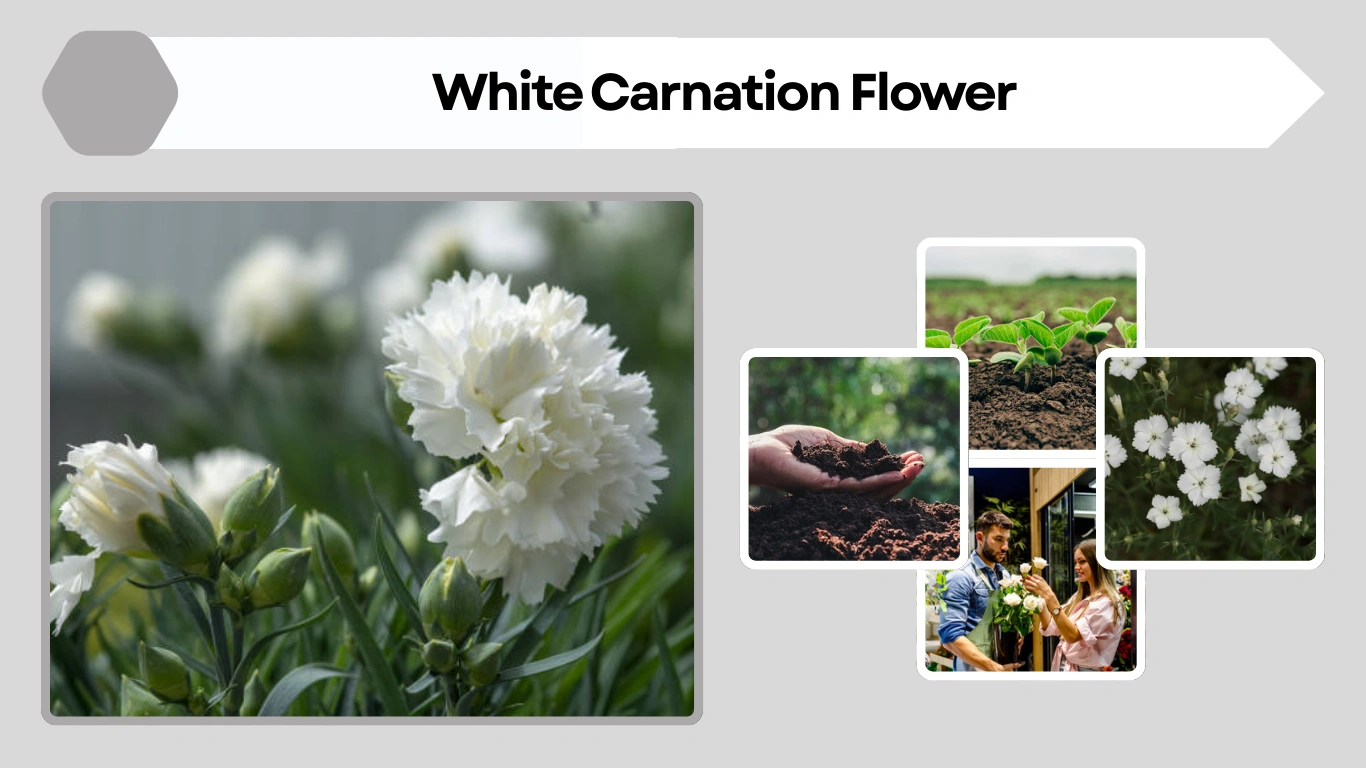
White carnations typically have sturdy green stems, narrow bluish-green leaves, and large layered flowers with frilled edges. They are valued both as garden plants and as cut flowers because of their long vase life and ability to stay fresh for extended periods.
Botanical Description of White Carnation

Plant structure
White carnation plants are herbaceous perennials, meaning they can live for several years under good conditions. They usually grow between 12 and 24 inches tall, depending on the variety. The stems are slender yet firm, allowing them to support large blossoms. Leaves are narrow, pointed, and arranged opposite each other along the stem, often showing a slightly waxy or bluish tint.
The root system is fibrous and relatively shallow, which is why well-drained soil is essential. In garden settings, carnations often form neat clumps and produce multiple flowering stems from a single plant.
Flower characteristics
The flowers are the main attraction. White carnations produce round, full blooms made up of many overlapping petals. The petal edges are typically frilled or serrated, giving the flower its classic ruffled look. Depending on the cultivar, flowers may be pure white, creamy white, or white with very light green or blush undertones.
Many white carnations are lightly fragrant, with a spicy, clove-like scent. Bloom size ranges from small spray-type flowers to large standard blooms that can reach three inches or more in diameter.
Origin and History of White Carnations
Carnations are believed to have originated in the Mediterranean region, including parts of southern Europe and western Asia. They have been cultivated for over 2,000 years and were valued by ancient Greeks and Romans for both decoration and ceremonial use. The name “Dianthus” comes from Greek words meaning “flower of the gods,” reflecting how highly these plants were regarded.
White carnations became especially popular in Europe during the Victorian era, when flowers were widely used to communicate emotions and messages. White varieties were associated with purity, innocence, and refined love. Over time, white carnations spread globally through trade and horticultural development, becoming one of the most commonly grown and commercially produced cut flowers in the world.
Meaning and Symbolism of White Carnation Flowers

Traditional meanings
White carnations traditionally symbolize purity, innocence, and sincere love. They are often linked to loyalty, good fortune, and remembrance. Because of these meanings, white carnations are frequently chosen for weddings, christenings, and memorial services.
White carnations are also associated with gentle affection and respect. They can express sympathy without heaviness, making them appropriate for both joyful and solemn occasions.
Cultural and religious symbolism
In many Western cultures, white carnations are used in funeral arrangements to represent eternal love and peaceful remembrance. They are also common in bridal bouquets, symbolizing the purity of love and new beginnings.
In Christian traditions, white carnations are sometimes linked to the Virgin Mary and motherly love. In some countries, they are worn on Mother’s Day as a symbol of gratitude, especially in memory of mothers who have passed.
Types and Varieties of White Carnations
There are several forms of white carnations, each suited for different uses.
- Standard white carnations: These produce one large flower per stem and are most often used in bouquets and floral arrangements.
- Spray white carnations: These produce clusters of smaller flowers on branching stems, ideal for filler and decorative displays.
- Dwarf or miniature white carnations: Compact plants well-suited for pots, borders, and container gardening.
- Fragrant heritage varieties: Older cultivars bred for strong scent and garden performance.
- Commercial cut-flower varieties: Bred for uniform color, long stems, and extended vase life.
How to Grow White Carnations

Climate and light requirements
White carnations grow best in full sun, needing at least five to six hours of direct light daily. They prefer mild to warm climates with good air circulation. Although they can tolerate light frost, prolonged cold or extreme heat can reduce flowering and plant health.
Soil needs
White carnations prefer well-drained, fertile soil. Heavy, water-retaining soil can lead to root rot, which is one of the most common problems when growing carnations. The soil should be loose, airy, and slightly alkaline to neutral, ideally with a pH between 6.5 and 7.5. Mixing compost or well-rotted organic matter into the soil improves drainage while providing nutrients. In containers, a high-quality potting mix with added sand or perlite works well.
Planting methods
White carnations can be grown from seeds, cuttings, or nursery plants. Seeds are usually started indoors and transplanted outside after the risk of frost has passed. Cuttings are commonly used to maintain specific varieties, as they produce plants identical to the parent. Young plants should be spaced well apart to allow airflow and reduce disease risk. When planting, the crown should sit slightly above soil level to prevent moisture buildup around the stem.
White Carnation Care Guide
- Watering routine: Water regularly but lightly. The soil should stay slightly moist, not soggy. It is better to water at the base of the plant rather than overhead to keep leaves and flowers dry.
- Fertilizing schedule: Apply a balanced, slow-release fertilizer during the growing season. Over-fertilizing can lead to leafy growth with fewer flowers.
- Pruning and deadheading: Removing spent blooms encourages new flowers and keeps plants neat. Light trimming also promotes bushier growth.
- Supporting tall stems: Some varieties grow tall and may need light staking to prevent bending or breakage.
- Pest and disease monitoring: Check plants regularly for aphids, spider mites, fungal spots, and signs of rot.
Blooming Season and Lifespan

White carnations typically bloom from late spring through summer, with some varieties flowering into early autumn. In mild climates or greenhouse conditions, they can bloom nearly year-round. Individual flowers can last two to three weeks on the plant and up to three weeks as cut flowers when properly cared for. With regular deadheading and feeding, carnation plants can continue producing blooms for several years.
Common Problems When Growing White Carnations
Carnations are generally hardy but can face issues such as yellowing leaves, weak stems, and poor flowering. Overwatering is the most frequent problem, often leading to root rot or fungal diseases. Pests like aphids and spider mites may attack young growth. Poor air circulation can cause leaf spots and mold. Ensuring proper spacing, sunlight, and dry foliage greatly reduces these problems.
Uses of White Carnation Flowers
Floral arrangements and events
White carnations are widely used in wedding bouquets, centerpieces, corsages, and sympathy arrangements. Their neutral color blends easily with other flowers, and their long vase life makes them ideal for professional floristry.
Home and garden use
In gardens, white carnations are planted in borders, rock gardens, and containers. Their compact growth and soft fragrance make them popular for patios and fragrance gardens.
Cultural and emotional uses
White carnations are often given as gifts to express love, respect, remembrance, and support. They are commonly used in memorial services and ceremonial events.
White Carnation vs Other Carnation Colors
While red carnations symbolize love and admiration, and pink carnations often represent gratitude and motherly affection, white carnations focus on purity, sincerity, and remembrance. Their calm appearance makes them especially suitable for formal occasions and peaceful settings.
Harvesting and Storing White Carnations
White carnations should be cut early in the morning when buds are just opening. Stems should be cut at an angle and placed immediately in clean water. Removing lower leaves prevents bacterial growth. Changing vase water regularly and keeping flowers in a cool, shaded area extends their freshness. Properly stored carnations can remain attractive for two to three weeks.
Interesting Facts About White Carnations
White carnations were among the earliest cultivated flower colors. They are known for their clove-like scent, which is rare among long-lasting cut flowers. Carnations are one of the most commercially grown flowers worldwide, valued for durability, symbolism, and adaptability.
FAQs
What does a white carnation symbolize?
White carnations symbolize purity, innocence, loyalty, remembrance, and sincere love. They are often associated with weddings, memorials, and expressions of respect.
Are white carnations good for weddings?
Yes. White carnations are popular in weddings because of their soft color, symbolism of pure love, and long-lasting blooms, which hold up well in bouquets and decorations.
How long do white carnation flowers last?
White carnations can last two to three weeks as cut flowers with proper care. On the plant, individual blooms also remain attractive for a long period.
Do white carnations have fragrance?
Many white carnation varieties have a light, spicy, clove-like fragrance, though scent strength varies by cultivar.
Are white carnations easy to grow at home?
Yes. With good sunlight, well-drained soil, and moderate watering, white carnations are relatively easy to grow in gardens or containers.