





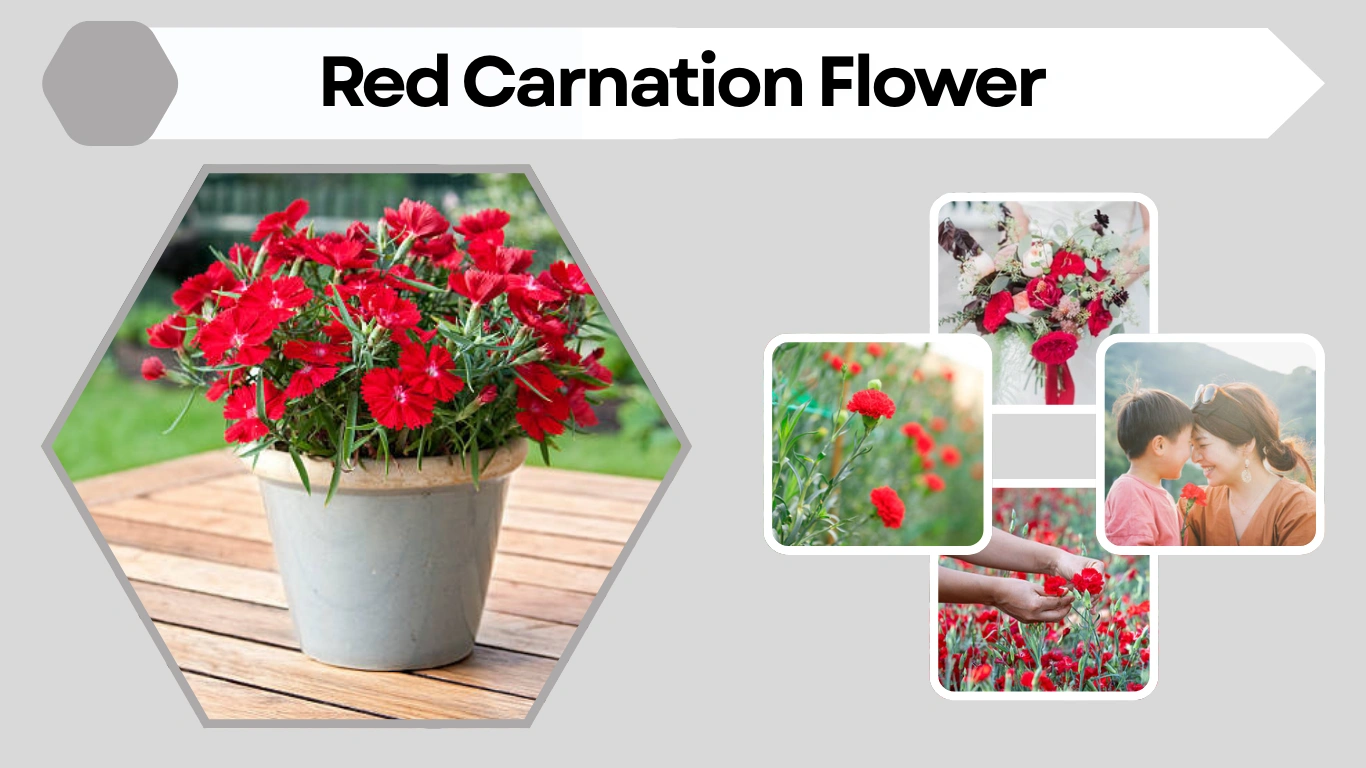
The red carnation flower is one of the most recognizable and meaningful flowers in the world. With its rich color, ruffled petals, and long-lasting blooms, the red carnation has become a powerful symbol of love, admiration, and deep affection. It is widely used in romantic bouquets, ceremonial events, and home gardens. Beyond its beauty, the red carnation carries centuries of cultural history and emotional meaning, making it one of the most valued flowers in both floristry and horticulture.
What Is a Red Carnation Flower?
The red carnation is a color variety of the carnation plant, scientifically known as Dianthus caryophyllus. Carnations belong to the Caryophyllaceae family and are native to the Mediterranean region. Through selective breeding, carnations now appear in many colors, but red remains the most iconic and widely associated with emotional expression.
Red carnations are known for their sturdy stems, narrow bluish-green leaves, and large, layered blooms with frilled edges. They are prized both as garden plants and as cut flowers because they hold their shape well, tolerate handling, and last a long time in vases.
Botanical Description of Red Carnations

Plant structure
Red carnation plants are herbaceous perennials that typically grow between 12 and 24 inches tall. The stems are upright and firm, allowing them to support large blossoms. Leaves are narrow, pointed, and slightly waxy, growing opposite each other along the stem. The plant forms neat clumps and produces multiple flowering stems during the growing season.
The roots are shallow and fibrous, which makes good drainage essential. When planted in well-prepared soil, red carnations develop strong stems and continuous blooms.
Flower characteristics
Red carnation flowers are round and full, made up of many overlapping petals with serrated or frilled edges. The color ranges from bright scarlet and cherry red to deep crimson and burgundy, depending on the variety. Many red carnations have a soft, spicy fragrance similar to cloves, although scent strength varies.
Blooms can reach two to three inches in diameter and are often borne singly on long stems or in clusters in spray varieties. Their layered structure gives them a rich, textured appearance that works well in both formal and casual arrangements.
Origin and History of Red Carnations
Carnations are believed to have originated in the Mediterranean region, including southern Europe and parts of western Asia. They have been cultivated for over two thousand years and were admired by ancient Greeks and Romans, who used them in garlands, ceremonies, and decorative art.
The name “Dianthus” comes from Greek words meaning “flower of the gods,” highlighting the high status carnations once held. Red carnations, in particular, became popular in Europe during the Middle Ages and later in Victorian times, when flowers were used to convey specific messages. Red carnations came to symbolize deep love, fascination, and admiration.
Over time, red carnations spread worldwide through trade and plant breeding. Today, they are among the most commercially grown flowers and are widely used in floral industries across the globe.
Meaning and Symbolism of Red Carnation Flowers

Traditional meanings
Red carnations traditionally symbolize love, admiration, passion, and deep affection. They are often associated with strong emotional bonds and sincere feelings. Darker red carnations may represent deep love and devotion, while lighter red shades are commonly linked to admiration and appreciation.
Because of these meanings, red carnations are frequently given as romantic gifts and used in celebrations that honor relationships and heartfelt emotions.
Cultural and modern symbolism
In modern culture, red carnations are widely used on Valentine’s Day, anniversaries, and romantic occasions. They also appear in ceremonies, graduations, and formal events to represent respect and honor.
In some countries, red carnations have political or social symbolism and are worn during commemorative events. They are also used in memorial services to express lasting love and remembrance.
Types and Varieties of Red Carnations
There are several popular forms of red carnations used in gardens and floral work.
- Standard red carnations: Produce one large flower per stem and are common in bouquets.
- Spray red carnations: Produce clusters of smaller blooms on branching stems.
- Dark red and burgundy varieties: Known for dramatic color and formal arrangements.
- Dwarf or miniature red carnations: Compact plants suited for pots and borders.
- Commercial florist varieties: Bred for long stems, uniform color, and extended vase life.
How to Grow Red Carnations

Climate and sunlight needs
Red carnations grow best in full sun, requiring at least five to six hours of direct light daily. They prefer moderate temperatures and good air circulation. While they can tolerate mild cold, extreme heat or prolonged frost can reduce blooming and weaken plants.
Soil requirements
Red carnations grow best in loose, well-drained soil. Heavy clay or constantly wet soil can cause root rot and weak growth. The soil should be fertile and slightly alkaline to neutral, with a pH between about 6.5 and 7.5. Mixing compost or aged organic matter into the soil improves structure and nutrients. In pots, use a high-quality potting mix with added sand or perlite for better drainage.
Planting methods
Red carnations can be started from seeds, cuttings, or young nursery plants. Seeds are often started indoors and transplanted after frost danger has passed. Cuttings are widely used to preserve specific varieties because they grow true to type. Plants should be spaced to allow airflow, which helps prevent disease. When planting, keep the crown slightly above soil level to avoid moisture buildup.
Red Carnation Care Guide

- Watering: Water regularly but avoid soaking the soil. Allow the top layer to dry slightly between watering.
- Fertilizing: Use a balanced fertilizer during the growing season. Too much nitrogen can lead to leafy growth with fewer flowers.
- Pruning and deadheading: Remove faded blooms to encourage continuous flowering and neat growth.
- Supporting stems: Taller varieties may need light staking to keep stems upright.
- Pest and disease control: Watch for aphids, spider mites, and fungal diseases. Good airflow and dry foliage reduce risk.
Blooming Season and Flower Longevity
Red carnations typically bloom from late spring through summer, with some varieties continuing into early autumn. In mild climates or controlled greenhouse environments, they can bloom nearly year-round. Individual flowers often last two to three weeks on the plant. When cut and properly conditioned, red carnations are known for their excellent vase life, often remaining fresh for up to three weeks.
Common Problems When Growing Red Carnations
Common issues include yellowing leaves, weak stems, and reduced flowering. Overwatering is the most frequent cause, often leading to root or stem rot. Poor air circulation can encourage fungal diseases such as leaf spot and rust. Pests like aphids and thrips may attack buds and young growth. Proper spacing, good drainage, and routine inspection help prevent most problems.
Uses of Red Carnation Flowers

Floral and decorative uses
Red carnations are widely used in bouquets, centerpieces, corsages, and floral displays. They are especially popular for Valentine’s Day, anniversaries, weddings, and formal events. Their bold color and durability make them ideal for long-lasting arrangements.
Garden and landscape uses
In gardens, red carnations are planted in beds, borders, and containers. Their compact growth and continuous blooming make them suitable for patios, walkways, and ornamental borders.
Emotional and cultural uses
Red carnations are often given to express love, admiration, respect, and remembrance. They appear in ceremonies, cultural events, and memorials, symbolizing strong emotional bonds.
Red Carnation vs Other Carnation Colors
Red carnations are associated mainly with love and passion. White carnations emphasize purity and remembrance, pink carnations often represent gratitude and motherly love, and yellow carnations may symbolize friendship or cheerfulness. Red varieties stand out for romantic and emotionally expressive occasions.
Harvesting and Caring for Cut Red Carnations
Red carnations should be cut early in the morning when buds are partially open. Cut stems at an angle and place them immediately into clean water. Remove leaves below the water line and change vase water every few days. Keeping flowers in a cool place away from direct sunlight helps extend freshness.
Interesting Facts About Red Carnations
Red carnations have been cultivated for centuries and were used in ancient ceremonial garlands. They are known for their clove-like fragrance, which inspired the name “carnation.” Carnations are among the most commercially grown flowers worldwide because of their long vase life and wide color range.
FAQs
What does a red carnation symbolize?
Red carnations symbolize love, admiration, passion, and deep affection. Darker shades often represent deep love, while lighter reds express appreciation.
Are red carnations romantic flowers?
Yes. Red carnations are commonly used as romantic flowers and are popular gifts for Valentine’s Day, anniversaries, and expressions of love.
How long do red carnations last in a vase?
With proper care, red carnations can last up to two to three weeks in a vase.
Do red carnations have fragrance?
Many red carnation varieties have a light, spicy, clove-like scent, though fragrance strength varies.
Are red carnations easy to grow at home?
Yes. With good sunlight, well-drained soil, and moderate watering, red carnations are relatively easy to grow in gardens or containers.