






The water lily flower is one of the most iconic aquatic plants in the world, admired for its floating leaves and beautifully symmetrical blooms. Growing naturally on the surface of still water, water lilies bring color, calmness, and elegance to ponds, lakes, and water gardens. Beyond their beauty, water lily flowers carry deep cultural and spiritual meaning and have been celebrated in art and tradition for centuries. This guide explores what a water lily flower is, how to identify it, its main types, and the symbolism behind this remarkable aquatic plant.
Water Lily Flower Overview
Water lily flowers belong mainly to the genus Nymphaea and are true aquatic plants that root in underwater soil while sending leaves and blooms to the water’s surface. Their round floating leaves, often called lily pads, provide shade and shelter for aquatic life, making water lilies ecologically valuable as well as decorative.
These plants are native to many parts of the world, from tropical regions to temperate climates. Because of this wide natural range, water lilies have evolved into hundreds of varieties with different colors, sizes, and blooming habits.
Water lilies are especially prized in ornamental ponds and water features. Their ability to bloom continuously through warm months and their calming visual effect make them a central feature of water gardens, public parks, and landscape designs.
What Is a Water Lily Flower Plant?

Botanical classification
Water lilies belong to the genus Nymphaea within the Nymphaeaceae family. They are true water plants, adapted to life in still or slow-moving freshwater environments.
Scientific name and family
The most common water lilies are classified under Nymphaea. Other related genera, such as Nuphar, are sometimes called water lilies, but Nymphaea includes most ornamental species.
Difference between water lily and lotus
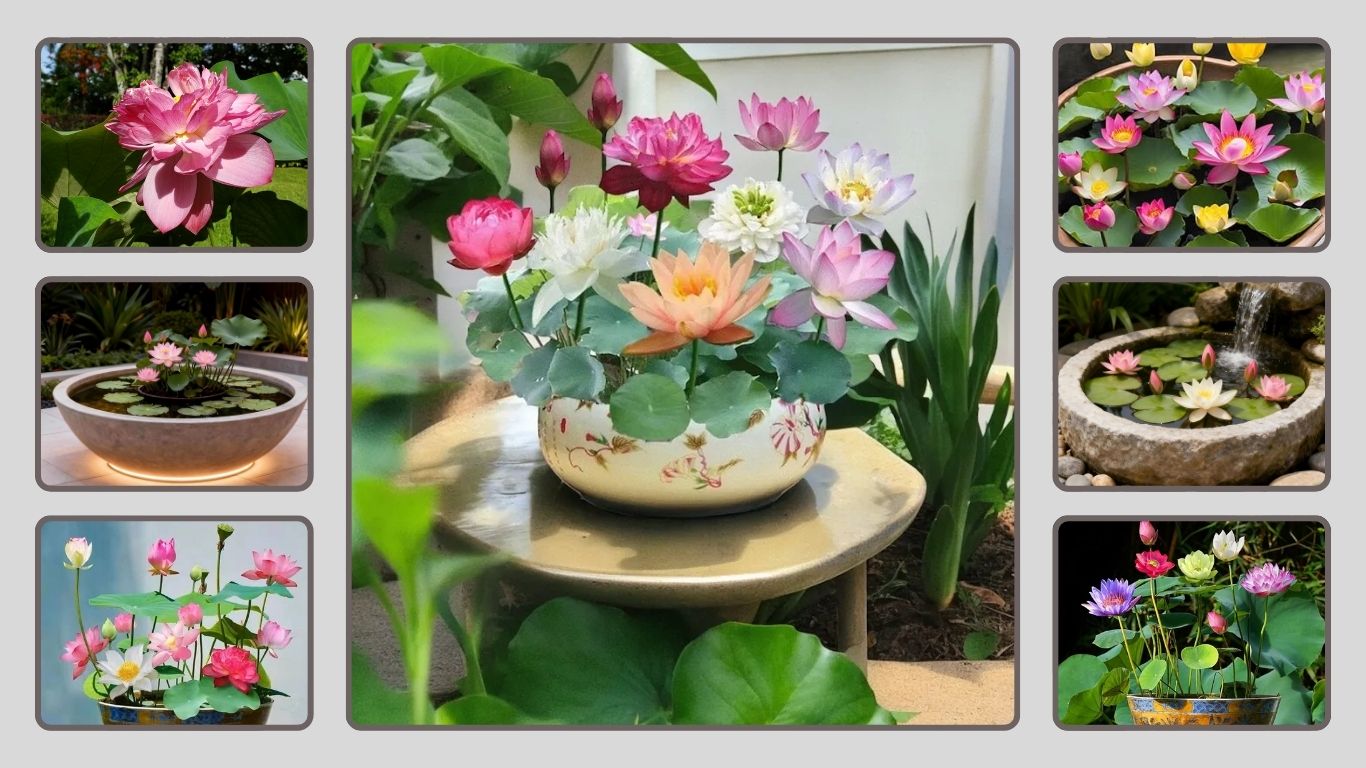
Although often confused, water lilies and lotuses are different plants. Water lily leaves usually float flat on the water’s surface, while lotus leaves often rise above the water. Their flowers and seed pods are also structurally different.
Natural habitat and origin
Water lilies naturally grow in ponds, lakes, marshes, and slow rivers. They are native to regions across Africa, Asia, Europe, and the Americas.
Identification of Water Lily Flowers
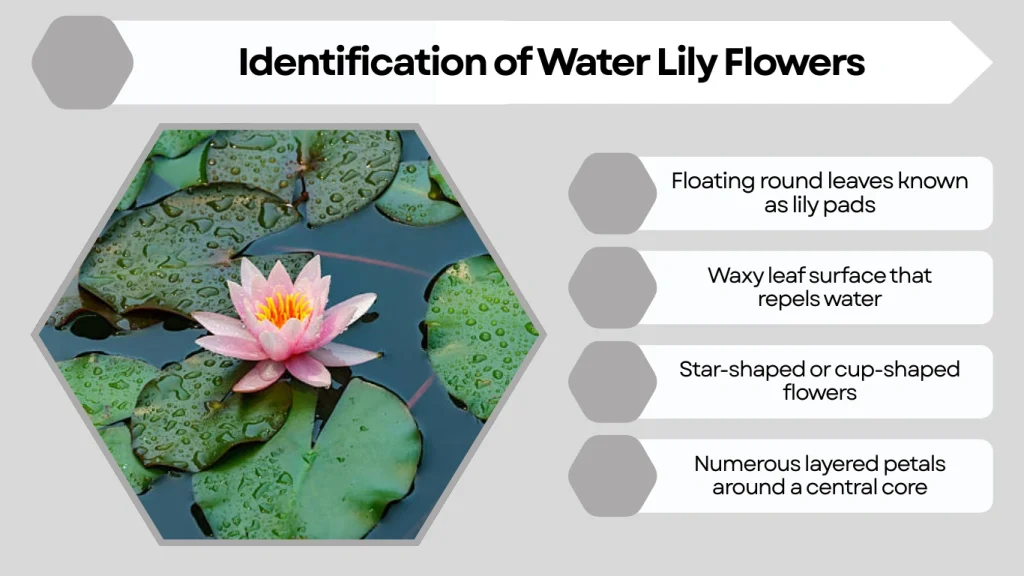
- Floating round leaves known as lily pads
- Waxy leaf surface that repels water
- Star-shaped or cup-shaped flowers
- Numerous layered petals around a central core
- Flexible stems rising from underwater rhizomes
- Blooming from late spring through summer
Types of Water Lily Flowers
Hardy water lilies
Hardy water lilies tolerate cooler climates and survive winter dormancy. They usually bloom during the day and come in shades of white, pink, red, and yellow.
Tropical water lilies
Tropical water lilies grow in warm climates and are known for their intense colors and dramatic blooms. Some varieties flower at night.
Day-blooming water lilies
Day-blooming types open their flowers in the morning and close them by evening. These are the most common pond varieties.
Night-blooming water lilies
Night-blooming water lilies open after sunset and release a strong fragrance, attracting nighttime pollinators.
Miniature and giant varieties
Some water lilies are compact and ideal for small containers, while others grow massive leaves and flowers suited for large ponds.
Water Lily Flower Meaning and Symbolism

Spiritual symbolism
Water lily flowers often symbolize purity, enlightenment, and inner peace. Because they rise clean and beautiful from muddy water, they represent spiritual growth and transformation.
Cultural meanings
In many cultures, water lilies are associated with life, fertility, and renewal. They have appeared in ancient art, religious carvings, and traditional stories.
Religious importance
Water lilies are frequently connected with Eastern spiritual traditions, where they symbolize awakening and balance.
Modern symbolic use
Today, water lilies represent calmness, beauty, and harmony. They are commonly used in decorative art, tattoos, and landscape symbolism.
Water Lily Flower Colors
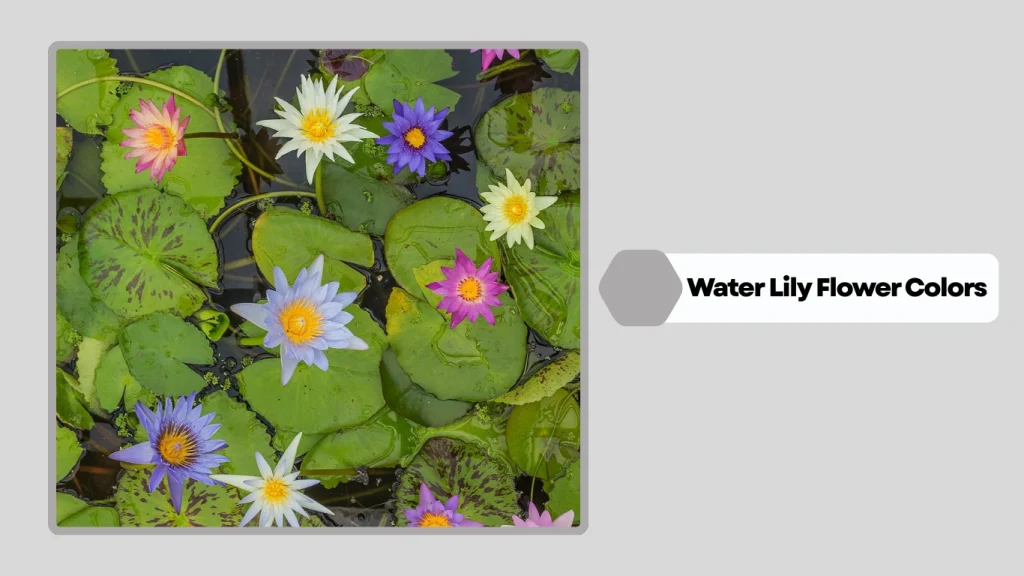
- White water lily flower
- Pink water lily flower
- Blue water lily flower
- Purple water lily flower
- Yellow water lily flower
- Multicolor and hybrid varieties
Where Water Lily Flowers Grow Naturally
Water lily flowers grow naturally in still or slow-moving freshwater environments such as ponds, lakes, marshes, and calm river edges. They are found on every continent except Antarctica, showing how adaptable these plants are to different climates.
In tropical regions, water lilies grow year-round and may bloom almost continuously. In temperate climates, they follow a seasonal cycle, emerging in spring, flowering through summer, and entering dormancy as temperatures drop.
Because they prefer calm, nutrient-rich water and soft, muddy bottoms, water lilies are most commonly seen in protected wetlands and shallow freshwater systems.
How to Grow Water Lily Flowers
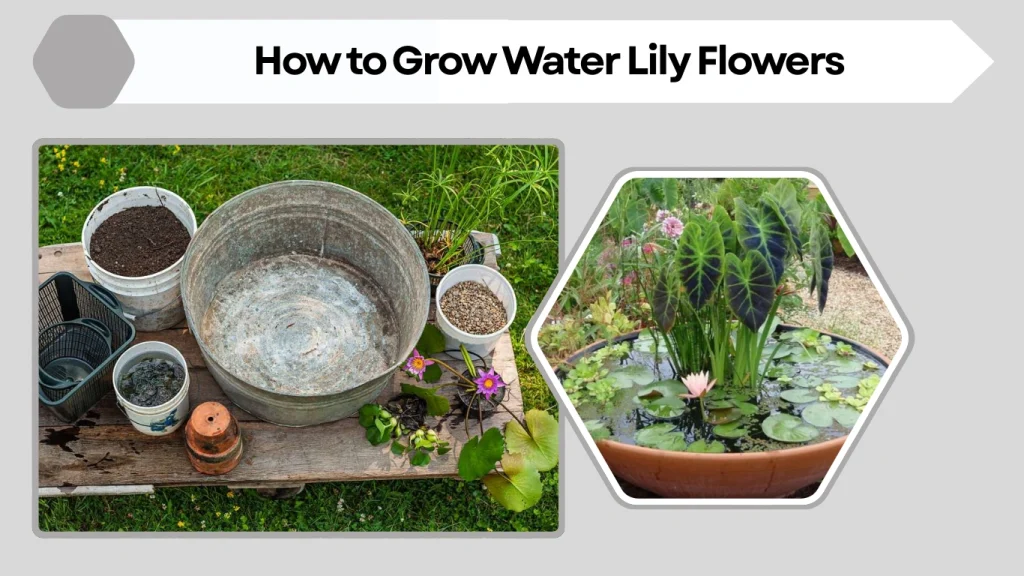
- Choose a pond, water garden, or wide container
- Use heavy aquatic soil or clay-based planting media
- Plant rhizomes horizontally in submerged containers
- Place plants at the correct water depth
- Provide at least five to six hours of sunlight daily
- Fertilize with aquatic plant tablets
- Remove old leaves and faded flowers regularly
Water Lily Flower Care Guide
Water quality and temperature
Water lilies grow best in clean, still water. Most varieties prefer warm conditions, though hardy types can tolerate cooler temperatures.
Sunlight and positioning
Full sun is essential for strong growth and flowering. Plants should be placed where they receive direct sunlight for most of the day.
Pruning and leaf control
Yellowing leaves and spent flowers should be removed to keep the plant healthy and to reduce organic buildup in the water.
Winter care and dormancy
Hardy water lilies can overwinter in ponds if their rhizomes are below the freezing level. Tropical water lilies usually need to be moved indoors or treated as annuals.
Water Lily Life Cycle
The water lily life cycle begins with a dormant rhizome anchored in underwater soil. As temperatures rise, new leaves grow upward until they float on the surface.
Flower buds then rise and open into blooms that may last several days. A single plant can produce many flowers throughout the growing season.
After blooming, flowers fade and sink below the surface, while the plant gradually slows its growth and returns to dormancy when conditions become unfavorable.
Common Problems and Diseases
- Aphids and aquatic insects
- Fungal leaf spot
- Algae overgrowth
- Poor blooming from low sunlight
- Root rot caused by stagnant or polluted water
Water Lily in Art, History, and Culture
Water lilies have been celebrated in art and culture for thousands of years. They were sacred symbols in ancient Egypt, representing creation, rebirth, and the sun.
In Asian traditions, water lilies and lotus-like flowers symbolize enlightenment, peace, and purity. They frequently appear in temple art and literature.
In modern history, water lilies became famous through impressionist paintings, especially those of Claude Monet, whose water lily series made the flower a global icon of beauty and tranquility.
Are Water Lily Flowers Toxic?
Most true water lilies are not highly toxic to humans, but some parts of the plant may cause mild stomach upset if ingested. Certain related aquatic plants sometimes called water lilies can be more harmful.
Pets that chew on leaves or roots may experience digestive irritation. It is best to discourage animals from feeding on aquatic plants.
When working in ponds, wearing gloves is recommended, especially when dividing or replanting rhizomes.
FAQs
What is a water lily flower?
A water lily flower is an aquatic bloom that grows on the surface of still freshwater. It belongs mainly to the genus Nymphaea and is known for its floating leaves and symmetrical flowers.
What do water lily flowers symbolize?
Water lily flowers symbolize purity, peace, rebirth, and enlightenment. They are often associated with spiritual growth and calmness.
How many types of water lilies are there?
There are hundreds of water lily varieties, broadly grouped into hardy and tropical types, with day-blooming and night-blooming forms.
Can water lilies grow in small ponds or containers?
Yes, many miniature and compact water lily varieties grow well in small ponds, tubs, and large containers.
What is the difference between a lotus and a water lily?
Water lilies float on the water’s surface, while lotus leaves usually rise above the water. They also belong to different plant families and have distinct flower and seed structures.