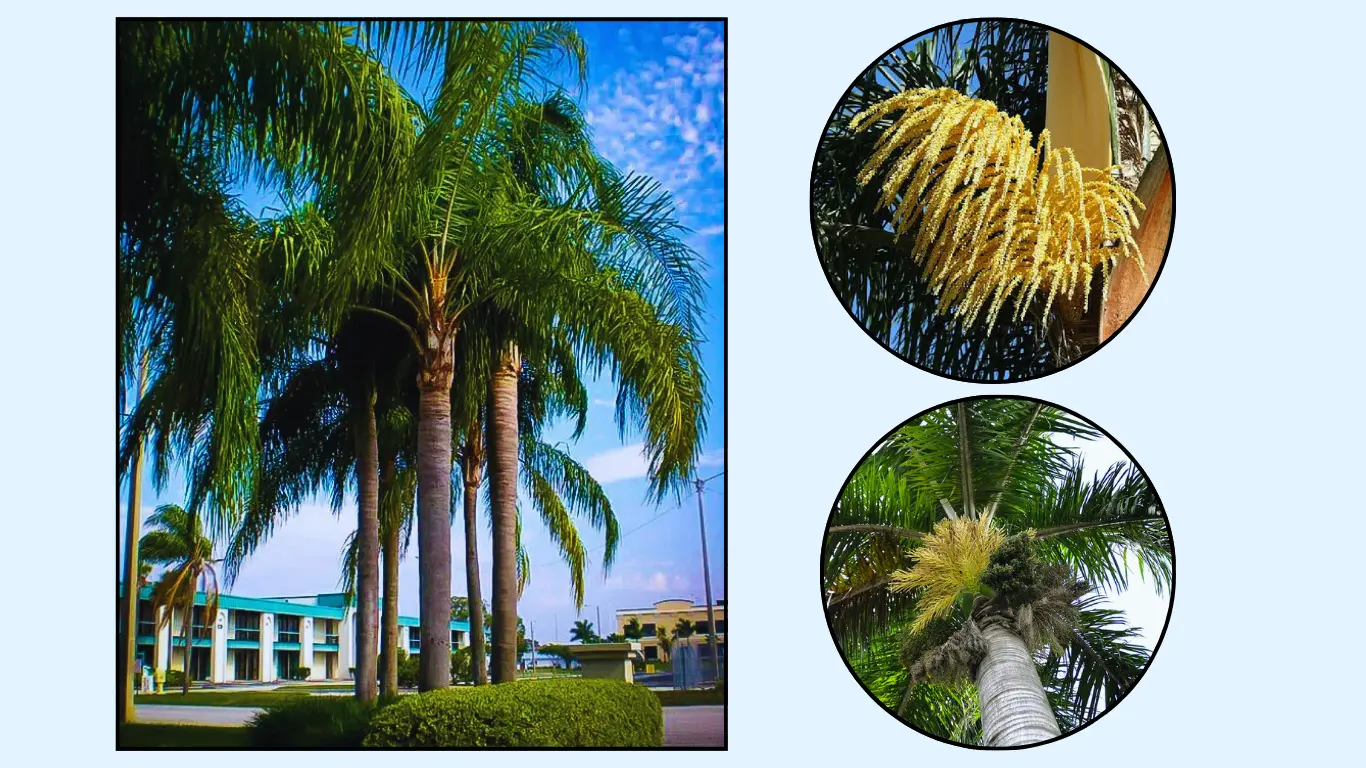
Queen palm trees (Syagrus romanzoffiana) are one of the most elegant and commonly grown palm trees in warm climates. Their tall, smooth trunks and lush, feathery fronds make them a favorite choice for homeowners, landscapers, and tropical garden lovers. In this guide, you’ll learn how to identify a queen palm tree at different stages of growth, including how to recognize baby queen palms, their fruit, trimming needs, and common problems—with helpful images and tips.
How to Identify a Queen Palm Tree

Queen palm trees are native to South America, especially Brazil and Argentina, but they thrive in USDA zones 9b to 11. Here’s how to recognize one:
- Height: Mature queen palms can grow up to 50 feet tall.
- Fronds: Long, arching fronds with feather-like leaflets. Each frond can be 10–15 feet long.
- Trunk: Smooth and light gray, with evenly spaced leaf scars (rings).
- Crown: A full, rounded canopy with 10–15 fronds.
Queen palms are often confused with other palms, but their graceful, symmetrical fronds and tall, straight trunk make them stand out.
Types of Queen Palm Trees
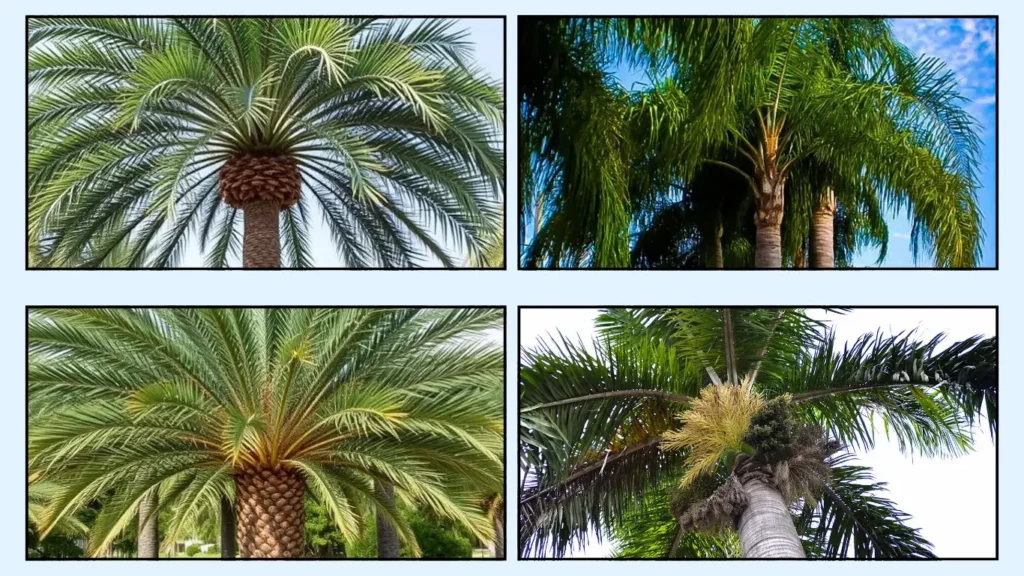
Technically, Syagrus romanzoffiana is the only true species known as the Queen Palm Tree, but it often appears in slightly different forms depending on its growing environment, hybridization, or maturity stage. Here are the main types or forms you might encounter:
1. Standard Queen Palm (Syagrus romanzoffiana)
This is the most common and widely planted type of queen palm. It grows up to 50 feet tall and has long, arching feather-like fronds. You’ll usually see these lining driveways, boulevards, or featured in tropical landscapes.
2. Baby Queen Palm
This refers to the young stage of the queen palm. These palms are typically sold in 1-gallon or 5-gallon nursery containers. Their fronds are smaller and less divided, and they look more like large grasses than full palms. While not a different species, they require different care than mature trees.
3. Hybrid Varieties
In some regions, queen palms are crossed with other palm species to create hybrids with improved cold tolerance or growth habits. These are less common and usually sold under nursery-specific names. They may look slightly different in frond structure or trunk texture.
4. Pindo-Queen Hybrid (Syagrus × costaricensis)
This is a hybrid between the queen palm and the pindo palm. It combines the cold hardiness of the pindo palm with the tropical look of the queen palm. It’s shorter, more compact, and can survive in areas with occasional frost—making it ideal for zone 8 gardens.
While there’s only one official queen palm species, the way it’s grown, sold, or hybridized means you may find slight variations in appearance or size. Always check the botanical name if you’re looking for a true queen palm.
Queen Anne Palm Tree – Are They the Same?
Sometimes people refer to “Queen Anne Palm Tree,” but there’s no scientific plant with that exact name. It may be a mislabeling or regional nickname for the Queen Palm (Syagrus romanzoffiana). Always check the botanical name when buying a palm to avoid confusion.
Baby Queen Palm Tree Identification
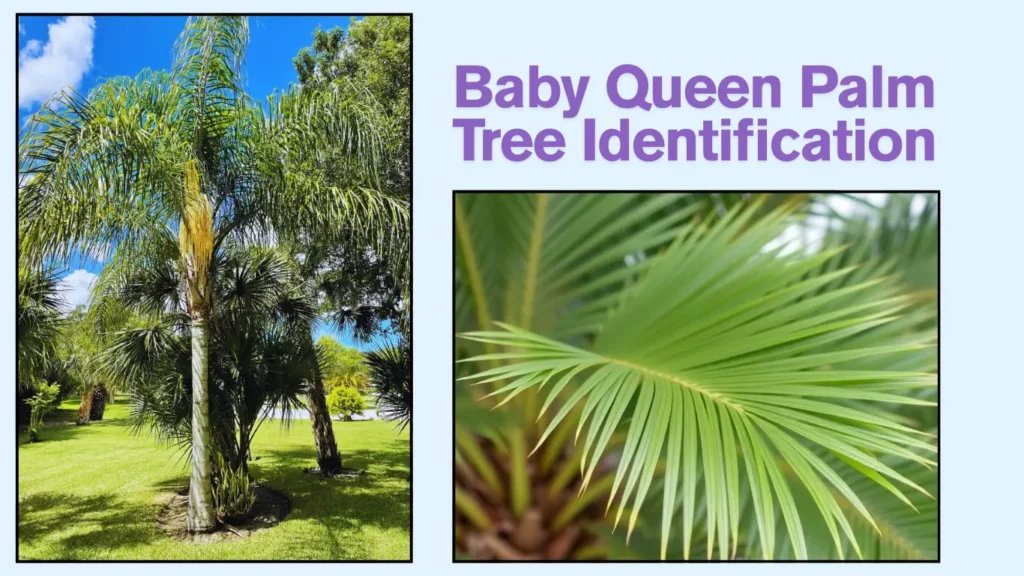
A baby queen palm tree looks very different from its mature form. At this stage:
- It’s about 1–3 feet tall.
- The trunk is not visible yet.
- Leaves are narrow and grass-like before they develop into full fronds.
- Grows in a clumping pattern if not thinned.
Baby palms are usually grown in pots or directly in garden soil. They need warm soil and steady watering for healthy root growth.
Queen Palm Tree Fruit
Queen palms produce small, orange, date-like fruits in clusters. These appear after flowering and hang below the fronds.
- Color: Bright orange when ripe.
- Shape: Round to oval, about 1 inch in diameter.
- Edibility: Not poisonous, but the fruit is fibrous and not pleasant to eat.
The fallen fruit can be messy, so many homeowners choose to trim the flower stalks before fruiting begins.
Queen Palm Tree Trimming Guide
Knowing how to trim a queen palm tree is key for its health and appearance. Here’s how to do it right:
When to Trim
- Only remove dead or yellowing fronds.
- Avoid trimming green, healthy fronds as this stresses the tree.
How to Trim
- Use clean, sharp pruning shears or a pole saw.
- Cut fronds close to the trunk but leave a small stub.
- Never “hurricane cut” (removing most fronds) – this weakens the tree.
Regular maintenance, known as queen palm tree trimming, helps prevent pest problems and keeps your landscape clean.
Queen Palm Tree Problems (With Visual Signs)

Queen palms are beautiful, but they’re not without problems. Here are some common issues:
1. Frizzle Top
- Caused by manganese deficiency.
- Leaves look withered or scorched at the tips.
2. Ganoderma Butt Rot
- A deadly fungal infection that causes trunk rot from the base.
3. Pest Infestations
- Aphids, mealybugs, and scale insects are common.
- Look for sticky residue or black sooty mold on fronds.
If you notice any of these issues, act quickly. Use palm-specific fertilizers, trim infected parts, and improve soil drainage.
Queen Palm vs King Palm – Key Differences
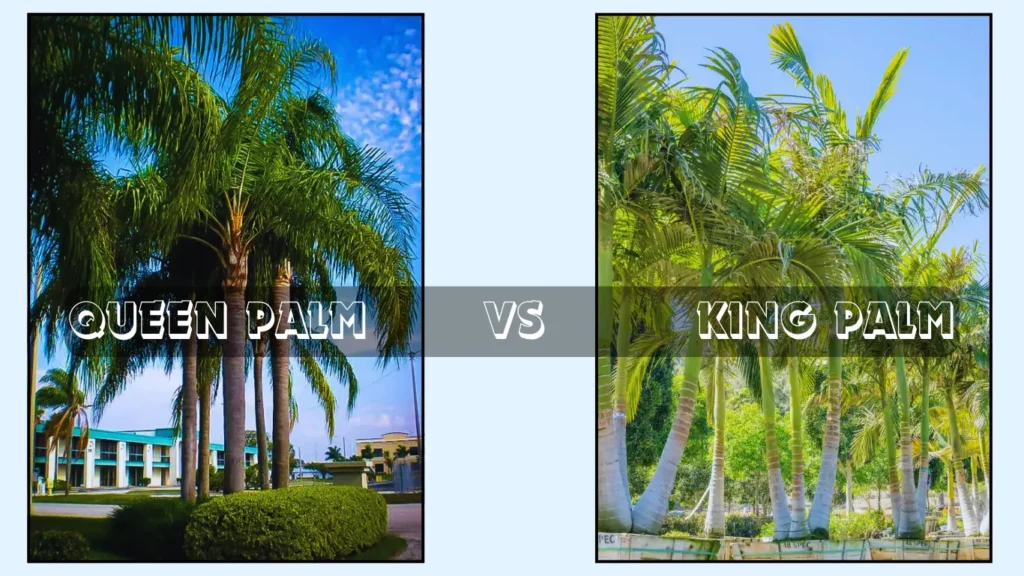
It’s easy to confuse queen palms with king palms (Archontophoenix cunninghamiana), but here’s how to tell them apart:
| Feature | Queen Palm | King Palm |
|---|---|---|
| Fronds | More feathery, flexible | Stiffer, more upright |
| Trunk | Gray and smooth | Slightly ringed and greenish |
| Height | Up to 50 ft | Up to 40 ft |
| Fruit | Orange, clustered | Red, smaller |
If you’re choosing between them, queen palms are more drought-tolerant, while king palms prefer humid, shaded spots.
Palm Tree Quilts Queen Size – A Tropical Touch for Your Bedroom
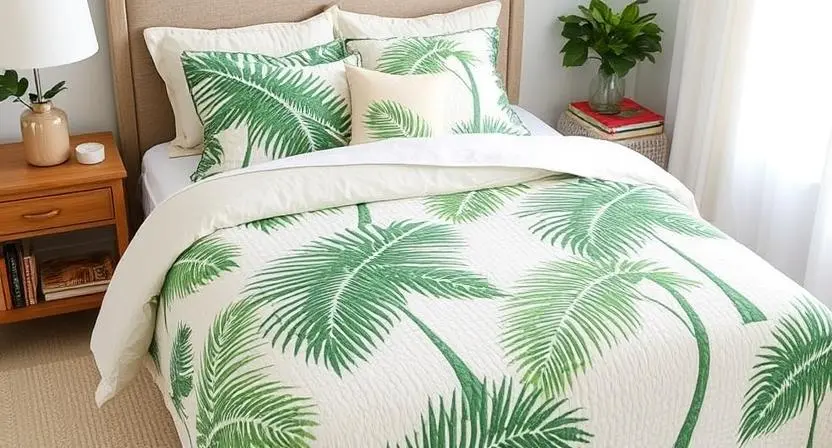
Love the look of queen palms? Bring tropical vibes indoors with palm tree quilts queen size. These quilts feature palm leaf designs and are perfect for a beachy or relaxed bedroom style. Whether it’s embroidered, printed, or vintage-style, it’s a fun way to show off your palm love. Look for breathable fabrics like cotton and pair them with neutral or sandy-colored pillows for the full island feel.
Conclusion
Queen palm trees are elegant, fast-growing, and perfect for tropical landscapes. With their tall trunks, graceful fronds, and orange fruits, they’re easy to identify once you know what to look for. Now that you’ve seen baby palms, learned trimming tips, and spotted common issues, you’re ready to care for or identify a queen palm like a pro. Don’t forget to share this guide or drop a comment with your own palm pics or questions!