





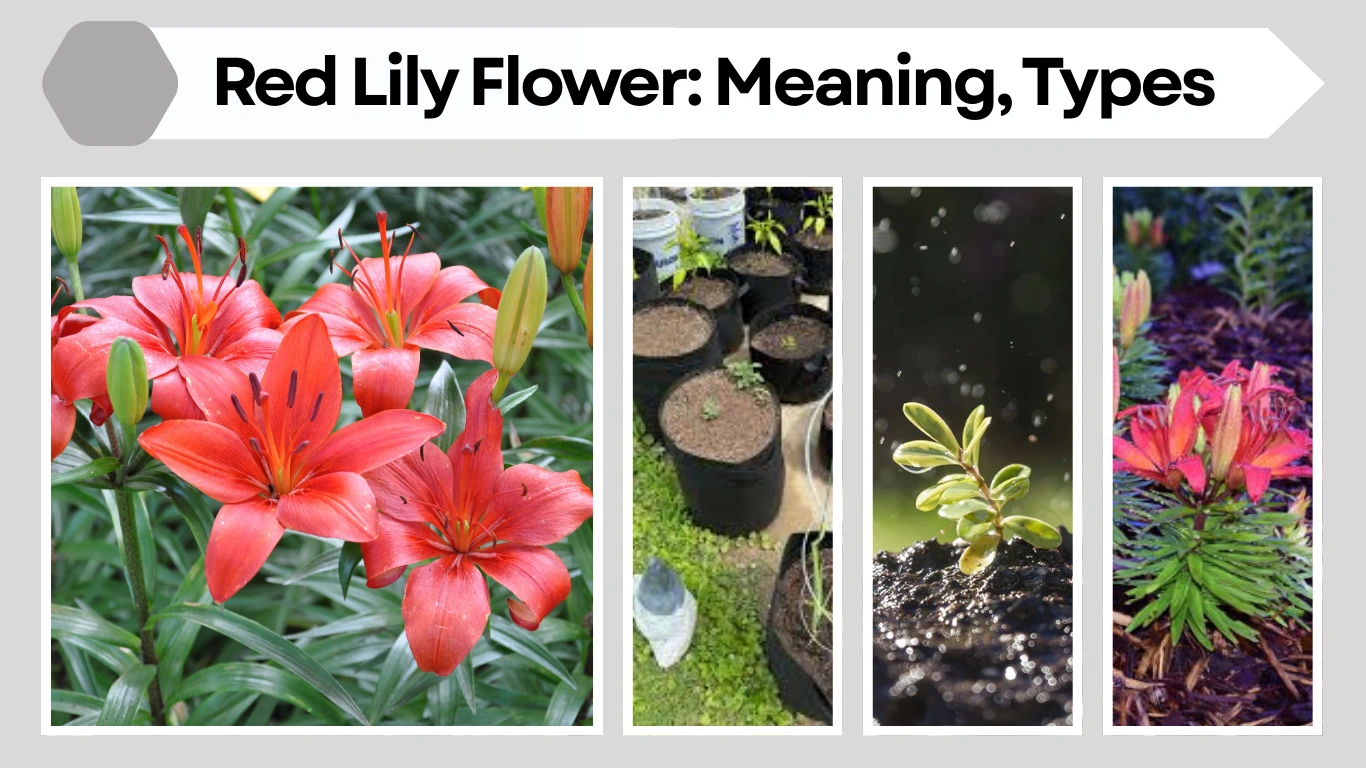
Red lily flowers are among the most striking and emotionally powerful blooms found in gardens and floral arrangements. With their bold red shades, elegant form, and strong symbolic meanings, red lilies are often associated with love, passion, courage, and admiration. These flowers are widely cultivated for ornamental gardens, cut-flower use, and decorative landscaping. This guide explores what red lilies are, how to identify them, their most popular types, and where they naturally grow.
What Is a Red Lily Flower?
A red lily flower refers to any true lily from the genus Lilium that produces red, deep pink, scarlet, or burgundy-colored blooms. Lilies grow from underground bulbs and are valued for their upright stems, narrow leaves, and large, showy flowers. Red lilies may appear as solid-colored blooms or feature darker spots, contrasting throats, or lighter petal edges.
Red lilies are popular because they create dramatic visual impact while also carrying strong symbolic meaning. Depending on the variety, they may be highly fragrant or nearly scentless. Their blooming season usually extends from late spring through summer, depending on species and climate.
Red Lily Flower Identification

- Large, trumpet-shaped or bowl-shaped flowers
- Petals often curved or slightly reflexed
- Shades ranging from bright scarlet to deep burgundy
- Dark speckles or lighter margins on some varieties
- Fragrance varying from strong to mild
- Long, narrow, glossy green leaves
- Upright stems with multiple blooms
- Average height between 1 and 6 feet
- Blooms in late spring to midsummer
- Grows from layered underground bulbs
Common Types of Red Lily Flowers

Asiatic Red Lily
Asiatic red lilies are among the earliest blooming lilies and are known for their bright colors and strong, upright stems. They typically have upward-facing flowers in vivid red, orange-red, or crimson tones. Most Asiatic lilies are lightly scented or fragrance-free, making them suitable for indoor arrangements.
They are hardy, easy to grow, and adapt well to a wide range of climates and soils. These qualities make Asiatic red lilies popular choices for beginner gardeners and container planting.
Oriental Red Lily
Oriental red lilies are famous for their large, dramatic flowers and powerful fragrance. Their blooms often display deep red or reddish-pink tones with white edges or spotted centers. Oriental lilies usually bloom later than Asiatic types, often in mid to late summer.
They prefer slightly acidic, well-drained soil and full sun to partial shade. Because of their intense scent and impressive flower size, Oriental red lilies are frequently used in bouquets and feature gardens.
Tiger Red Lily
Tiger lilies are easily recognized by their bright red-orange petals covered with dark spots and their strongly reflexed shape. Although often more orange than true red, many varieties are commonly grouped with red lilies due to their bold coloration.
Tiger lilies are very hardy and naturally occur in parts of Asia and North America. They grow tall, multiply quickly, and thrive in a wide range of conditions, making them excellent naturalizing plants in gardens.
Trumpet Red Lily
Trumpet red lilies produce long, tube-shaped flowers that flare at the tips, creating a dramatic and elegant appearance. Their colors range from rosy red to deep crimson, often with contrasting throats.
These lilies can grow quite tall and are usually fragrant. They bloom in mid to late summer and are commonly planted as background plants, border accents, or focal points in flower beds.
Natural Habitat and Distribution
True lilies are native mainly to the temperate regions of the Northern Hemisphere. Wild red lily species originated across Asia, Europe, and North America, particularly in meadows, mountain slopes, and woodland edges. Many modern red lilies are hybrids developed from these wild species.
Red lilies thrive in climates with cool winters and warm summers. They naturally grow in areas with well-drained soil, moderate moisture, and plenty of sunlight. In cultivation, red lilies adapt well to garden beds, raised borders, and large containers when proper drainage and light are provided.
How to Grow Red Lily Flowers

- Choose firm, healthy, disease-free bulbs
- Plant bulbs in early spring or autumn
- Use loose, well-drained, organic-rich soil
- Plant bulbs 4–6 inches deep
- Space bulbs 8–12 inches apart
- Place in full sun to partial shade
- Water well after planting
- Keep soil moist but not waterlogged
- Apply mulch to cool the roots
- Stake tall varieties if needed
Red Lily Flower Care Guide

Proper care ensures red lilies bloom strongly and return each year with healthy growth. Although lilies are not difficult plants, they respond best to consistent moisture, sunlight, and seasonal feeding.
Watering
Red lilies prefer evenly moist soil, especially during active growth and flowering. Water deeply once or twice a week depending on rainfall and soil type. Avoid soaking the soil constantly, as standing water can cause bulb rot.
Light Requirements
Most red lilies grow best in full sun, with at least six hours of direct light daily. In very hot regions, light afternoon shade helps protect blooms from fading and reduces plant stress.
Fertilizing
Feed red lilies in early spring using a balanced fertilizer or one formulated for flowering bulbs. A second light feeding before blooming supports flower production. Avoid high-nitrogen fertilizers that encourage leaves over flowers.
Pruning and Deadheading
Remove spent blooms to prevent seed formation and help the plant focus energy on strengthening the bulb. After flowering, allow stems and leaves to remain until they yellow naturally. This process allows the bulb to store nutrients for the next season.
Red Lily Flower Meaning and Symbolism
Red lilies symbolize deep love, passion, courage, admiration, and respect. They are often associated with romantic emotions, strong bonds, and heartfelt expression. In some cultures, red lilies also represent confidence, prosperity, and emotional strength.
Because of their bold color and dramatic appearance, red lilies are popular choices for romantic bouquets, celebration arrangements, and decorative garden themes that focus on intensity and beauty.
Red Lily Flower Lifecycle
- Bulb dormancy during winter
- Root growth underground
- Spring sprouting and stem emergence
- Leaf development
- Bud formation
- Blooming stage
- Pollination by insects
- Energy storage in the bulb before dormancy
Common Problems With Red Lilies
Pests
Aphids, spider mites, and lily beetles are common pests. Lily beetles are especially destructive and can quickly strip plants of leaves. Regular inspection and early control are essential.
Diseases
Botrytis blight causes brown spots and gray mold on leaves and flowers, especially in humid conditions. Bulb rot results from poor drainage. Viral diseases may cause streaking or distorted growth. Good airflow, clean gardening practices, and proper soil conditions reduce disease risk.
Propagation of Red Lily Flowers
Red lilies are most commonly propagated through bulb division. Mature bulbs produce smaller bulblets that can be separated and replanted in autumn. Another method is scaling, where individual bulb scales are rooted to produce new plants. Growing lilies from seed is possible but slow.
Red Lilies in Gardens and Floral Design
Red lilies are widely used as focal points in flower beds, borders, and mixed perennial gardens. Their height and vivid color make them effective background or centerpiece plants. They also perform well in large containers on patios and walkways.
In floral design, red lilies are valued for their elegance, long stems, and long-lasting blooms. They are often used in romantic bouquets, formal arrangements, and decorative displays.
FAQs
What do red lily flowers symbolize?
Red lilies symbolize deep love, passion, courage, admiration, and strong emotional bonds. They are often used to express intense feelings and heartfelt respect.
Are red lilies easy to grow?
Yes, red lilies are relatively easy to grow when planted in well-drained soil with adequate sunlight. Basic watering, fertilizing, and pest control are usually enough for healthy growth.
Do red lilies come back every year?
Most red lilies are perennial plants. When properly cared for, their bulbs survive underground through winter and regrow each year, producing fresh stems and blooms.
Can red lilies grow in pots?
Red lilies grow well in containers if the pot is deep and well-drained. Container planting is ideal for patios, balconies, and controlled garden displays.
Are red lilies fragrant?
Fragrance depends on the type. Oriental and trumpet red lilies are usually strongly scented, while Asiatic red lilies often have little to no fragrance.