

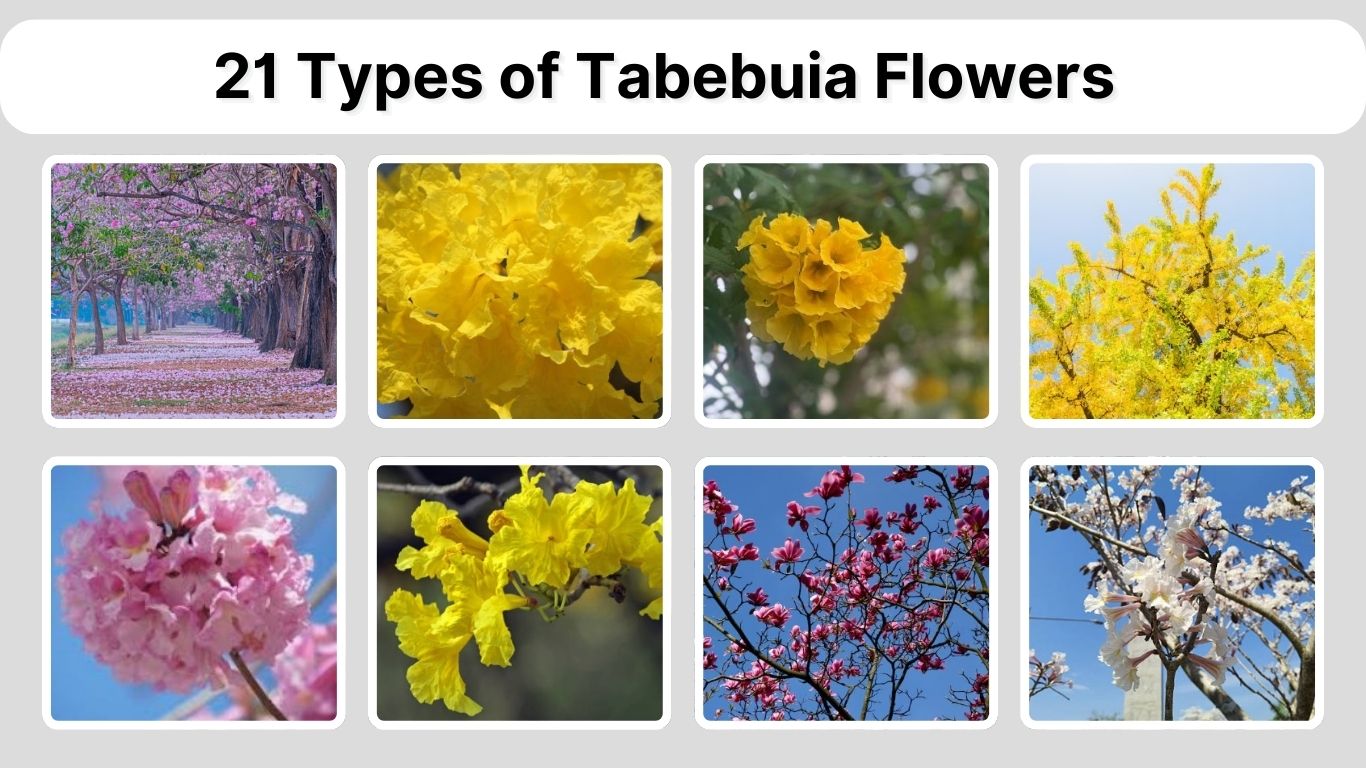
Tabebuia flowers are among the most eye-catching tropical blossoms, famous for their trumpet-shaped blooms and dramatic seasonal displays. These flowering trees, native mainly to Central and South America, burst into shades of pink, yellow, purple, and white—often before new leaves appear. Because of their beauty, fast growth, and pollinator-friendly flowers, Tabebuia species are widely planted in streets, parks, and home gardens. This guide explores 21 different types of Tabebuia flowers, highlighting their diversity and ornamental value.
1. Tabebuia rosea (Pink Trumpet Tree)

Tabebuia rosea, commonly known as the Pink Trumpet Tree, is one of the most popular and widely cultivated Tabebuia species. It is famous for its large, trumpet-shaped pink flowers that bloom in heavy clusters, often covering the entire tree before new leaves appear. Native to Central America, Mexico, and northern South America, this species is widely planted as an ornamental tree along streets, parks, and gardens because of its fast growth and striking floral display.
Identification
- Medium to large deciduous flowering tree
- Height usually ranges from 20 to 30 meters when mature
- Smooth to slightly fissured gray bark
- Palmately compound leaves with 5 leaflets
- Large trumpet-shaped flowers, light pink to deep rose
- Flowers appear in dense clusters at branch tips
- Blooming season mainly in late winter to spring
Flower Characteristics
The flowers of Tabebuia rosea are large, showy, and tubular, with five soft, flaring lobes. Their color ranges from pale blush pink to rich rose, sometimes with yellow or white throats. Each bloom is highly attractive to bees, butterflies, and hummingbirds, making the tree valuable for pollinators.
Habitat and Growth
Tabebuia rosea naturally grows in tropical and subtropical dry forests, coastal regions, and open woodlands. It prefers full sun, warm temperatures, and well-drained soil. Once established, the tree is moderately drought-tolerant and can thrive in urban landscapes, roadsides, and open parks.
Uses and Importance
This species is widely used as an ornamental shade tree because of its spectacular flowering season. Its wood is sometimes used locally for light construction and crafts. In many regions, Tabebuia rosea is also planted for reforestation, erosion control, and to enhance biodiversity by supporting nectar-feeding wildlife.
2. Tabebuia aurea (Golden Trumpet Tree)

Tabebuia aurea, commonly called the Golden Trumpet Tree, is a striking flowering tree known for its bright yellow blooms that appear in massive clusters. Native to South America, especially Brazil and Bolivia, this species is widely planted in tropical and subtropical regions for landscaping. During its blooming season, the tree often becomes completely covered in golden flowers, creating a dramatic ornamental display.
Identification
- Medium-sized deciduous tree with a rounded crown
- Typically grows 7 to 15 meters tall
- Gray to brown, slightly rough bark
- Palmately compound leaves with 5 narrow leaflets
- Bright golden-yellow, trumpet-shaped flowers
- Flowers bloom in dense terminal clusters
- Main flowering season occurs in late winter and early spring
Flower Characteristics
The flowers are large, tubular, and vivid yellow, with soft, flared edges and a slightly darker throat. They are rich in nectar and strongly attract bees, butterflies, and birds. The intense yellow coloration makes this species especially popular for avenue planting and ornamental gardens.
Habitat and Growth
Tabebuia aurea thrives in open savannas, dry forests, and riverine areas. It prefers full sun and well-drained, sandy to loamy soils. The tree is drought-tolerant once established and adapts well to hot climates, making it suitable for urban planting and roadside landscapes.
Uses and Importance
This species is mainly valued as an ornamental tree for streets, parks, and gardens. It also plays an ecological role by providing early-season nectar for pollinators. In its native range, it is sometimes planted for land restoration and shade in open landscapes.
3. Tabebuia impetiginosa (Purple Trumpet Tree)

Tabebuia impetiginosa, also known as the Purple Trumpet Tree or Pau d’Arco, is admired for its rich purple to lavender-pink blossoms. Native to Central and South America, it is one of the most well-known Tabebuia species due to both its beauty and its traditional medicinal associations.
Identification
- Medium to large deciduous flowering tree
- Commonly reaches 8 to 20 meters in height
- Dark gray, rough, fissured bark
- Palmately compound leaves, usually with 5 leaflets
- Showy trumpet-shaped flowers in purple, pink, or lavender shades
- Blooms appear in large clusters before leaf growth
- Flowering season usually late winter to early spring
Flower Characteristics
The flowers are large, velvety, and trumpet-shaped, often with pale or yellowish throats. Their deep purple and lavender tones make them highly ornamental and visually dramatic. The blossoms attract many pollinators, including bees and hummingbirds.
Habitat and Growth
Tabebuia impetiginosa grows naturally in tropical forests, dry woodlands, and savanna edges. It prefers full sun and fertile, well-drained soils. The tree is moderately drought-tolerant and is commonly cultivated in warm regions as a landscape and avenue tree.
Uses and Importance
Beyond ornamental use, this species is famous for its inner bark, traditionally used in herbal preparations known as pau d’arco. Ecologically, it supports pollinators and contributes to urban biodiversity when planted in gardens and parks.
4. Tabebuia heterophylla (Pink Poui)

Tabebuia heterophylla, commonly known as Pink Poui, is a graceful flowering tree native to the Caribbean and parts of northern South America. It is valued for its soft pink to lavender blossoms that bloom in profusion, often when the branches are nearly leafless. This species is widely planted in coastal regions and tropical gardens because of its adaptability and decorative appeal.
Identification
- Medium-sized deciduous to semi-evergreen tree
- Usually grows 10 to 20 meters tall
- Smooth to lightly fissured gray bark
- Palmately compound leaves with 3 to 5 leaflets
- Trumpet-shaped flowers, pale pink to lavender
- Flowers borne in loose terminal clusters
- Blooms mainly in late winter and early spring
Flower Characteristics
The flowers are large, trumpet-like, and delicately colored, ranging from blush pink to soft lavender, often with a lighter throat. They create an elegant floral display and are attractive to bees, butterflies, and nectar-feeding birds.
Habitat and Growth
Tabebuia heterophylla naturally grows in coastal forests, dry woodlands, and limestone areas. It prefers full sun and well-drained soil and shows good tolerance to salt spray and drought, making it suitable for seaside landscaping.
Uses and Importance
This species is mainly planted as an ornamental tree in gardens, parks, and along streets. It is also useful in coastal restoration projects and supports local pollinators by providing an early-season nectar source.
5. Tabebuia chrysotricha (Golden Trumpet Tree)

Tabebuia chrysotricha is a spectacular yellow-flowering Tabebuia species best known for its dense, bright golden blossoms and fuzzy young growth. Native to Brazil, it is one of the most popular ornamental Tabebuia trees worldwide and is especially admired for its compact size and heavy flowering habit.
Identification
- Small to medium-sized deciduous tree
- Typically reaches 4 to 10 meters in height
- Gray-brown bark with a slightly rough texture
- Palmately compound leaves, usually with 5 leaflets
- Brilliant golden-yellow trumpet-shaped flowers
- Flowers form thick clusters on branch tips
- Main blooming period occurs in late winter to early spring
Flower Characteristics
The flowers are large, intensely yellow, and trumpet-shaped, often completely covering the branches. Their rich nectar content attracts bees and other pollinators, while the vivid color makes the tree a focal point in ornamental landscapes.
Habitat and Growth
Tabebuia chrysotricha grows naturally in tropical forests and open woodlands. It thrives in full sun with well-drained soil and performs well in warm, frost-free climates. Once established, it tolerates short dry periods.
Uses and Importance
This species is widely used as a decorative tree in parks, home gardens, and along roadsides. Its manageable size makes it ideal for smaller spaces, and its abundant flowers enhance urban biodiversity and visual appeal.
6. Tabebuia ochracea (Yellow Lapacho)

Tabebuia ochracea, often called Yellow Lapacho, is a striking flowering tree recognized for its soft golden-yellow blooms and elegant form. Native to South America, especially Brazil, Paraguay, and Argentina, this species flowers heavily at the end of the dry season, when branches may appear almost completely covered in blossoms.
Identification
- Medium-sized deciduous tree with an open crown
- Common height ranges from 8 to 18 meters
- Gray to brown bark, becoming rough with age
- Palmately compound leaves with 5 narrow leaflets
- Pale to bright yellow trumpet-shaped flowers
- Flowers arranged in showy terminal clusters
- Blooming usually occurs in late winter to early spring
Flower Characteristics
The flowers are trumpet-shaped, soft yellow to golden, sometimes with faint darker markings inside the throat. Their gentle color and large size make them highly attractive to bees, butterflies, and other pollinators.
Habitat and Growth
Tabebuia ochracea naturally grows in savannas, dry forests, and woodland edges. It prefers full sun and well-drained soils and is well adapted to seasonal drought, making it suitable for warm, semi-dry climates.
Uses and Importance
This species is widely planted as an ornamental tree for streets and parks. In its native range, it also contributes to habitat restoration and supports pollinators during periods when few other trees are in bloom.
7. Tabebuia pallida (Pink Poui)

Tabebuia pallida, commonly known as Pink Poui, is a beautiful Caribbean Tabebuia species admired for its soft rose-pink flowers and graceful branching. It is native to the Greater Antilles and is frequently planted as a decorative tree in tropical and subtropical landscapes.
Identification
- Medium-sized deciduous flowering tree
- Usually grows 10 to 20 meters tall
- Smooth gray to light brown bark
- Palmately compound leaves with 5 leaflets
- Trumpet-shaped flowers, pale pink to rosy lavender
- Flowers borne in loose, terminal clusters
- Blooms mainly in late winter and spring
Flower Characteristics
The blossoms are large, funnel-shaped, and delicately colored, often showing a lighter or whitish throat. When in full bloom, the tree creates a soft pink canopy that is highly ornamental and visually striking.
Habitat and Growth
Tabebuia pallida naturally occurs in coastal forests, limestone hills, and open woodlands. It grows best in full sun and well-drained soil and tolerates coastal conditions, including moderate salt exposure.
Uses and Importance
This species is primarily valued as an ornamental and avenue tree. It also plays an ecological role by providing nectar for insects and birds, helping maintain local pollinator populations.
8. Tabebuia barbata (Bearded Trumpet Tree)

Tabebuia barbata is a lesser-known but attractive Tabebuia species, notable for its yellow to golden trumpet-shaped flowers and slightly hairy floral parts. Native to parts of northern South America, this tree produces eye-catching blooms that stand out against its usually leafless branches during the flowering season.
Identification
- Medium-sized deciduous flowering tree
- Typically grows 8 to 15 meters tall
- Gray-brown bark, lightly fissured
- Palmately compound leaves with 5 leaflets
- Yellow trumpet-shaped flowers, often with hairy throats
- Flowers appear in clustered groups at branch tips
- Main blooming season is late winter to spring
Flower Characteristics
The flowers are tubular and bright yellow, often showing fine hairs inside the throat, which gives rise to the name “bearded.” Their bold color and nectar-rich structure attract bees and other pollinating insects.
Habitat and Growth
Tabebuia barbata naturally grows in dry forests, savannas, and open woodland areas. It prefers full sun and well-drained soils and shows good tolerance to heat and seasonal dryness.
Uses and Importance
This species is mainly used as an ornamental tree in tropical landscapes. It also contributes ecologically by providing nectar to pollinators when few other trees are in bloom.
9. Tabebuia serratifolia (Yellow Ipe)

Tabebuia serratifolia, widely known as Yellow Ipe, is one of the most famous Tabebuia species because of its brilliant yellow flowers and extremely hard, durable wood. Native to Central and South America, it is admired both for ornamental planting and for its ecological importance.
Identification
- Medium to large deciduous tree
- Can reach 20 to 30 meters in height
- Thick, rough, deeply fissured bark
- Palmately compound leaves with serrated leaflets
- Large, bright yellow trumpet-shaped flowers
- Flowers bloom in dense terminal clusters
- Flowering season usually late winter to early spring
Flower Characteristics
The flowers are large, vivid yellow, and strongly trumpet-shaped, often covering the canopy almost completely. Their intense color makes the tree highly visible from long distances and very attractive to pollinators.
Habitat and Growth
Tabebuia serratifolia grows naturally in tropical rainforests, dry forests, and riverine areas. It prefers full sun and deep, well-drained soil. The tree is drought-tolerant once established and long-lived.
Uses and Importance
Besides being a popular ornamental tree, this species is famous for its extremely dense, rot-resistant wood, commonly known as ipe. Ecologically, it supports insects, birds, and overall forest biodiversity.
10. Tabebuia caraiba (Silver Trumpet Tree)

Tabebuia caraiba, often called the Silver Trumpet Tree, is a visually striking species recognized for its silvery-gray foliage and bright yellow flowers. Native to the Caribbean and parts of northern South America, this tree stands out even when not in bloom due to its pale, shimmering leaves.
Identification
- Medium-sized deciduous to semi-evergreen tree
- Usually grows 8 to 15 meters tall
- Smooth gray bark and silvery young branches
- Palmately compound leaves with silvery-green leaflets
- Bright yellow, trumpet-shaped flowers
- Flowers borne in clusters at the ends of branches
- Main flowering period occurs in the dry season
Flower Characteristics
The flowers are large, golden-yellow, and trumpet-shaped, creating a vivid contrast against the tree’s silver-toned foliage. They are rich in nectar and attract bees, butterflies, and birds.
Habitat and Growth
Tabebuia caraiba naturally occurs in coastal forests, dry woodlands, and limestone soils. It thrives in full sun, tolerates drought well, and adapts to poor, sandy soils, making it suitable for urban and seaside landscapes.
Uses and Importance
This species is mainly planted as an ornamental tree for its unique foliage and bright flowers. It is also useful in coastal landscaping and contributes to pollinator support in tropical environments.
11. Tabebuia guayacan (Guayacan)

Tabebuia guayacan, commonly known as Guayacan, is a large and impressive Tabebuia species famous for its abundant yellow blossoms and long lifespan. Native to Central America and northern South America, it often becomes a dominant tree in dry tropical forests.
Identification
- Medium to large deciduous flowering tree
- Typically reaches 15 to 30 meters in height
- Thick, rough, dark gray bark
- Palmately compound leaves with 5 leaflets
- Bright yellow trumpet-shaped flowers
- Flowers appear in heavy clusters before leaf growth
- Flowering usually occurs late winter to spring
Flower Characteristics
The flowers are showy, bright yellow, and tubular, often forming massive displays that can be seen from far away. Their nectar-rich blooms attract a wide range of pollinators.
Habitat and Growth
Tabebuia guayacan grows naturally in dry tropical forests, savannas, and woodland edges. It prefers full sun and well-drained soil and is well adapted to seasonal drought conditions.
Uses and Importance
This species is valued both as an ornamental tree and as a hardwood source. Ecologically, it plays an important role in native forests by supporting insects, birds, and maintaining forest structure.
12. Tabebuia donnell-smithii (Primavera)

Tabebuia donnell-smithii, commonly known as Primavera, is a fast-growing Tabebuia species admired for its bright yellow blossoms and tall, straight form. Native to Mexico and Central America, it is widely planted both as an ornamental tree and as a valuable timber species.
Identification
- Medium to large deciduous tree with an upright crown
- Commonly grows 15 to 30 meters tall
- Light gray to brown bark, becoming slightly fissured with age
- Palmately compound leaves with 5 leaflets
- Bright yellow, trumpet-shaped flowers
- Flowers borne in large terminal clusters
- Blooms mainly in late winter to early spring
Flower Characteristics
The flowers are large, vivid yellow, and strongly tubular, forming dense clusters that brighten the landscape. They are rich in nectar and attract bees and other pollinating insects.
Habitat and Growth
Tabebuia donnell-smithii naturally grows in tropical dry forests and moist lowland regions. It prefers full sun, deep well-drained soil, and warm climates. The tree grows relatively quickly compared to many other Tabebuia species.
Uses and Importance
Besides ornamental use, Primavera is an important timber tree, valued for its light-colored, workable wood. Ecologically, it supports pollinators and contributes to reforestation and restoration projects.
13. Tabebuia billbergii (Yellow Trumpet Tree)

Tabebuia billbergii is a lesser-known Tabebuia species valued for its yellow trumpet-shaped flowers and graceful branching. Native to parts of South America, it blooms seasonally, producing eye-catching floral clusters that stand out against bare branches.
Identification
- Medium-sized deciduous flowering tree
- Typically reaches 8 to 18 meters in height
- Gray to brown bark with shallow fissures
- Palmately compound leaves with 5 leaflets
- Yellow trumpet-shaped flowers
- Flowers arranged in loose terminal clusters
- Blooming generally occurs in the dry season
Flower Characteristics
The blossoms are bright yellow, tubular, and moderately large, creating a cheerful and ornamental display. They are attractive to bees and other nectar-feeding insects.
Habitat and Growth
Tabebuia billbergii grows in tropical forests, dry woodlands, and open areas. It prefers full sun and well-drained soils and tolerates short dry periods once established.
Uses and Importance
This species is primarily grown as an ornamental tree in tropical landscapes. It also plays an ecological role by providing nectar for pollinators and contributing to plant diversity.
14. Tabebuia nodosa (Desert Trumpet Tree)

Tabebuia nodosa, often called the Desert Trumpet Tree, is a distinctive species adapted to drier environments. Native to parts of South America, especially Argentina, Bolivia, and Paraguay, it is known for its pale yellow flowers and twisted, sculptural trunk form.
Identification
- Small to medium-sized deciduous flowering tree
- Usually grows 5 to 12 meters tall
- Thick, often twisted trunk with rough gray bark
- Palmately compound leaves with 3 to 5 leaflets
- Pale yellow to creamy trumpet-shaped flowers
- Flowers borne in terminal clusters
- Blooms mainly in late winter and early spring
Flower Characteristics
The flowers are trumpet-shaped and soft yellow, sometimes almost cream-colored, giving the tree a subtle but elegant floral display. They attract bees and other pollinating insects.
Habitat and Growth
Tabebuia nodosa naturally grows in dry forests, scrublands, and semi-arid regions. It prefers full sun and well-drained soils and is highly tolerant of drought and heat.
Uses and Importance
This species is mainly planted as an ornamental in dry-region landscapes and botanical collections. Its unusual trunk shape and seasonal blooms also make it popular for bonsai and decorative planting.
15. Tabebuia incana (Gray Trumpet Tree)

Tabebuia incana, known as the Gray Trumpet Tree, is recognized for its grayish foliage and soft yellow flowers. Native to South America, this species has a subtle beauty and is valued for both ornamental planting and ecological importance.
Identification
- Medium-sized deciduous tree
- Commonly grows 8 to 16 meters tall
- Gray to brown bark with light fissuring
- Palmately compound leaves with gray-green leaflets
- Soft yellow trumpet-shaped flowers
- Flowers appear in loose clusters
- Flowering generally occurs in the dry season
Flower Characteristics
The flowers are pale yellow, trumpet-shaped, and moderately large, creating a gentle floral display. Their nectar attracts bees, butterflies, and other pollinators.
Habitat and Growth
Tabebuia incana grows in dry forests, open woodlands, and savanna regions. It prefers full sun, well-drained soils, and warm climates, and it tolerates seasonal drought well.
Uses and Importance
This species is used as an ornamental tree and in native habitat restoration. It helps support pollinators and contributes to the diversity and structure of tropical dry forests.
16. Tabebuia aureopilosa (Golden-haired Trumpet Tree)

Tabebuia aureopilosa is a rare and visually appealing Tabebuia species distinguished by the fine golden hairs on its young leaves and flower parts. Native to parts of South America, this tree produces soft yellow trumpet-shaped blooms that appear prominently before new foliage fully develops.
Identification
- Medium-sized deciduous flowering tree
- Typically grows 8 to 15 meters tall
- Gray to light brown bark, slightly rough
- Palmately compound leaves with fine golden hairs
- Soft yellow trumpet-shaped flowers
- Flowers borne in terminal clusters
- Blooming season mainly late winter to spring
Flower Characteristics
The flowers are pale to medium yellow, tubular, and delicately textured. The subtle golden hairs around the floral parts give the blossoms a soft, velvety appearance and help distinguish this species from other yellow-flowering Tabebuia trees.
Habitat and Growth
Tabebuia aureopilosa naturally grows in tropical forests and dry woodland zones. It prefers full sun and well-drained soil and is moderately tolerant of dry seasons once established.
Uses and Importance
This species is mostly grown in botanical collections and specialty landscapes. Ecologically, it contributes nectar for pollinators and adds genetic diversity within the Tabebuia group.
17. Tabebuia roseoalba (White Trumpet Tree)

Tabebuia roseoalba, commonly called the White Trumpet Tree, is admired for its elegant white to pale pink flowers and smooth, light-colored trunk. Native to South America, it creates a striking display when in full bloom.
Identification
- Medium-sized deciduous flowering tree
- Usually grows 7 to 15 meters tall
- Smooth gray to whitish bark
- Palmately compound leaves with 5 leaflets
- White to very pale pink trumpet-shaped flowers
- Flowers appear in showy terminal clusters
- Blooms mainly in late winter and early spring
Flower Characteristics
The blossoms are large, trumpet-shaped, and creamy white, sometimes flushed with soft pink and often marked with a pale yellow throat. They create a refined, bright canopy that is highly ornamental.
Habitat and Growth
Tabebuia roseoalba naturally occurs in dry forests and savannas. It thrives in full sun, tolerates drought once established, and grows well in well-drained, moderately fertile soils.
Uses and Importance
This species is widely planted as an ornamental and avenue tree. It also supports bees and other pollinators and is useful in landscaping projects that aim to combine beauty with ecological value.
18. Tabebuia stenocalyx (Narrow-Throated Trumpet Tree)

Tabebuia stenocalyx is a distinctive Tabebuia species named for the narrow throat of its trumpet-shaped flowers. Native to parts of South America, it produces elegant yellow blooms that appear in clusters, giving the tree a refined ornamental look during its flowering season.
Identification
- Medium-sized deciduous flowering tree
- Commonly grows 8 to 18 meters tall
- Gray-brown bark with shallow fissures
- Palmately compound leaves with 5 leaflets
- Yellow trumpet-shaped flowers with narrow throats
- Flowers borne in terminal clusters
- Flowering usually occurs in the dry season
Flower Characteristics
The flowers are bright yellow, tubular, and slightly narrower than many other Tabebuia species. Their shape and color make them attractive to bees and other pollinating insects.
Habitat and Growth
Tabebuia stenocalyx naturally grows in tropical forests and dry woodland areas. It prefers full sun and well-drained soils and shows good tolerance to seasonal drought.
Uses and Importance
This species is mainly grown as an ornamental tree and in botanical collections. It also contributes ecologically by providing nectar for pollinators and enhancing plant diversity.
19. Tabebuia pulcherrima (Beautiful Trumpet Tree)

Tabebuia pulcherrima, whose name means “most beautiful,” is admired for its striking floral displays and graceful growth habit. Native to South America, this species bears showy yellow trumpet-shaped flowers that bloom in clusters.
Identification
- Medium-sized deciduous flowering tree
- Typically reaches 10 to 20 meters in height
- Gray to brown bark, lightly fissured
- Palmately compound leaves with 5 leaflets
- Bright yellow trumpet-shaped flowers
- Flowers arranged in dense terminal clusters
- Blooms mainly late winter to early spring
Flower Characteristics
The flowers are large, vivid yellow, and strongly trumpet-shaped, forming attractive, eye-catching clusters. They are rich in nectar and draw bees, butterflies, and birds.
Habitat and Growth
Tabebuia pulcherrima grows in tropical forests and open woodland regions. It prefers full sun and fertile, well-drained soils and is moderately drought-tolerant once established.
Uses and Importance
This species is valued as an ornamental tree in tropical landscapes. Ecologically, it supports pollinators and contributes to the diversity of flowering trees.
20. Tabebuia palmeri (Palmer’s Trumpet Tree)

Tabebuia palmeri, commonly known as Palmer’s Trumpet Tree, is a lesser-known Tabebuia species recognized for its yellow trumpet-shaped flowers and upright growth form. Native to parts of Central and South America, it produces seasonal floral displays that brighten dry-season landscapes.
Identification
- Medium-sized deciduous flowering tree
- Usually grows 8 to 16 meters tall
- Gray to brown bark, lightly fissured
- Palmately compound leaves with 5 leaflets
- Bright yellow trumpet-shaped flowers
- Flowers borne in terminal clusters
- Flowering mainly occurs in the dry season
Flower Characteristics
The blossoms are tubular, bright yellow, and moderately large, creating a cheerful ornamental effect. They attract bees and other nectar-feeding insects.
Habitat and Growth
Tabebuia palmeri naturally grows in tropical forests and dry woodland regions. It prefers full sun and well-drained soils and tolerates seasonal drought well.
Uses and Importance
This species is mainly planted as an ornamental tree in warm-climate gardens and parks. It also supports local pollinators and adds diversity to landscaped environments.
21. Tabebuia chrysantha (Yellow Ipe)

Tabebuia chrysantha, also known as Yellow Ipe, is one of the most iconic yellow-flowering Tabebuia species, celebrated for its intense golden blooms and majestic form. Native to Central and South America, it is widely planted as a street and park tree.
Identification
- Medium to large deciduous flowering tree
- Can reach 15 to 30 meters in height
- Thick, rough, dark gray bark
- Palmately compound leaves with 5 leaflets
- Brilliant golden-yellow trumpet-shaped flowers
- Flowers appear in heavy terminal clusters
- Blooms mainly in late winter to spring
Flower Characteristics
The flowers are large, bright golden-yellow, and trumpet-shaped, often covering the branches before leaves emerge. Their striking color makes the tree highly ornamental and easily recognizable.
Habitat and Growth
Tabebuia chrysantha grows in tropical forests, dry woodlands, and savanna regions. It thrives in full sun and well-drained soil and is moderately drought-tolerant once established.
Uses and Importance
This species is highly valued as an ornamental tree and is also ecologically important for pollinators. In its native range, related yellow ipe trees are sometimes used in reforestation and conservation plantings.